
That orange-yellow paste does a lot of heavy lifting in a Peruvian sauce. It brings medium heat, a smoky-fruity pepper aroma, and a color that no generic chili powder can quite replicate on its own.
Finding a solid aji amarillo substitute means matching all three signals, not just the spice level.
The form of your substitute matters as much as the flavor. Jarred paste and chili purées blend into a sauce smoothly and help it emulsify.
Powders and dry spices behave differently: they need fat or liquid to bloom, and they won't give you the same creamy body.
One more thing before the list: if your recipe depends on that orange hue (think causa or aji de gallina), prioritize color as your first filter. Heat is the easiest thing to dial up later.
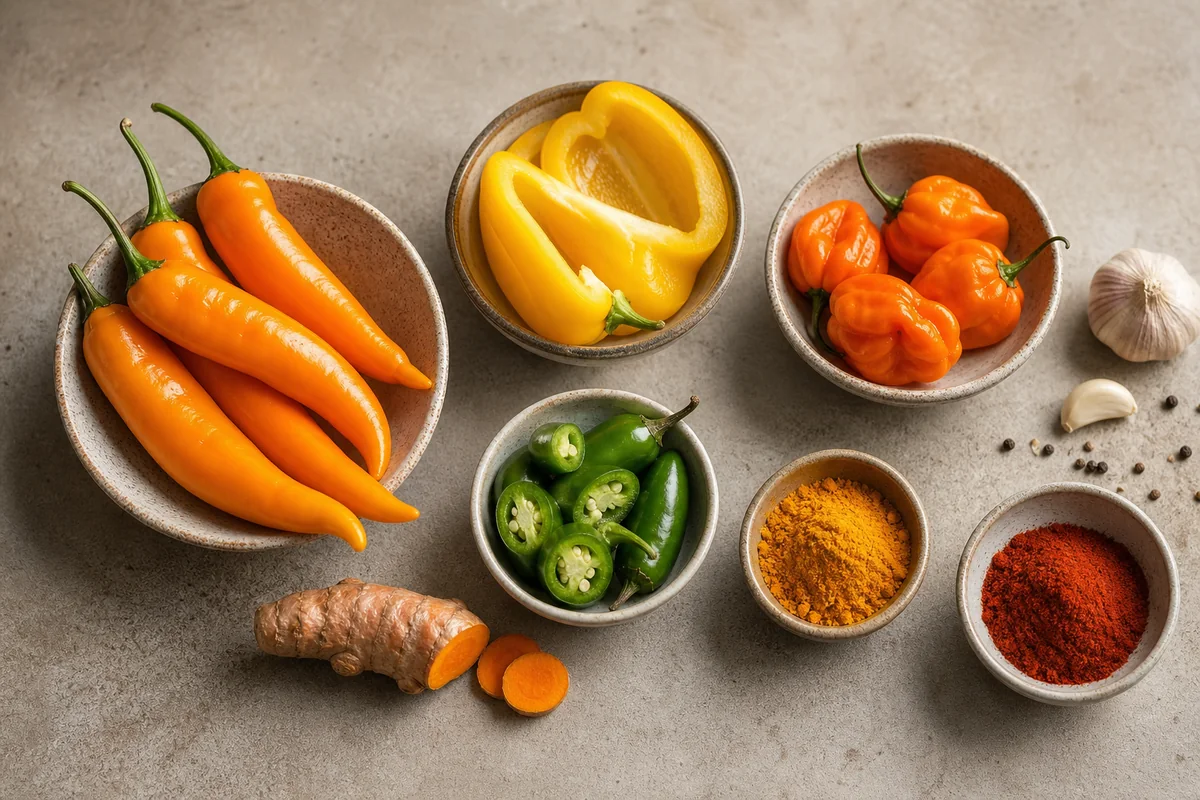
The best ají amarillo substitutes match orange color, medium heat, and smoky-fruity pepper flavor. Jarred ají amarillo paste is the closest swap. Ají panca paste plus smoked paprika adds depth. Yellow chili purée, bell pepper purée with cayenne, turmeric with cayenne, and red pepper flakes with sweet paprika cover you when specialty peppers aren't available.
5 Best Aji Amarillo Substitutes, Ranked by Match
| # | Substitute | Best For | Ratio | Key Note |
|---|---|---|---|---|
| 1 | Ají Amarillo Paste (Jarred) | Both | 1:1 | Taste before salting |
| 2 | Ají Panca Paste + Smoked Paprika | Cooked | ¾:1 | Darker, smokier result |
| 3 | Yellow Chili Purée + Chili Powder | Both | 1:1 | Simmer 2-3 min |
| 4 | Bell Pepper Purée + Cayenne | Cooked | 1:1 | Add acid if flat |
| 5 | Turmeric + Cayenne | Both | Pinch | Color only, not smoky |
The five options below go deeper on each one, with ratios, timing tips, and a clear signal for when to skip.
1. Ají Amarillo Paste (Jarred)
If you can find it in a Latin grocery or online, jarred ají amarillo paste is the answer. It already has that bright pepper character locked in, and it behaves exactly like fresh-ground paste in a sauce.
- Ratio for paste recipes: Use 1:1. If your recipe calls for 2 tablespoons of ají amarillo paste, use 2 tablespoons of jarred.
- Ratio for dried/ground recipes: Start at ½ the jarred amount, then taste and add more slowly.
- Salt watch: Jarred paste is often pre-salted. Taste before you add any extra salt to the dish.
- Color hold: Add paste off the heat or in the last simmer minutes to preserve the orange brightness.
Skip if: Your jarred paste is hotter than expected. Start with ½ the amount and dilute with cream or broth until the heat level feels right.
2. Ají Panca Paste + Smoked Paprika
Ají panca is earthy and wine-dark where ají amarillo is bright and citrusy. They sit in the same pepper family but pull in opposite directions, so understanding the panca-amarillo flavor split helps you correct before you overcook.
The fix is simple: use about ¾ of the ají panca paste your recipe needs, then add a small pinch of smoked paprika to lift the brightness back up.
Ají Panca Paste + Smoked Paprika
Works for: Braised meats, stews, rice dishes where some color depth is welcome
Skip if: Your recipe needs very bright orange color - the sauce will turn a deeper reddish-brown
- Starting ratio: ¾ tablespoon ají panca paste for every 1 tablespoon ají amarillo your recipe calls for.
- Add paprika early: Stir smoked paprika in at the beginning of the simmer so it blooms into the oil or fat.
- Prevent bitterness: Don't let the paste fry on high heat without liquid - it scorches fast and turns bitter.
- Too dark? Balance with a small spoonful of honey or a splash of sweet pepper purée to brighten the sauce.
Skip if: Your dish is supposed to be visually orange. Pair with turmeric or roasted yellow pepper to correct the hue.
3. Yellow Chili Purée + Chili Powder
This is the most flexible DIY option. A mild yellow chili (like banana pepper or yellow wax pepper) gives you the orange-leaning color and body, and smoked chili powder fills in the heat and depth.
Blend the yellow chili until completely smooth before adding it to the pan. Graininess usually means you stopped blending 30 seconds too soon.
| Use | Ratio | Notes |
|---|---|---|
| Creamy sauce base | 1:1 purée | Add chili powder ½ teaspoon at a time; simmer 2-3 min |
| Marinade | 1:1 purée + ¼ teaspoon powder | No simmering needed; powder hydrates in acid |
| Dry rub base | Powder only | Skip purée; use smoked chili powder + sweet paprika |
- Bloom the powder: Stir chili powder into warm oil for 30 seconds before adding any liquid. This prevents raw-spice taste.
- Simmer time: Give the combined purée and powder at least 2 minutes over medium heat. It thickens slightly and the flavors merge.
- Heat control: If the chili is very mild, add a second ¼ teaspoon of smoked chili powder and taste again rather than dumping it all in.
- Texture fix: If the sauce looks thin after blending, a teaspoon of plain Greek yogurt or crema stirred in at the end restores body.
Skip if: Your yellow chili is almost flavorless (some grocery-store banana peppers are). In that case, start with bell pepper purée and lean harder on the spices.
4. Bell Pepper Purée + Cayenne
Orange or yellow bell pepper purée is the go-to when you need the sweetness and body of ají amarillo without any specialist ingredients. The sharp linear heat of cayenne replaces the pepper's kick, though you won't get the smoky-fruity note without paprika alongside.
This option is best for slow-simmered sauces, soups, and creamy dishes where the pepper flavor is one layer among several.
- Starting ratio: 1 tablespoon orange or yellow bell pepper purée for every 1 tablespoon ají amarillo. Add cayenne in ⅛ teaspoon increments.
- Add cayenne late: Stir it in during the last few minutes of cooking. Early addition can make the heat sharper than intended.
- Too sweet? A small squeeze of lemon or lime juice, or a pinch of salt, cuts through the bell pepper sweetness fast.
- Want smokiness? Add a pinch of smoked paprika alongside the cayenne. Even ¼ teaspoon changes the whole profile.
Skip if: Your recipe is specifically built around that distinct ají amarillo pepper aroma, like a classic aji de gallina. The result will be pleasant but identifiably different.
5. Turmeric + Cayenne
This is an emergency move, not a flavor match. Turmeric handles the orange-yellow color duty fast, and cayenne brings the heat.
What you won't get is any smoky-fruity pepper depth. The earthy profile of turmeric can actually work against you if you use too much.
- Color ratio: Start with ⅛ teaspoon turmeric per tablespoon of the ají amarillo your recipe calls for. Add more in tiny pinches.
- Bloom cayenne: Stir cayenne into warm oil or broth for 20-30 seconds before adding other ingredients. It rounds out the sharp heat.
- Add pepper notes: A pinch of smoked paprika or a few crushed dried chili flakes layers in some of the missing pepper complexity.
- Balance: If the sauce tastes flat, a small amount of white vinegar or lime juice brings it forward without adding more spice.
Skip if: Your dish is built around a genuine pepper-forward flavor. Go back to option 1 or 2 instead. Turmeric is color insurance, not a pepper replacement.
Making Any Aji Amarillo Substitute Taste Right
The goal after choosing your substitute is to tune three things: color, heat, and texture. Color comes first because it's hardest to fix once the dish is done.
If your substitute runs pale, a small pinch of sweet paprika stirred in early (not late) will shift the hue without adding much heat.
Heat is more forgiving. If the sauce runs too hot, stir in a spoonful of cream, plain yogurt, or unsalted broth to dilute the capsaicin.
If it's too mild, a pinch of dried heat options added to warm oil will bring it back up. Keep checking as you go, not just at the end.
Texture is the last fix: if your substitute is a dry powder and your recipe expected a paste, blooming the powder in fat first and finishing with a small spoon of cream or purée closes the gap. Getting stored paprika and spices from a fresh container also matters more than most people expect.
- Fix pale color: Add sweet paprika in ¼ teaspoon increments at the start of cooking, not after the sauce has set.
- Fix excess heat: Stir in 1-2 tablespoons of cream, plain yogurt, or broth and simmer 1 minute before tasting again.
- Fix gritty texture: Bloom any dry substitute (powder, flakes) in a teaspoon of warm oil for 30 seconds, then add liquid slowly.
Frequently Asked Questions
Yes, but bell pepper purée lacks the smoky-fruity pepper note. Add a pinch of smoked paprika and a dash of cayenne to bring the flavor closer to dried ají amarillo.
Jarred ají amarillo paste is best - it emulsifies smoothly. If unavailable, yellow chili purée plus a pinch of smoked paprika gives similar body and color for creamy applications.
Stir in a small spoonful of yellow bell pepper purée or a tiny pinch of turmeric to shift the color lighter. Avoid adding more dark chili paste at this stage.
Cook the paste or powder in fat over medium heat with constant stirring, and never let it sit dry on high heat. A small amount of honey or sugar also cuts bitterness quickly.
Not closely - you get color and heat but miss the smoky-fruity pepper aroma entirely. Add a pinch of smoked paprika to improve the match slightly.
5 Best Aji Amarillo Substitutes for Any Recipe
Ingredients
Equipment
Method
- Decide whether your recipe needs a paste (creamy sauce texture) or powder/purée (more flexible, often added while simmering).
- Choose the closest substitute to your goal: match color first (yellow/orange), then match heat level (medium vs mild).
- Start with the listed ratio, then taste: add a little salt/acid or sugar only if your dish tastes flat compared to ají amarillo.
- If the substitute is drier (powder/flakes), mix it into a spoon of warm oil or broth before adding to prevent gritty texture.
- If the substitute is brighter but hotter than ají amarillo, dilute with yogurt/cream, broth, or cooked purée until balanced.
Notes
- Ají amarillo is usually used as a paste/purée, so texture matters as much as heat.
- If your substitute lacks orange color, prioritize turmeric/paprika or a yellow chili purée.
Tried this recipe?
Let us know how it was!
Carrie is a food writer and editor with more than 15 years of experience. She has worked for some of the biggest names in the food industry, including Bon Appétit, Food & Wine, and Martha Stewart Living.
As the Editor in Chief of EpicureDelight, Carrie oversees all of the content on the site. She also manages the team of contributing writers and editors, who help to create delicious recipes, helpful tips, and informative articles that you’ll find on the site.
A native of the Chicago area, Carrie is passionate about all things food. She loves trying new restaurants and experimenting with new recipes in her kitchen. She’s also a graduate of the Culinary Institute of America, so she knows a thing or two about food!



