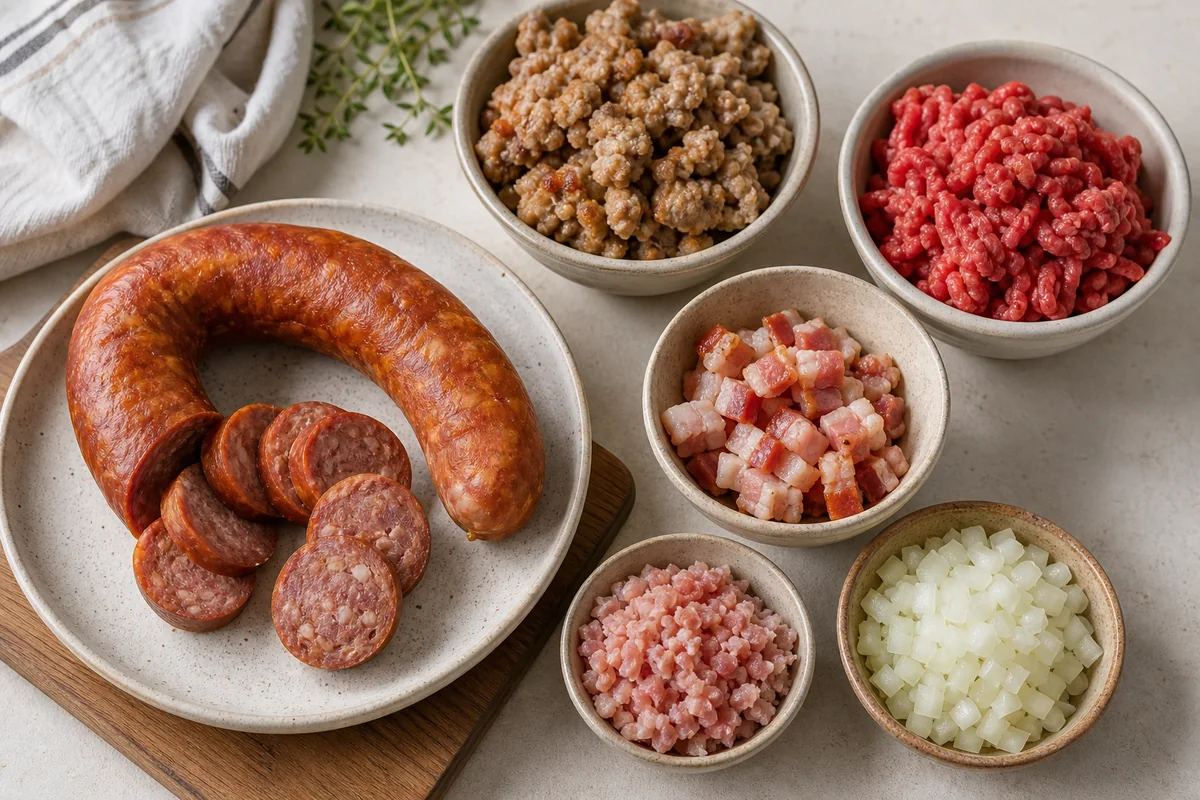
Bacon does three jobs at once: it salts, it smokes, and it releases fat that carries flavor through whatever it touches. Pull out even one of those three and a dish can fall flat.
The right bacon substitute matches at least two of the three, and the one you pick should depend on the job bacon is doing in your specific recipe.
For crispy toppings, you need a swap you can properly brown. For flavor bases in soups or sauces, smoke and salt matter more than texture.
For baking, you mostly need salty richness and a little fat. That's the framework to keep in mind as you read through the options below.
Bacon brings salt, smoke, and rendered fat to a recipe. The best swap matches at least two of those. Turkey bacon and pork belly work for crispy bites. Smoked pancetta and smoked ham cover flavor-forward uses. A soy sauce and smoked paprika blend fills in when texture isn't the goal.
5 Best Bacon Substitutes in Every Recipe
Pick the swap below that matches what bacon is doing in your dish: crisping on top, building a flavor base, or blending into a batter. The table gives you a fast overview before the detailed breakdowns.
| # | Substitute | Best For | Ratio | Key Note |
|---|---|---|---|---|
| 1 | Turkey Bacon | Both | 1:1 | Sear hot for crisp edges |
| 2 | Pork Belly | Cooking | 1:1 | Render low, then crisp high |
| 3 | Smoked Pancetta | Cooking | 1:1 | Use less in salty dishes |
| 4 | Smoked Turkey Sausage | Both | 1:1 | Brown, then crumble to size |
| 5 | Smoked Ham | Cooking | 1:1 | Brief sear only; dries fast |
1. Turkey Bacon
Turkey bacon is the most direct bacon replacement for everyday cooking. It browns, crisps at the edges, and holds a salty flavor that works in sandwiches, pasta, and salads without much adjustment.
The one limitation is smoke. Most turkey bacon has mild smoke, so if your dish needs a deep smoky backbone, add a small pinch of this russet spice to close the gap.
Thick-cut versions crisp better than thin ones, so buy thick-cut when you can.
Turkey Bacon
Works for: crispy pasta toppings, breakfast sandwiches, BLTs, and salad bits
Skip if: your recipe leans on deep smoky flavor without extra seasoning support
- Pan temp: Use medium-high heat, not medium - lower temps make it steam instead of brown
- Drain well: Rest on a rack after cooking, not paper towels, so it stays crisp longer
- Cut after cooking: Cook strips whole, then chop - cutting beforehand leads to uneven browning
- Ratio: Use 1:1; no adjustment needed for most recipes
2. Pork Belly
Pork belly is what bacon actually is before curing and smoking. It renders fat the same way, crisps under high heat, and carries flavor through oil-based dishes better than any other swap on this list.
The prep is slightly different from pulling strips out of a package. You render the fat first on low heat for 5 to 7 minutes, then turn the heat up to crisp the outside.
If you want guidance on getting that texture right, choosing this cut over pre-sliced options gives you the most control. Chop it into bacon-sized pieces after cooking.
- Start low: Render on low-medium heat first to release fat without burning the exterior
- Finish high: Turn to medium-high for the last 3 minutes to crisp and brown the surface
- Drain excess fat: Remove about half the rendered fat from the pan before adding other ingredients
- Cut size: Aim for ½-inch cubes to match standard bacon bit portions
Skip this if you need a lower-fat option. Pork belly is rich even after draining, and there's no leaner version of it.
3. Smoked Pancetta
Pancetta already lives close to bacon on the flavor spectrum: cured pork, salt-forward, with a fat that browns quickly. Smoked pancetta adds the smoke layer that plain pancetta lacks, making it the strongest flavor match for carbonara-style dishes and bean soups.
Salt is the main thing to watch. Smoked pancetta tends to run saltier than standard bacon, especially if your dish already includes broth, cheese, or canned tomatoes.
- Pan fry, don't bake: Pancetta crisps best in a skillet - oven baking makes it rubbery
- Use slightly less: Start at ¾ of the bacon amount called for, then taste and add more if needed
- Add early: Render it at the start of cooking so the fat builds flavor into the base
If you need to explore broader cured pork swaps, that's worth a look for recipes where pancetta itself is the primary ingredient. Skip smoked pancetta if your dish is delicate (like a light egg custard) and you can't taste-adjust mid-cook.
4. Smoked Turkey Sausage
Smoked turkey sausage fills the bacon-bits role well in casseroles, mac and cheese, and stuffing. It has fat and seasoning built in, and when you brown it in a pan, it releases enough savory drippings to flavor a base almost the way bacon does.
When storing smoked turkey before use, keep it refrigerated and use within the package date for best browning results. The drier it gets, the less fat it releases.
- Brown first: Cook in a dry skillet on medium-high until exterior is set and slightly caramelized
- Crumble warm: Break apart with a spoon while hot - it holds together better before it cools
- Target size: Keep crumbles pea-sized to match bacon bit texture in most dishes
Skip this if your recipe needs thin crispy strips for layering. Sausage crumbles won't give you that flat strip look or texture.
5. Smoked Ham
Smoked ham is a quick-grab substitute when you need savory, smoky bits and have nothing else on hand. It already carries salt and smoke, and a 60-second sear in a hot pan is all it needs to get flavor-ready.
| Use | Ratio | Notes |
|---|---|---|
| Soups and stews | 1:1 | Add near the end; it's already cooked |
| Salad topping | 1:1 | Sear briefly, then cool before adding |
| Pasta mix-in | 1:1 | Toss in during last 2 minutes of cooking |
| Crispy topping | - | Not recommended; ham won't crisp like bacon |
- Chop small: Cut into ¼-inch cubes so searing is fast and even
- Hot pan, short time: 45 to 60 seconds per side on medium-high - longer dries it out
- Add late: Drop into the dish near the end of cook time so it doesn't tighten up
Skip smoked ham if you need long crispy strips. It won't replicate bacon's stringy, crunchy texture no matter how high you turn the heat.
Making Bacon Substitutes Work in Any Recipe
Every bacon substitute needs you to think in three categories: salt level, smoke intensity, and how much fat it releases. Get two of those three right and most recipes will taste close to the original.
The third is usually fixable with a small seasoning adjustment at the end.
- Not smoky enough? Add smoked paprika gradually (start at ¼ tsp) or a careful drop of liquid smoke - both let you control depth without overpowering
- Too salty? Dilute with unsalted broth, a splash of cream, or a neutral starch; the salty-savory profile of cured meats intensifies as liquid reduces, so catch it early
- Not crisping? Pat the substitute dry before it hits the pan, use a higher heat, and resist flipping too soon - browning needs contact time and dry surface moisture
One note on timing: don't add the substitute cold. Most bacon replacements need the heat of a pan or oven to release their flavor properly.
A cold or uncooked substitute added at the last minute won't develop the same result.
Frequently Asked Questions
Turkey bacon (thick-cut) is the closest for crispiness. Cook it in a hot skillet and drain on a rack - it browns at the edges and holds its texture well in salads and pasta.
Yes, smoked ham works well in soups and stews at a 1:1 ratio. Add it near the end of cook time so it stays moist and doesn't dry out from prolonged heat.
Cook it on medium-high (not high) heat and pull it from the pan just before it looks fully done. It continues to firm up off the heat, so early removal prevents dryness.
Usually yes, but start at ¾ of the amount since pancetta runs saltier than most bacon. Taste after cooking and add the remaining amount only if more savory depth is needed.
Mix soy sauce with smoked paprika and fold into the batter or dough at a ¾:1 ratio relative to bacon. Check that your fermented soy product is fresh for full flavor impact.

5 Best Bacon Substitutes in Every Recipe
Ingredients
Equipment
Method
- Decide the bacon job: crisp topping (needs browning), flavor base (needs smoke/salt), or baking mix-in (needs salty richness).
- Match the substitute using the ratio: use 1:1 for meat swaps; if using the flavor-boost approach, start at ¾ of the bacon amount.
- Prep for best texture: sear/thin-fry most substitutes; for pork belly, render first, then crisp; for smoked pancetta, fry briefly for curl.
- Adjust seasoning last: taste after cooking and add extra salt only if the substitute is unsmoked or drained.
- Use timing: add crisp pieces at the end; add crumbed/seared bits during the last 2–5 minutes for even flavor.
Notes
- For the closest results, focus on salt + smoke + fat rendering behavior rather than just color.
- Drain any very fatty swap on a rack/paper towels before adding to salads, pastas, and casseroles.
Tried this recipe?
Let us know how it was!
Carrie is a food writer and editor with more than 15 years of experience. She has worked for some of the biggest names in the food industry, including Bon Appétit, Food & Wine, and Martha Stewart Living.
As the Editor in Chief of EpicureDelight, Carrie oversees all of the content on the site. She also manages the team of contributing writers and editors, who help to create delicious recipes, helpful tips, and informative articles that you’ll find on the site.
A native of the Chicago area, Carrie is passionate about all things food. She loves trying new restaurants and experimenting with new recipes in her kitchen. She’s also a graduate of the Culinary Institute of America, so she knows a thing or two about food!