
Absinthe has a flavor you can't fake halfway-that sharp anise hit with a green, herbal backbone isn't something most pantry spirits can replicate on their own. But the right absinthe substitute can get you close enough that your cocktail still tastes intentional and your baked goods stay balanced.
The key question is what the absinthe is actually doing. Is it the anise bite, the herbal bitterness, or just a boozy backdrop?
Pin that down first, and the swap becomes obvious.
For cocktails, reach for a Pernod-style anise aperitif at 1:1. For baking without heavy licorice, dry vermouth holds the herbal note. In a true pinch, steep star anise in neutral spirit for 10 minutes and use it at 1:1.
5 Absinthe Substitutes Ranked by Flavor Match
Use this table to match your flavor goal before reading the full breakdowns. Understanding the differences between anise vs star anise can also help you choose the right direction when you're substituting from scratch.
| # | Substitute | Best For | Ratio | Key Note |
|---|---|---|---|---|
| 1 | Pernod-style aperitif | Both | 1:1 | Closest anise + herbal profile |
| 2 | Anise liqueur (anisette) | Both | 1:1 | Sweeter, reduce sugar elsewhere |
| 3 | Sambuca | Cocktails | ¾:1 | Very sweet, use less |
| 4 | Dry vermouth | Baking | 1:1 | Herbal, low anise punch |
| 5 | Star anise + neutral spirit | Both | 1:1 | DIY, mild and adjustable |
If you already know your flavor goal, jump straight to the matching section.
1. Pernod-Style Anise Aperitif
This is the single closest swap you'll find on a bar shelf. Pernod and similar anise aperitifs share absinthe's anise-forward character and carry enough herbal bitterness that drinks won't taste flat or one-dimensional.
The main difference is alcohol content: Pernod sits around 40% ABV versus absinthe's typical 55-75%, so the flavor lands slightly softer. At 1:1, that's usually fine; in cocktails where absinthe plays a dominant role, nudge up to 1.25:1.
- Cocktail use: Use 1:1 in any rinse, mist, or measured pour-works in Sazeracs and Corpse Revivers without adjustment
- Baking use: Add it exactly where the recipe calls for absinthe; the herbal notes mellow well in heat
- Dryness note: Pernod is drier than sambuca or anisette-no need to reduce sugar in most recipes
- Skip if: Your recipe needs heavy sweetness from the absinthe itself; this option won't add sugar
2. Anise Liqueur (Anisette-Style)
Anisette and ouzo-style liqueurs lead with pure licorice-that's their strength, and it's also where you need to be careful.
If you're working with a recipe where the alternatives to sambuca family of flavors fits, anisette-style liqueurs sit in that same sweet-anise zone. They work well in both cocktails and pastries where anise is the star, but they skip absinthe's botanical bitterness entirely.
- Cocktails: Start at 1:1, then taste-these liqueurs are often 25% ABV, so the anise hits fast but the alcohol punch is lower
- Baking: Use 1:1 in cookies and glazes; the sweetness blends into sugar-forward recipes naturally
- Adjustment tip: Reduce added sugar by 1-2 teaspoon per tablespoon of liqueur to stay balanced
- Skip if: Your recipe depends on absinthe's herbal bitterness-anisette won't bring that edge
3. Sambuca
Sambuca is sweeter than absinthe by a wide margin, and that single fact shapes every substitution decision. Use it at ¾:1 rather than 1:1 to keep the sweetness from taking over.
When it works, sambuca is genuinely good. For a sambuca's shelf life question aside, what matters here is flavor: it has a clean licorice note that reads clearly in stirred cocktails and simple baked goods.
- Cocktails: Works in short drinks and stirred recipes; avoid in anything already syrup-heavy like a sweet Negroni variation
- Desserts: Good in chocolate-based cakes or tiramisu where the sweet undertone blends in
- Balance fix: Add a small pinch of salt or a few drops of lemon juice to cut the sugar edge
Sambuca as Absinthe Swap
Works for: stirred cocktails, chocolate desserts, short drinks needing a licorice note
Skip if: recipe already has a heavy sugar source-frosting, simple syrup, or sweet liqueur
4. Dry Vermouth
Dry vermouth won't give you licorice. It will give you a herbaceous, slightly bitter backbone that keeps baked goods from tasting flat when absinthe is called for in small amounts.
This is the go-to dry vermouth swaps that work angle for baking: vermouth carries wormwood and botanical notes that echo absinthe's complexity without screaming licorice at every bite.
| Use | Ratio | Notes |
|---|---|---|
| Cakes & quick breads | 1:1 | Adds herbal depth; no anise sweetness |
| Savory pastry / pâté | 1:1 | Clean bitter note, reduces well in heat |
| Cookies / biscotti | ½:1 | Strong herb flavor-use less, taste first |
- Baking timing: Add vermouth early in the batter-it mellows sharper botanical notes during baking
- Sweetness gap: If the recipe needs absinthe's slight sweetness, add ¼ teaspoon honey per tablespoon of vermouth
- Skip if: Your recipe's entire flavor depends on strong anise-vermouth simply won't replicate that note
5. Star Anise + Neutral Spirit
When there's no anise liqueur anywhere nearby, this DIY extraction approach is your fastest path to an absinthe-like note. It takes about 10 minutes and uses what most kitchens already have.
The result is milder than true absinthe, but the anise character is genuine-not a distant echo.
- Step 1: Combine 1 whole star anise (or ¼ teaspoon ground) with 3 tablespoon of warm water in a small saucepan; steep 8-10 minutes over low heat
- Step 2: Remove star anise, let the liquid cool fully, then stir in 1 tablespoon of vodka or another neutral spirit per tablespoon of your final substitution
- Ratio: Use at 1:1 for cocktails and baking; the flavor is gentler than bottled absinthe, so taste and add up to 1.25:1 if needed
- Avoid "spicy" tone: Don't steep longer than 12 minutes-extended steeping pulls bitter, astringent notes that read more like mulled spice than absinthe
- Skip if: You can't do a warm infusion-if you need a zero-cooking option, pick a bottled liqueur from entries 1-3 above
Making an Absinthe Substitute Taste Right (Dose + Balance)
Getting the swap right is mostly about starting cautious and tasting early. Most absinthe replacements arrive with a flavor variable-sweetness in sambuca, low anise in vermouth, lighter ABV in aperitifs-and a small adjustment during mixing or batter prep is far easier than fixing it at the end.
Whether you're building a cocktail or folding a small measure into a cake, the same principle applies: add 75% of the listed amount first, taste, then decide.
- Start at ¾ of the called-for amount, stir or fold it in, and taste before you commit. Most substitutes release their flavor as they mix-what reads mild at first often opens up once diluted or warmed.
- Balance sweetness or bitterness with small fixes: if the swap is too sweet, a pinch of salt or ½ teaspoon lemon juice brings it back; if it's too bitter, add ¼ teaspoon simple syrup to cocktails or ½ teaspoon honey to baked recipes.
- For baking, add early: alcohol-based substitutes mellow in the oven-add them to wet ingredients rather than finishing the batter with them, so the harshest notes have time to cook off.
Frequently Asked Questions
Yes-use sambuca at ¾:1 instead of a full measure. Add a small pinch of salt or a few drops of lemon juice to cut the extra sweetness sambuca brings.
Dry vermouth is your best option-it adds herbal complexity without heavy licorice. Use it at 1:1 and add it to wet ingredients early so the botanicals mellow in heat.
Reach for a Pernod-style anise aperitif first-it carries both anise and herbal bitterness closest to absinthe. Dry vermouth is a secondary option when anise is less important.
Steep 1 whole star anise in warm water for 8-10 minutes, cool it, then combine with a neutral spirit at a 1:1 ratio. Don't steep longer than 12 minutes or it turns bitter and spiced.
Some can, especially dry vermouth or bitter aperitifs. Add them early in the mixing process so baking time mellows the edge; a small amount of honey in the batter also helps.
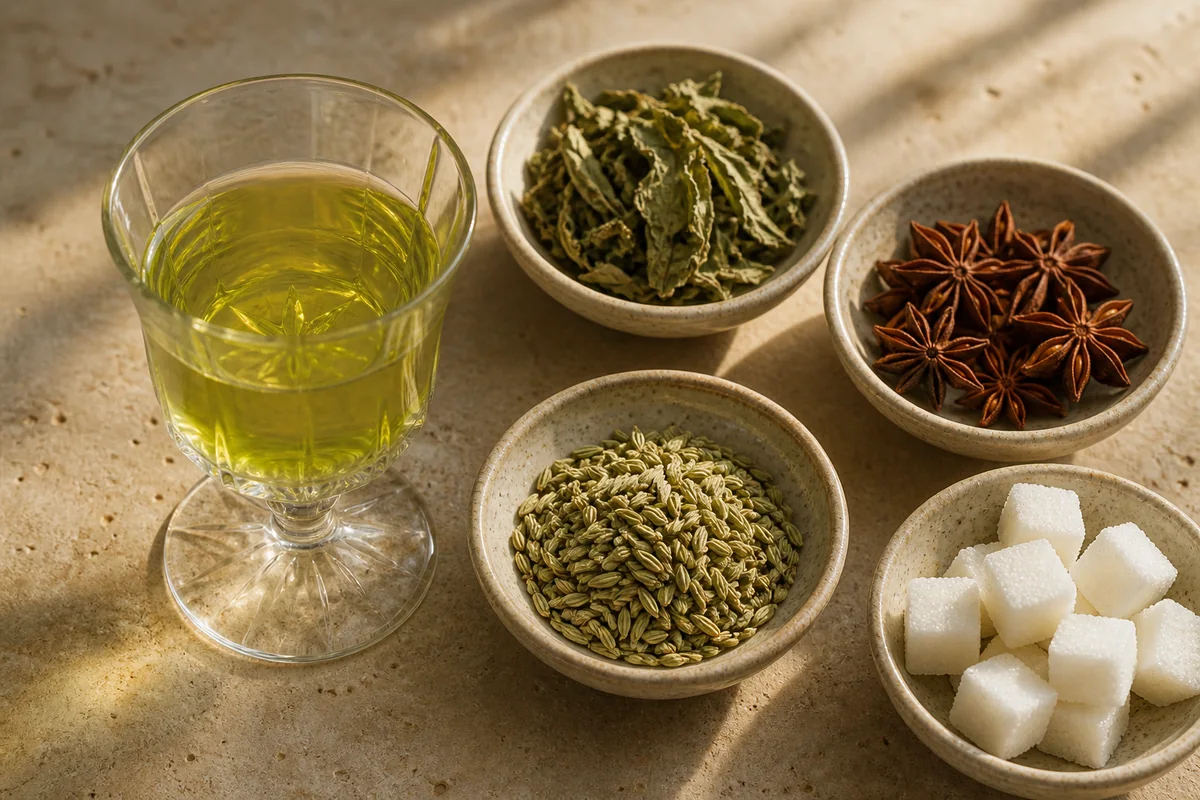
5 Best Absinthe Substitutes (Pantry Swaps)
Ingredients
Equipment
Method
- Decide what absinthe is doing in your recipe: anise flavor, herbal bitterness, or both.
- Pick the closest match from the table/entries and apply the listed ratio (use the lower ratio for sweeter liqueurs).
- For cocktails, stir gently and taste once diluted; for baking, add early and bake to mellow harsh bitterness.
- If the substitute is sweeter, add a small pinch of salt or a squeeze of lemon; if it’s too mild, add ¼ of the substitute amount.
- Recheck after the first pour/bake: absinthe-style flavor blooms as it mixes or bakes, so minor adjustments go a long way.
Notes
- Absinthe varies by brand, so treat ratios as starting points and taste-adjust.
Tried this recipe?
Let us know how it was!
Carrie is a food writer and editor with more than 15 years of experience. She has worked for some of the biggest names in the food industry, including Bon Appétit, Food & Wine, and Martha Stewart Living.
As the Editor in Chief of EpicureDelight, Carrie oversees all of the content on the site. She also manages the team of contributing writers and editors, who help to create delicious recipes, helpful tips, and informative articles that you’ll find on the site.
A native of the Chicago area, Carrie is passionate about all things food. She loves trying new restaurants and experimenting with new recipes in her kitchen. She’s also a graduate of the Culinary Institute of America, so she knows a thing or two about food!



