
That deep-purple bowl staring back at you from Instagram looks impossible to replicate without actual acai. It's not.
The color, the thick-spoonable texture, and the berry-forward flavor all come down to choosing the right frozen fruit or concentrate and blending it correctly.
Acai berries as a substitute means you're working with two targets: dark pigment and a dense, almost gelato-like texture when blended. Most of the options below hit both, though a couple lean more liquid than spoonable.
One thing worth knowing before you pick: understanding the taste of acai berries helps you decide how much sweetness or tartness your swap will need. Some substitutes run sweeter, some sharper.
The best acai berries substitutes are frozen blueberries + blackberries (closest match), frozen black raspberries (bolder tang), purple grape juice concentrate (pantry-friendly), dragon fruit + blueberries (creamier base), and pomegranate puree (bright and ruby-toned). All work 1:1 in smoothies and bowls.
5 Acai Berries Substitutes: Best Use, Taste, and Texture
Pick your substitute based on two things: whether you want a drinkable smoothie or a thick, spoonable bowl, and whether you're starting from frozen fruit or a concentrate. Frozen fruit generally blends into a denser pulp; concentrates are more liquid and need thinning to avoid a syrupy result.
| # | Substitute | Best For | Ratio | Key Note |
|---|---|---|---|---|
| 1 | Frozen Blueberries + Blackberries | Both | 1:1 | Closest berry flavor |
| 2 | Frozen Black Raspberries | Both | 1:1 | Tangier; reduce acid |
| 3 | Purple Grape Juice Concentrate | Smoothie | 1:1 thinned | Thin first; watch sugar |
| 4 | Dragon Fruit + Blueberries | Both | 1:1 | Mild base; add blueberries |
| 5 | Pomegranate Puree | Smoothie | 1:1 | Ruby tint; balance tang |
5 Substitutes That Actually Work for Acai Berries
1. Frozen Blueberries + Blackberries
This combination is the workhorse of acai substitution. Blueberries bring a mellow, slightly earthy sweetness; blackberries add depth and a darker pigment that pushes the blend toward that signature purple.
- Best use: Thick smoothie bowls and layered breakfast bowls with granola toppings
- Blend time: Run the blender 30-60 seconds, scrape walls, then rest 1 minute and blend again for a scoopable texture
- Thickness fix: If the mix is too loose, add 4-5 ice cubes and blend 20 seconds more; avoid adding liquid
- Sweetness note: Taste before adding any sweetener - frozen blackberries can run slightly tart but rarely need more than a teaspoon of honey
Skip if: You need the actual earthy-chocolate edge that acai carries. This substitute is berry-forward, not earthy.
2. Frozen Black Raspberries
Black raspberries hit harder than blueberries. The color is a deep ruby-purple and the flavor is bolder, almost jammy, with more tartness than acai carries.
We like this one for smoothies where the other ingredients (banana, almond milk) will mellow the sharpness. For how long acai berries keeps and whether your original supply is still usable, check storage before reaching for a substitute.
- Best for: Drinkable smoothies and smoothie bowls where other fruits are already in the mix
- Tartness fix: Skip any added lemon juice entirely; a small half-banana handles the balance better
- Texture note: Blend longer than you think - about 60 seconds - and scrape walls once during blending for a smoother result
- Color payoff: Higher than most substitutes; expect a vivid deep-purple that photographs well
Skip if: Your recipe already includes yogurt with citrus or a vinegar-based dressing as a topping. The tartness can compound quickly.
3. Purple Grape Juice Concentrate
Grape concentrate is the pantry option when you have no frozen fruit available. It gives a strong purple color fast, and it's easy to measure.
The trade-off is sweetness - undiluted concentrate is very sugary and more juice-like than pulpy.
Grape Concentrate for Smoothies
Works for: drinkable smoothies, smoothie bases, purple overnight oats
Skip if: you need a thick, spoonable bowl - it stays liquid without added frozen fruit
Grape Concentrate for Bowls
Works for: a flavor + color base when you add frozen banana or frozen cauliflower to thicken
Skip if: you're blending without any frozen additions - the bowl won't hold its shape
- Thinning ratio: Mix 2 tablespoon concentrate with 3 tablespoon cold water before blending; taste and adjust
- Sweetness control: Start with less concentrate than you think you need - you can always add more
- Thickness fix: Add ½ cup frozen banana after thinning to bring the bowl to a scoopable consistency
Skip if: You want a true berry-pulp texture. Concentrate is a color-and-flavor shortcut, not a textural one.
4. Dragon Fruit + Blueberries
Dragon fruit on its own is pale and mild - it's the blueberries doing the real work here. Together, they give you a creamy blend with enough berry depth to pass as an acai-style bowl.
Knowing dragon fruit's shelf life matters if you're buying fresh rather than frozen; fresh dragon fruit fades fast once cut.
| Use | Ratio | Notes |
|---|---|---|
| Smoothie (drinkable) | 2 parts dragon fruit : 1 part frozen blueberries | Creamy, lighter purple; add almond milk to blend smooth |
| Bowl (spoonable) | 1 part dragon fruit : 2 parts frozen blueberries | Thicker, deeper color; blend without added liquid for best texture |
- Color control: More blueberries = deeper purple; more dragon fruit = paler lavender tone
- Flavor balance: Dragon fruit is very mild, so don't skip the blueberries or the bowl will taste flat
- Texture tip: Use frozen dragon fruit chunks if possible; fresh dragon fruit adds liquid and softens the blend
Skip if: You want a tart, punchy flavor. Dragon fruit softens everything around it.
5. Pomegranate Puree
Pomegranate puree brings brightness and a tart edge that works in smoothies, though the color skews ruby-red rather than purple. If you're using concentrate, thin it with 2-3 tablespoon of water per tablespoon of concentrate before blending - undiluted pomegranate concentrate is intensely sour.
- Sweetness balance: Add half a frozen banana or 1 teaspoon of honey to offset pomegranate's sharpness
- Acid management: Skip additional citrus entirely when pomegranate is in the mix
- Color note: Expect a ruby-red to deep-pink result, not purple - pair with a few frozen blueberries if purple matters
- Best for: Smoothies where tartness is welcome, like mango-pomegranate or pomegranate-ginger blends
Skip if: The recipe specifically needs purple color or a mild berry base. Pomegranate is bold and will read red.
Making Acai Berries Substitutes Taste Right
The goal with any acai berries replacement is to hit three things in order: thickness first, color second, flavor last. Most people chase flavor balance before fixing texture, which leads to adding more sweetener to an already thin blend.
Fix the body of the smoothie or bowl first, then taste.
- Fix thickness: Add frozen fruit or 4-5 ice cubes and re-blend rather than reducing liquid; blending longer without adding anything usually doesn't thicken a loose mix
- Fix sweetness: Taste after blending and add sweetener in small increments - ½ teaspoon at a time - especially if your substitute is already a concentrate
- Fix tartness: A small piece of frozen banana (about 2 inches) neutralizes sharpness without making the bowl taste like a banana smoothie
Frequently Asked Questions
They'll get close but not identical. Acai has a faint earthy-chocolate undertone that frozen blueberries and blackberries won't fully replicate, though the berry flavor and color will be very similar.
Use frozen fruit rather than fresh, blend without added liquid, and rest the mix 1 minute before a second blend. Add ice cubes if the texture is still too loose.
Yes, but thin the concentrate with water first and skip any added sweetener until you've tasted the finished blend. Concentrates are already high in natural sugar.
Frozen black raspberries give the deepest purple-ruby color of the five options. Frozen blueberries and blackberries blended together are a close second with a more classic purple tone.
Skip added lemon juice when using tart substitutes like black raspberries or pomegranate. A small piece of frozen banana is the fastest fix for an over-sharp blend.
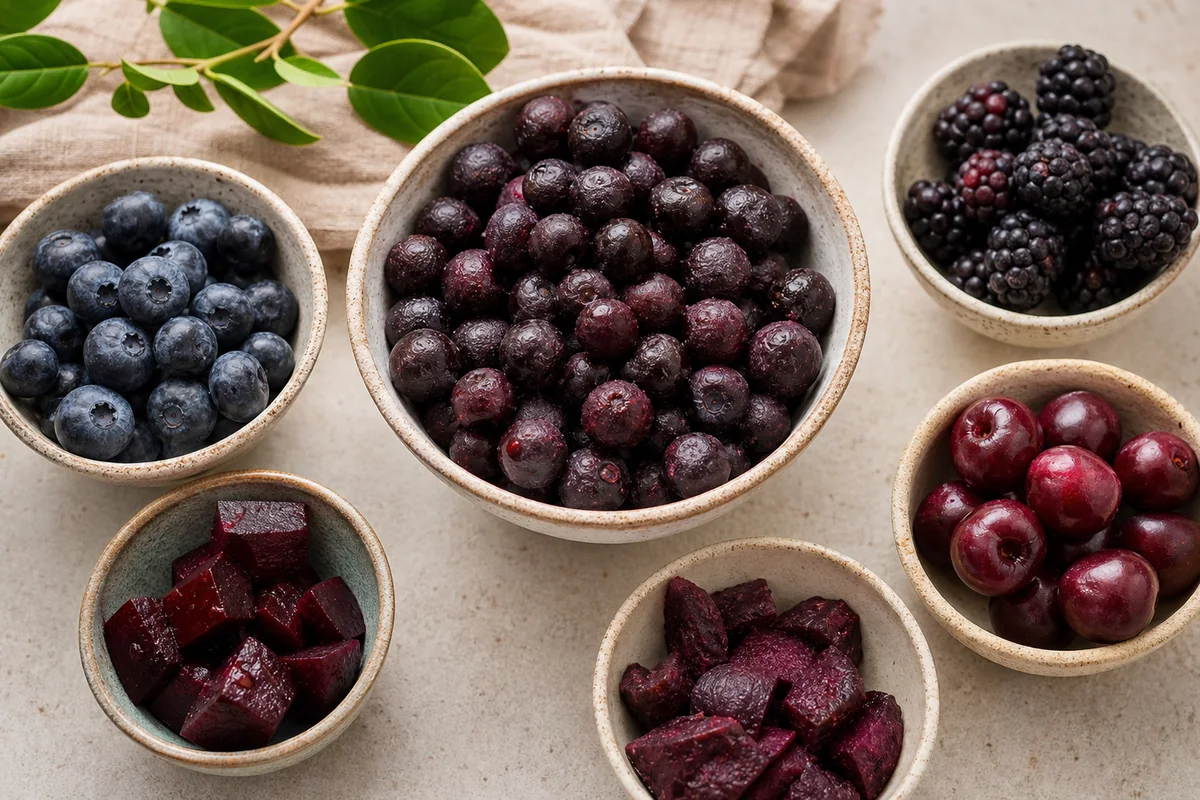
5 Best Acai Berries Substitutes for Better Results
Ingredients
Equipment
Method
- Identify your use: smoothie (drinkable) vs. bowl (spoonable). Choose the substitute based on whether you want pure berry flavor or a more juice-like base.
- Measure using the 1:1 ratio (by weight if you have a kitchen scale). If your substitute is concentrate (like grape), thin with water first.
- Blend 30–60 seconds, then rest 1 minute and blend again if needed for a smooth, scoopable texture.
- Adjust flavor: add a pinch of salt to deepen berry notes, and only add extra sweetener if your substitute isn’t already concentrated.
- Use immediately for best texture; if it’s too thin, add more frozen fruit or ice and blend again.
Notes
- If your recipe calls for frozen acai, default to frozen-fruit substitutes for closest texture.
- For concentrates, sweetness can jump—thin more than you think, then sweeten only after blending.
Tried this recipe?
Let us know how it was!
Carrie is a food writer and editor with more than 15 years of experience. She has worked for some of the biggest names in the food industry, including Bon Appétit, Food & Wine, and Martha Stewart Living.
As the Editor in Chief of EpicureDelight, Carrie oversees all of the content on the site. She also manages the team of contributing writers and editors, who help to create delicious recipes, helpful tips, and informative articles that you’ll find on the site.
A native of the Chicago area, Carrie is passionate about all things food. She loves trying new restaurants and experimenting with new recipes in her kitchen. She’s also a graduate of the Culinary Institute of America, so she knows a thing or two about food!



