
Almond milk has a quietly mild flavor that disappears into batter or a smoothie without demanding attention. That's actually what makes finding a good almond milk substitute tricky: you're not replacing a loud ingredient, you're replacing a background one, and the wrong swap can tip sweetness or texture without you noticing until it's too late.
The good news is that several plant-based and dairy options land close enough to matter. Whether you need something for baking, coffee, or a blender recipe, one of these five swaps will work cleanly.
For baking, oat milk or soy milk are the strongest swaps because they deliver creaminess and enough protein to support batter structure. For drinks and smoothies, cashew milk or oat milk taste closest to almond milk's mild, slightly sweet character. All five work at a 1:1 ratio.
5 Almond Milk Substitutes That Actually Perform in Real Recipes
Before picking your swap, scan this table. It shows each substitute's best use, how it changes flavor, and the default ratio.
Every option swaps at 1:1 by volume unless you see a thickness note.
| # | Substitute | Best For | Ratio | Key Note |
|---|---|---|---|---|
| 1 | Oat Milk (Unsweetened) | Both | 1:1 | Neutral, creamy, no nuts |
| 2 | Soy Milk (Unsweetened) | Both | 1:1 | Protein supports batter set |
| 3 | Cashew Milk | Both | 1:1 | Richer; watch browning |
| 4 | Rice Milk | Drinks/Thin Batters | 1:1* | Thin; reduce before using |
| 5 | Dairy or Lactose-Free Milk | Baking | 1:1 | Most consistent results |
1. Oat Milk (Unsweetened)
Oat milk is our top pick for everyday swapping because it matches almond milk's texture more closely than most alternatives. It is creamy without being heavy, and the flavor is neutral enough that most baked goods won't taste different once done.
In baking, it hydrates flour well and gives muffins and pancakes a soft, even crumb. For drinks and smoothies, barista-style oat milk foams better than standard and has the closest mouthfeel to full-fat almond milk.
- Baking swap: Use unsweetened at 1:1; no other adjustment needed for most cakes, muffins, and quick breads
- Sweetness check: If you only have sweetened oat milk, reduce added sugar in the recipe by about 2 tablespoons per cup used
- Drinks: Works well in coffee, smoothies, and hot chocolate; barista versions steam cleanly
Skip if: you specifically need a nutty flavor note in the dish. Oat milk is more cereal-forward, so it won't replicate that background nuttiness almond milk in dairy recipes sometimes provides.
2. Soy Milk (Unsweetened)
When a batter needs to set properly, soy milk is the most reliable swap you have. Its protein content is the closest to dairy milk among plant milks, which means cakes and muffins rise and firm up more predictably than they would with thinner options.
The flavor is very mild once baked, though raw soy milk has a faint beany note that some people notice. Understanding the role soy milk plays in a recipe helps you decide whether that note is a problem for your dish or not.
- Ratio: 1:1 by volume; no adjustments needed in most recipes
- Texture outcome: Batters hydrate evenly and produce a moist, structured crumb in cakes and muffins
- Too thin? If your batter feels loose, rest it 5-10 minutes so the flour absorbs fully before baking
- Flavor in cookies: The beany note bakes out almost entirely; choose a plain, unflavored brand to stay neutral
Skip if: the recipe is a delicate, almond-forward cake where nutty flavor is central. Soy won't replicate that. Skip if: you are serving someone with a soy allergy - use oat milk instead.
3. Cashew Milk
Cashew milk is noticeably richer than almond milk, which is a win for creamy desserts and a potential issue for already-dense batters. It is smooth, mildly sweet, and has almost no background flavor that competes with other ingredients.
If you want to understand how cashew milk in cooking behaves across different applications, the flavor profile is closer to a diluted cream than a nut milk, which makes it ideal for frostings, puddings, and pancakes.
Cashew Milk
Works for: frostings, puddings, pancakes, creamy soups, smoothies, and any recipe where extra richness improves the result
Skip if: your batter is already dense, your cashew milk is sweetened and the recipe is sweet, or you need a very light texture
- Ratio: 1:1; but if your cashew milk is store-bought and noticeably sweet, reduce added sugar by 1-2 tablespoons
- Browning watch: The extra natural sugars in cashew milk can cause baked goods to brown slightly faster; check 3-5 minutes early
- Best uses: Cheesecakes, creamy pasta sauces, pancake batter, and any frosting base
Skip if: you need a light batter (like a thin crêpe) - cashew milk may make it feel heavier than intended.
4. Rice Milk
Rice milk is the thinnest option on this list. It won't give your batter the same body as almond milk, and if you use it straight in a cake recipe, you may end up with a softer, looser result than you wanted.
That said, it is a solid option when you know how to handle its limitations. For naturally thin batters or sweet sauces, it works just fine.
For anything that needs structure, simmer rice milk in a small saucepan for 2-3 minutes before measuring - that small reduction brings the body close enough to work.
- Best uses: Thin pancake batters, light sauces, smoothies, and rice pudding
- Thickness fix: Simmer on medium-low for 2-3 minutes, cool slightly, then measure your 1:1 amount
- Flavor note: Very mild and slightly sweet; one of the most allergy-friendly options on this list
- Not ideal for: Dense cakes, muffins, or anything where liquid body affects rise
Skip if: you are making a structured cake and can't take time to reduce the milk first. Use oat or soy milk instead.
5. Dairy Milk (or Lactose-Free)
If you don't need a dairy-free result, regular milk is the most consistent performer in baking. It has fat, protein, and water in proportions that baking recipes were originally built around, so nothing needs adjusting when you swap it in.
For anyone who keeps using lactose free milk for creaminess already in the fridge, the swap is identical - same ratio, same behavior, same result.
- Baking: Cakes, cookies, muffins, and quick breads all behave exactly as expected at 1:1
- Flavor note in drinks: In uncooked applications like smoothies or coffee, the dairy flavor is noticeable - it will taste more milk-forward than almond milk does
- Lactose-free version: Behaves identically in baking; slightly sweeter than regular milk due to the enzyme breakdown of lactose
Skip if: the recipe is dairy-free by design, or you are cooking for someone with a dairy allergy or intolerance.
Making Any Almond Milk Substitute Work (Quick Swap Rules)
The three things that matter when swapping are creaminess, sweetness, and thickness. Get those right and the final dish lands where it should.
For creaminess, oat and cashew lead; for sweetness control, always use unsweetened versions; for thickness, rice milk is the one that needs a small fix. If you're working through questions about soy milk in dairy recipes specifically, the same principles apply - protein and sweetness are the levers.
- Default ratio: Use 1:1 by volume for all five substitutes; no guesswork needed
- Sweetness adjustment: If your substitute is sweetened, reduce the recipe's added sugar by 10-25% (roughly 1-2 tablespoons per cup of liquid used)
- Thickness rescue: For thin substitutes like rice milk, simmer 2-3 minutes before using, or add 1 tablespoon of flour to the dry ingredients to compensate
Frequently Asked Questions
Yes. Unsweetened oat milk swaps directly at 1:1 in any baking recipe. If you only have sweetened oat milk, reduce added sugar in the recipe by about 2 tablespoons per cup.
Oat milk and cashew milk taste closest to almond milk in drinks. Barista oat milk steams particularly well for lattes.
Use unsweetened oat or soy milk. Both are widely available unsweetened and match almond milk's mild, low-sugar profile without altering the recipe's intended sweetness.
Simmer rice milk on medium-low for 2-3 minutes, then cool before measuring. Alternatively, add 1 extra tablespoon of flour to the dry ingredients to compensate for its thin body.
Yes, it is one of the best options. Soy milk's protein helps cookies and muffins set evenly, and the flavor bakes out to nearly neutral in finished goods.
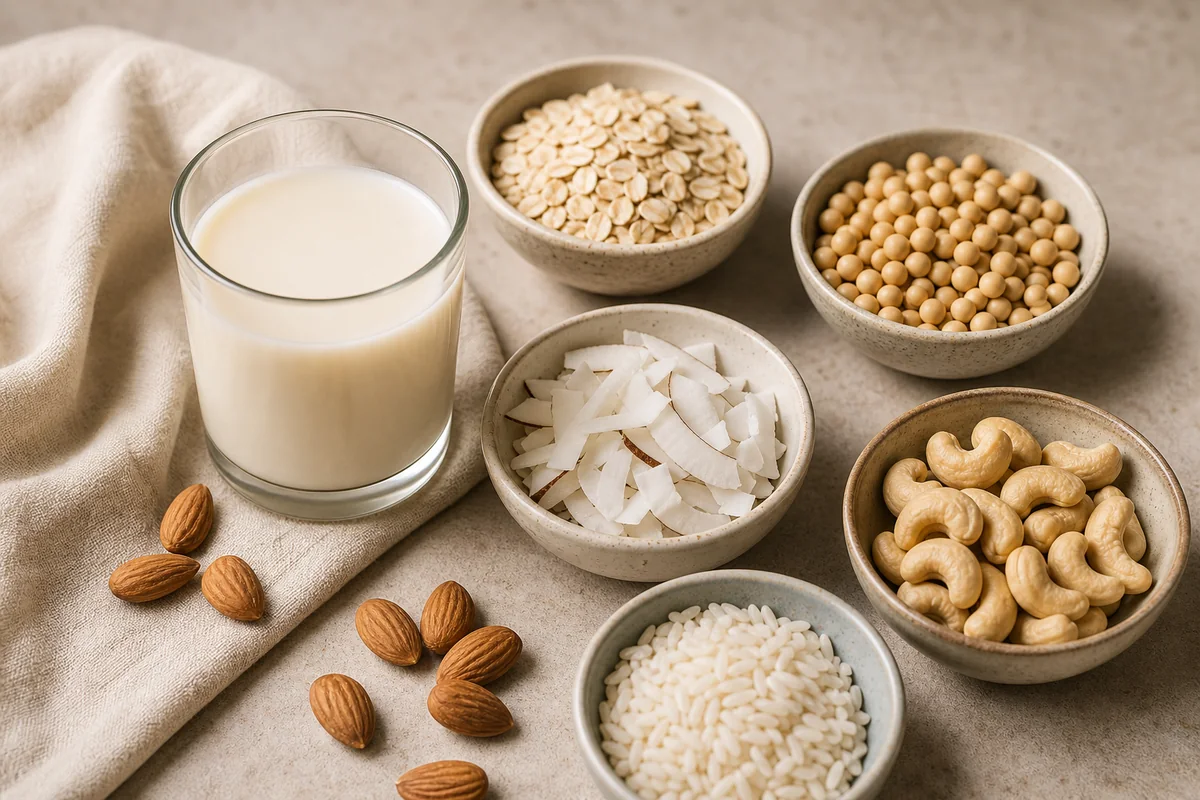
5 Best Almond Milk Substitutes in Every Recipe
Ingredients
Equipment
Method
- Match your recipe goal: for baking, prefer soy or oat milk; for smoothies/coffee, oat or cashew milk tastes closest.
- Swap using the listed 1:1 ratio (by volume). For very thin substitutes like rice milk, reduce 2–3 minutes to thicken.
- If your substitute is sweeter than almond milk, reduce added sugar in the recipe by 10–25%.
- For batters/doughs that feel too loose, add 1–2 tablespoons flour or use a brief rest (5–10 minutes) to hydrate.
- Taste before baking/serving adjustments: add a pinch of salt to brighten flavor in sweet recipes.
Notes
- For baked goods, consistency matters more than exact nut flavor—choose a substitute that matches creaminess and sweetness.
- Always use unsweetened versions when the recipe relies on almond milk’s neutral taste.
Tried this recipe?
Let us know how it was!
Carrie is a food writer and editor with more than 15 years of experience. She has worked for some of the biggest names in the food industry, including Bon Appétit, Food & Wine, and Martha Stewart Living.
As the Editor in Chief of EpicureDelight, Carrie oversees all of the content on the site. She also manages the team of contributing writers and editors, who help to create delicious recipes, helpful tips, and informative articles that you’ll find on the site.
A native of the Chicago area, Carrie is passionate about all things food. She loves trying new restaurants and experimenting with new recipes in her kitchen. She’s also a graduate of the Culinary Institute of America, so she knows a thing or two about food!



