
Anchovy paste does one thing better than almost anything else in the pantry: it disappears into a dish while making everything taste more like itself. That concentrated salt-and-umami punch is what you're actually trying to replace, and the right anchovy paste substitute depends on whether your recipe needs the faint fishiness or just the savory depth.
Anchovy paste substitute: pick the closest match
Most cooks reach for anchovy paste in sauces, dressings, and braises because it builds a background note that reads as "savory" rather than "fishy." Understanding the anchovy paste taste helps you decide whether a direct swap like fish sauce or a milder option like Worcestershire is the right call.
The rule is simple: if your recipe reduces a lot or already has multiple salty elements, go milder and add less. If it's a quick vinaigrette or pasta sauce, fish sauce or Worcestershire will handle the job cleanly.
Anchovy paste substitutes rank by how much fishy depth they carry. Fish sauce is the closest match; Worcestershire sauce gives umami without strong fishiness; anchovy powder is concentrated and easy to overdo; soy sauce + olive oil avoids fish flavor entirely; capers + olive oil is your briny emergency swap.
5 Best Anchovy Paste Substitutes (Ranked): quick reference
Before you pick, know the role the paste plays. A substitute that works in a slow-cooked ragù may overwhelm a light Caesar.
The table below ranks all five by anchovy-like umami, salt control, and range of use.
| # | Substitute | Best For | Ratio | Key Note |
|---|---|---|---|---|
| 1 | Fish Sauce | Both | 1:1 | Add early, reduce if salting |
| 2 | Worcestershire Sauce | Both | 1:1 | Spiced; milder fish flavor |
| 3 | Anchovy Powder | Cooking | ¾:1 | Bloom first; easy to over-salt |
| 4 | Soy Sauce + Olive Oil | Both | 1:1 | No fish; strong glutamate base |
| 5 | Capers + Olive Oil | Cooking | 1:1 | Briny, blend smooth for paste |
If you find yourself wondering whether your fish sauce swap also needs backing from something else, a quick look at fish sauce substitutes can point you toward the right supporting flavors.
1. Fish Sauce
Fish sauce is the most direct stand-in because it shares anchovy paste's core DNA: fermented fish, concentrated salt, and deep glutamate umami. The difference is texture - fish sauce is liquid, so it disperses faster and can thin a paste-based sauce slightly.
- Where it works: Pasta sauces, braised meats, stir-fries, and Caesar-style dressings
- When to add it: In hot dishes, add it early so the liquid cooks off and the flavor melds; in cold dressings, add it after emulsifying, then taste
- Salt balance tip: If your dish already has parmesan, cured olives, or salted butter, start at 50-75% of the listed amount and taste before adding more
Skip if: you have three or more salty umami sources already active in the dish - the result can tip sharp rather than savory.
2. Worcestershire Sauce
Worcestershire is fermented and complex, but its worcestershire sauce flavor leans spiced and slightly sweet rather than purely oceanic. It still delivers genuine umami depth, which is why it works well anywhere anchovy paste is providing background rather than center-stage fishiness.
Worcestershire Sauce
Works for: cooked sauces, gravies, braised dishes, and marinades where spiced umami reads as savory complexity
Skip if: you need a straight anchovy profile - classic Caesar dressing or bagna cauda will taste noticeably different
- Starting amount: Use 1:1 to begin, then pull back by 1 teaspoon at a time if the dish tastes too sweet-spiced
- In cold dishes: Add a small amount, stir well, and taste before committing - the spice notes are more obvious when nothing is cooking them off
- Taste-test note: If it tastes "Worcestershire-y" rather than savory-neutral, add a few drops of soy sauce to shift the profile back toward straight umami
If you ever need replacements for Worcestershire sauce itself, there's a full guide for that situation too.
3. Anchovy Powder
Anchovy powder is the most concentrated option on this list. A small amount goes further than the same volume of paste, which makes it easy to overshoot and harder to correct once it's in.
- How to bloom it: Stir the powder into warm oil or broth for 30-60 seconds before adding anything else - this opens the flavor and prevents a gritty, flat-salt edge
- Starting ratio: Use about ¾ of the paste amount called for; you can always add more after tasting
- Best dishes: Pasta sauces, dry rubs, and slow-cooked braises where it has time to fully hydrate
- Avoid dull salt: If you forget to bloom it, the powder can taste more like straight salt than savory anchovy - the blooming step is not optional
Skip if: you're making a small-batch sauce and can't stop to taste mid-cook. Fish sauce is more forgiving because you can adjust by the drop.
4. Soy Sauce + Olive Oil
This combination handles the anchovy paste substitute in baking situation better than any other swap on the list. Soy sauce brings glutamates for umami; olive oil smooths the mouthfeel so it doesn't read as sharp or thin.
Neither ingredient is fishy, which is the point.
If you want to experiment further with what pairs alongside this combo, checking out alternatives to soy sauce or olive oil alternatives can open up other angles.
- How to combine: Mix 1 part soy sauce with 1 part olive oil and stir before adding to the recipe - the oil carries the soy into fat-based components more evenly
- Best uses: Bread doughs, savory muffins, marinades, and roasted vegetable glazes
- Salt overlap warning: If your recipe already has miso, soy, or fish sauce, skip this swap entirely - you'll hit the umami ceiling and everything goes flat
Skip if: your recipe already contains soy sauce. Doubling up doesn't double the depth; it just salts the dish past the point of balance.
5. Capers + Olive Oil
Capers are the least "anchovy" substitute here, but they carry real brine and salt. When you blend them smooth with olive oil, the result gets surprisingly close to anchovy paste's texture and delivers a briny, savory note that works in a pinch.
For other ways to swap this ingredient, there are solid best caper alternatives worth knowing.
| Use | Ratio | Notes |
|---|---|---|
| Dressings and vinaigrettes | 1:1 blended paste | Drain, blend with equal-part olive oil, taste before adding |
| Pasta and braise sauces | 1:1 blended paste | Add early; texture softens as it cooks |
| Dips and spreads | 1:1 blended paste | Blend very smooth or leave slightly textured by choice |
- Prep: Drain capers thoroughly, then blend with olive oil until smooth or near-smooth
- Best uses: Dressings, slow-cooked sauces, and Mediterranean-style dips
- Texture note: Even with a good blender, small caper flecks may remain - fine for rustic dishes, not ideal for ultra-smooth emulsions
Skip if: the recipe needs a clean, silky paste texture. Capers may stay slightly speckled unless you have a high-powered blender and run it for a full minute.
Making anchovy paste substitutes work (without over-salting)
The most common mistake is measuring a substitute the same way you'd measure anchovy paste without accounting for differences in concentration or salt content. Start with 75% of the called-for amount, stir it in, taste, and add from there. This approach matters most with anchovy powder and fish sauce, both of which can tip a dish salty very fast.
Knowing the anchovy paste taste you're targeting makes it much easier to judge when you're close.
- Add to warm fat first: Stir your substitute into warm oil or butter before the other ingredients so the umami disperses evenly instead of pooling
- Taste before salting: Hold any additional salt until after you've added the substitute - every option on this list brings its own sodium load
- In baking, go small: Add half the intended amount to the batter, taste before the dry ingredients go in, and only increase if the savory note reads too faint
Frequently Asked Questions
Fish sauce is the closest match for cooked sauces because it shares the same fermented fish base. Add it early and let it cook down so the flavor melds rather than sits on top.
Soy sauce mixed with olive oil is the safest pick for baking because it has no fishy notes that might amplify in the oven. Use half the called-for amount and taste the batter first.
Yes, but taste after the first addition - Worcestershire carries spice and sweetness that anchovy paste doesn't. In cooked dishes it blends well; in cold dressings it can taste more obvious.
Blend it with olive oil and add it to warm fat rather than directly to the dish. The oil dilutes the sharpness and helps it read as background umami instead of a dominant soy flavor.
Yes - drain them fully first, then blend with olive oil until as smooth as your blender allows. Unblended capers stay chunky and won't distribute through a sauce the way paste does.
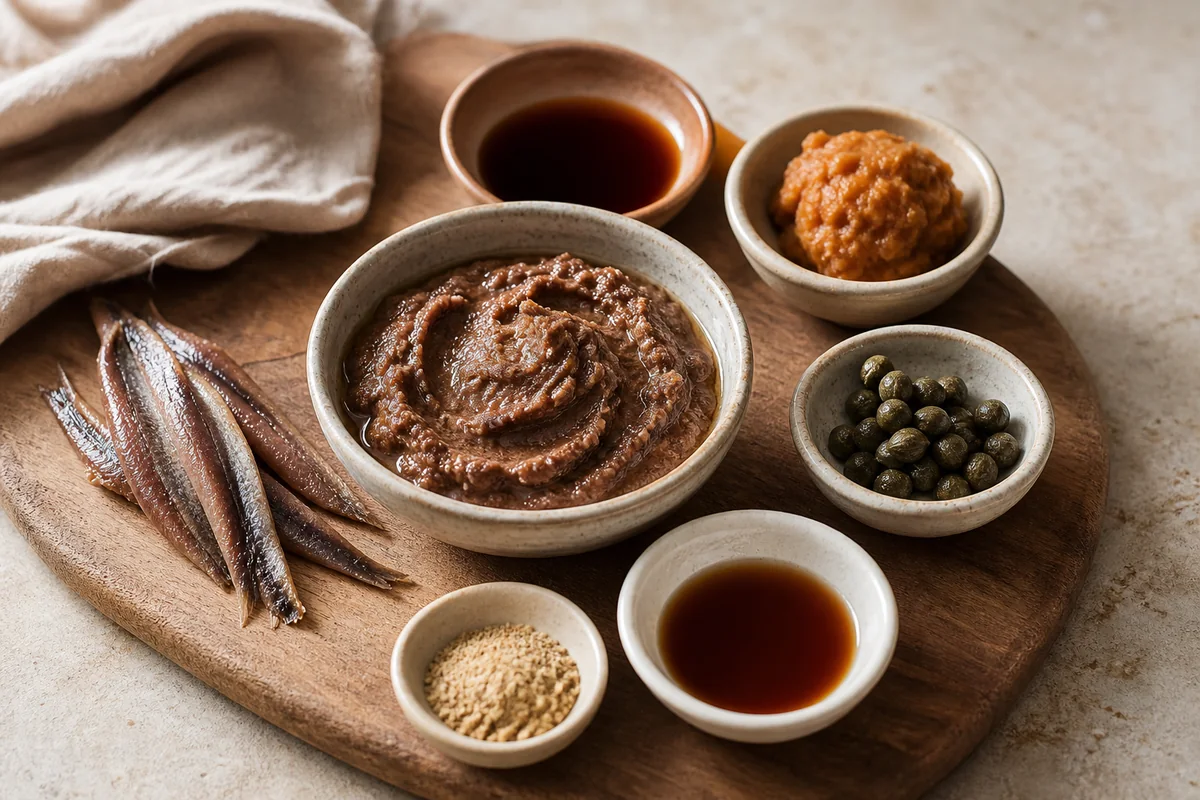
5 Best Anchovy Paste Substitutes (Ranked)
Ingredients
Equipment
Method
- Identify what the paste is doing in your recipe: savory depth in sauces vs. salty lift in dressings vs. umami in baking.
- Choose the substitute from the order that best matches flavor: fish sauce (closest), then Worcestershire, then anchovy powder, then capers + olive oil.
- Apply the listed ratio and mix into warm fat (oil/butter) or warm liquid so the umami disperses evenly.
- Adjust after tasting: if it’s too salty, reduce the amount next time; if it’s not “anchovy-like” enough, add a tiny pinch of extra umami (not more salt).
- In baking, keep the swap small and taste the batter before adding dry ingredients so you don’t lock in excess salt.
Notes
- Tasting is mandatory—anchovy paste, fish sauce, and Worcestershire vary widely by brand and concentration.
- If your recipe already contains salty ingredients (soy sauce, parmesan, salted butter), start 25–50% lower than the ratio and build.
Tried this recipe?
Let us know how it was!
Carrie is a food writer and editor with more than 15 years of experience. She has worked for some of the biggest names in the food industry, including Bon Appétit, Food & Wine, and Martha Stewart Living.
As the Editor in Chief of EpicureDelight, Carrie oversees all of the content on the site. She also manages the team of contributing writers and editors, who help to create delicious recipes, helpful tips, and informative articles that you’ll find on the site.
A native of the Chicago area, Carrie is passionate about all things food. She loves trying new restaurants and experimenting with new recipes in her kitchen. She’s also a graduate of the Culinary Institute of America, so she knows a thing or two about food!



