
That moment when the recipe says "one cup apple cider" and your pantry has everything except apple cider - it's more common than you'd think.
A good apple cider substitute matches two things: the gentle sweetness and the mild acidity that cider brings to braises, glazes, and baked goods.
Get both right and most recipes won't notice the difference.
Apple cider sits somewhere between plain apple juice and something sharper. It has body, fruit-forward sweetness, and just enough tang to lift a sauce or activate baking soda.
That means your swap needs to cover at least one of those angles - and ideally both. If you've ever leaned on a squeeze of lemon to brighten a dish, you already understand the basic logic here.
The five strongest apple cider substitutes are unsweetened apple juice + lemon juice, apple juice + apple cider vinegar, diluted apple cider vinegar, reduced hard cider, and white grape juice + vinegar. Each targets a different mix of sweetness and acidity.
5 Apple Cider Substitutes That Replace Sweetness and Tang
| # | Substitute | Best For | Ratio | Key Note |
|---|---|---|---|---|
| 1 | Apple juice + lemon juice | Both | 1:1 | Add 1 teaspoon lemon per cup |
| 2 | Apple juice + apple cider vinegar | Both | 1:1 | Add 1 tablespoon vinegar per cup |
| 3 | Apple cider vinegar + water | Cooking | 1:1 | 1 tablespoon vinegar + 3 tablespoon water |
| 4 | Hard cider (reduced) | Cooking | 1:1 | Reduce 5-8 min before using |
| 5 | White grape juice + vinegar | Both | 1:1 | Add 1 tablespoon vinegar per cup |
Skip this section if your recipe is very sweet already - the added fruit sugars in juice-based swaps may push it over. In that case, go straight to the diluted apple cider vinegar option and add just enough fruit flavor with a small dash of juice.
1. Apple Juice + Lemon Juice
This is the closest non-alcoholic match for apple cider in almost every context. Unsweetened apple juice supplies the fruit-forward body, and a small amount of lemon juice fills in the acidity gap that plain juice can't cover on its own.
If you're curious about other ways to get that brightness in a recipe, checking out replacements for lemon juice can help you fine-tune the acid side of the swap.
- Ratio: 1 cup unsweetened apple juice + 1 teaspoon fresh lemon juice = 1 cup apple cider
- For baking: Add lemon juice directly to wet ingredients; no resting needed
- For sauces: Taste after 3 minutes of simmering and add a few extra drops of lemon if the flavor feels flat
- Sweetness control: If the apple juice brand is already sweet, reduce by 2 tablespoon and compensate with water
Skip if: your recipe depends on sharp acidity rather than fruit flavor - the apple juice + vinegar combo in option 2 will serve you better.
2. Apple Juice + Apple Cider Vinegar
When cider's tang does real work - activating baking soda, building glaze depth, or cutting richness in a braise - plain juice falls short. This combination keeps the fruit base while pulling in genuine acidity.
The vinegar brings a sharper lift than lemon juice does, which makes this the better call for layer cakes, quick breads, and any sauce where you want brightness without sweetness creeping in. Understanding apple cider vinegar flavor helps you judge how much to use before you pour.
- Ratio: 1 cup unsweetened apple juice + 1 tablespoon apple cider vinegar = 1 cup apple cider
- For baking: Combine in a small bowl first; let it sit 1 minute before adding to batter
- For stovetop: Add to the pan early so the vinegar edge softens with heat
- Starting cautiously: If your apple cider brand runs sweet, begin with 1 teaspoon vinegar and increase after tasting
Skip if: your recipe is very sweet and you're worried about sour notes - start with only 1 teaspoon vinegar per cup and scale up only after a taste check.
3. Diluted Apple Cider Vinegar
This option is for cooks who mainly need acidity, not apple flavor. Think marinades, quick pickles, or pan sauces where the cider is there to tenderize or brighten rather than to taste like fruit.
Diluted Apple Cider Vinegar
Works for: marinades, deglazing, vinaigrettes, quick pickles
Skip if: apple flavor is a key note in the dish
Good apple cider vinegar storage matters here - a bottle that has been open for a year may have mellowed significantly, which changes how much you need to add.
- Ratio: 1 tablespoon apple cider vinegar + 3 tablespoon water = ¼ cup; scale up proportionally for full cup
- Flavor gap: Add a small amount of apple juice (2 tablespoon per cup) if the final dish tastes too sharp or flat
- Reduction tip: Don't reduce this swap - the vinegar concentration increases quickly and can overpower the dish
Skip if: your recipe lists apple cider for its fruit character as much as its tang. Go with option 1 or 2 in that case.
4. Hard Apple Cider (Reduced)
Hard cider already has the apple aroma and the acidic backbone. The problem is raw alcohol, which can taste harsh and cook unevenly in shorter recipes. A 5-8 minute reduction solves both issues at once - it drives off most of the alcohol and concentrates the cider's natural sweetness into something closer to the non-alcoholic version.
This is the best swap for savory cooking: pork braises, cider-glazed chicken, or onion-heavy dishes where you want depth and body. If you're also deciding between other pantry swaps, reading about replacements for apple juice can show you where regular juice-based options fall short compared to this one.
- Method: Simmer hard cider in a small saucepan over medium heat for 5-8 minutes until reduced by roughly 20%
- Ratio after reduction: Use 1:1 in place of apple cider; the concentration handles the extra volume lost
- Sweetness watch: Semi-sweet hard ciders reduce into something noticeably sweeter - taste before adding to the dish and cut with a splash of water if needed
- Dry cider preference: A dry or brut hard cider reduces to a flavor much closer to traditional pressing-style apple cider
Skip if: you need a non-alcoholic substitute. Even after reduction, trace alcohol remains and the flavor profile shifts away from family-friendly cooking.
5. White Grape Juice + Apple Cider Vinegar
White grape juice is a quieter fruit base than apple juice - it has less aroma but a clean sweetness that plays well with vinegar without fighting it. It works best in recipes where the cider is one flavor among many: quick cakes, simple glazes, and pan sauces.
Knowing how long apple juice lasts is relevant here too, because white grape juice has similar storage behavior - once open, use it within 7-10 days for best results in your swap.
| Use | Ratio | Notes |
|---|---|---|
| Quick cake batter | 1:1 | 1 cup grape juice + 1 tablespoon ACV; mildly sweet, low apple aroma |
| Pan glaze | 1:1 | 1 cup grape juice + 1 tablespoon ACV; reduce 4-5 min for body |
| Marinade | 1:1 | 1 cup grape juice + 1.5 tablespoon ACV; extra vinegar improves tenderizing |
- Apple aroma gap: Add ¼ teaspoon apple extract per cup if the dish specifically needs that orchard note
- Sweetness: Grape juice is often sweeter than unsweetened apple juice - reduce by 1-2 tablespoon and add water to even it out
- Best contexts: Sauces and glazes benefit most; baked goods work too, though the apple note will be subtle
Skip if: your recipe is built around cinnamon-apple flavor (like a spiced cake or apple butter). The grape base won't carry that aroma, and you'll notice the difference. Option 1 or 2 is the better call there.
Making Your Apple Cider Substitute Taste Right
The swap ratio is only the starting point. Match, heat briefly, then taste - that loop catches 90% of problems before the dish is committed. Most substitutes need a small correction after the first heat exposure, because acidity softens and sweetness can surge once the liquid reduces.
- Too sweet: Add ½ teaspoon apple cider vinegar at a time and stir; taste after each addition before the next
- Too sharp: Stir in ½ teaspoon honey or a small splash of unsweetened apple juice to round the edge
- Flat fruit flavor: A drop or two of apple extract (not apple-flavored syrup) restores the aroma without adding sweetness
Frequently Asked Questions
Unsweetened apple juice plus 1 tablespoon apple cider vinegar per cup is the closest match. It replicates both the fruit flavor and the acidity that activates leavening in most baked goods.
No - undiluted apple cider vinegar is far too sharp and will overpower the dish. Dilute it: 1 tablespoon vinegar to 3 tablespoon water, then scale to the amount your recipe needs.
Yes. Unreduced hard cider can taste raw and alcoholic, especially in shorter-cook recipes. A 5-8 minute simmer removes the harshness and tightens the flavor considerably.
Add ½ teaspoon honey and a small splash of unsweetened apple juice, then taste again. Avoid adding sugar directly - it doesn't carry the same fruit character that cider provides.
A 2-3 minute rest helps the substitute meld into wet ingredients before mixing with dry ones. It also lets the vinegar start activating baking soda at the right moment.
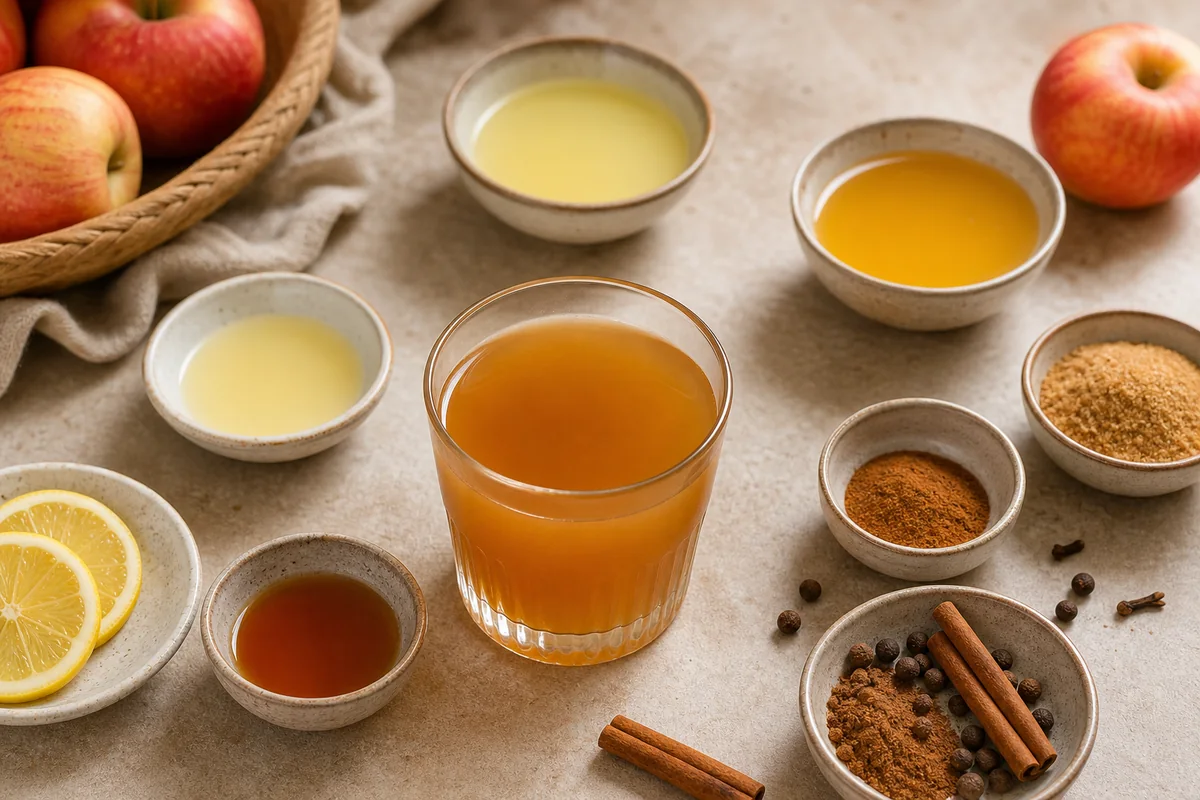
5 Best Apple Cider Substitutes for Any Recipe
Ingredients
Equipment
Method
- Decide what you need from apple cider: fruity sweetness, tang, or both (use "+ lemon" for brightness or "+ vinegar" for acidity).
- Start with the 1:1 ratio for most swaps, then adjust by taste: add a splash more acid for sharpness or reduce gently for sweetness.
- If substituting for baking, stir the swap into wet ingredients and rest batter 2-3 minutes so flavors meld.
- If substituting for simmered sauces, heat the swap 3-6 minutes to thicken slightly and round the flavor.
- Taste at the 1st pour and again after a short heat step; cider varies by brand, so micro-adjust with lemon or vinegar.
Notes
- Use 1:1 for most recipes, then tune acidity (lemon/vinegar) or sweetness (gentle reduction).
- For non-alcoholic swaps, prefer apple juice + acid rather than vinegar-only.
Tried this recipe?
Let us know how it was!
Carrie is a food writer and editor with more than 15 years of experience. She has worked for some of the biggest names in the food industry, including Bon Appétit, Food & Wine, and Martha Stewart Living.
As the Editor in Chief of EpicureDelight, Carrie oversees all of the content on the site. She also manages the team of contributing writers and editors, who help to create delicious recipes, helpful tips, and informative articles that you’ll find on the site.
A native of the Chicago area, Carrie is passionate about all things food. She loves trying new restaurants and experimenting with new recipes in her kitchen. She’s also a graduate of the Culinary Institute of America, so she knows a thing or two about food!



