
Running out of baking powder mid-recipe is one of those small kitchen disasters that feels bigger than it is. The fix is almost always in your pantry already.
You just need to match the right swap to what your recipe already contains.
Baking powder is a blend of a base (baking soda), an acid (usually cream of tartar), and a stabilizer (cornstarch). When you substitute it, you're rebuilding those three jobs.
The best baking powder substitute depends on two things: whether your recipe already has acidic ingredients, and how quickly you can get the batter into the oven.
The most reliable baking powder replacement is homemade baking powder: mix ¼ teaspoon baking soda + ½ teaspoon cream of tartar to replace 1 teaspoon baking powder. If you're out of cream of tartar, use baking soda with lemon juice, vinegar, or dairy. Each swap requires acid to activate the soda and produce CO2 lift.
5 Best Baking Powder Replacement Swaps That Work
Every substitute below is built around baking soda as the base. What changes is the acid.
Match your swap to what's already in your batter and how neutral you need the final flavor to stay.
| # | Substitute | Best For | Ratio | Key Note |
|---|---|---|---|---|
| 1 | Homemade Baking Powder | Both | 1:1 | Closest chemistry match |
| 2 | Baking Soda + Lemon Juice | Both | 1:1 | Bake immediately after mixing |
| 3 | Baking Soda + Vinegar | Both | 1:1 | Most flavor-neutral acid |
| 4 | Baking Soda + Yogurt/Buttermilk | Both | 1:1 | Adds tenderness to crumb |
| 5 | Self-Rising Flour | Both | 1.25:1 | Reduce added salt and leaveners |
1. Homemade Baking Powder
This is the swap we reach for first. It rebuilds baking powder from scratch using three ingredients that handle the same base, acid, and stabilizer roles.
The result behaves nearly identically to a store-bought can.
Homemade vs. Store-Bought Baking Powder
Works for: Almost any recipe. Baking soda provides lift, cream of tartar provides acid, and cornstarch slows the reaction slightly for better oven spring.
Skip if: You're also out of cream of tartar. Without it, you lose the acid component and the batter won't rise properly.
Store-bought baking powder is double-acting. It reacts twice: once when wet, once in heat.
This homemade version acts more like a single-acting powder. Get your batter into the oven within 15 minutes of mixing.
When you explore soda-based swaps more broadly, you'll see this same base-plus-acid logic repeated across many substitutes.
- Ratio: Replace 1 teaspoon baking powder with ¼ teaspoon baking soda + ½ teaspoon cream of tartar + ¼ teaspoon cornstarch.
- Mixing order: Combine all three dry ingredients together before adding to your flour blend.
- Timing: Bake within 10-15 minutes of combining wet and dry ingredients.
- No cornstarch? Skip it. The swap still works, just with a slightly faster initial reaction.
2. Baking Soda + Lemon Juice
Lemon juice works best when your recipe can handle a faint citrus note-think muffins, quick breads, or pancakes. Plain white cake is where we'd hesitate.
The acid in lemon juice activates baking soda immediately on contact, so this pairing is fast and has no buffer time built in.
We've seen batters fall flat simply because the cook stirred everything together and then answered the phone. Mix and bake right away.
- Ratio: Replace 1 teaspoon baking powder with ¼ teaspoon baking soda + ½ teaspoon fresh lemon juice. Reduce another liquid in the recipe by ½ teaspoon to compensate.
- Mixing order: Stir baking soda into lemon juice in the wet bowl first, then combine wet and dry together.
- Flavor impact: In most recipes over 1 cup of flour, the citrus note is faint after baking. It's most noticeable in thin, delicate batters.
- Skip if: You're making plain vanilla cupcakes or any very delicate batter where even subtle citrus would clash.
If you're working through moist bake swaps and want more moisture-swap ideas, moisture-adding baking swaps cover other acidic ingredient options worth keeping in mind.
3. Baking Soda + Distilled White Vinegar
Vinegar is often the more practical acid option when you need something truly neutral. It doesn't add a citrus profile and its sharp smell bakes off almost completely during cooking.
The reaction with baking soda is immediate and vigorous, which means you get good lift but very little room for delay. Don't overmix after combining wet and dry ingredients.
Twelve stirs is enough-stop while it still looks slightly lumpy.
- Ratio: Replace 1 teaspoon baking powder with ¼ teaspoon baking soda + ½ teaspoon distilled white vinegar. Reduce another liquid by ½ tsp.
- Mixing order: Add vinegar to the wet ingredients, then fold in dry ingredients last and bake immediately.
- Overmixing risk: Excess stirring after the acid hits the soda deflates the bubbles before they can set in the oven.
- Skip if: Your recipe already contains vinegar or another strong acid. Stacking acids can push the flavor sour and weaken the total lift.
4. Baking Soda + Plain Yogurt or Buttermilk
Both yogurt and buttermilk carry enough lactic acid to activate baking soda, and they also add protein and fat that make the crumb more tender.
| Use | Ratio | Notes |
|---|---|---|
| Thin batter (pancakes, crepes) | ¼ teaspoon soda per 1 teaspoon powder | Buttermilk works as-is; no thinning needed |
| Standard batter (muffins, quick bread) | ¼ teaspoon soda per 1 teaspoon powder | Use ½ cup plain yogurt; thin with 1-2 tablespoon milk if very thick |
| Rich batter (cake layers) | ¼ teaspoon soda per 1 teaspoon powder | Full-fat yogurt works well; reduce another liquid by 2 tbsp |
Thick Greek yogurt needs thinning. Add milk one tablespoon at a time until it pours like regular yogurt before measuring it into the recipe.
When storing buttermilk, remember it stays active for leavening up to about two weeks past its open date if kept cold.
Skip if: Your yogurt is sweetened or flavored. Added sugar and flavorings disrupt the acid balance and change the final taste unpredictably.
5. Self-Rising Flour
Self-rising flour is a pantry shortcut, not a chemistry-perfect replacement. It already contains baking powder and salt mixed into all-purpose flour.
That makes it convenient but inflexible.
Self-Rising Flour Swap
Works for: Simple recipes where you want to skip measuring acids entirely. Biscuits, pancakes, and simple cakes are the best fits.
Skip if: Your recipe adds extra salt or already specifies baking powder alongside other leaveners. Over-leavening makes baked goods rise and then collapse.
The swap ratio is slightly more generous than 1:1 because you're replacing flour and leavener at once. Use 1¼ cups self-rising flour in place of 1 cup all-purpose flour plus 1 teaspoon baking powder.
Then cut any added salt in the recipe by half. If the recipe also calls for extra baking soda, leave it out entirely.
- Ratio: 1¼ cups self-rising flour replaces 1 cup all-purpose flour + 1 teaspoon baking powder.
- Salt adjustment: Reduce added salt by 50%, since self-rising flour includes salt already.
- Do this: Sift the self-rising flour before measuring to avoid clumping and uneven rise.
- Not that: Don't add extra baking powder on top. It's already in the flour and stacking it over-aerates the crumb.
For recipes where you want to understand how soda flavor changes affect your final bake, it's worth reading up before committing to a heavier leavener amount.
Making the Swap Work (Rise + Flavor)
The biggest source of failed substitutions is timing, not ratios. Once baking soda contacts any acid (lemon juice, vinegar, yogurt, cream of tartar), CO2 bubbles start forming.
If the batter sits more than 15-20 minutes before baking, those bubbles escape and the lift is gone before the oven can set it. Pick your substitute based on three factors: what acid your recipe already has, how tender or neutral you need the crumb to taste, and whether you can move quickly enough to bake without a long rest.
- Mix wet and dry last: Combine baking soda with your acid source in the wet bowl before you stir in the flour. This gives you the most even CO2 distribution in the batter.
- Bake within 15 minutes: Set your oven to temperature before you start mixing. Every minute the batter waits, bubbles are escaping.
- Avoid a bitter or soapy taste: That flavor comes from unreacted baking soda. If you add soda without a matching acid, or add too much soda relative to the acid, the excess doesn't neutralize and tastes metallic. Match the ratio precisely and don't eyeball it.
Frequently Asked Questions
Technically yes, but the results are unreliable. Without an acid to react with, baking soda produces very little CO2 lift and leaves a soapy, metallic aftertaste in the finished bake.
No longer than 15 minutes. The acid-soda reaction peaks quickly and the CO2 bubbles escape before the oven can set them, leaving a denser, flatter result.
Vinegar bakes off almost completely. Lemon juice leaves a faint citrus note in thin batters. Yogurt adds mild tang that most people find pleasant in cakes and muffins.
Use 1¼ cups self-rising flour per cup of all-purpose flour, then cut the recipe's added salt by half. Self-rising flour already contains salt, so stacking it causes over-seasoning.
Cookies need less lift and tolerate stronger flavors, so lemon or vinegar swaps work fine. Cakes need even, sustained rise, making the cream of tartar homemade blend the safer choice.
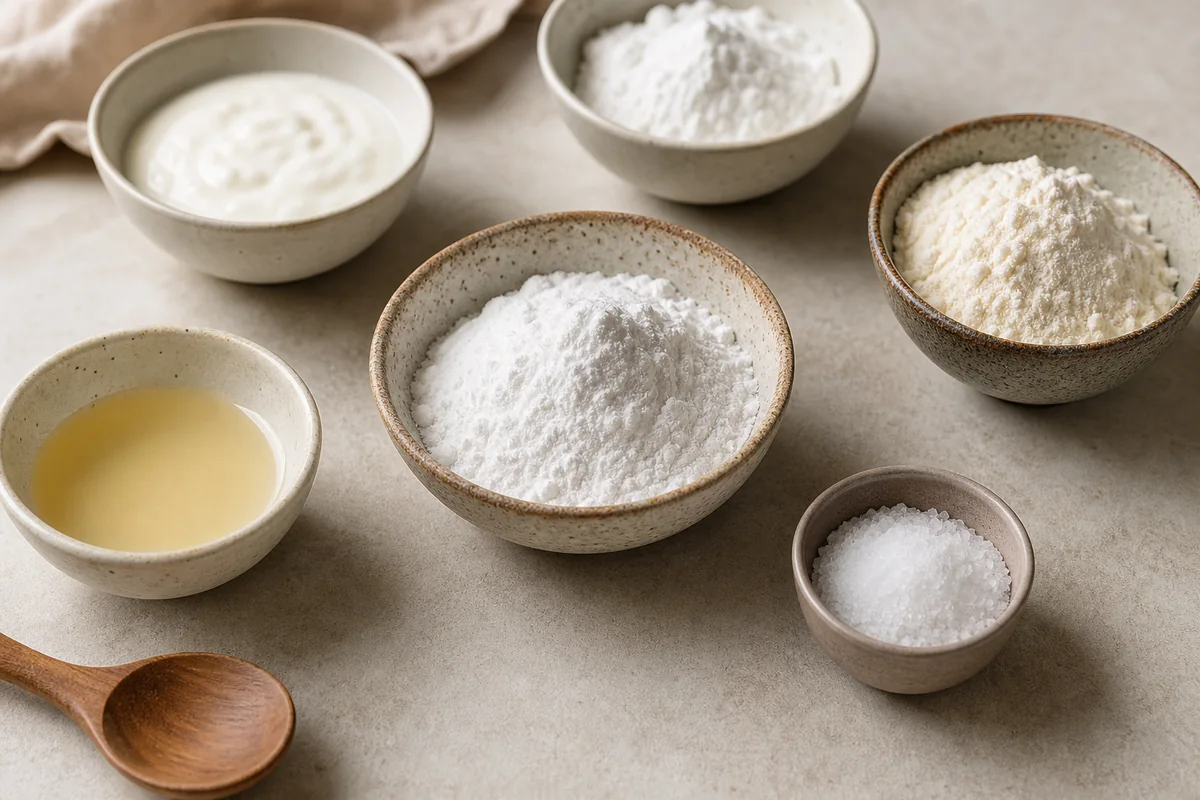
5 Best Baking Powder Substitutes (Tested Swaps)
Ingredients
Equipment
Method
- Check your recipe: if it already includes acidic ingredients (buttermilk, yogurt, lemon, vinegar), prioritize baking soda-based swaps over self-rising flour.
- Match the substitute to your batter’s wetness: thinner/wetter batters handle lemon/vinegar well, while richer batters benefit from yogurt/buttermilk for texture.
- Use the listed ratio for the baking powder amount, then mix baking soda with the wet/acid ingredients before combining with dry.
- Avoid long delays after mixing (especially with soda + acid): bake soon after batter is combined for maximum lift.
- If your recipe is savory or delicate, start with the smaller end of the swap’s ratio and taste-check after a test bake.
Notes
- For soda + acid swaps, bake promptly after mixing to capture CO2 lift.
- Self-rising flour typically adds salt—reduce added salt if your recipe includes it.
Tried this recipe?
Let us know how it was!
Carrie is a food writer and editor with more than 15 years of experience. She has worked for some of the biggest names in the food industry, including Bon Appétit, Food & Wine, and Martha Stewart Living.
As the Editor in Chief of EpicureDelight, Carrie oversees all of the content on the site. She also manages the team of contributing writers and editors, who help to create delicious recipes, helpful tips, and informative articles that you’ll find on the site.
A native of the Chicago area, Carrie is passionate about all things food. She loves trying new restaurants and experimenting with new recipes in her kitchen. She’s also a graduate of the Culinary Institute of America, so she knows a thing or two about food!



