
That thick, salty-fermented spoonful of black bean paste does a lot of heavy lifting. It's not just salt and it's not just bean flavor.
The paste brings a sticky body and a fermented edge that pushes savory dishes into something deeper. Finding the right black bean paste substitute means deciding whether you're chasing that fermented punch, the thick texture, or both.
Most replacements will get you one of those two things more easily than the other. Saltiness you can tweak with a pinch.
Thickness you can build by reducing. Fermented tang, though, is harder to fake, so knowing what your dish actually needs will help you pick the right path.
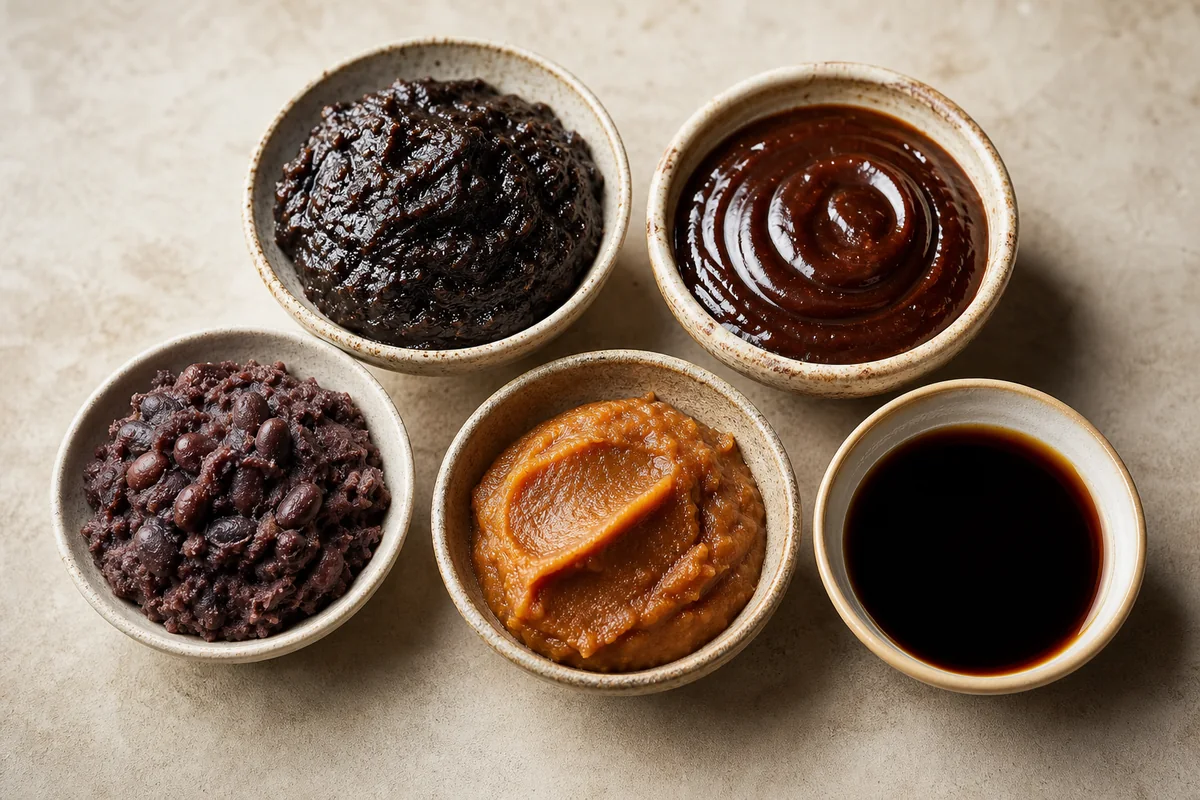
The best black bean paste substitutes are fermented black bean paste (dou chi), black bean sauce, blended canned black beans, soy sauce plus miso, and mushroom paste. Match by texture first, then adjust saltiness and sweetness to fit your dish.
5 Best Black Bean Paste Substitutes Worth Trying
Use the table below as your starting point. Then read each H3 for how to apply and adjust.
| # | Substitute | Best For | Ratio | Key Note |
|---|---|---|---|---|
| 1 | Fermented Black Bean Paste (Dou Chi) | Both | 1:1 | Stir well; check saltiness first |
| 2 | Black Bean Sauce | Both | ¾:1 | Sweeter; reduce a bit before using |
| 3 | Blended Canned Black Beans | Cooking | 1:1 | Simmer 2-3 min to thicken |
| 4 | Soy Sauce + Miso | Sauces | 1:1 | Best for depth, not thick spreads |
| 5 | Mushroom Paste/Concentrate | Cooking | 1:1 | Add gradually; boost with salt |
1. Fermented Black Bean Paste (Dou Chi)
Dou chi is the closest thing to black bean paste you can buy off a shelf. Both are made from salted, fermented soybeans, so the funk and salty-savory character are nearly identical.
The main difference is texture: dou chi can be chunkier, so a quick stir or mash brings it to the right consistency.
Brands vary a lot in saltiness. Taste a small amount before you add the full amount your recipe calls for.
Fermented Black Bean Paste (Dou Chi)
Works for: stir-fries, braises, noodle sauces, any dish needing fermented-bean depth
Skip if: the brand you have is much saltier than what the recipe was written for - start with ¾ the amount and add from there
- Mash or stir: Use a fork or spoon to break down any whole beans before adding to the pan
- Taste first: Add ¾ of the called-for amount, stir for 30 seconds over heat, then taste
- Adjust salt: If the dish tastes flat after 1 minute of cooking, add the remaining amount gradually
- Simmer briefly: 2-3 minutes in the pan will mellow the sharp fermented edge slightly
2. Black Bean Sauce
Black bean sauce is thicker and often sweeter than black bean paste because most commercial versions include added sugar and oil. It works well when you need sauce body in a stir-fry but aren't after a sharp fermented tang.
Use about ¾ of what the recipe calls for to start. You can always add more, but you can't undo sweetness once it's in the pan.
- Start at ¾: Measure ¾ of the paste amount and taste before adding the rest
- Balance sweetness: If it tastes too round or sweet, add a small pinch of salt and a few drops of rice vinegar
- Reduce for thickness: Let the sauce sit over medium heat for 1-2 minutes extra to concentrate if the paste was meant to thicken the dish
- Oil content: Black bean sauce is oilier than paste; reduce added oil elsewhere by about 1 teaspoon
Skip if: your recipe specifically needs that dry, tangy fermented bite. Black bean sauce reads rounder and milder, and the dish will taste noticeably different.
3. Blended Canned Black Beans
This is the option hiding in your pantry right now. Canned black beans blend into a smooth, thick paste with about 90 seconds in a blender.
They won't taste fermented at all, but a quick simmer concentrates the flavor and lets you build saltiness from scratch.
Rinse the beans well before blending. The canning liquid adds a metallic edge that you don't want carrying into the dish.
| Use | Ratio | Notes |
|---|---|---|
| Stir-fry or braise | 1:1 | Simmer 2-3 min in pan to concentrate |
| Thick spread or dip | 1:1 | No reduction needed; season generously |
| Thin sauce or marinade | ¾:1 | Skip reduction; add soy for depth |
- Rinse: Drain and rinse one 15 oz can thoroughly under cold water
- Blend smooth: Add 1-2 tablespoons of water and blend until completely velvety
- Simmer to concentrate: Cook over medium heat for 2-3 minutes, stirring constantly
- Season: Add soy sauce 1 teaspoon at a time, plus a small pinch of salt, until the flavor feels deep enough
Skip if: fermented tang is a signature of the dish. Blended beans are mild and flat without an acid boost. A few drops of rice vinegar or a small amount of miso stirred in can help close the gap.
4. Soy Sauce + Miso (Red or Brown)
This combo won't replicate the sticky paste body, but it mimics the fermented umami character faster than any other pantry approach. Red or brown miso is saltier and more pungent than white miso, which makes it a better stand-in for that savory bean depth.
Whisk 1 tablespoon of miso with 1 teaspoon of soy sauce per tablespoon of black bean paste called for. You can read more about how black bean sauce compares in flavor to understand how far this swap can stretch.
- Ratio start: 1 tablespoon miso + 1 teaspoon soy sauce per 1 tablespoon black bean paste needed
- Add miso first: Let it hit the pan alone for 20-30 seconds before adding liquids, which deepens the flavor
- Reduce for thickness: If the dish needs body, let the mixture reduce for 2 minutes over medium heat
- Adjust acid: A few drops of rice vinegar at the end brightens the flat savory note
Skip if: your dish needs a spoonable, paste-thick texture. This swap is for sauces and marinades only.
5. Mushroom Paste or Concentrate
Mushroom paste is an umami helper, not a fermented-bean replacement. It won't taste like beans at all.
But when texture and bean flavor aren't the point and you just need a dish to taste deep and savory, mushroom paste does solid work.
Add it gradually. A tablespoon can be enough to shift an entire sauce.
- Start small: Begin with ½ the amount and taste after 1 minute of cooking
- Build with salt: Add salt in small increments since mushroom paste doesn't bring the same salinity as fermented bean paste
- Add acid: A tiny drop of soy sauce or vinegar keeps the flavor from tasting one-dimensional
- Reduce for body: Let it cook down 2-3 minutes if the recipe needs a thick paste consistency rather than a loose sauce
Skip if: black bean paste is the main flavor of the dish. Mushroom paste reads as "savory" in a generic sense and won't remind anyone of beans or fermentation.
Making Black Bean Paste Substitutes Work
Every substitute needs a small adjustment cycle: taste early, correct the balance, then check thickness before the dish finishes cooking. The adjustment is usually small.
A pinch of salt, a small splash of vinegar, or an extra minute of reduction does most of the work. If you're working with black bean options like blended canned beans or black bean sauce, the starting flavor will already be in the right neighborhood.
- Salt and sweetness: If the substitute is sweeter than expected, add a pinch of salt and a few drops of rice vinegar; if too salty, pull back the added soy sauce or skip any extra seasoning
- Thickness: For dishes that need a thick paste body, reduce the substitute in the pan over medium heat for 1-3 minutes, stirring constantly until it reaches the right spoonable consistency
- Timing: Add paste-style substitutes early in cooking so heat mellows their edge; add liquid-based swaps like soy-miso in the last 2-3 minutes so the flavor stays sharp
Frequently Asked Questions
Start at ¾:1 because black bean sauce is sweeter and oilier. Taste after 1 minute of cooking, then add more if the dish needs more depth.
Stir in 1 teaspoon of soy sauce and a few drops of rice vinegar per tablespoon of paste needed. Simmer for 2-3 minutes to concentrate the flavor.
Blended canned black beans or black bean sauce both hold up well. Reduce either one in the pan for 2 minutes to get the right sticky body.
It depends on the recipe. Soy-miso can replicate savoriness but changes moisture levels, so reduce any added liquid in the recipe by about 1 tablespoon.
Too sweet: add a pinch of salt and a few drops of rice vinegar. Too salty: skip added soy sauce and add a small amount of unseasoned blended bean or plain water.
5 Best Black Bean Paste Substitutes Worth Trying
Ingredients
Equipment
Method
- Decide what you need most: salty-fermented depth, thick bean texture, or both.
- Pick a substitute from the list, using the ratio as your starting point (especially for sauces).
- Adjust after heating: if too sweet, add a small pinch of salt; if too thin, reduce in the pan for 1–3 minutes.
- Taste at the end of cooking and fine-tune—add acid (a few drops) if the swap tastes flat.
Notes
- For thick, fermented texture, prioritize blended canned beans or black bean sauce.
- For flavor-only replacement in stir-fries, soy sauce + miso is the fastest depth builder.
Tried this recipe?
Let us know how it was!
Carrie is a food writer and editor with more than 15 years of experience. She has worked for some of the biggest names in the food industry, including Bon Appétit, Food & Wine, and Martha Stewart Living.
As the Editor in Chief of EpicureDelight, Carrie oversees all of the content on the site. She also manages the team of contributing writers and editors, who help to create delicious recipes, helpful tips, and informative articles that you’ll find on the site.
A native of the Chicago area, Carrie is passionate about all things food. She loves trying new restaurants and experimenting with new recipes in her kitchen. She’s also a graduate of the Culinary Institute of America, so she knows a thing or two about food!



