
Bourbon does a lot of quiet work in a recipe. That vanilla warmth, the mild sweetness, the faint oak note underneath - pull it out and you'll notice the gap.
A good bourbon substitute fills that gap deliberately, not just by volume but by matching what the bourbon was actually doing in the dish.
Swaps differ by use. In baking, you mostly need the sweetness and vanilla character.
In glazes and sauces, the oak and caramel matter more. Getting the ratio right keeps your dish on track instead of tasting watered-down or off.
The best bourbon substitutes depend on whether you need sweetness, oak, or depth. Apple juice or dark rum cover most baking and glaze recipes at a 1:1 ratio. Vanilla extract with water, dry sherry, and strong coffee fill specific roles. Match your sub to the flavor your recipe leans on.
5 Bourbon Substitute Swaps for Baking & Sauces
Every recipe that calls for bourbon is leaning on one of three things: its sweetness, its oak-and-vanilla character, or its general liquid depth. Once you know which one your recipe needs, picking a substitute gets simple.
The five options below cover all three goals, with ratios that keep your dish in balance.
| # | Substitute | Best For | Ratio | Key Note |
|---|---|---|---|---|
| 1 | Apple Juice / Cider | Both | 1:1 | Sweet, no oak bite |
| 2 | Dark Rum | Both | 1:1 | Closest caramel depth |
| 3 | Vanilla Extract + Water | Baking | 1:1 | Vanilla notes only |
| 4 | Dry Sherry | Sauces | ¾:1 | Oaky, slightly tangy |
| 5 | Strong Coffee / Espresso | Baking | 1:1 | Depth, not bourbon flavor |
1. Apple Juice or Apple Cider
Apple juice is the most practical non-alcohol swap for bourbon in baking. It keeps the sweetness and adds a mild warmth that holds up well in cakes, quick breads, and marinades.
The flavor stays in the background without making your dessert taste fruity, especially if you use plain (not pulpy) apple juice.
- Best for: Pound cakes, muffins, peach cobblers, and fruit-based glazes
- Flavor direction: Lightly sweet, faintly tart - no whiskey edge
- Application: Swap 1:1, no reduction needed in most batters; reduce by a tablespoon for thick glazes
- Skip if: Your recipe depends on oak or whiskey aroma - apple juice won't get close to that
When your recipe calls for a fruit-forward base, vanilla-form swaps can pair well alongside cider to round out what the bourbon was doing.
2. Dark Rum
Dark rum is the closest spirit-family match to bourbon. Both are aged, both carry vanilla and caramel notes, and both have a warmth that shows up in sauces and baked goods alike.
The flavor profile lines up well enough that most people won't notice the difference in a glaze or a pecan pie filling.
Understanding the rum difference matters here: light rum is too neutral and won't carry the same weight. Stick with dark or aged rum.
- Best for: BBQ glazes, caramel sauces, pecan pie, and bread pudding
- Flavor direction: Sweeter and darker than bourbon - slightly more molasses-forward
- Adjustment: Reduce by 1 tablespoon if the rum flavor feels too pronounced after tasting
- Skip if: You need a subtle background note - rum can push to the front
3. Vanilla Extract + Water
This swap targets bourbon's vanilla notes directly. Mix 1 teaspoon of vanilla extract with enough water to reach the total volume your recipe needs, then use it 1:1.
It works well in baked goods where the bourbon is mostly there for aroma and a faint sweetness.
The potency of your extract matters here. Fresh, dark vanilla extract gives a stronger result.
Pale or old extract will produce a flat finish.
- Best for: Vanilla cakes, cookies, brownies, and custards
- Flavor direction: Pure vanilla, no oak or whiskey character at all
- Application: Use 1 teaspoon extract per 2 tablespoon water to fill a 2 tablespoon bourbon measure
- Skip if: Your recipe is a glaze or sauce that needs body and complexity - this won't hold up
4. Dry Sherry
Dry sherry is the most underrated savory substitute for bourbon. It brings a light tang and a nuttiness that reads as complexity in pan sauces, meat glazes, and some savory baked dishes.
It isn't as sweet as bourbon, but it has an oak-adjacent character that keeps sauces from tasting flat.
Dry Sherry vs. Bourbon
Works for: Savory glazes, mushroom sauces, meat marinades, and braising liquids
Skip if: Your recipe needs bourbon's sugar-forward sweetness, like in pecan pie or sweet BBQ sauce
Use ¾ of the bourbon amount called for. Sherry is more assertive, and using a full 1:1 ratio can tip the dish toward acidic.
If you often use sherry in cooking, savory wine swaps for sherry itself are worth knowing too.
- Best for: Pan sauces, savory marinades, mushroom-based dishes
- Flavor direction: Dry, nutty, slightly tangy - less sweet than bourbon
- Adjustment: Simmer 1-2 minutes to mellow the edge before finishing a sauce
5. Strong Coffee or Espresso
Coffee won't replicate bourbon's flavor. What it does is match bourbon's perceived warmth and depth, especially in recipes where chocolate or cherry is already doing heavy work.
Think of it as a depth amplifier, not a flavor clone.
- Best for: Chocolate cakes, brownies, dark cherry desserts, and mocha glazes
- Flavor direction: Bitter-roasted warmth - supports cocoa and caramel flavors without tasting like coffee
- Application: Use strong brewed coffee or cold espresso at 1:1; avoid adding sugar unless the recipe needs it
- Skip if: Your recipe is vanilla-forward or fruit-light - coffee will pull the flavor in the wrong direction
For recipes that also lean on espresso as a primary flavor, knowing the strength difference between single and double espresso helps you avoid over-intensifying the swap.
Making Bourbon Substitutes Taste Right
The ratio is the starting point, but the finishing step is what separates a passable swap from one that works. Most substitutes benefit from a short simmer or a quick taste-and-adjust before they go into the final dish.
Two minutes of attention here makes a real difference.
- Match the flavor goal first: Pick sweet (apple juice, vanilla) for baking, oaky (sherry, rum) for glazes and sauces, or deep (coffee) for chocolate-heavy recipes - don't just grab what's in the cabinet
- Apply the listed ratio exactly: Starting at the correct volume prevents over-substituting, which is harder to fix than under-substituting
- Reduce if needed: For juice or coffee swaps, simmer the substitute in the pan for 2-3 minutes before combining with other ingredients; for rum or sherry, taste after mixing and reduce the sauce by 1 tablespoon if the flavor is too sharp
Frequently Asked Questions
Apple juice or apple cider at a 1:1 ratio is the best non-alcohol option. It keeps the sweetness and mild warmth without any whiskey bite.
Yes, dark rum works 1:1 in most glazes and sauces. Taste after combining and reduce by 1 tablespoon if the flavor feels too sweet or dark.
For batters, no reduction is needed. For glazes or sauces, simmer the cider for 2 minutes first to concentrate the flavor slightly.
It can if you use a full 1:1 ratio. Use ¾ of the called-for bourbon amount and simmer briefly to mellow any sharpness before adding to sweet recipes.
Strong brewed coffee or cold espresso at 1:1 is the best pick. It amplifies cocoa depth and warmth without tasting like coffee in the finished dish.
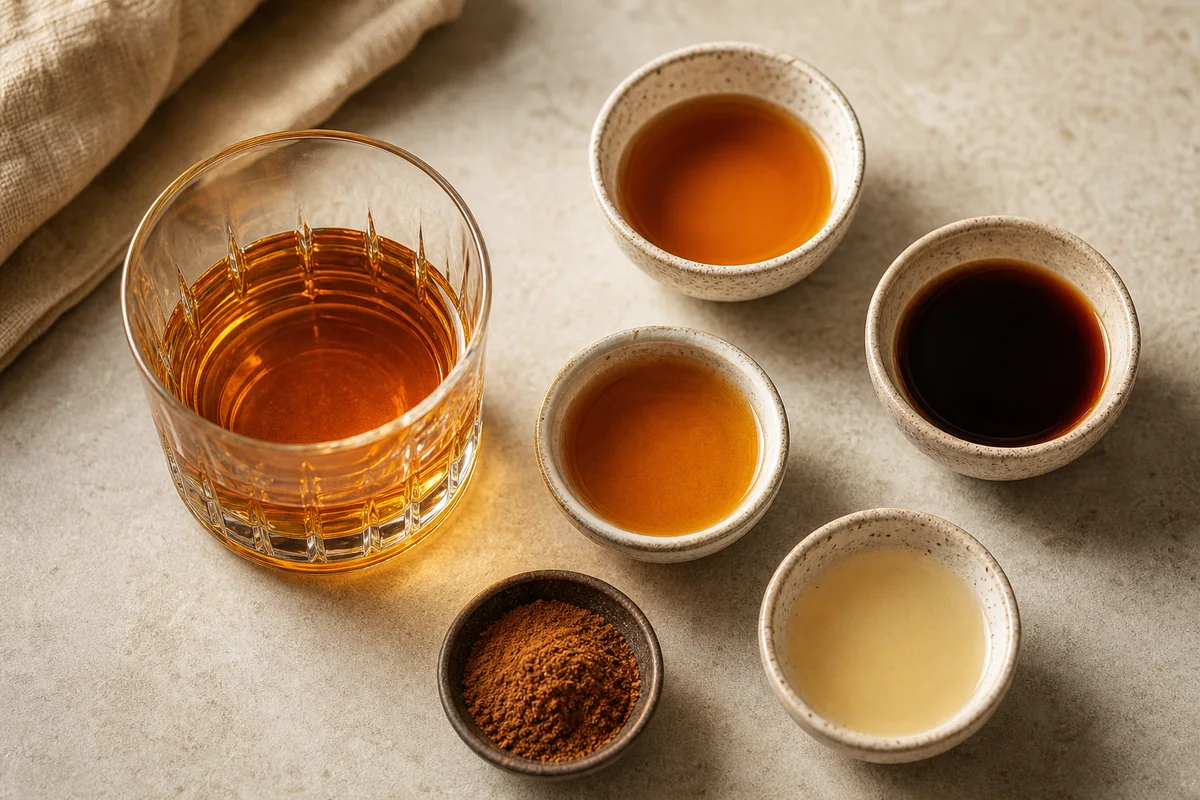
5 Best Bourbon Substitutes (Easy Swaps)
Ingredients
Equipment
Method
- Decide your flavor target: vanilla-sweet, oaky-whiskey warmth, or deep caramel/coffee richness.
- Use the ratio from the table for the bourbon amount the recipe calls for.
- If your substitute is less “spirit-like” (juice/coffee), simmer 1–2 minutes in the pan or with your sauce to intensify flavor.
- If you used a boozier substitute (rum/sherry), taste and reduce only if the flavor feels too sharp.
- Finish with a small pinch of salt or a few grains of sugar only if the overall balance needs it.
Notes
- Alcohol differences: baking often reduces alcohol, but flavor compounds (vanilla/oak/caramel) remain—choose the substitute that matches that direction.
- Intensity tip: if the substitute is milder than bourbon (like juice), a quick simmer or reduction helps.
Tried this recipe?
Let us know how it was!
Carrie is a food writer and editor with more than 15 years of experience. She has worked for some of the biggest names in the food industry, including Bon Appétit, Food & Wine, and Martha Stewart Living.
As the Editor in Chief of EpicureDelight, Carrie oversees all of the content on the site. She also manages the team of contributing writers and editors, who help to create delicious recipes, helpful tips, and informative articles that you’ll find on the site.
A native of the Chicago area, Carrie is passionate about all things food. She loves trying new restaurants and experimenting with new recipes in her kitchen. She’s also a graduate of the Culinary Institute of America, so she knows a thing or two about food!



