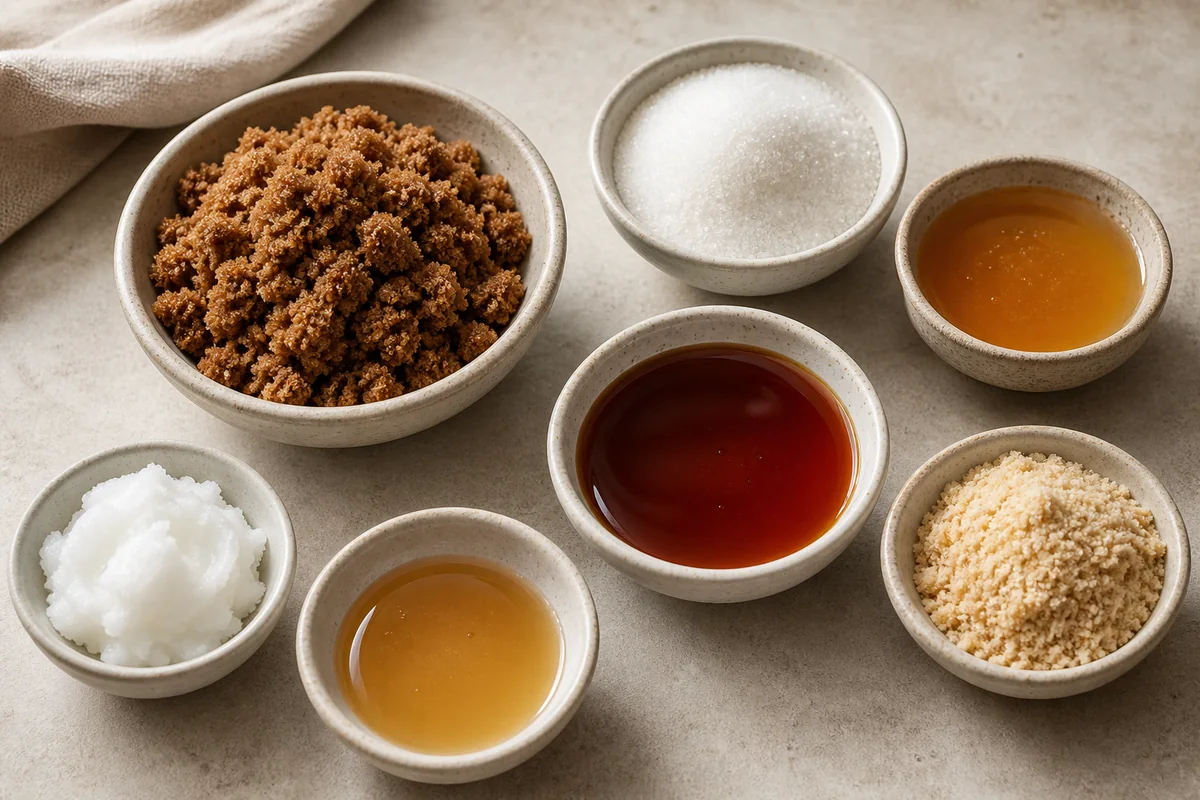
That sticky, clumped handful of brown sugar is one of the most flavor-active ingredients in your pantry. Its molasses content adds moisture and a caramel-forward depth that plain white sugar simply can't fake on its own.
A good brown sugar substitute has to match at least one of those two things: the moisture, the flavor, or ideally both.
Brown sugar's job varies by recipe. In cookies, it holds water and keeps the crumb soft.
In sauces and glazes, it melts into a deep amber sweetness. Knowing which property matters most in your dish makes picking a swap much easier.
The best brown sugar substitute depends on whether your recipe needs moisture or just caramel flavor. White sugar blended with molasses is the closest match for baking. Demerara, turbinado, and coconut sugar work at a 1:1 ratio for most recipes. Maple syrup suits sauces and glazes best.
5 Best Brown Sugar Substitutes You Can Trust
Before you read the deep-dives below, scan this table to find your best match fast.
| # | Substitute | Best For | Ratio | Key Note |
|---|---|---|---|---|
| 1 | White Sugar + Molasses | Both | 1:1 | Closest flavor, moisture match |
| 2 | Demerara Sugar | Baking | 1:1 | Drier; browns fast |
| 3 | Turbinado Sugar | Baking | 1:1 | Mild caramel, slightly grainy |
| 4 | Coconut Sugar | Both | 1:1 | Darker color, coconut hint |
| 5 | Maple Syrup | Sauces | ¾:1 | Liquid; reduce other liquids |
1. White Sugar + Molasses
This is the swap we recommend first, every time. Blending white sugar with molasses recreates both the caramel flavor and the moisture that brown sugar provides, making it the most reliable option for cookies, cakes, and spice rubs.
The ratio is simple: for every cup of brown sugar, use 1 cup of white sugar and stir in 1 tablespoon of molasses. For a light brown sugar effect, use 1 teaspoon instead.
Mix well before adding to your batter; the molasses distributes unevenly if you just toss it in.
- Light brown sugar: 1 cup white sugar + 1 teaspoon molasses, stirred until uniform
- Dark brown sugar: 1 cup white sugar + 1 tablespoon molasses for a stronger, deeper flavor
- For glazes: Warm the mixture slightly so the molasses blends without streaking
- For spice rubs: Mix dry, then press between fingers to break up any molasses clumps
If you want to understand choosing the right molasses type before you blend, that page covers the flavor differences clearly. Skip this blend if your recipe needs a very light, delicate sweetness.
The molasses adds real depth, which can overpower something subtle like a shortbread.
2. Demerara Sugar
Demerara is drier than brown sugar, with larger crystals and a caramel-toffee edge that holds up well in baking. It gives cookies and muffins a crunchy top rather than a chewy center, so the texture shift is real.
Use it when you want visible sparkle on top of a crumble or scone, or when you need a caramel note in a dough that doesn't require softness. For a helpful reference on swapping around this sugar, picking demerara alternatives covers cases where it also falls short.
Demerara Sugar
Works for: crumble toppings, scones, crunchy cookie edges, spice blends
Skip if: you need chewy cookies or a moist cake crumb
- Ratio: Use 1:1 by weight, not volume, since the larger crystals pack differently
- Browning: Start checking bakes 3-4 minutes early; demerara browns faster than brown sugar
- Creaming: Add 1 extra minute of creaming time to help the larger crystals break down in butter
3. Turbinado Sugar
Turbinado is a raw sugar with a mild caramel note and a golden color that looks similar to light brown sugar in the bag. The main difference you'll notice in baking is a slightly grainier feel if the crystals don't fully dissolve.
It works well in most recipes where brown sugar plays a background role. If you want to explore other raw-sugar options as well, swapping raw sugar styles lists the closest alternatives.
Use it 1:1, and cream it with butter a little longer than usual to help dissolve those bigger grains.
- Cookies and bars: Use 1:1; cream with fat for at least 2 extra minutes to reduce graininess
- Oatmeal and granola: Works perfectly, the grains dissolve during baking with no issue
- Topping sprinkle: Excellent on muffins or breads where a slight crunch is welcome
- Dissolving: If grittiness is a concern, dissolve in 1 teaspoon warm water before adding to the mix
Skip turbinado if the recipe needs a smooth, finely dissolved sugar base, like a silky caramel sauce or a very tender crumb cake.
4. Coconut Sugar
Coconut sugar is pressed from coconut palm sap and has a natural caramel-brown flavor that sits close to light brown sugar. It's less sweet than white sugar, and it will darken your bake slightly more than expected.
| Use | Ratio | Notes |
|---|---|---|
| Cookies | 1:1 | Slightly darker color; chewy texture holds |
| Cakes | 1:1 | Expect a deeper crumb color; flavor is mild |
| Sauces | 1:1 | Dissolves well; mild coconut note in finish |
| Spice rubs | 1:1 | Works cleanly; no moisture issue |
The comparison between sugar types and their flavor profiles is useful if you're unsure whether coconut sugar fits your recipe's needs.
- Swap ratio: Use 1:1 by weight for all recipes
- Color: Expect the finished bake to look darker than usual; flavor is not affected
- Moisture: Slightly less moisture than brown sugar; add 1 teaspoon water per cup if cookies seem dry
Skip coconut sugar if you're sensitive to any coconut aftertaste or if the recipe calls for a clean, classic molasses flavor. The coconut note is faint but present in lighter bakes.
5. Maple Syrup
Maple syrup is a liquid sweetener, so it changes the structure of your dough or batter when you swap it in. It's best for sauces, glazes, and marinades where wet sweetness is already part of the formula.
The flavor is distinct. It reads as sweet and woodsy rather than caramel-molasses, which works beautifully in BBQ sauce or a pork glaze.
For anyone curious about swapping it the other way, choosing a syrup alternative covers that direction well.
Maple Syrup in Baking
Works for: banana bread, muffins, soft cookies where extra moisture is tolerable
Skip if: the recipe needs dry, scoopable sweetness like a classic chocolate chip cookie dough
Maple Syrup in Sauces and Glazes
Works for: BBQ sauce, stir-fry glazes, marinades, salad dressings
Skip if: you need a thick, crystalline finish that only a granulated sugar provides
- Ratio: Use ¾ cup maple syrup for every 1 cup of brown sugar called for
- Liquids: Reduce other liquids in the recipe by 3 tablespoon per ¾ cup of maple syrup used
- Browning: Liquid sugars brown faster; check your bake 5 minutes early and tent with foil if needed
- Baking soda boost: Add a small pinch of baking soda (⅛ teaspoon per cup) to offset maple's mild acidity
Making Brown Sugar Substitutes Work (Texture + Timing)
Getting the swap right is mostly about understanding two things: how much moisture your substitute brings, and how fast it browns. Drier substitutes like demerara or turbinado tend to push cookies toward a crisper edge, while wetter options like maple syrup can thin your batter if you don't compensate.
Understanding what molasses flavor contributes to a bake helps you judge how much caramel depth your swap actually needs to deliver.
For storing granulated sugars long-term, an airtight container keeps them from hardening or clumping, which matters when you're mid-recipe and need them fast.
- Match moisture first: If the original recipe produces chewy cookies, choose a substitute with molasses (the blend) or coconut sugar. Drier substitutes work for crumbles, scones, and toppings where a little crunch is fine.
- Adjust creaming or liquid: Grainy substitutes like turbinado need longer creaming with butter. Liquid substitutes like maple syrup need a 3 tablespoon reduction in any other added liquid per cup used.
- Watch browning and doneness: Any substitute with residual molasses or liquid sugar content browns faster than plain white sugar. Start checking 3-5 minutes before the recipe's stated done time, and use a toothpick rather than just color as your guide.
Frequently Asked Questions
Yes, but the cookies will spread more and turn out crisper. White sugar lacks molasses moisture, so add 1 teaspoon of molasses per cup to restore chew.
Use ¾ cup maple syrup per 1 cup brown sugar, then reduce other liquids by 3 tablespoons. This keeps your batter at the right consistency.
The white sugar and molasses blend is the best choice for chew. Coconut sugar is a close second, though it produces a slightly darker cookie.
Both add a mild caramel note similar to brown sugar, but the flavor is slightly less intense. Expect a crisper texture rather than a softer crumb.
It is 1:1 by measure and close in caramel flavor, but it produces a darker color. Add 1 teaspoon of water per cup if your bake seems dry.
5 Best Brown Sugar Substitutes You Can Trust
Ingredients
Equipment
Method
- Decide your use case: baking (cookies/cakes) needs moisture-like brown sugar, while sauces/glazes can handle liquid sweeteners.
- Start with the listed ratio: use the 1:1 options for closest behavior, or the ¾:1 maple blend for liquid-based swaps.
- If your substitute is drier (demerara/turbinado), increase resting or add a splash of moisture from the recipe (e.g., butter/eggs) to prevent overly crisp results.
- If your substitute is liquid (maple), reduce any added liquids by a small amount and watch browning—liquid sugars can darken faster.
- Taste-test the mix (or do a quick test batch) and adjust: add a pinch of salt/acid balance for richer molasses flavor.
Notes
- If your brown sugar is hard (clumpy), first break it up; a substitute that recreates moisture matters most in cookies and cakes.
- For recipes calling for brown sugar by weight, measure by weight when possible.
Tried this recipe?
Let us know how it was!
Carrie is a food writer and editor with more than 15 years of experience. She has worked for some of the biggest names in the food industry, including Bon Appétit, Food & Wine, and Martha Stewart Living.
As the Editor in Chief of EpicureDelight, Carrie oversees all of the content on the site. She also manages the team of contributing writers and editors, who help to create delicious recipes, helpful tips, and informative articles that you’ll find on the site.
A native of the Chicago area, Carrie is passionate about all things food. She loves trying new restaurants and experimenting with new recipes in her kitchen. She’s also a graduate of the Culinary Institute of America, so she knows a thing or two about food!