
Campari has a flavor that's hard to fake: bitter, orange-forward, and just herbal enough to keep you guessing. The right campari substitute depends on whether you need that bitter backbone, the citrus lift, or both working together.
For cocktails, a close aperitif replacement usually wins. In baking or glazes, a fruit-based swap with added bitters often does the job just as cleanly.
Aperol is the closest pour-and-go swap for orange-aperitif drinks. Cynar covers bitter structure when citrus matters less. For baking, blood orange liqueur plus bitters hits Campari's depth without overpowering sweetness. A DIY vermouth, orange peel, and bitters build works in a pinch for both.
5 Best Campari Substitutes Ranked by Flavor Match
Before picking, scan the table for your use case. Each substitute is ranked by how closely it matches Campari's bitter-orange character.
| # | Substitute | Best For | Ratio | Key Note |
|---|---|---|---|---|
| 1 | Aperol | Both | 1:1 | Add bitters for more bite |
| 2 | Cynar | Both | 1:1 | Earthy, less orange aroma |
| 3 | Amaro (Averna-style) | Both | 1:1 | Darker, warmer sweetness |
| 4 | Blood orange liqueur | Both | 1:1 | Citrus-forward; needs bitters |
| 5 | Dry vermouth + orange peel + bitters | Both | 1:1 | DIY build; very adjustable |
1. Aperol
Aperol is the easiest direct swap for Campari in spritzes and light cocktails. It carries the same orange-aperitif spirit, just with less bitterness and a touch more sweetness.
For drinks, that difference is noticeable but not a dealbreaker. In baking, the gap shrinks even further, since the sugar in most recipes absorbs the extra sweetness anyway.
- Cocktails: Swap 1:1 in Negronis or spritzes; add orange bitters if the drink feels flat
- Baking/glazes: Use 1:1 with no adjustment needed in most recipes
- Flavor note: Aperol's orange-aperitif profile leans tangerine-sweet rather than grapefruit-bitter
- Bitterness fix: 3-4 dashes of Angostura or orange bitters brings it closer to Campari's punch
Skip if: your recipe depends on Campari's strong grapefruit bitterness. Aperol can't replicate that without heavy bitters correction.
2. Cynar
Cynar is Campari's bitter equal in intensity, but it pulls flavor in a different direction. The artichoke-and-herb base trades citrus brightness for something earthier and darker.
That's actually a strength in stirred cocktails and braised meat glazes, where herbal depth matters more than orange pop. If you want a deeper look at alternatives for this bitter liqueur, the options swapping Cynar out are worth checking.
- Use at: 1:1 in any recipe calling for Campari's bitter backbone
- Reduce by: 1-2 teaspoon if the herbal flavor overwhelms a delicate drink
- Add: A strip of fresh orange peel to lift the citrus aroma that Cynar lacks
- Best for: Stirred cocktails, savory glazes, and bitter-leaning desserts
Skip if: the recipe specifically needs bright orange aroma front and center. Cynar's earthy-herbal character, even with added orange peel, stays muted on the citrus side.
3. Amaro (Averna-Style)
Amaro is a broader category, but Averna-style options sit closest to Campari's bittersweet range. They carry warm notes of caramel and dried citrus peel, rather than Campari's sharp grapefruit bite.
We prefer using amaro in baking and winter cocktails, where that warmth feels intentional. When swapping in amaro for a lighter drink, cut the amount by about 1 teaspoon per 1 oz to stop it from going syrupy.
- Ratio: Start at 1:1, reduce to ¾:1 if the recipe reads too sweet
- Bitterness fix: Add 2-3 dashes of orange bitters and a pinch of orange zest
- Best for: Winter Negroni riffs, chocolate-orange baked goods, and glazes
- Watch sweetness: Amaro can push recipes toward candy-like territory fast
Amaro (Averna-style)
Works for: stirred cocktails, baking, glazes where warm bittersweet depth is welcome
Skip if: the recipe is built around Campari's bright, citrus-forward bitterness - amaro pushes toward caramel and spice instead
4. Blood Orange Liqueur
Blood orange liqueur nails Campari's citrus aromatics better than almost any other swap. The problem is that it drops the herbal bitterness almost entirely, leaving a sweeter, fruit-forward result.
The fix is simple and consistent: pair it with citrus-forward options in orange-based recipes, and always add bitters alongside it. Without that bitterness layer, the swap reads more like a flavored dessert syrup than an aperitif.
- Ratio: 1:1 in drinks and baking
- Bitters fix: Add 4-6 dashes of orange bitters per 1 oz of liqueur
- Best for: Spritzes, citrus cakes, and glazes where orange aroma leads
- Avoid: Using it alone without bitters - the result will taste sweet and flat
Skip if: you don't have bitters on hand. This swap depends on them to rebuild Campari's bitter structure.
5. Dry Vermouth + Orange Peel + Bitters
This DIY build is the most flexible option when you have no aperitif liqueur available. Dry vermouth stays neutral and wine-like, so the orange peel and bitters do all the heavy lifting on flavor.
Start with vermouth as the base, then build bitter-orange character on top. For baking, skip the vermouth and double the bitters with a tablespoon of orange juice to avoid wine notes in a hot oven.
- Base ratio: 1 oz dry vermouth per 1 oz Campari needed
- Add: 4-6 dashes orange bitters and 1 wide strip fresh orange peel per 1 oz
- Stir or muddle: Muddle the peel briefly to release oil before mixing in drinks
- For baking: Use 2 teaspoon orange juice + 4 dashes bitters per 1 oz - skip the vermouth
| Use | Ratio | Notes |
|---|---|---|
| Single cocktail (1 oz) | 1 oz vermouth + 5 dashes bitters + 1 peel strip | Muddle peel, stir well with ice |
| Baking batch (3 oz) | 2 tablespoon orange juice + 12 dashes bitters | Omit vermouth; use in glaze or batter |
If you want to explore picking a different vermouth base, there are options that keep the build wine-neutral without dry vermouth specifically.
Skip if: your recipe can't handle vermouth's herbal-wine notes in a cold application. Use Cynar or amaro instead.
Making Campari Substitutes Work (Fast Fixes)
Every substitute above fails in the same two ways: it's either too sweet, or it's missing orange aroma. The fix for both is the same - bitters correct sweetness, and fresh orange zest corrects flat citrus.
When reaching for bitters to patch a sweet swap, orange bitters almost always outperform aromatic bitters for this specific flavor profile. For the orange side, a microplaned strip of fresh zest added at the last moment keeps the aroma alive.
- Too sweet: Add orange bitters 2 dashes at a time, tasting between each addition, until the bitter edge returns
- Flat citrus: Stir in ¼ teaspoon fresh orange zest per serving in drinks, or 1 teaspoon per batch in baking
- Too herbal/earthy: Add a small splash of fresh citrus juice - roughly ½ teaspoon per serving - to brighten the aroma without changing sweetness
Frequently Asked Questions
Aperol at a 1:1 ratio is the closest ready-to-pour swap. Add 3-4 dashes of orange bitters if your cocktail needs Campari's stronger bitter edge.
Yes. Heat softens bitterness, so the result is usually more orange-herbal than bitter. Aperol or blood orange liqueur with bitters both work well in glazes and batters.
Add orange bitters two dashes at a time until bitterness returns. You can also reduce the substitute by 1-2 teaspoon and add fresh orange zest to sharpen the profile.
Use the DIY build: dry vermouth, fresh orange peel, and 4-6 dashes of orange bitters per ounce. That combination recreates the bitter-orange structure without a dedicated liqueur.
Aperol is better for orange-forward drinks like spritzes. Cynar is better when you need bitter intensity and don't mind losing some of the citrus brightness.
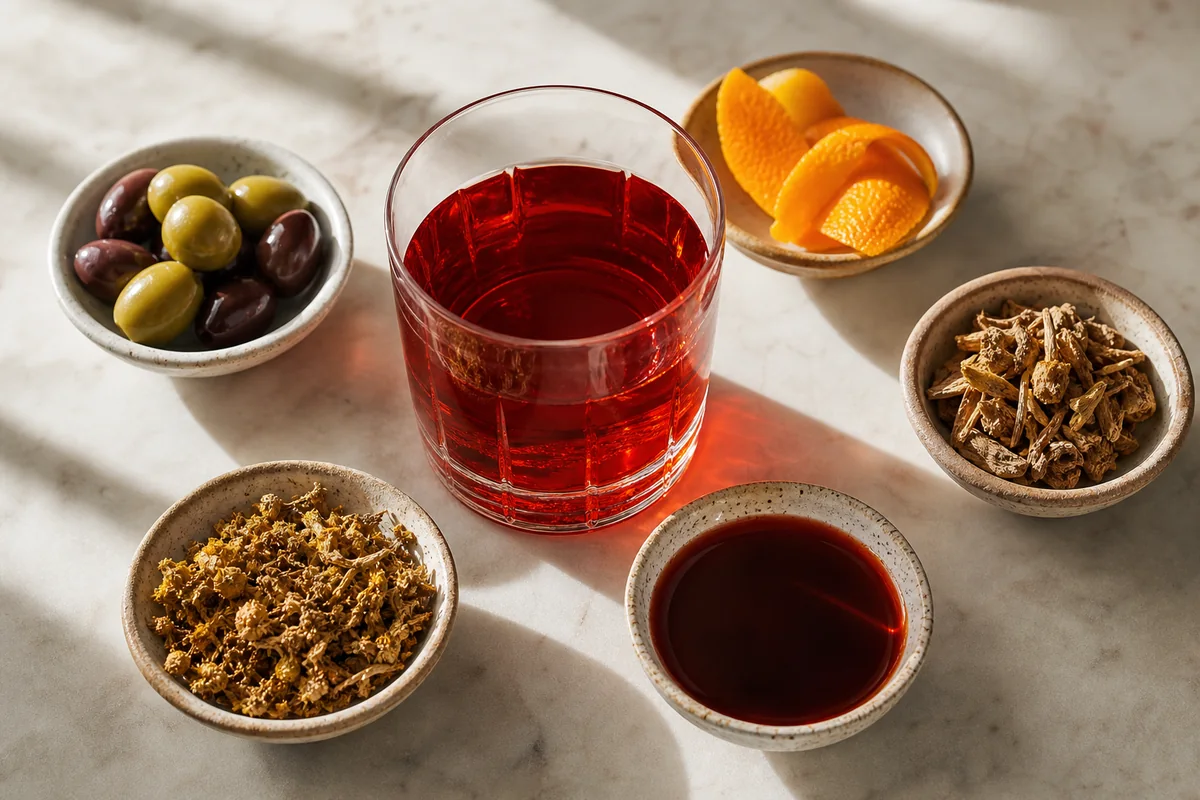
5 Best Campari Substitutes (Ranked)
Ingredients
Equipment
Method
- Decide if your goal is drink-style bitterness (cocktail, spritz, riff) or baking flavor (depth, color, tangy bitterness).
- Choose the highest-ranked option that matches your needed intensity; apply using the listed ratio (1:1 unless noted).
- If the substitute tastes sweeter or less bitter than Campari, add 2–6 dashes of orange bitters (or a small pinch of bitter herbs in baking).
- If the substitute tastes flat or too herbal, add a little fresh orange zest (drinks) or a tiny splash of citrus (baking) to lift the aroma.
- Taste and adjust: you should feel bitter-orange character without harshness; keep notes for next time.
Notes
- For drinks, bitterness and citrus aromatics matter most; start with the ratio, then adjust with bitters and orange zest.
- For baking, Campari’s role is usually flavor depth + a hint of bitterness; use slightly less for sweeter substitutes and compensate with bitters/zest.
Tried this recipe?
Let us know how it was!
Carrie is a food writer and editor with more than 15 years of experience. She has worked for some of the biggest names in the food industry, including Bon Appétit, Food & Wine, and Martha Stewart Living.
As the Editor in Chief of EpicureDelight, Carrie oversees all of the content on the site. She also manages the team of contributing writers and editors, who help to create delicious recipes, helpful tips, and informative articles that you’ll find on the site.
A native of the Chicago area, Carrie is passionate about all things food. She loves trying new restaurants and experimenting with new recipes in her kitchen. She’s also a graduate of the Culinary Institute of America, so she knows a thing or two about food!



