A ripe whole cantaloupe keeps about five days in the refrigerator, while cut cantaloupe is best used within three to four days. An underripe melon can sit at room temperature briefly until it smells fragrant and gives slightly at the blossom end.
Once the rind is cut, keep the flesh at 40°F or below. A sour fermented odor, leaking liquid, mold, or slimy collapsing flesh means the cantaloupe has gone bad.

Refrigerate a ripe whole cantaloupe for about five days and use cut flesh within three to four days. Wash the netted rind before cutting because the knife crosses from the outside to the edible center.
How Long Does Cantaloupe Last?
A cantaloupe does not begin its home life in one fixed state. An underripe melon needs time to soften and develop aroma, while a fully ripe melon is already using its shortest whole-fruit clock.
Press the blossom end, which sits opposite the stem scar, with one finger. A ripe cantaloupe gives slightly without feeling sunken or wet.
A hard blossom end and little fragrance suggest the melon needs more time. Leave it at room temperature for a day or two, then check it morning and evening.
Cantaloupe continues to ripen after harvest, but UC Davis notes that its sugar content does not increase. Counter time can improve softness and aroma, yet it cannot turn a low-sugar melon into a sweeter one.
A ripe melon has a sweet floral or musky scent near the blossom end. The background rind often shifts from green-gray toward tan or yellow, though variety changes the exact color.
The stem end should look smooth where the melon slipped from the vine. A long attached stem can suggest early harvest, while a wet cracked scar can invite decay.
Deep give across a broad area, loose liquid in the seed cavity, or an alcoholic smell means the melon passed simple ripeness. Cut it only when the rind is sound and you can inspect the flesh immediately.
A single bruise may remain local, but spreading softness points to deeper breakdown. Do not rely on a sweet smell when the surface also leaks or carries mold.
Move a ripe melon from the counter to the refrigerator. Cold slows further softening once the fruit smells fragrant and gives slightly at the blossom end.
Once the blossom end gives and the fragrance appears, cold storage slows the next stage of softening. Leaving a ripe cantaloupe in a warm kitchen uses up its best texture quickly.
| State | Useful window | Storage move |
|---|---|---|
| Whole and underripe | About 1 to 2 days | Room temperature, checked twice daily |
| Whole and ripe | About 5 days | Refrigerator away from raw meat |
| Cut or cubed | 3 to 4 days | Covered at 40°F or below |
| Frozen cubes | Best within several months | Airtight freezer bag for blended uses |
Set the whole melon on a clean refrigerator shelf or tray where juices cannot drip onto other food. Do not wedge heavy jars against the rind because pressure damage creates a soft entry point.
Cantaloupe produces ethylene and can continue toward over-ripeness in storage. Give it space rather than sealing it in a wet bag with other ripe fruit.
Condensation encourages surface mold around the stem scar and damaged netting. Dry a melon that entered the refrigerator wet, and keep it away from a leaking produce drawer.
UC Davis reports 12 to 15 days under tightly controlled commercial temperatures, with up to 21 days possible at the cold edge. A home refrigerator receives a melon after harvest and transport, so the practical five-day ripe window is the safer planning number.
Why Should You Wash Cantaloupe Before Cutting It?
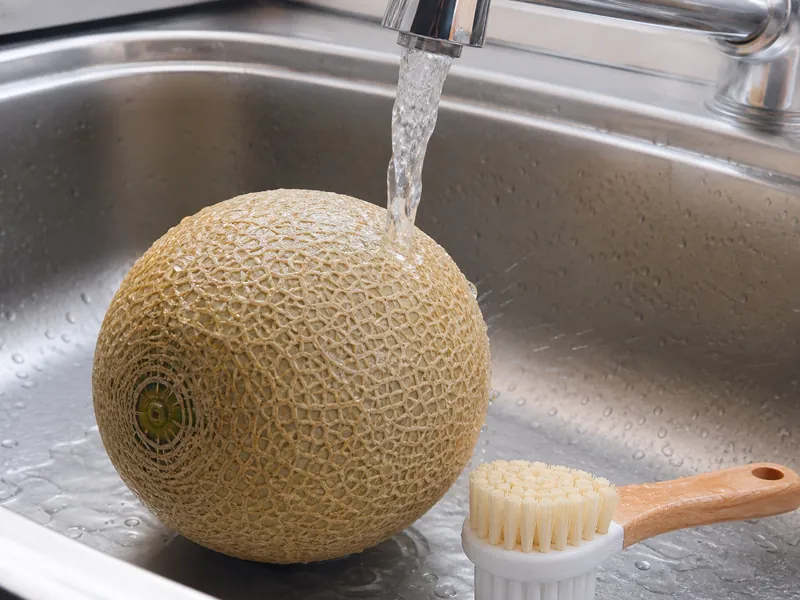
Cantaloupe has a rough netted rind with many shallow spaces. Dirt and microbes on that surface can move to the orange flesh when a knife travels through the rind.
The FDA advises rinsing produce such as cantaloupe under running water before cutting. Soap, detergent, and bleach do not belong on food.
- Wash your hands. Clean the knife, brush, board, and counter before the melon arrives.
- Rinse the whole rind. Hold the cantaloupe under cool running water rather than soaking it.
- Scrub the netting. Use a clean produce brush without breaking the rind.
- Dry the surface. A clean towel keeps the melon from sliding under the knife.
- Cut on a clean board. Keep raw meat and its utensils away from the fruit.
Do not wash a melon and return it wet to long storage. Clean it close to cutting so water does not sit inside the netting for days.
A cracked, punctured, or moldy rind is a different problem from surface dirt. Washing cannot repair damage that already reaches into the fruit.
How Should You Store Cut Cantaloupe?
Keep cut cantaloupe at 40°F or below and use it within three to four days. Refrigerate it within two hours, or within one hour above 90°F.
Cut melon is a time and temperature controlled food because the protected low-acid flesh is now exposed. The FDA uses 41°F or below for fresh-cut melon in food operations, while home guidance sets 40°F as the refrigerator target.
Store halves cut-side down in a covered container, or wrap the cut face tightly. Cubes belong in a shallow sealed container that cools quickly and limits contact with other food.
Keep the seed cavity only when you plan to use the half soon. Removing the wet seeds makes the flesh easier to inspect and prevents loose juice from pooling in the center.
Date the container when several people use the refrigerator. Color can stay bright after the safe serving window has passed, so memory is a poor clock.
A bowl set out for breakfast or a picnic uses the room-temperature limit even when the cubes still feel cool. Return only portions that stayed below the time boundary and were protected from dirty utensils.
Discard cut melon that shared a board or knife with raw poultry, meat, or seafood before cleaning. Refrigeration slows growth but does not undo cross-contamination.
Pre-cut supermarket melon should arrive cold and have an intact package. Follow the printed use-by date when it is earlier than your own three-to-four-day count.
When Should You Throw Cantaloupe Away?
Ripe cantaloupe smells sweet, floral, and musky. Spoiled cantaloupe shifts toward sour fruit, alcohol, yeast, or garbage, often while the flesh releases more liquid.
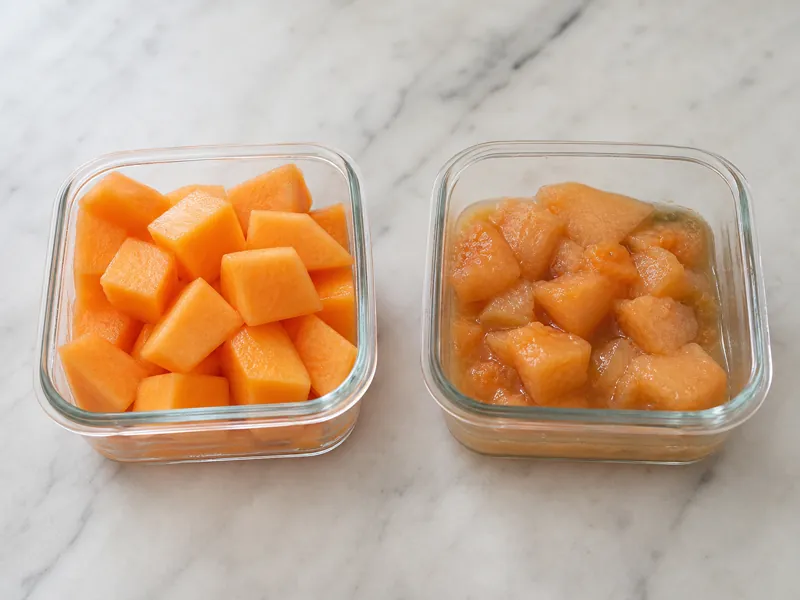
Fresh cubes hold clean edges and feel juicy without a slick coating. A thin sheen from natural juice is normal, but thick slime and collapsing corners show tissue breakdown.
- Keep a whole melon that is firm, clean-smelling, and free of deep damage.
- Use today a very ripe melon with soft fragrant flesh but no sour odor, leak, slime, or mold.
- Discard flesh that smells fermented, feels slimy, or sits in cloudy leaking liquid.
- Discard a melon with mold around a cracked stem scar or a spreading sunken lesion.
- Do not taste-test cut melon that exceeded its cold window or shows a spoilage sign.
Seeds loosen naturally as the melon becomes very ripe. Loose seeds paired with watery flesh and sour odor show a much later stage than loose seeds in otherwise firm sweet fruit.
Surface mold on a firm low-moisture food can sometimes be managed with a wide cut, but cantaloupe is wet and porous. Discard the melon rather than carving around visible growth.
Can You Freeze Cantaloupe?
Freezing forms ice crystals that break the melon cells. The cubes keep their flavor and color better than their crisp bite, so the final use should welcome softness.
Choose ripe firm flesh with a sweet clean smell. Cut even cubes, drain surface juice, and freeze them in one layer before moving them into an airtight bag.
- Use cubes while frozen in a smoothie or frozen drink where they replace some ice.
- Partly thaw them for sorbet, granita, or a cold puree that benefits from remaining frost.
- Use fully thawed melon in sauce or puree because the flesh becomes too soft and wet for fruit salad.
Do not freeze cantaloupe that already smells sour or leaks from decay. Cold pauses further quality loss but cannot make spoiled fruit sound.
Small bags prevent repeated thawing and refreezing. Press out extra air, flatten the bag, and remove one recipe-size portion at a time.
Honeydew storage uses a similar cut-melon cold boundary, though its ripeness cues and aroma differ. Watermelon brings a firmer rind and a different flavor, but its cut flesh also needs prompt refrigeration.
If fresh cantaloupe is unavailable, a cantaloupe substitute should match the dish rather than the storage method. Mango works in puree, honeydew fits a fruit bowl, and papaya brings softer flesh with a different aroma.
Sources
- UC Davis Postharvest Research and Extension Center, cantaloupe maturity and storage guidance
- U.S. Food and Drug Administration, fruit washing and cut-melon temperature guidance
- FoodSafety.gov, fruit handling and the two-hour rule
Yes, when it is already ripe or you need to slow it down. A very underripe melon develops aroma and softness better during a short counter rest.
Flesh color can develop without a tender texture or strong sweetness. Harvest maturity, variety, and cold exposure all affect the final bite.
A small clean pressure bruise may be cut away generously and the sound fruit used at once. Spreading slime, sour odor, mold, or leaking tissue calls for full disposal.
No, packaged ready-to-eat melon should not need another rinse unless the label directs it. Extra handling can add contamination to already cut flesh.
Do not give a pet fruit you would discard for mold, fermentation, or slime. Sound fresh flesh should be offered only in a suitable portion after the rind and seeds are removed.

Carrie is a food writer and editor with more than 15 years of experience. She has worked for some of the biggest names in the food industry, including Bon Appétit, Food & Wine, and Martha Stewart Living.
As the Editor in Chief of EpicureDelight, Carrie oversees all of the content on the site. She also manages the team of contributing writers and editors, who help to create delicious recipes, helpful tips, and informative articles that you’ll find on the site.
A native of the Chicago area, Carrie is passionate about all things food. She loves trying new restaurants and experimenting with new recipes in her kitchen. She’s also a graduate of the Culinary Institute of America, so she knows a thing or two about food!