Caramel can last from a few weeks to several months, but the right clock depends on the form. Wrapped caramel candy, dry caramel shards, and dairy caramel sauce do not belong under one storage rule.
Homemade caramel sauce with cream or butter should be refrigerated after it cools. Low-moisture candy can stay in a cool pantry, but sauce has enough water and dairy to spoil faster.

Caramel shelf life depends on whether it is plain candy, sauce, or dairy-rich homemade caramel. Watch texture and smell more than the date, and discard caramel with mold, sour odor, or separated oily liquid.
Which Type of Caramel Do You Have?
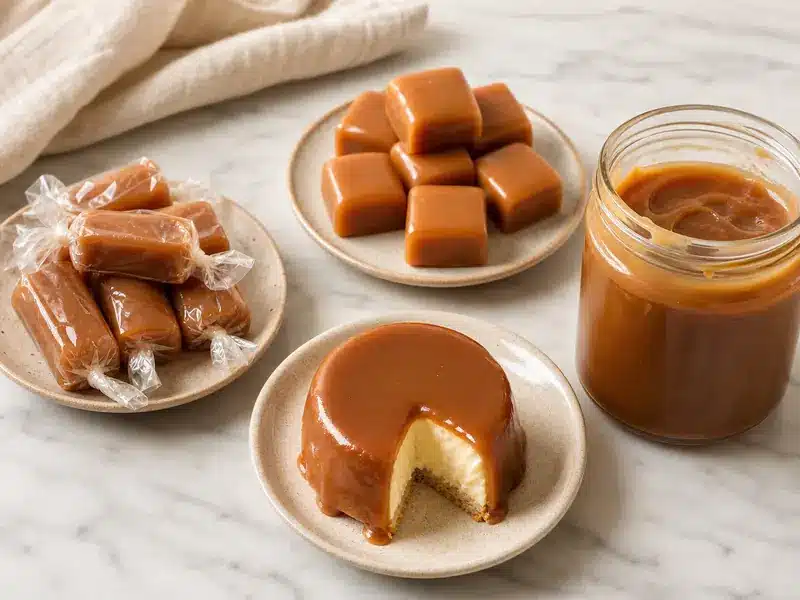
Caramel is a cooking result, not one storage category. A hard sugar shard, a wrapped soft candy, and a jar of cream sauce hold different amounts of water.
Dairy sauce has the shortest clock
Water and dairy shorten the safe window because they make sauce easier to contaminate. Cream and butter also add fat that can develop a stale odor during storage.
Wrapped candy is protected from humidity
A wrapper limits moisture exchange and keeps pieces from sticking together. Once the bag opens, an airtight box protects the candy better than a loose fold in the original bag.
Dry caramel absorbs water from the room
Hard shards contain little water, but humid air can make their surface tacky. They need a dry container even though they do not need the same refrigerator treatment as dairy sauce.
This is why brown sugar bag storage focuses on moisture, while coconut oil jar storage focuses more on rancid fat. Caramel can have both problems if the recipe includes butter or cream.
How Long Does Each Type of Caramel Last?
| Caramel Type | Storage | Best Window |
|---|---|---|
| Wrapped soft caramels | Cool pantry | Package date, then texture check |
| Dry caramel shards | Airtight pantry | Several weeks if kept dry |
| Homemade dairy caramel sauce | Refrigerator | About 2 to 3 weeks |
| Opened store caramel sauce | Refrigerator unless label says otherwise | Follow the label after opening |
Use the package date for store-bought wrapped caramels. After opening, keep each piece wrapped or move the candy to an airtight container so humidity does not make the surface sticky.
Homemade dairy caramel sauce is a shorter-clock food. A clean jar kept cold is usually best within about 2 to 3 weeks unless your tested recipe gives a shorter time.
The date on packaged caramel is usually about quality. The date on homemade sauce is about your storage habit, your jar, and how cleanly you use it.
Do not judge homemade sauce by the calendar alone. A jar that was dipped with a used spoon can fail sooner than a jar poured cleanly every time.
Salted caramel follows the same timing as the base sauce. Salt changes flavor and can help the sauce taste brighter, but it does not make dairy sauce safe for pantry storage at home.
Why Can't Homemade Dairy Caramel Sauce Stay in the Pantry?
Sugar slows some spoilage, but it does not make every caramel sauce shelf-stable. Cream, butter, and added water change the risk.
If the sauce was not made and processed as a tested shelf-stable product, refrigerate it. Treat it more like opened canned milk or opened plant-milk carton than like wrapped candy.
Homemade sauce starts a cold-storage clock
Do not home-can dairy caramel sauce unless the recipe and process come from a trusted preservation source. A normal dessert sauce belongs in the refrigerator.
A sealed store jar may use a different process
Commercial jars can be different because the maker controls formula, heat treatment, packaging, and acidity. A home dessert sauce in a reused jar does not get the same safety margin.
The 2-hour room-temperature rule is a useful home boundary for dairy sauce. If the sauce sat out through a party or overnight, do not move it to the fridge and call it fixed.
Does Grainy Caramel Mean It Has Spoiled?
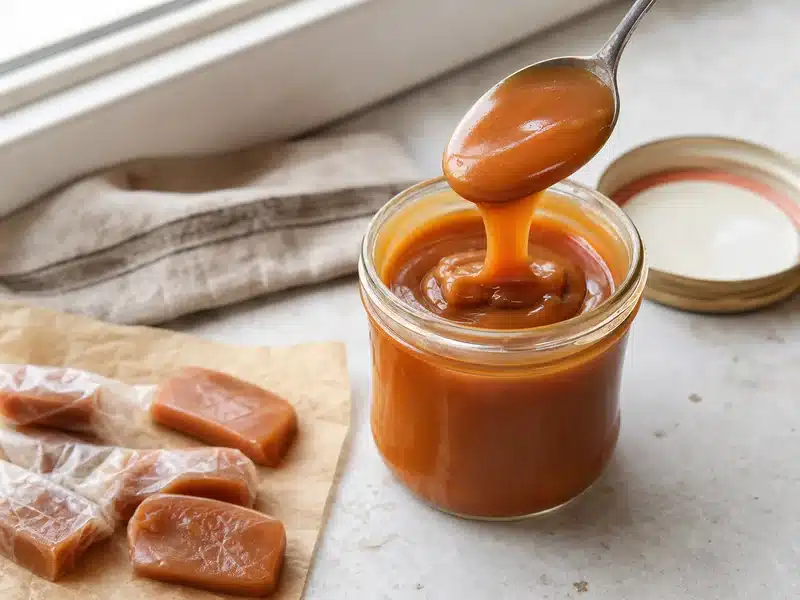
Grainy caramel is not always spoiled. Sugar crystals can form when sauce cools, when it is stirred roughly, or when crystals on the pan edge seed the batch.
Wrapped caramels can also dry out, sweat, or turn firmer in a cold room. Those changes hurt texture, but they are not the same as mold, gas, or sour odor.
Warm clean caramel slowly if it is only too thick. Do not use heat as a repair when the jar smells fermented or the lid pops with pressure.
Dry sweetener swaps work differently because they do not add dairy moisture. Pages like less-sweet backups and brown sugar swaps are about sweetness and texture, not sauce safety.
A clean grainy sauce can often be used in brownies, coffee drinks, or warm toppings where a perfectly smooth finish matters less. A spoiled sauce should not be used anywhere, even in a baked dessert.
Crystallized candy can also be chopped into cookie dough if it smells normal and has no pests. That use works because the oven softens texture, but it does not erase contamination.
When Should You Throw Caramel Away?
Check sauce before candy because sauce has the higher spoilage risk. If you see mold, bubbles, gas pressure, a sour smell, or a sharp fermented taste, throw the sauce away.
Wrapped candy should be discarded when it has mold, pests, sticky leakage from damaged packaging, or a bitter stale smell. Do not cut away one bad edge and keep the rest.
- Throw out sauce if it smells sour, grows mold, bubbles, or separates into a strange watery layer.
- Throw out candy if it has mold, pests, sticky leakage, or a bitter stale odor.
- Warm gently only when caramel is clean but too thick from cold storage.
Do not taste caramel to test it when you already see mold or pressure. Visual spoilage is enough reason to discard the container.
Can You Freeze Caramel Sauce?
You can freeze caramel sauce, but the texture may change. Dairy and sugar can separate a little after thawing, so freeze only sauce that was clean and fresh.
Thaw frozen sauce in the refrigerator, then warm it slowly while stirring. Heat only the portion you plan to use so the main jar does not warm and chill again.
- Cool homemade sauce before sealing the jar.
- Refrigerate dairy sauce within 2 hours.
- Freeze in small portions if you will not use it soon.
- Thaw in the refrigerator before reheating.
- Warm slowly and stir until smooth.
Freezing is a storage tool, not a rescue for spoiled sauce. For wet puree storage, opened opened pumpkin can has a shorter cold clock because water and handling matter more than sugar.
Can You Safely Can Homemade Caramel Sauce?
Home canning is not the same as pouring hot caramel into a clean jar. Safe canning depends on a tested process, the food's formula, and the heat treatment reaching the right conditions.
Dairy caramel sauce is a poor place to improvise because cream and butter change the safety picture. If you want a shelf-stable caramel product, buy a commercially sealed sauce or use a tested preservation source.
Other thick sweet foods have their own rules too. A page like maltose swaps helps with candy behavior, while storage safety still depends on the finished food and water level.
Do not treat a sealed home jar as proof that the sauce is safe. A tight lid can trap gas from spoilage, which is why bulging, hissing, or pressure at opening is a discard sign.
Keep wrapped candy dry
Store wrapped caramels in a cool, dry place away from sunlight. If the bag is open, use an airtight container so the candy does not absorb moisture or smells from the pantry.
Protect refrigerated sauce from dirty utensils
Keep caramel sauce in a clean jar with a tight lid. Use a clean spoon each time, and never dip in a spoon that touched cake, dairy, or crumbs.
For dessert bars, portion the sauce into a small serving bowl and keep the main jar cold. That keeps guests from dipping into the storage jar and shortening the life of the rest.
If you are baking with caramel, plan around the other ingredients too. A cheesecake filling has different storage needs than a dry candy garnish, which is why cream cheese backup decisions and cannabutter storage follow different clocks.
For homemade caramel sauce, clean jar handling matters as much as the refrigerator date. A dirty spoon can shorten the window even when the sauce was cooked well.
Sources
- Penn State Extension guidance on foods that are unsafe to can at home.
- National Center for Home Food Preservation canning safety overview.
- USDA FSIS shelf-stable food safety guidance.
Frequently Asked Questions
Does caramel sauce need to be refrigerated?
Yes for most homemade dairy sauces. Chill it in a clean covered jar, and follow the label for opened store-bought sauce.
Can wrapped caramels go bad?
Yes. They usually dry out or turn stale first, but mold, pests, strange odor, or sticky leakage means you should discard them.
Can you freeze caramel sauce?
Yes, but freezing can change texture. Thaw it in the refrigerator and warm it slowly while stirring.
Is grainy caramel spoiled?
Not always. Graininess can come from sugar crystals, but graininess with sour odor, mold, or bubbles is a discard sign.
Can you leave caramel sauce out overnight?
Do not leave dairy caramel sauce out overnight. If it sat at room temperature for more than 2 hours, discard it.

Carrie is a food writer and editor with more than 15 years of experience. She has worked for some of the biggest names in the food industry, including Bon Appétit, Food & Wine, and Martha Stewart Living.
As the Editor in Chief of EpicureDelight, Carrie oversees all of the content on the site. She also manages the team of contributing writers and editors, who help to create delicious recipes, helpful tips, and informative articles that you’ll find on the site.
A native of the Chicago area, Carrie is passionate about all things food. She loves trying new restaurants and experimenting with new recipes in her kitchen. She’s also a graduate of the Culinary Institute of America, so she knows a thing or two about food!