
Crack a few carom seeds between your fingers and that sharp, almost medicinal hit tells you exactly why they're so hard to swap out. Carom seed (ajwain) carries a pungent warmth that sits somewhere between thyme, citrus, and something fiercer than either. No single substitute matches it perfectly.
That said, five spices come close enough to save your paratha, your dal tadka, or your spiced bread. Each one below includes a tested ratio and honest "skip if" guidance so you're not guessing mid-recipe.
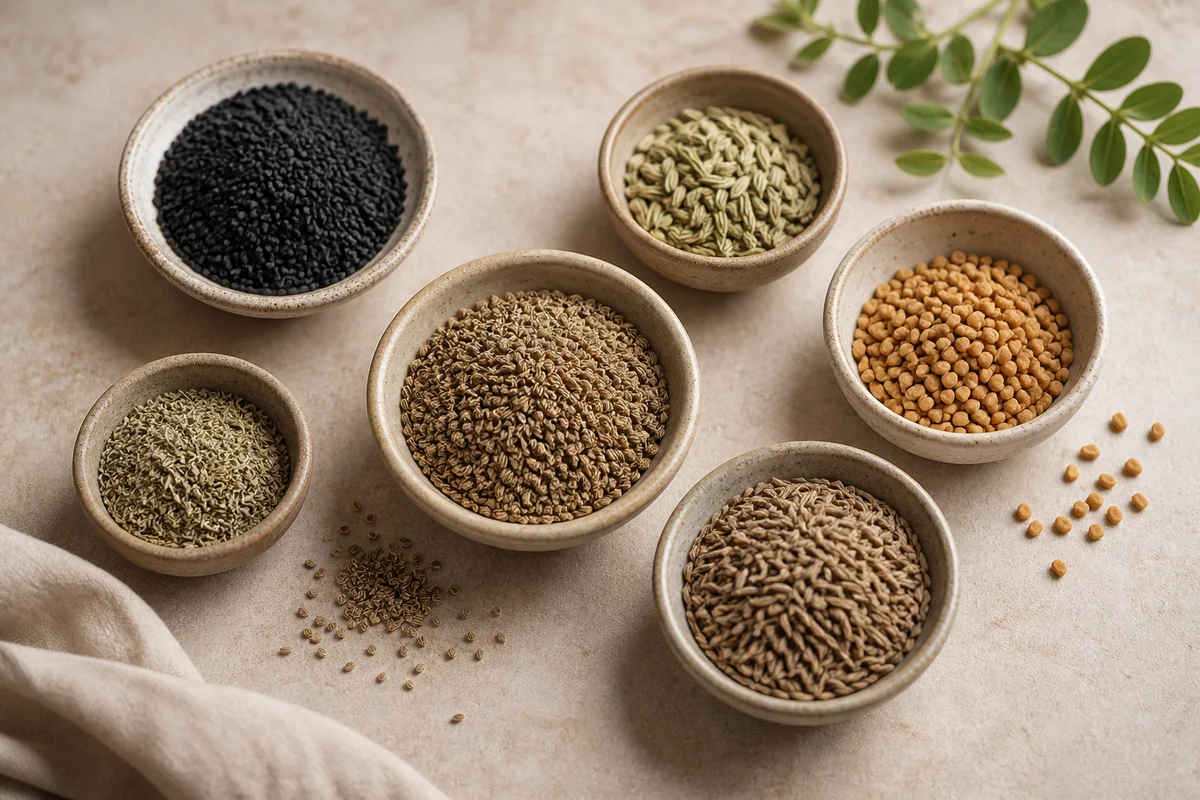
The best carom seed substitute is ground fennel seed at a 1:1 ratio for doughs and pan-fried dishes. Cumin seed (¾:1) adds earthy warmth. Nigella seeds and celery seed (both 1:1) keep the pungent-citrus angle. Dried thyme works in a pinch at ½:1.
5 Best Carom Seed Substitutes Ranked by Flavor Match
| # | Substitute | Best For | Ratio | Key Note |
|---|---|---|---|---|
| 1 | Fennel seed (ground) | Both | 1:1 | Grind first, less anise |
| 2 | Cumin seed (ground) | Cooking | ¾:1 | Earthy, can dominate |
| 3 | Nigella seeds | Both | 1:1 | Crush lightly to spread |
| 4 | Celery seed | Both | 1:1 | Bright, citrus-herbal |
| 5 | Dried thyme (powdered) | Cooking | ½:1 | Milder, use less |
1. Fennel Seeds (Ground)
Ground fennel is the closest aromatic match for a carom seed replacement in most doughs and pan-fried dishes. It brings herbal warmth without the sharp medicinal edge, and at a 1:1 ratio it drops into recipes with very little adjustment needed.
Grind fennel seeds in a spice grinder or crush them in a mortar before adding. Whole fennel releases flavor unevenly and can leave pockets of concentrated anise in the finished dish.
For information on how this spice behaves in different applications, the herbal swap options page covers the broader flavor context well.
- Doughs (paratha, roti, pakora batter): Add ground fennel directly into the flour mix at 1:1.
- Pan-frying and shallow frying: Bloom it in oil for 20-30 seconds before adding other ingredients.
- Spice blends: Use it alongside a pinch of dried thyme to reconstruct more of carom's herbal bite.
Skip if: your recipe already uses star anise, licorice root, or heavy anise flavoring. Fennel pushes sweeter and that direction compounds fast.
2. Cumin Seeds (Ground)
Cumin is the pantry-first choice when you want a carom seed alternative and have nothing else. It delivers recognizable warmth but steers earthy rather than citrus-thyme, so expect a mild flavor shift in delicate dishes.
Use it at ¾ of the original carom amount. Going full 1:1 with cumin often tips the dish toward a heavier, musky register.
If you want to understand how cumin's flavor profile compares in more detail, choosing the right cumin swap matters as much as the ratio itself, and deciding on cumin alternatives can help you calibrate expectations.
- Ratio: Use ¾ teaspoon ground cumin for every 1 teaspoon carom called for.
- Earthy vs. pungent: Cumin mimics the warm-spice feeling but skips the thyme-citrus brightness.
- Control the depth: Start with half, taste, then add the rest gradually so it doesn't take over.
- Best applications: Lentil soups, vegetable stir-fries, and spiced rice where cumin already fits naturally.
Skip if: carom is the lead flavor note in your recipe, like in ajwain paratha or carom-spiced crackers. Cumin reads too differently there.
3. Nigella Seeds (Kalonji)
Nigella delivers a tangy, pungent bite that sits closer to carom than most people expect. It is oniony, slightly peppery, and carries its own sharp edge that can read stronger than carom if left whole.
The fix is simple: crush the seeds lightly before using them. That sharp, peppery seed releases its oils more evenly when cracked, which prevents hot pockets of intensity in the finished dish.
Whole Nigella Seeds
Works for: toppings on naan, flatbread crusts, finishing sprinkles
Skip if: the seeds need to distribute flavor through a batter or dough
Lightly Crushed Nigella
Works for: doughs, tempering oil, spiced vegetables, lentil tadka
Skip if: you want a mild, background warmth - crushed nigella has more assertive bite
- Ratio: 1:1, crushed lightly in a mortar.
- Tempering: Add to hot oil just as you would carom - 20 seconds is enough before adding onion or veg.
- Toppings: Whole seeds on naan or pita work beautifully without any crushing needed.
Skip if: you find oniony, peppery sharpness distracting. Nigella's tang is its whole personality and it does not fade into the background.
4. Celery Seed
Celery seed is the best option when the citrusy, herbal brightness of carom is what you're trying to preserve. It is not identical, but its clean warmth is closer to carom's fresh pungency than cumin or thyme.
Use it at a 1:1 ratio. It works well in vegetable dishes, dal, and spice blends where carom adds a lift rather than a dominant note.
For a broader look at what makes this seed tick, the bright, herbal profile is worth reading before you commit it to a complex blend.
- Dal and lentil dishes: Stir in at the tempering stage, 1:1 with what the recipe asks for.
- Spice blends and dry rubs: Celery seed holds its character without overpowering other spices.
- Vegetable roasts: Toss with oil before roasting - it blooms well under dry heat.
Skip if: your dish already has a strong celery base (celery stalk, celery root, or celery salt). The flavor stacks and can tip the dish in an unwanted direction.
5. Dried Thyme (Powdered)
Thyme is directionally correct as a carom seed substitute because carom's aroma is partly thyme-adjacent. But thyme is milder, so it works as a backup rather than a full match.
Powder the thyme between your fingers before adding it. That breaks the dried leaves into a finer texture that blends into batters and doughs without leaving visible flakes.
For context on how thyme-adjacent spices behave in Indian-style cooking, this anise-herbal flavor comparison covers the overlap well.
- Doughs: Add at the flour stage, powdered, at ½:1 ratio.
- Early vs. finishing: Add thyme early in cooking for herbal depth; late additions can taste raw and grassy.
- Boost the bite: Pair with a small pinch of black pepper to recreate some of carom's pungency.
Skip if: you need the mouth-punch that carom delivers in fried dough like bhatoora or puri. Thyme is too soft for that job - use fennel or nigella instead.
Making Carom Seed Substitutes Work
The biggest mistake with any carom seed replacement is dropping in whole seeds where the original called for crushed or ground. Whole seeds release aroma slowly and unevenly, so your substitute may seem weak at first, then suddenly overwhelming in one bite.
For dishes where you're working with celery-adjacent flavors, understanding bright seed swaps helps you judge how much adjustment you actually need.
- Prep first, always: Grind or crush your substitute before measuring. Ground spices bloom faster and distribute evenly through dough or oil.
- Timing by application: For doughs, mix the substitute into flour before adding liquid. For tempering, add it to hot oil and wait 20-25 seconds before the next ingredient goes in.
- Taste and balance: After cooking, if the flavor reads flat, add a small pinch more of your substitute plus a squeeze of lemon to approximate carom's citrus edge.
Frequently Asked Questions
Ground fennel seed at a 1:1 ratio is the best choice for doughs like paratha or pakora batter. Grind it first so the flavor distributes evenly rather than clumping in one spot.
Grind it. Whole fennel seeds release flavor unevenly and can create pockets of strong anise taste in baked or fried dishes.
No. Cumin is earthy and warm but it skips carom's thyme-citrus brightness entirely. Use celery seed or fennel if that fresh, pungent note matters in your dish.
Add a small squeeze of lemon juice and a pinch of salt to soften the edge. For mustard or nigella that's gone sharp, a little fat (butter or oil) blunts the bitterness quickly.
Yes, at a 1:1 ratio. Add it to hot oil and let it sizzle for 20 seconds before the next ingredient so the flavor blooms properly.
5 Best Carom Seed Substitutes (with Ratios)
Ingredients
Equipment
Method
- Identify whether you’re using carom seeds in dough (paratha/pakora) or as a tempering/topping (sprinkles in lentils/veg).
- Choose the closest flavor match from the substitute list and match the ratio shown (reduce by half for thyme and mustard seeds).
- If the substitute is whole (fennel/cumin/nigella/mustard), grind or crush it so the flavor blooms evenly rather than tasting patchy.
- Taste after cooking and adjust: add a small pinch more for extra pungency, or balance with a bit of salt/sourness.
Notes
- Carom seeds are used for aroma and punch—grinding/crushing is the fastest way to mimic that impact.
- Stronger herbal or bitter substitutes should be reduced to prevent an overpowering finish.
Tried this recipe?
Let us know how it was!
Carrie is a food writer and editor with more than 15 years of experience. She has worked for some of the biggest names in the food industry, including Bon Appétit, Food & Wine, and Martha Stewart Living.
As the Editor in Chief of EpicureDelight, Carrie oversees all of the content on the site. She also manages the team of contributing writers and editors, who help to create delicious recipes, helpful tips, and informative articles that you’ll find on the site.
A native of the Chicago area, Carrie is passionate about all things food. She loves trying new restaurants and experimenting with new recipes in her kitchen. She’s also a graduate of the Culinary Institute of America, so she knows a thing or two about food!



