
Cavatappi's spiral twist and ridged surface are doing real work in your dish. They trap sauce in every groove, so swapping them out carelessly means you get sauce pooling at the bottom of the bowl instead of clinging to every bite.
The good news is that several pasta shapes share enough of those same structural features to do the job well.
The best cavatappi pasta substitute is ridged rotini, which matches the spiral shape and ridged surface at a 1:1 ratio. Ridge-fusilli is the closest corkscrew match. Ridged elbow macaroni works well for creamy dishes, while ridged penne and rigatoni handle chunky sauces best.
The shape logic matters here. Cavatappi's sauce-grip comes from two things working together: the spiral twist and the ridges running along the outside.
Any good substitute should have at least one of those features, and ideally both. Cooking times can also vary by shape, so keep that in mind when you're timing your meal.
5 Best Cavatappi Pasta Substitutes (Shape + Sauce Match)
The table below gives you a fast reference before you read the full breakdown. Each substitute works at a 1:1 ratio, and the key note tells you where it performs best.
| # | Substitute | Best For | Ratio | Key Note |
|---|---|---|---|---|
| 1 | Ridged Rotini | Both | 1:1 | Best all-purpose spiral swap |
| 2 | Ridge-Fusilli | Both | 1:1 | Closest corkscrew texture match |
| 3 | Casarecce-Style | Thick Sauces | 1:1 | Elegant ridged curve; sauce-heavy |
| 4 | Ridged Elbow Macaroni | Creamy | 1:1 | Great for mac and cheese |
| 5 | Penne (Ridged) | Chunky | 1:1 | Tube scoops chunky sauces well |
For thick or creamy sauces, prioritize ridged spirals first. For chunky meat sauces, short ridged tubes like penne or rigatoni can scoop sauce into the hollow center.
Now let's look at each one in detail.
1. Ridged Rotini
Ridged rotini is the substitute we reach for first, and for good reason. It shares cavatappi's spiral structure, and when it has ridges, the sauce contact surface is nearly identical.
Use it at a 1:1 ratio with no other adjustments needed.
The one thing that matters here is confirming your rotini is actually ridged. Smooth rotini spirals sauce but does not grip it the same way.
Once you've confirmed the ridges, this swap is nearly seamless for most dishes.
- Best for: Creamy tomato sauces, baked pasta dishes, and thick cheese sauces where cling counts most.
- Toss tip: Add a small splash of pasta water (about 2 tablespoons) and toss immediately after draining; the starch helps sauce lock onto the ridges.
- Ratio: 1:1 by weight or volume, no adjustment needed.
Skip if: Your rotini is smooth with no ridges, it won't cling consistently to thick sauces and you'll notice sauce sliding off quickly.
2. Ridge-Fusilli
Ridge-fusilli and cavatappi are close cousins. Both spiral along their length, and when the fusilli has ridges, the two shapes behave almost identically in a pot of sauce.
Swap at 1:1 and you likely won't notice a difference in the finished bowl.
The mild, springy pasta texture that makes cavatappi satisfying to eat is present in ridge-fusilli as well. This is especially useful for baked dishes where the pasta needs to hold its shape under heat.
- Best sauce type: Creamy tomato, vodka sauce, pesto, or any sauce with a medium body.
- Timing tip: Taste 1 minute before the package time ends; ridge-fusilli can cook through slightly faster than cavatappi's thicker walls.
- Ratio: 1:1 by weight or volume.
Skip if: You only have smooth fusilli. Choose ridged or expect noticeably less sauce cling, especially with thick cream sauces.
3. Casarecce-Style Ridged Spirals
Casarecce is a rolled, twisted shape with a channel running through the center. That channel does the same work as cavatappi's corkscrew, catching sauce inside as well as on the ridged exterior.
Use it at 1:1, and it performs best with heavier ragù-style sauces that have enough body to fill those curves.
The main practical note is toss time. Pull casarecce at a firm al dente, then toss it in the sauce pan for 60 seconds over low heat.
This keeps it from going soft while giving the sauce time to work into the channel. If your casarecce is noticeably wider than typical cavatappi, pull it 1 minute early and toss a little longer to avoid mushiness.
Skip if: Your casarecce is significantly wider than cavatappi. Adjust by slightly undercooking and tossing longer in the pan.
4. Ridged Elbow Macaroni
Ridged elbow macaroni is a pantry staple that earns its place here for one specific use: creamy, cheesy sauces. The curve of the elbow and its ridges hold cheese sauce surprisingly well, even if the shape lacks cavatappi's full corkscrew.
Swap it at 1:1.
Ridged Elbow vs. Cavatappi
Works for: mac and cheese, creamy alfredo, baked casseroles, any dish where sauce volume is high and sauce-grip matters less than sauce-hold inside a tube.
Skip if: your sauce is very light or oil-based, because the short tube shape holds sauce unevenly compared with a longer spiral.
- Best sauce types: Cheddar cheese sauce, béchamel, creamy tomato, or any thick dairy-based sauce.
- Pasta water tip: Add 3 tablespoons of pasta water before tossing; elbow macaroni has less spiral surface so the starch helps compensate.
- Ratio: 1:1, but toss the finished pasta 30 seconds longer than you would with cavatappi to improve sauce adhesion.
Skip if: Your elbow macaroni is smooth, not ridged. The sauce cling drops noticeably and you lose most of what makes this swap worthwhile.
5. Penne (Ridged)
Ridged penne handles chunky sauces better than any spiral shape because the hollow tube actually scoops meat and vegetable pieces inside it. The outer ridges then catch the sauce coating.
Use it at 1:1 and expect a slightly different mouthfeel, but the sauce-loading is excellent for ragù and arrabbiata styles.
Penne cooks in about 10 to 12 minutes for most brands. Pull it 1 minute early, taste it, then toss directly into the hot sauce rather than draining and waiting.
- Best for: Meat ragù, arrabbiata, roasted vegetable sauces, and other chunky preparations where the sauce has solid pieces to scoop.
- Toss tip: Finish the last minute of cooking in the sauce pan with a splash of pasta water; penne absorbs sauce differently than a spiral and benefits from this step.
- Ratio: 1:1 by weight or volume.
Skip if: Your sauce is delicate, butter-based, or olive oil-only. Tube shapes hold sauce unevenly in lighter preparations and spirals do a better job.
Making Cavatappi Substitutes Work (Cook + Toss)
The rule across all five substitutes is the same: match ridges and shape as closely as you can, cook to a firm al dente, and toss immediately. Any substitute pasta benefits from going straight from the colander into the sauce rather than sitting in a bowl.
Ridged shapes need contact with hot sauce and pasta water starch to develop the coating that makes every bite evenly covered.
- Cook-time check: Taste your substitute 1 full minute before the package time ends; ridged and spiral shapes often finish sooner than the label suggests.
- Pasta water toss: Add 2 to 3 tablespoons of reserved pasta water to the sauce before adding the drained pasta; the starch creates a coating that clings to ridges and tubes.
- Serve immediately: Don't let substituted pasta sit more than 2 minutes before plating; it will continue absorbing sauce and can dry out or go soft faster than cavatappi's thicker walls would allow.
Frequently Asked Questions
Ridged rotini is the closest general-purpose option because it shares cavatappi's spiral shape and ridged surface. Ridge-fusilli is the single best match for corkscrew texture specifically.
You can, but sauce cling drops noticeably with smooth fusilli. Use it for lighter sauces and add extra pasta water to compensate for the reduced surface grip.
Not exactly. Taste 1 minute before the package time ends because rotini and penne are thinner than cavatappi and often finish faster than expected.
Ridged elbow macaroni is the better pick for mac and cheese because the short tube holds melted cheese sauce inside the cavity. Rotini works too but delivers a different texture.
Toss the drained pasta directly into hot sauce within 30 seconds of draining, and add 2 to 3 tablespoons of reserved pasta water. Serve within 2 minutes to prevent absorption and drying.
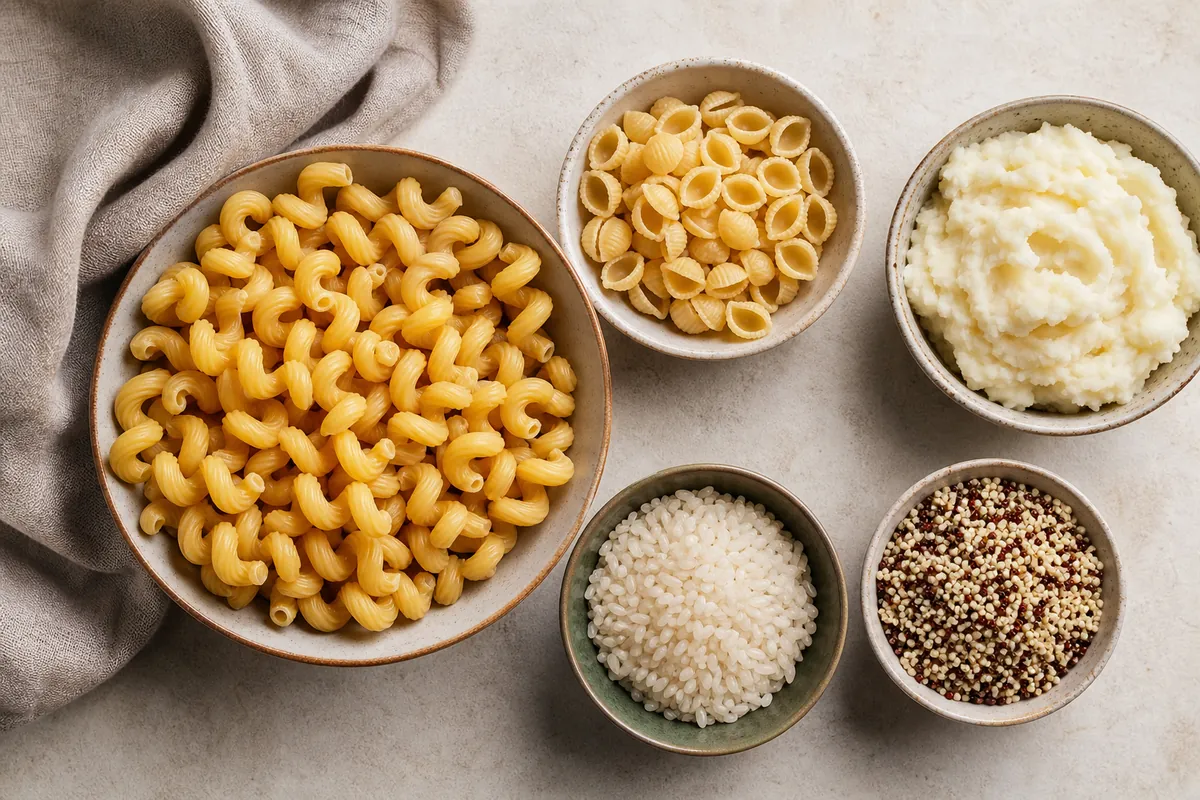
5 Best Cavatappi Pasta Substitutes (Flavor-Matched)
Ingredients
Equipment
Method
- Identify your sauce thickness: thick/cheesy needs ridges; lighter sauces work well with smooth spirals too.
- Choose a 1:1 substitute based on shape: ridged rotini/fusilli for corkscrew grip, ridged elbow/penne/rigatoni for tube-based capture.
- Cook until al dente using the package time, then taste 1 minute early—ridged substitutes often finish slightly faster.
- Toss immediately with sauce (and a splash of pasta water if needed) to help cling build on the ridges.
- If your substitute is smoother than cavatappi, add an extra toss time (30–60 seconds) to improve sauce adhesion.
Notes
- Ridges + spiral/twist are the biggest drivers of sauce cling.
- Cook al dente and toss right away for the closest “bite + coating” effect.
Tried this recipe?
Let us know how it was!
Carrie is a food writer and editor with more than 15 years of experience. She has worked for some of the biggest names in the food industry, including Bon Appétit, Food & Wine, and Martha Stewart Living.
As the Editor in Chief of EpicureDelight, Carrie oversees all of the content on the site. She also manages the team of contributing writers and editors, who help to create delicious recipes, helpful tips, and informative articles that you’ll find on the site.
A native of the Chicago area, Carrie is passionate about all things food. She loves trying new restaurants and experimenting with new recipes in her kitchen. She’s also a graduate of the Culinary Institute of America, so she knows a thing or two about food!



