
That savory, faintly grassy punch celery salt adds to a Bloody Mary or a potato salad is hard to place until it's missing. The blend is simple: celery salt substitute searches spike because people forget it's two things at once, celery aroma and salt, not just one seasoning you can swap blindly.
Getting the balance right matters more than finding a single drop-in. A plain salt swap seasons the dish but loses the celery note entirely.
A celery-only swap brings the aroma back but leaves everything under-seasoned.
Celery salt is a two-part blend: celery aroma and salt. The best swaps rebuild both. Crushed celery seed plus table salt is the closest match. Ground celery seed alone works when salt is already in the recipe. Old Bay fits savory cooking only.
5 Best Celery Salt Substitutes in Every Recipe
| # | Substitute | Best For | Ratio | Key Note |
|---|---|---|---|---|
| 1 | Celery seed (crushed) + salt | Both | 1:1 | Closest flavor match |
| 2 | Ground celery seed + pinch salt | Both | ¾:1 | Best for aroma-forward dishes |
| 3 | Old Bay seasoning | Savory | 1:1 | Adds warm spice notes |
| 4 | Dried celery flakes (minced) + salt | Both | 1:1 | More herb-like aroma |
| 5 | Garlic-herb salt + celery seed pinch | Savory | 1:1 | Emergency fix only |
1. Celery Seed (Crushed) + Salt
Crushing celery seeds is the single step that separates a good swap from a flat one. Whole seeds release less aroma into a dish, so a quick pass in a mortar or under a spoon brings out their oil.
Because this dried seasoning blend loses potency over time, fresher seeds always give a stronger result.
Use a 1:1 ratio total, with roughly one-half of the volume as crushed seed and the other half as fine table salt. Taste after stirring into wet dishes, or after the first few minutes of cooking dry applications like rubs.
- Ratio: ½ teaspoon crushed celery seed + ½ teaspoon table salt = 1 teaspoon celery salt
- Best for: Dressings, potato salad, Bloody Mary, meat rubs, deviled eggs
- Adjust: Start with slightly less salt, taste, then add the final pinch
- Skip if: You need a single-ingredient swap and have no celery seed on hand
2. Ground Celery Seed + Salt
Ground celery seed brings the aroma immediately, with no crushing required. The flavor varies noticeably by brand, so understanding seed intensity and flavor notes helps you decide how much to use before you start measuring.
- Ratio: ¾ teaspoon ground celery seed + a small pinch of salt = 1 teaspoon celery salt
- Add salt gradually: Start with a half-pinch, stir, taste, then decide if you need more
- Works well in: Coleslaw, pickling brines, spice rubs, soups, dipping sauces
- Skip if: The recipe is salt-sensitive baking where you cannot taste and adjust mid-process
3. Old Bay Seasoning
Old Bay is salty and carries a celery-like note from the spices already in it. It also brings paprika, bay leaf, and pepper, so the flavor profile is broader than plain celery salt.
Knowing what this spiced coastal blend adds helps you judge whether it fits the recipe before you commit.
Old Bay Seasoning
Works for: Seafood boils, roasted potatoes, soups, stews, chicken rubs, corn on the cob
Skip if: You're baking, or the dish has a mild flavor where warm spices will stand out
- Ratio: 1:1, but start at three-quarters and taste before adding the rest
- Salt check: Old Bay is already quite salty, so pull back on any other salt in the recipe
- Best use: Savory, hearty dishes where extra spice notes blend into the background
4. Dried Celery Flakes + Salt
Dried celery flakes taste more like the vegetable's leaf than like the seed, which makes them an herb-forward swap. They work best when minced finely so they distribute evenly in sauces and doughs rather than sitting in clumps.
If you want to understand how dried flake seasoning differs in flavor, it reads as fresher and greener than the seed version.
- Prep: Mince or crumble flakes as fine as possible before measuring
- Ratio: ½ teaspoon finely minced celery flakes + ½ teaspoon table salt = 1 teaspoon celery salt
- Best for: Soups, stews, casseroles, stuffing, savory breads
- Skip if: You don't have salt to add alongside, because the flakes alone won't match celery salt's seasoning power
5. Garlic-Herb Salt + Celery Seed
This is the emergency fix for when the pantry is nearly bare. A garlic-herb seasoning salt covers the saltiness gap and adds a savory base, but it won't deliver celery aroma on its own.
Add a small pinch of celery seed if you have any at all, because even a modest amount pulls the flavor back toward the original.
| Use | Ratio | Notes |
|---|---|---|
| Soups and stews | 1:1 | Garlic-herb salt + celery seed pinch; reduce other added salt |
| Meat rubs | 1:1 | Mix well before applying; garlic note blends in during roasting |
| Dressings | ¾:1 | Start under ratio; garlic-herb salt can overpower lighter vinaigrettes |
| Baking | Avoid | Garlic and herb notes clash with sweet or delicate baked goods |
You can see how swapping spiced seasoning blends generally follows the same taste-and-adjust logic across recipes. Always reduce any other salt in the dish when using flavored salts.
- Ratio: 1 teaspoon garlic-herb salt + 1 small pinch celery seed = 1 teaspoon celery salt
- Best for: Roasted vegetables, potato dishes, heartier soups
- Skip if: Celery flavor is central to the dish and garlic notes will read as off
Making the Swap Taste Right
The single thing that separates a seamless substitute from a noticeable one is tasting at the right point. Celery salt blends vary in how salty or how celery-forward they are, so no ratio is absolute.
If you want to go deeper on what the original contributes, knowing the savory seed profile of celery salt helps you identify exactly what your dish is missing.
When you're working in baking, picking a reliable seed alternative early matters because you can't taste and fix mid-bake the way you can in a soup.
- Salt balance: Start with 75% of the measured substitute, then taste before adding the last 25%. Most swaps run saltier or milder than the original blend.
- Celery aroma: If the dish tastes flat after the first cook step, a half-pinch of ground celery seed stirred in at the end usually recovers the aroma without over-salting.
- Baking vs. savory timing: In savory cooking, adjust after the first 5 minutes. In baking, mix your substitute into dry ingredients first and keep it at or slightly under the recipe's called-for amount, since you can't correct once it's in the oven.
Frequently Asked Questions
You can, but the dish will be under-seasoned because celery seed adds aroma without much saltiness. Always add a pinch of table salt alongside to match celery salt's full effect.
Crushed celery seed mixed with table salt at equal parts is the closest match. Use half a teaspoon of each to replace one teaspoon of celery salt.
Use the substitute at or slightly under the called-for amount, then mix it into dry ingredients first. You can't taste-correct once the batter is in the oven.
Yes, at a 1:1 ratio, but reduce any other salt in the recipe since Old Bay is quite salty. Expect a slightly spicier, more complex flavor from the blend.
Keep it in a small airtight glass jar away from heat and light. Use it within keeping seeds fresh guidelines, roughly six months, for best aroma.
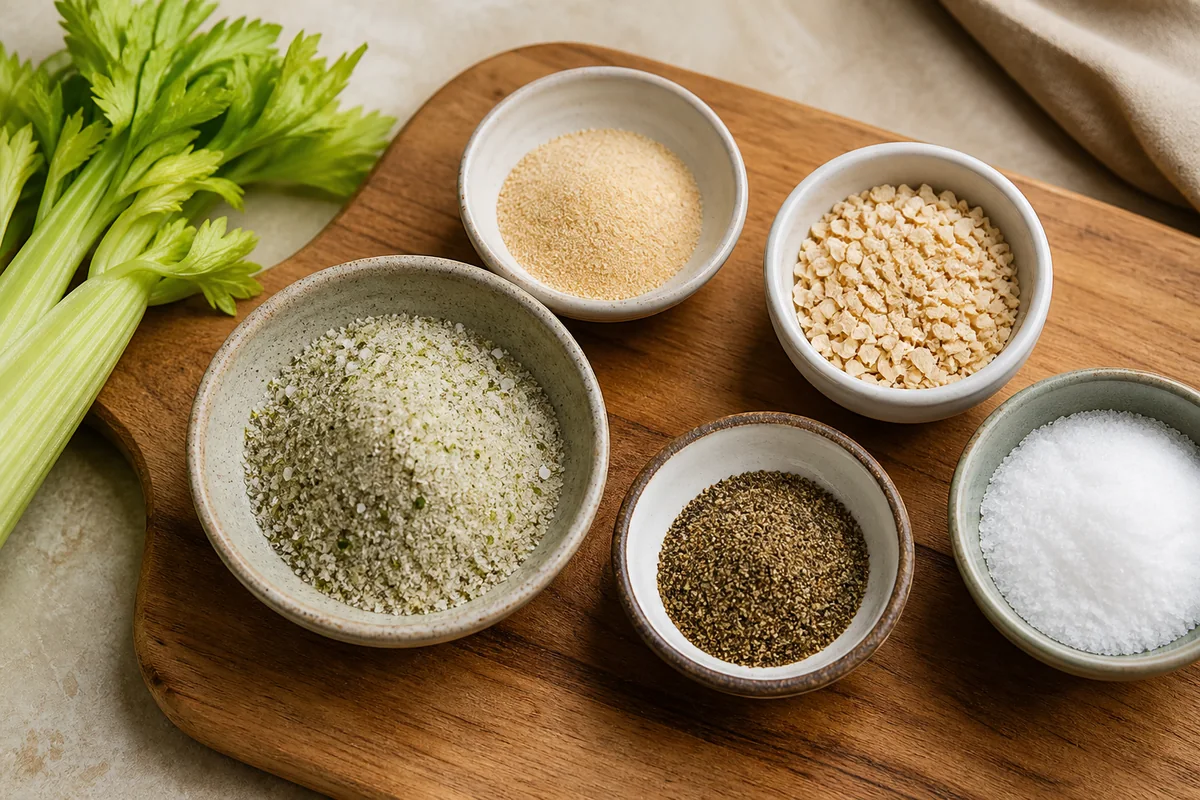
5 Best Celery Salt Substitutes in Every Recipe
Ingredients
Equipment
Method
- Identify how you’ll use celery salt (seasoning blend for savory cooking vs. baking). If the recipe needs pure saltiness, prioritize a combo approach (celery seed + salt).
- Swap using the listed ratio for your closest match, then add gradually (especially for blends like Old Bay).
- Mix the substitute into wet ingredients early (sauces, dressings) or distribute dry seasoning evenly (potatoes, meat rubs, dough).
- Taste after the first cook step (or after combining dough/sauce). Adjust with extra salt or a pinch more celery seed to dial in the celery aroma.
- If you made a celery-seed + salt blend, store it airtight so the celery aroma doesn’t fade.
Notes
- Celery salt is a blend, so the best substitutes either recreate both notes or closely match the dominant flavor for your dish.
- Celery seed aroma is stronger when freshly crushed—if your substitute tastes flat, crush before using.
Tried this recipe?
Let us know how it was!
Carrie is a food writer and editor with more than 15 years of experience. She has worked for some of the biggest names in the food industry, including Bon Appétit, Food & Wine, and Martha Stewart Living.
As the Editor in Chief of EpicureDelight, Carrie oversees all of the content on the site. She also manages the team of contributing writers and editors, who help to create delicious recipes, helpful tips, and informative articles that you’ll find on the site.
A native of the Chicago area, Carrie is passionate about all things food. She loves trying new restaurants and experimenting with new recipes in her kitchen. She’s also a graduate of the Culinary Institute of America, so she knows a thing or two about food!



