
Chili paste does three things at once: it brings heat, body, and a faint fermented depth that sauces and stir-fries depend on. When it's gone, a thin, one-note substitute will leave the dish feeling flat.
The best chili paste substitute matches at least two of those three qualities, then lets you adjust the third.
Most swaps work well if you respect the ratio and taste as you go. A little vinegar can restore tang.
A quick simmer can add body. The five options below cover sweet, smoky, garlicky, and straight-heat profiles.
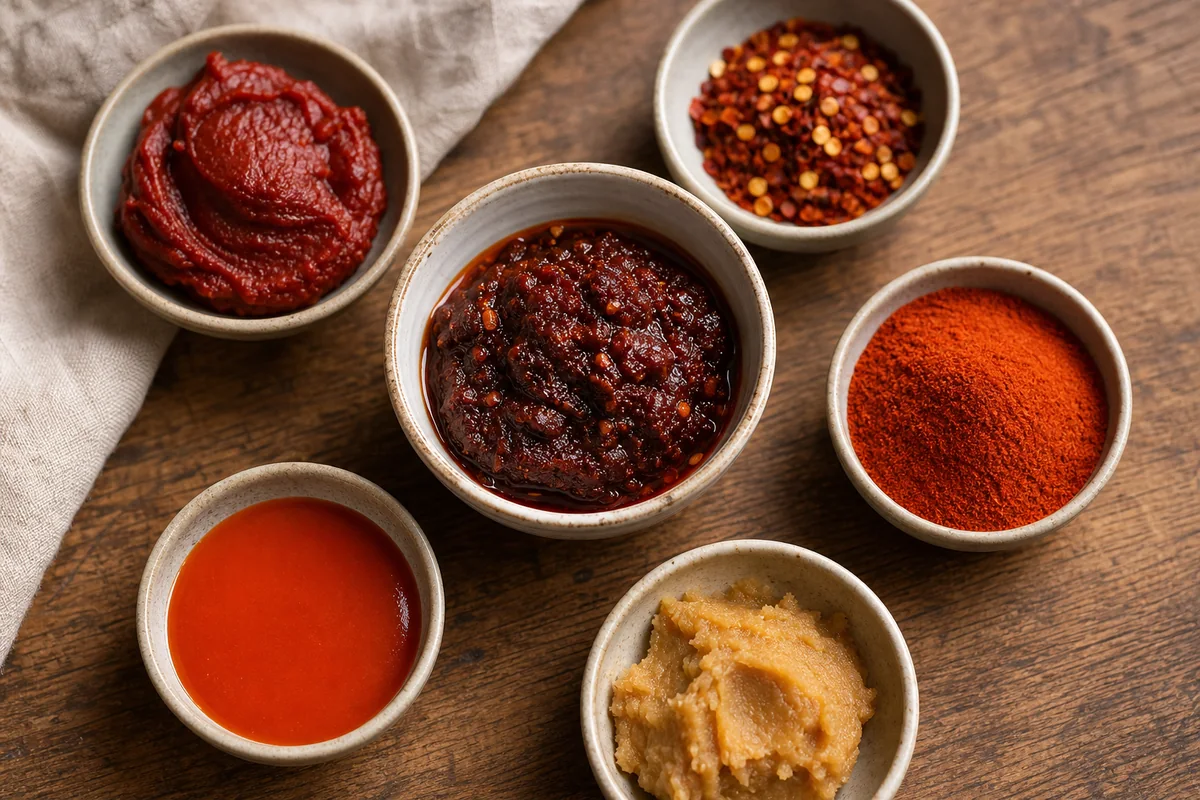
The closest match to chili paste is sambal oelek at a 1:1 ratio. For a sweet-spicy option, use gochujang at ¾ of the amount. Harissa works for smoky depth. A hot sauce and chili flake blend or chili oil with vinegar covers emergency situations.
5 Chili Paste Substitutes (Flavor-Matched for Heat + Tang)
Not every substitute here tastes like chili paste. They each match one or two of its jobs, and the table below shows which job each one does best.
| # | Substitute | Best For | Ratio | Key Note |
|---|---|---|---|---|
| 1 | Sambal Oelek | Both | 1:1 | Bright, slightly vinegary |
| 2 | Gochujang | Both | ¾:1 | Sweet and fermented |
| 3 | Harissa | Cooking | ¾:1 | Smoky, cumin-forward |
| 4 | Hot Sauce + Chili Flakes | Cooking | 1:1 | Thicken before using |
| 5 | Chili Oil + Vinegar | Finishing | 1:1 | Thin; add soy for body |
1. Sambal Oelek
Sambal oelek is the most direct swap on this list. It is ground fresh chilies with very little else, so the texture is coarse and thick.
That means it holds up in stir-fries, glazes, and braises the same way chili paste does.
The one thing to know is that sambal oelek is brighter and slightly more acidic than most neutral chili pastes. If you want to understand its full flavor behavior before using it, the fermented chili profile is worth a quick read.
In most savory applications, that brightness is an asset, not a problem.
Sambal Oelek vs Chili Paste
Works for: stir-fries, marinades, glazes, noodle sauces, dipping blends
Skip if: your recipe needs a sweet-fermented base (gochujang is a better call there)
- Ratio: Use 1:1 as a direct swap in most savory recipes
- Acidity fix: If it tastes too sharp, cook it in the pan for 30 seconds before adding other ingredients
- Texture note: The coarse grind is chunkier than smooth chili paste; blend it briefly for a smoother finish
Skip if: your recipe needs a sweet or fermented flavor base. Sambal oelek is clean heat, not complex sweetness.
2. Gochujang
Gochujang is a Korean fermented chili paste with a sweet, miso-like depth. It is thicker and stickier than most chili pastes, which means it behaves well in sauces and braises but can tip sweet fast.
If you are deciding between fermented options, gochujang is the one to reach for when you want body and complexity together.
- Ratio: Start at ¾ the amount called for, then taste before adding more
- Balance trick: Add a small splash of rice vinegar or a pinch of salt if it reads heavy or overly sweet
- Heat level: Milder than raw chili paste; add a pinch of chili flakes if you need more fire
- Best uses: Marinades, bibimbap-style bowls, glazes, ramen broth, slow-cooked sauces
Skip if: your recipe needs sharp, savory heat without sweetness. Harissa or sambal oelek will serve you better there.
3. Harissa
Harissa is a North African chili paste built on roasted chilies, garlic, cumin, and sometimes caraway. It brings heat and a smoky, spiced warmth that chili paste doesn't always have.
For dishes that can carry those extra notes, such as lamb, roasted vegetables, or tomato-based sauces, it is a strong swap. If you need to go the other direction and find something to replace harissa itself, swapping smoky paste covers those options well.
Use ¾ of the amount called for in your recipe. If the original chili paste was neutral, the cumin and garlic in harissa may shift the flavor noticeably.
Finish with a squeeze of lemon or a small splash of vinegar to lift it back toward brightness.
- Ratio: ¾:1; reduce further if the dish is already spiced
- Smokiness fix: If it reads too smoky, stir in a small spoon of plain tomato paste to dilute
- Best uses: Roasted meats, shakshuka, grain bowls, yogurt-based dips, slow braises
Skip if: the dish has a delicate or clean flavor profile. Harissa will dominate it. Choose sambal oelek for cleaner heat.
4. Hot Sauce + Chili Flakes
This is the emergency build-it-yourself option. Hot sauce alone is too thin and too acidic to behave like chili paste.
But if you simmer it with dried pepper flakes for 30 to 60 seconds, it thickens enough to cling to food and coat a spoon.
| Use | Ratio | Notes |
|---|---|---|
| Stir-fry sauce | 1 tablespoon hot sauce + ½ tablespoon flakes | Simmer 45 sec before adding veg |
| Marinade | 1 tablespoon hot sauce + 1 teaspoon flakes | Let sit 5 min; flakes bloom in acid |
| Dipping sauce | 1 tablespoon hot sauce + 1 tablespoon flakes | No cooking needed; rest 10 min |
- Ratio: 1:1 by volume as a starting point, before simmering
- Heat warning: Chili flakes intensify after blooming; taste after simmering, not before
- Tang control: If the hot sauce is very vinegary, cut it with 1 teaspoon water and 1 teaspoon soy sauce
Skip if: you need chili paste's thickness to coat or bind ingredients and don't have time to simmer. Without that step, hot sauce slides right off.
5. Chili Oil + Vinegar
Chili oil has the heat and aroma of chili paste, but none of the body. To make it work in place of paste, you need to address two things: thickness and tang.
A small splash of vinegar (or soy sauce) pulls the oiliness into focus and gives it the savory edge that paste normally provides. For a broader look at liquid heat options, there are more directions to consider depending on your dish.
Use a 1:1 ratio by volume, then add ½ teaspoon of rice vinegar or soy sauce per tablespoon of chili oil. Stir it into a hot pan for 20 seconds before adding other ingredients.
That brief contact with heat drives off some of the raw oil flavor and helps it behave more like a paste.
- Ratio: 1 tablespoon chili oil + ½ teaspoon vinegar or soy, per 1 tablespoon chili paste called for
- Best uses: Finishing sauces, quick noodle toss, drizzled into soups, fast stir-in seasonings
- Body boost: Add ½ teaspoon cornstarch slurry if the dish needs actual cling and coating
Skip if: you need fermented sweetness. Chili oil is heat and aroma only. Reach for gochujang instead.
Making Chili Paste Substitutes Taste Right
Getting the ratio right is only half the job. Every substitute above behaves differently once heat, acid, and time get involved.
The chopped chili swap options and the fermented paste types all shift in intensity after cooking, so tasting at the end matters more than tasting at the start. If you're also working with replacing liquid chili sauce in the same recipe, adjust both at once rather than separately.
- Too sharp or acidic: Add a pinch of salt and cook one extra minute to mellow the edge
- Too sweet: Reduce by 1 to 2 teaspoons next time and finish the dish with a small splash of vinegar
- Too thin: Simmer uncovered for 60 seconds or stir in ½ teaspoon of tomato paste to add body
Frequently Asked Questions
Yes, but flakes lack the body and moisture of paste. Bloom them in a little oil or hot sauce first, then use about 1 teaspoon of flakes per tablespoon of chili paste.
Start at ¾:1, not 1:1. Gochujang is sweeter and more fermented, so a full swap can tip the flavor too far toward sweetness in savory applications.
Simmer hot sauce with chili flakes for 30 to 60 seconds over medium heat. It thickens enough to cling to food and coat a spoon.
Harissa is the best pick. It brings roasted chili heat plus cumin and garlic warmth. Use ¾ the amount and taste before adding more.
Not on its own. Pair it with soy sauce or vinegar for tang, and stir in a small cornstarch slurry if the dish needs actual coating and cling.
5 Best Chili Paste Substitutes (Flavor-Matched)
Ingredients
Equipment
Method
- Identify your recipe need: thick stir-in heat (best) vs smoky-spice depth vs sweet-fermented flavor.
- Start with the recommended ratio from the table (or reduce by 25% for sweet pastes like gochujang/harissa).
- If using a liquid substitute, simmer 30–60 seconds with chili flakes or a spoon of sauce so it clings to food.
- Adjust in small increments: add vinegar for tang, salt for savoriness, and a pinch of sugar only if the swap tastes harsh.
- Taste after cooking—chili pastes mellow, so judge heat at the end, not the start.
Notes
- Match thickness first (paste vs liquid). If your swap is sweeter or smokier than your chili paste, start lower and adjust tang/salt to compensate.
Tried this recipe?
Let us know how it was!
Carrie is a food writer and editor with more than 15 years of experience. She has worked for some of the biggest names in the food industry, including Bon Appétit, Food & Wine, and Martha Stewart Living.
As the Editor in Chief of EpicureDelight, Carrie oversees all of the content on the site. She also manages the team of contributing writers and editors, who help to create delicious recipes, helpful tips, and informative articles that you’ll find on the site.
A native of the Chicago area, Carrie is passionate about all things food. She loves trying new restaurants and experimenting with new recipes in her kitchen. She’s also a graduate of the Culinary Institute of America, so she knows a thing or two about food!



