Coconut oil usually keeps its best quality for about 18 to 24 months when the jar stays sealed, dry, and away from heat and light.
Use the best-by date on your jar because processing and packaging change the exact window. Opening does not start a short refrigerator clock, but it exposes the oil to more oxygen and kitchen contamination.
Solid, soft, and liquid coconut oil can all be normal. Discard the oil when it smells rancid, sour, paint-like, or musty, or when you see mold or wet debris in the jar.
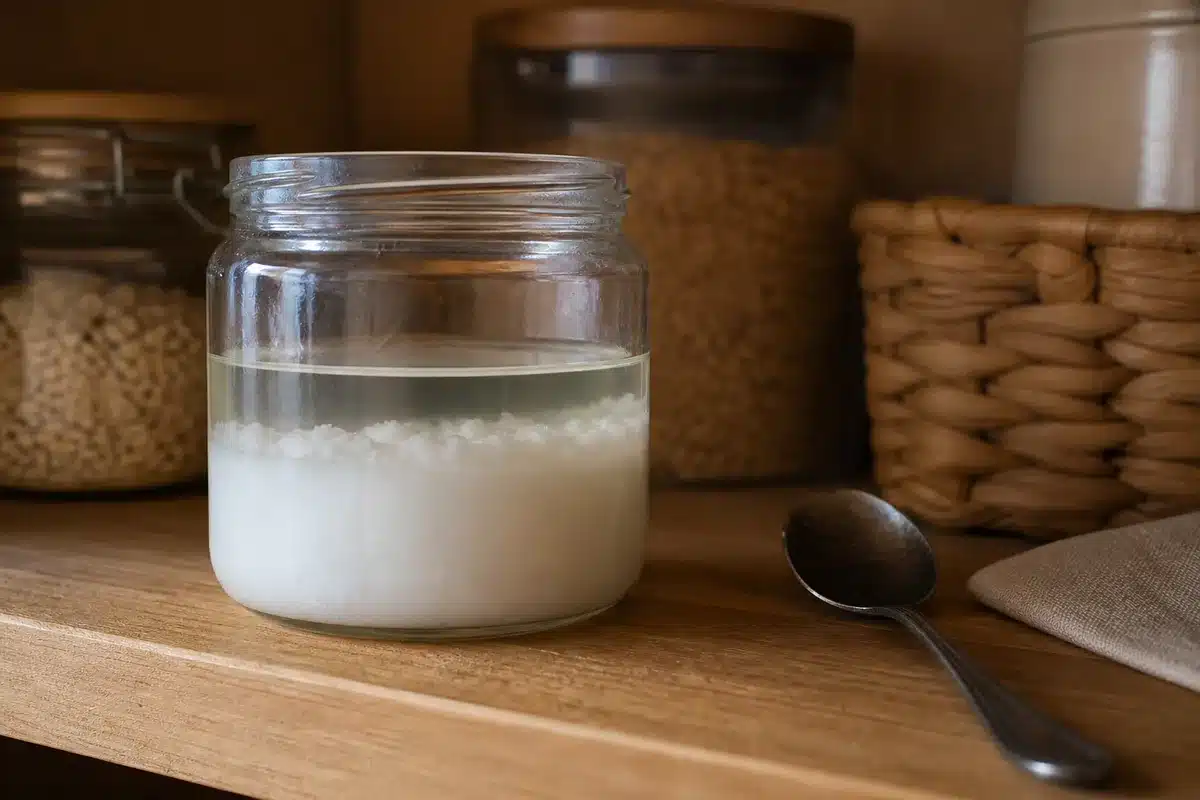
Coconut oil is usually bad when it smells rancid, bitter, soapy, or paint-like, not when it changes from solid to liquid. Keep the jar dry and tightly closed because moisture and dirty utensils shorten its life.
How Long Does Coconut Oil Last?
| Jar state | Useful guide | What owns the decision |
|---|---|---|
| Unopened | Often 18 to 24 months | Maker date, seal, heat, and light exposure |
| Opened and kept dry | Use the printed date as the baseline | Odor, lid condition, and storage history |
| Past the best-by date | No automatic discard day | Rancid odor, debris, moisture, or damage |
An undated jar at the back of a cupboard cannot be judged by age alone.
Commercial coconut oil often carries an 18-to-24-month quality window because its high saturated-fat content resists oxidation better than many liquid cooking oils.
The number is not a promise for every jar. Virgin and refined oils use different processing, while clear glass, loose lids, warm shelves, and wet utensils can shorten useful life.
Start with the printed date because it reflects the maker's process and package. Then check the seal, storage spot, and aroma.
Cracked lids, a warm ledge, or a smell that changed from the original jar all shorten confidence in the date.
A past best-by date often signals possible flavor loss rather than a sudden safety change in plain oil. Inspect the jar and discard it when the aroma or condition has turned.
Do not apply this clock to coconut milk, coconut butter, or shredded coconut. Those foods contain different amounts of water, so the shredded coconut timing owns that separate decision.
Does Melted or Solid Coconut Oil Mean It Has Spoiled?
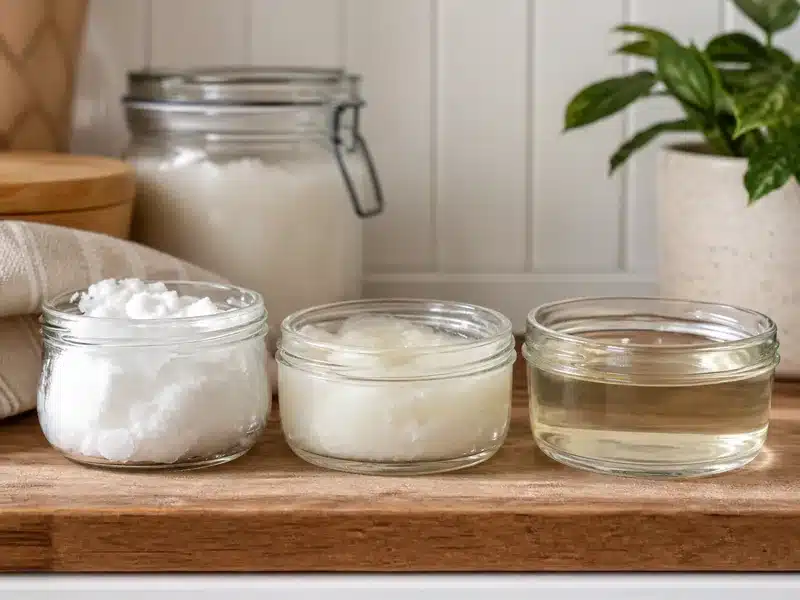
A jar can show a white lower layer beneath a clear upper layer during a warm afternoon.
This split reflects melting, not spoilage. Ordinary coconut oil changes from solid to liquid near 76°F, so a cool room creates white crystals and a warm room creates clear oil.
A partly melted jar is not spoiled just because it looks uneven. Check odor, debris, moisture, and storage history before making the decision.
Small grains and crystals can form as the oil cools at different speeds. Gentle room-temperature warming will make them disappear without improving or harming the oil.
Refrigeration is optional for plain commercial coconut oil and makes it harder to scoop. Repeated melting and solidifying may change crystal texture, but it does not create microbes in a clean, dry jar.
The aroma depends on the product. Virgin oil should retain a mild coconut scent, while refined oil may smell nearly neutral from the start, as described in the coconut flavor.
How Should You Store Coconut Oil?
A jar sitting above a warm stove ages faster than one in a shaded cupboard.
Heat and light speed chemical reactions with oxygen, while an open lid lets fresh oxygen reach the oil each day.
Heat and light speed flavor loss
Choose a closed cabinet instead of a sunny counter or a spot beside the oven, dishwasher vent, or range. A stable room temperature protects aroma longer.
Oxygen reaches the oil through the lid and headspace
Close the jar promptly and wipe oily threads with a clean dry towel so the lid seals. A smaller working container can reduce repeated air exposure when the main jar is large.
Water changes a low-moisture food
Use a clean dry spoon. Water and crumbs create small pockets where mold or microbes can grow even though plain coconut oil contains little water.
Use a clean dry spoon and never return used oil from a pan to the original jar. Fried crumbs, salt, and water change the product and make the original date meaningless.
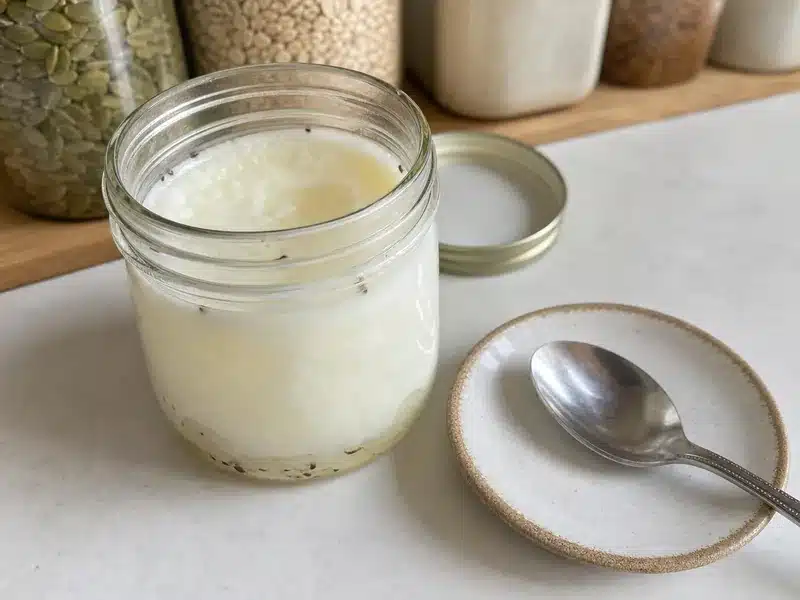
If the jar is too large for slow use, move a working portion into a smaller clean dry container. Keep the main jar sealed so it sees less air and handling.
Choose a container with a narrow opening for a pourable working portion. Less exposed surface means less oil contacts fresh air each time you open it.
A cooking replacement uses a different flavor and melting profile. The solid-fat backup covers that choice, while neutral oil options fit recipes that need a neutral liquid fat.
Baking may need a fat that firms as it cools. The butter swap helps match that structure when the coconut oil has turned rancid or the coconut flavor does not fit.
How Can You Tell Whether Coconut Oil Is Rancid?
Open the lid and smell the oil before focusing on the date.
Fresh virgin coconut oil smells mild and coconut-like, while refined oil smells faint or neutral. Oxidized oil can smell like paint, crayons, soap, old nuts, or stale cardboard.
- Usually normal: white crystals, clear liquid, partial melting, and a mild familiar aroma.
- Oxidized: a new paint-like, soapy, sour, musty, or harsh odor.
- Contaminated: mold, wet pockets, food crumbs, insects, or unexplained colored patches.
A slight yellow cast can occur in some oils and is not enough to prove spoilage. Pair color with odor, debris, package damage, and storage history.
Do not seek a taste test when the oil already smells wrong or contains growth. Rancid oil will also spoil the flavor of every ingredient in the pan.
Do Refined and Virgin Coconut Oils Age the Same Way?
Two new jars can smell different on day one because refining removes much of coconut oil's natural aroma and flavor.
Virgin oil offers a clearer aroma clue, while refined oil may need closer attention to paint-like or stale notes that were not present when new.
Virgin oil has an aroma baseline
Fresh virgin coconut oil smells mildly coconut-like. Protect that aroma from heat, light, and oxygen, and treat a new harsh or stale odor as a change.
Refined oil starts close to neutral
The label date and storage history carry more weight because there is less coconut aroma to compare. Paint-like or stale notes that were absent in a new jar still signal oxidation.
Fractionated coconut oil and MCT oil stay liquid at cooler temperatures and follow their own labels. Fresh garlic, herbs, fruit, or water also create a different food-safety problem, so use a tested infused-oil method instead of the plain coconut oil clock.
Fractionated coconut oil and MCT oil also remain liquid at lower temperatures. Use the MCT oil timing for that bottle and the MCT oil swap when a recipe needs its specific liquid behavior.
The label and the original aroma form your baseline. Compare today's jar with that baseline instead of comparing two different coconut oil types.
Use a dry spoon every time you scoop from the jar. Water droplets can create small cloudy pockets that age faster than the rest of the oil.
Refined coconut oil gives fewer smell clues than virgin oil. If the jar tastes bitter or leaves a waxy stale finish, replace it even when the color still looks normal.
Sources
These sources support the typical quality window and temperature behavior used above.
- Nutiva coconut oil questions for a manufacturer-stated shelf life of at least two years.
- NOW Foods coconut oil questions for coconut oil properties and quality testing.
- CocoGoods coconut oil questions for pantry storage, phase change, and rancid odor guidance.
The maker's date remains more specific than a general range because processing, water content, and packaging differ among products.
Frequently Asked Questions
Plain commercial coconut oil usually does not need refrigeration. A cool dark cupboard keeps it easy to scoop while protecting it from heat and light.
Normal room-temperature melting and solidifying do not prove spoilage. Heat, light, oxygen, moisture, and dirty utensils matter more than the phase itself.
Inspect the jar, storage history, aroma, and surface first. Discard oil with a new rancid or musty odor because baking will not restore its flavor.
Plain oil should not contain a water pocket. Discard a contaminated jar and use only clean dry utensils in the next one.
Some products start slightly yellow, so color alone is not enough. A new harsh odor, mold, wet debris, or major color change supports discarding it.

Carrie is a food writer and editor with more than 15 years of experience. She has worked for some of the biggest names in the food industry, including Bon Appétit, Food & Wine, and Martha Stewart Living.
As the Editor in Chief of EpicureDelight, Carrie oversees all of the content on the site. She also manages the team of contributing writers and editors, who help to create delicious recipes, helpful tips, and informative articles that you’ll find on the site.
A native of the Chicago area, Carrie is passionate about all things food. She loves trying new restaurants and experimenting with new recipes in her kitchen. She’s also a graduate of the Culinary Institute of America, so she knows a thing or two about food!