
That sauce is almost perfect, and then you reach for the cornstarch and find an empty box. A good cornstarch substitute can save the dish, but the wrong one will leave you with a cloudy, gluey, or floury result.
Cornstarch does three things: it thickens sauces, creates a glossy sheen on glazes, and adds structure to some baked goods. The substitutes below can cover most of those jobs, but each one behaves differently under heat.
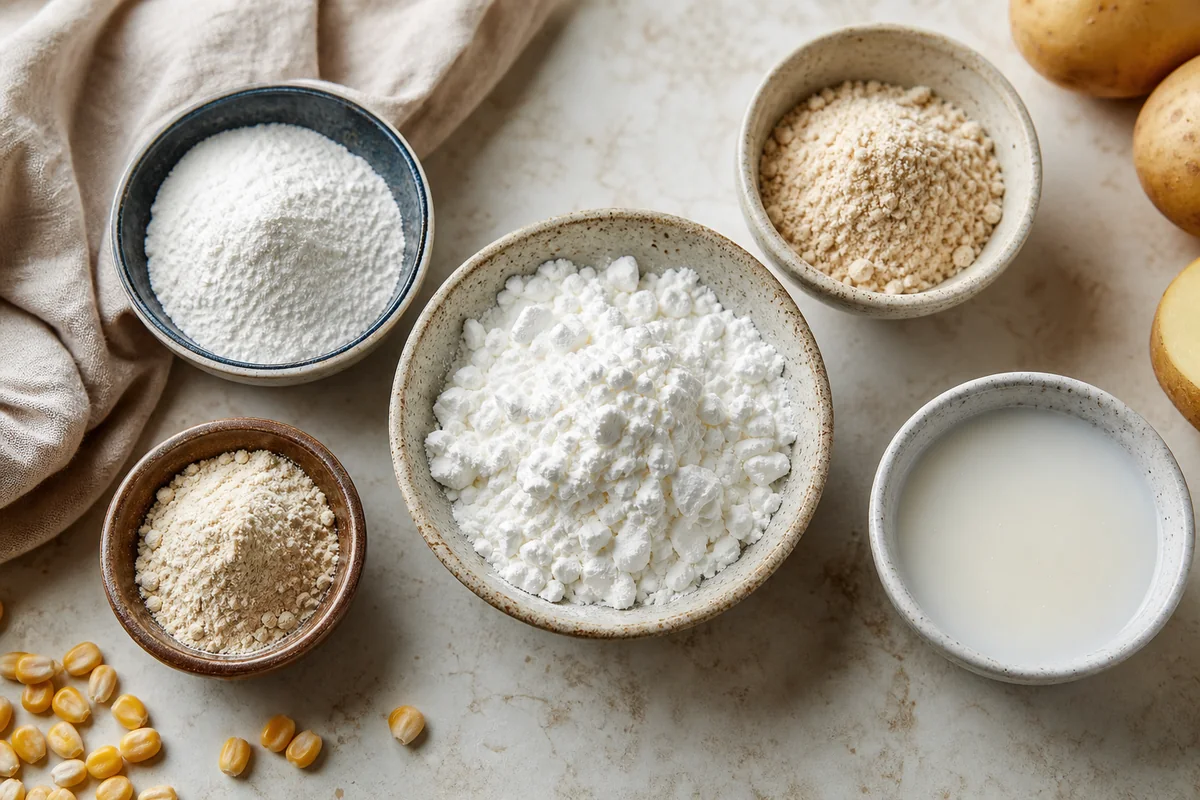
For clear, glossy sauces, arrowroot or tapioca starch are your best options at a 1:1 ratio. Potato starch works well for gravies and reheated dishes. All-purpose flour and rice flour are solid backups, but both need a 1.5:1 ratio and a longer simmer to deliver clean flavor and decent body.
5 Best Cornstarch Substitute Swaps (Ranked)
The table below gives you a fast read on ratios and best uses. "Clear" means the sauce stays glossy and translucent.
"Neutral" means the thickened sauce is opaque but flavor-clean. "Floury" means you need extra cook time to remove the raw taste.
| # | Substitute | Best For | Ratio | Key Note |
|---|---|---|---|---|
| 1 | Arrowroot Powder | Clear/Glossy | 1:1 | Don't boil hard |
| 2 | Tapioca Starch | Clear/Silky | 1:1 | Slightly bouncy texture |
| 3 | Potato Starch | Neutral | 1:1 | Good for reheating |
| 4 | All-Purpose Flour | Neutral/Cloudy | 1.5:1 | Simmer 2+ minutes |
| 5 | Rice Flour | Neutral/Cloudy | 1.5:1 | Use a cold slurry |
After the table, one rule applies everywhere: always mix your substitute with cold water first. Dropping dry starch into hot liquid is how lumps start.
1. Arrowroot Powder
Arrowroot is the closest match to cornstarch for sauces where clarity matters. It thickens at a slightly lower temperature and leaves the sauce looking clean and bright, not milky.
Unlike cornstarch, this mild starch won't turn the sauce cloudy even with acidic ingredients like citrus or vinegar. That makes it a better call for sweet-and-sour sauces or fruit glazes.
- Ratio: 1:1 by volume or weight
- Method: Whisk with cold water first, then pour into the warm sauce while stirring
- Heat: Simmer gently-hard boiling breaks arrowroot's thickening and thins the sauce
- Timing: It thickens fast; pull the heat once the sauce turns glossy
Skip this if your sauce needs a hard, rolling boil to reduce. Arrowroot cannot take that kind of heat without thinning out again.
2. Tapioca Starch (Tapioca Flour)
Tapioca starch thickens to a silky, slightly stretchy texture that works brilliantly in fruit pie fillings and glossy stir-fry sauces. It holds its sheen well and doesn't turn grey-ish when it cools, which cornstarch sometimes does.
If you're choosing between tapioca and arrowroot, think about the dish. Tapioca handles fruit's natural acid well.
For a comparison of how tapioca performs against other binders, starch-versus-gum thickening options is worth a read before you decide.
- Ratio: 1:1 by volume
- Method: Make a cold-water slurry, stir in slowly as the mixture heats
- Texture warning: Can feel slightly bouncier or more elastic than cornstarch in custard-style fillings
- Best uses: Fruit fillings, glazes, stir-fry sauces, and any recipe needing a clear finish
Skip this if you want a completely thin, neutral texture. The slight elasticity is barely noticeable in most sauces, but it shows up in custards.
3. Potato Starch
Potato starch is a reliable swap for gravies and pan sauces, especially ones you plan to reheat. It thickens smoothly and keeps a fairly neutral flavor.
Potato Starch vs. Cornstarch
Works for: gravies, reheated dishes, soups, and mild-flavored sauces where cloudiness is fine
Skip if: the sauce is very delicate or served raw-finished-potato starch needs real heat to cook out its raw starchiness
- Ratio: 1:1 by volume
- Method: Slurry in cold water first, then stir into simmering liquid
- Reheating: Holds up better than arrowroot when gently rewarmed
- Texture: Slightly less glossy than arrowroot but cleaner than flour
Simmer until fully thickened, then stop. Overcooking potato starch breaks it down and you lose the body you built.
4. All-Purpose Flour (Slurry)
Flour is the most common kitchen backup, but it needs more of it and a longer cook time. A flour slurry will thicken most sauces, though you should expect a cloudier, less glossy result compared to any of the starches above.
| Use | Ratio | Notes |
|---|---|---|
| Sauce / gravy | 1.5 tablespoon flour per 1 tablespoon cornstarch | Slurry method; simmer 2-3 min |
| Stew thickening | 2 tablespoon flour per 1 tablespoon cornstarch | Add early; longer cook removes raw taste |
| Baked goods | 1.5:1 | Adjust liquid slightly; structure differs |
- Slurry first: Whisk flour into cold water until smooth before adding to hot liquid
- Simmer time: Cook at least 2 minutes after it thickens to kill the raw flour flavor
- Texture: Expect a matte, opaque finish rather than a shiny glaze
- Flavor: Neutral after proper cooking, but slightly heavier mouthfeel than starch
Skip this if you need a clear, glossy sauce. Flour will always cloud the liquid, no matter how long you simmer it.
5. Rice Flour (Slurry)
Rice flour is a solid gluten-free backup for thickening sauces with mild flavors. It's finer than all-purpose flour, so the texture is smoother, though it still runs cloudier than arrowroot or tapioca.
When you're storing bags of alternative starches, knowing how to keep them fresh matters. Proper storage of powdery starches, including storing starch properly, follows the same general rules: cool, dry, and airtight.
- Ratio: 1.5:1 (1.5 tablespoon rice flour per 1 tablespoon cornstarch)
- Method: Cold slurry, then stir continuously as it heats to prevent settling
- Texture: Smooth and slightly opaque; less gritty than all-purpose flour
- Best uses: Asian-style sauces, mild soups, and gluten-free baking thickening
Skip this if you need high-gloss clarity. Rice flour is a workhorse, not a showpiece, and your sauce will look noticeably more opaque than a cornstarch version.
Making Cornstarch Substitutes Work (No Lumps, Right Thickness)
The biggest failure point with any starch swap is skipping the slurry step. You mix the substitute with cold liquid first, always, then pour it into your hot sauce while stirring.
Dropping dry starch into a simmering pan is asking for hard lumps that won't smooth out.
Heat management is the second issue. Every substitute here can thin or break under a hard boil except flour, which just needs a longer simmer.
Keep your heat at a steady, gentle simmer once the substitute goes in.
- Mix cold first: Combine your substitute with twice its volume in cold water, whisk until completely smooth, then add slowly to the hot sauce
- Stir continuously: Keep stirring for the first 60-90 seconds after adding the slurry; this is when lumps form if you stop
- Adjust after cooling: Sauces thickened with starch get slightly thicker as they cool, so pull them off heat when they look just barely thinner than you want
Frequently Asked Questions
Yes, but you must simmer the sauce for at least 2 minutes after it thickens. That cook time removes the raw flour flavor completely.
Arrowroot powder is the best option for a clear, shiny finish. Tapioca starch is a close second and handles acidic ingredients equally well.
Always make a cold-water slurry first, then pour it slowly into hot liquid while stirring. Never add dry starch directly to a hot sauce.
Arrowroot may thin slightly when reheated at high heat. Tapioca is more stable but can turn slightly elastic. Reheat both gently over low heat.
Use 1:1 for arrowroot, tapioca, and potato starch. Use 1.5:1 for flour or rice flour, since both are weaker thickeners by volume.
5 Best Cornstarch Substitutes (Honest Picks)
Ingredients
Equipment
Method
- Match your goal: if you need a clear, shiny sauce, choose arrowroot or tapioca; for neutral thickening, choose potato starch.
- Use the listed ratio, then mix the substitute with cold liquid first (a slurry) to prevent lumps.
- Heat to a gentle simmer and stir until the sauce turns glossy and coats the back of a spoon.
- If it’s too thick, thin with water/stock; if it’s not thick enough, simmer 30–60 seconds more and stir.
Notes
- Cornstarch thickening can break if overboiled; aim for gentle simmering once thick.
- Flour-based swaps need a longer heat time to lose raw flour taste.
Tried this recipe?
Let us know how it was!
Carrie is a food writer and editor with more than 15 years of experience. She has worked for some of the biggest names in the food industry, including Bon Appétit, Food & Wine, and Martha Stewart Living.
As the Editor in Chief of EpicureDelight, Carrie oversees all of the content on the site. She also manages the team of contributing writers and editors, who help to create delicious recipes, helpful tips, and informative articles that you’ll find on the site.
A native of the Chicago area, Carrie is passionate about all things food. She loves trying new restaurants and experimenting with new recipes in her kitchen. She’s also a graduate of the Culinary Institute of America, so she knows a thing or two about food!



