
Cottage cheese pulls double duty in recipes. It adds moisture and a mild, creamy body that holds batters together without making them heavy.
Choosing a cottage cheese substitute means matching those two traits first, and the dairy label second.
The good news is that several everyday ingredients come close. The ranked list below covers the best swaps for spreads, savory cooking, and baking, ordered by how well each one mimics the texture cottage cheese is actually doing in your dish.
The best cottage cheese substitutes match its moisture level and creaminess before anything else. Greek yogurt (strained) and ricotta are the top two for most uses. For non-dairy needs, blended silken tofu is the most reliable option in savory dishes.
5 Best Cottage Cheese Substitutes Ranked by Texture and Use
Each substitute below is matched to the job cottage cheese most commonly does: binding, creaminess, or moisture. The best swap depends on whether you need a curd-like thickness or smooth, bake-ready creaminess.
| # | Substitute | Best For | Ratio | Key Note |
|---|---|---|---|---|
| 1 | Greek Yogurt (Strained) | Both | 1:1 | Strain if pourable |
| 2 | Ricotta (Whole-Milk) | Baking | 1:1 | Blend for smoother texture |
| 3 | Cream Cheese (Softened) | Cooking | ¾:1 | Loosen with milk first |
| 4 | Silken Tofu (Blended) | Cooking | 1:1 | Add lemon for tang |
| 5 | Skyr (Plain, Thick) | Both | 1:1 | Splash milk if too dry |
1. Greek Yogurt (Thick, Strained)
Thick, strained Greek yogurt is the closest everyday swap for cottage cheese. It is creamy, mildly tangy, and holds moisture well enough that most recipes won't notice the difference.
The key is starting with a spoonable yogurt, not a pourable one. If you're unsure whether yogurt alone covers your needs, picking the right yogurt alternative can open up more options.
- Best use: Casseroles, baked bowls, stuffed pasta, and mixed batters
- Texture fix: Strain for 15-20 minutes through a cheesecloth if the yogurt is too loose
- Ratio: 1:1 in most recipes; reduce by 2 tablespoon per cup if moisture is a concern
- Tang match: Plain Greek yogurt already has the mild acidity cottage cheese provides
Skip if: your recipe needs visible curds rather than a smooth, creamy base.
2. Ricotta (Whole-Milk)
Whole-milk ricotta is a natural fit for baked dishes. It has a slightly sweeter, creamier flavor than cottage cheese, but it melts and binds the same way in heat.
For layered bakes like lasagna or stuffed shells, it is actually a better structural choice.
- Ratio: 1:1; blend briefly if a smoother texture is needed for the recipe
- Best use: Lasagna layers, baked pasta, breakfast bowls, and blended sauces
- Texture note: Ricotta is slightly grainier than cottage cheese but softens completely with heat
- Storage tip: Check fresh Italian-style curd expiry before mixing into a bake
Skip if: you can't tolerate a slightly sweeter, richer dairy flavor than cottage cheese gives.
3. Cream Cheese (Softened + Loosened)
Cream cheese is denser and richer than cottage cheese, so it needs a small adjustment before it works as a swap. Soften it at room temperature first, then loosen with milk until it reaches a spoonable consistency.
It is best suited to spreads and sauces where that extra richness is welcome rather than a problem. Before softening leftover blocks, check that they are still within date.
- Ratio: Use ¾ cup cream cheese per 1 cup cottage cheese called for
- Loosen it: Add 1-2 teaspoon milk per ¼ cup until the texture is spreadable and spoonable
- Best use: Dips, baked spreads, creamy pasta sauces, and blended casserole bases
- Tang fix: A small squeeze of lemon brings back the mild acidity cream cheese lacks
Skip if: you need a curd-style texture or a lighter dairy presence in the recipe.
4. Silken Tofu (Blended Smooth)
Silken tofu is the most dependable non-dairy swap when the recipe is savory and the other ingredients supply the seasoning. Blend it completely smooth before using.
Any graininess means it wasn't blended long enough.
Silken Tofu vs. Cottage Cheese
Works for: savory casseroles, blended sauces, non-dairy baked mixes where flavor comes from spices or broth
Skip if: you need dairy tang without adding lemon or vinegar to compensate
- Ratio: 1:1 in casseroles and savory baked dishes
- Blend time: Process for at least 60 seconds until fully silky with no lumps
- Tang fix: Add 1 teaspoon lemon juice or a pinch of salt per cup to mimic cottage cheese brightness
- Best use: Savory tarts, grain bowls, and non-dairy pasta bakes
5. Skyr (Plain, Thick)
Skyr sits naturally between Greek yogurt and cottage cheese in texture. It is thick, tangy, and high in protein, which makes it fold cleanly into batters and savory mixes.
It won't thin out the way plain yogurt can, and its tang is closer to cottage cheese than ricotta's sweetness.
- Ratio: 1:1 in most recipes; no straining needed if already thick
- Best use: Savory bakes, pancake batters, stuffed vegetable dishes, and mixed grain bowls
- Flavor note: Skyr has a pleasantly tart edge; pair it where that fermented dairy tang supports the dish
- Moisture check: Add milk 1 teaspoon at a time only if the batter looks drier than expected
Skip if: the recipe is a sweet dessert where tang would compete with the other flavors.
Making Cottage Cheese Substitutes Work (No Surprise Texture)
Matching thickness matters more than brand or label when you swap in any of these options. A substitute that is too thin will loosen your batter, water down a sauce, or cause a baked dish to set unevenly.
The fix is almost always in the prep step before the ingredient goes into the bowl. For dishes where you are deciding between a fresh or already-opened dairy base, knowing how long to keep storing opened cheese at home affects which substitute you reach for.
- Adjust moisture first: Strain loose substitutes for 15-30 minutes; loosen thick ones like cream cheese with 1-2 teaspoon of milk per ¼ cup before measuring
- Control curd vs. smooth: For recipes that need visible body, use ricotta or skyr without blending; for smooth folds, blend silken tofu or whip Greek yogurt briefly
- Match the tang: Taste your substitute before it goes in; if it reads flat, a few drops of lemon juice or a small pinch of salt brings back cottage cheese's mild brightness
Frequently Asked Questions
Ricotta holds shape better in layered bakes like lasagna. Greek yogurt is better for moist batters and mixed casseroles where a lighter dairy presence works.
Strain it through cheesecloth or a fine mesh strainer for 15-30 minutes. Reduce liquid by 2 tablespoon per cup if the recipe is moisture-sensitive.
Not directly. Use ¾ cup cream cheese per cup of cottage cheese, then loosen it with milk until it reaches a spoonable texture.
Add 1 teaspoon lemon juice or a small pinch of salt per cup. Cultured options like skyr or Greek yogurt already carry enough tang without adjustment.
Blended silken tofu is the most consistent option. Use it 1:1 and add lemon juice or salt to replace the mild tang cottage cheese provides.
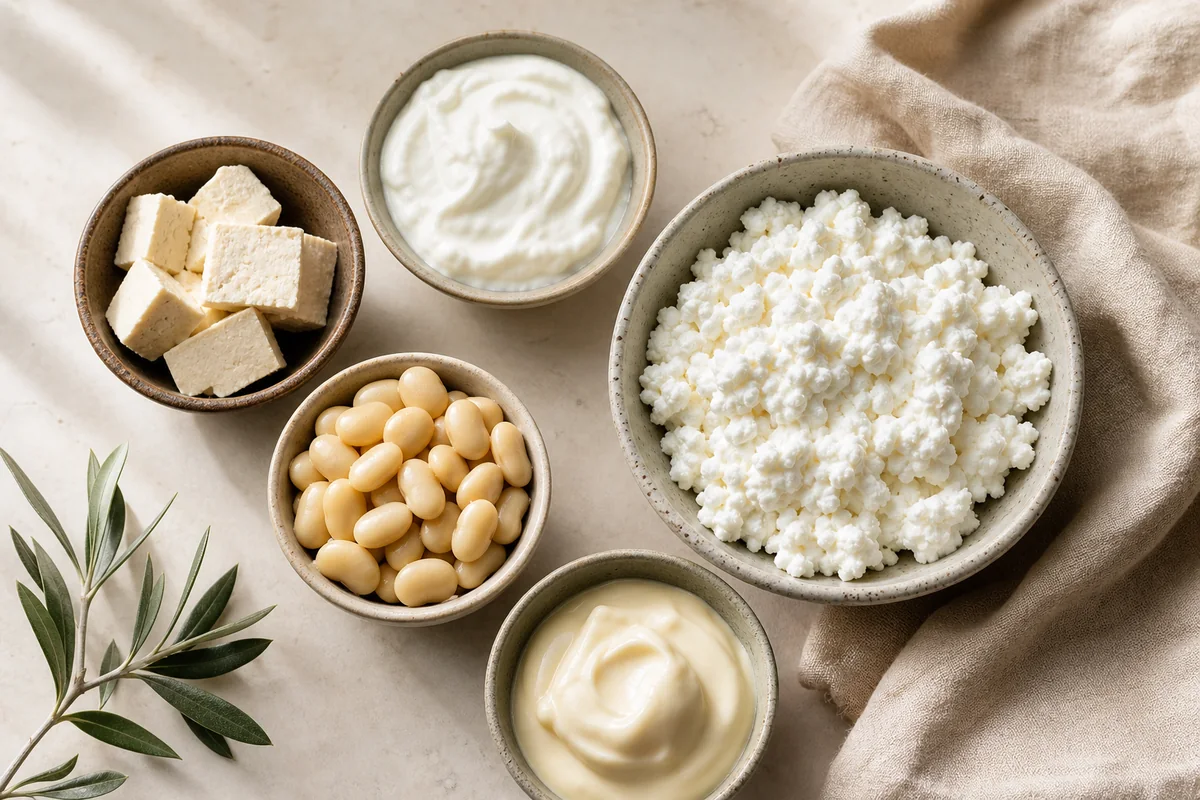
5 Best Cottage Cheese Substitutes (Ranked)
Ingredients
Equipment
Method
- Decide what you’re making (baked casserole, savory mix, or a cold spread) and prioritize texture: thick, creamy, or smooth.
- Choose a substitute from the ranked picks; for most uses start with the listed ratio (usually 1:1).
- Adjust moisture: if your substitute is wetter (plain yogurt), strain 15–30 minutes; if it’s too thick (cream cheese), loosen with a small splash of milk.
- Taste-match the tang: if you want cottage-cheese-like tang, use a cultured option (Greek yogurt or skyr) rather than sweetened dairy.
- Use immediately for spreads, or fold into batters/mixtures; for baking, stir just until combined to prevent graininess.
Notes
- If you’re substituting in a cold spread, prioritize thickness; if baking, prioritize smooth foldability.
- When a substitute is packaged smooth, blend briefly only if you need a more even curd-like texture.
Tried this recipe?
Let us know how it was!
Carrie is a food writer and editor with more than 15 years of experience. She has worked for some of the biggest names in the food industry, including Bon Appétit, Food & Wine, and Martha Stewart Living.
As the Editor in Chief of EpicureDelight, Carrie oversees all of the content on the site. She also manages the team of contributing writers and editors, who help to create delicious recipes, helpful tips, and informative articles that you’ll find on the site.
A native of the Chicago area, Carrie is passionate about all things food. She loves trying new restaurants and experimenting with new recipes in her kitchen. She’s also a graduate of the Culinary Institute of America, so she knows a thing or two about food!



