
Double cream sits at the top of the dairy fat ladder. It's thick enough to spoon, stable enough to reduce without splitting, and rich enough to change the texture of nearly any sauce or dessert it touches.
When you're out of it, the right double cream substitute depends on what the cream is actually doing in the recipe. Thickening a sauce is different from folding into a cold dessert, and the wrong swap will either split or stay thin.
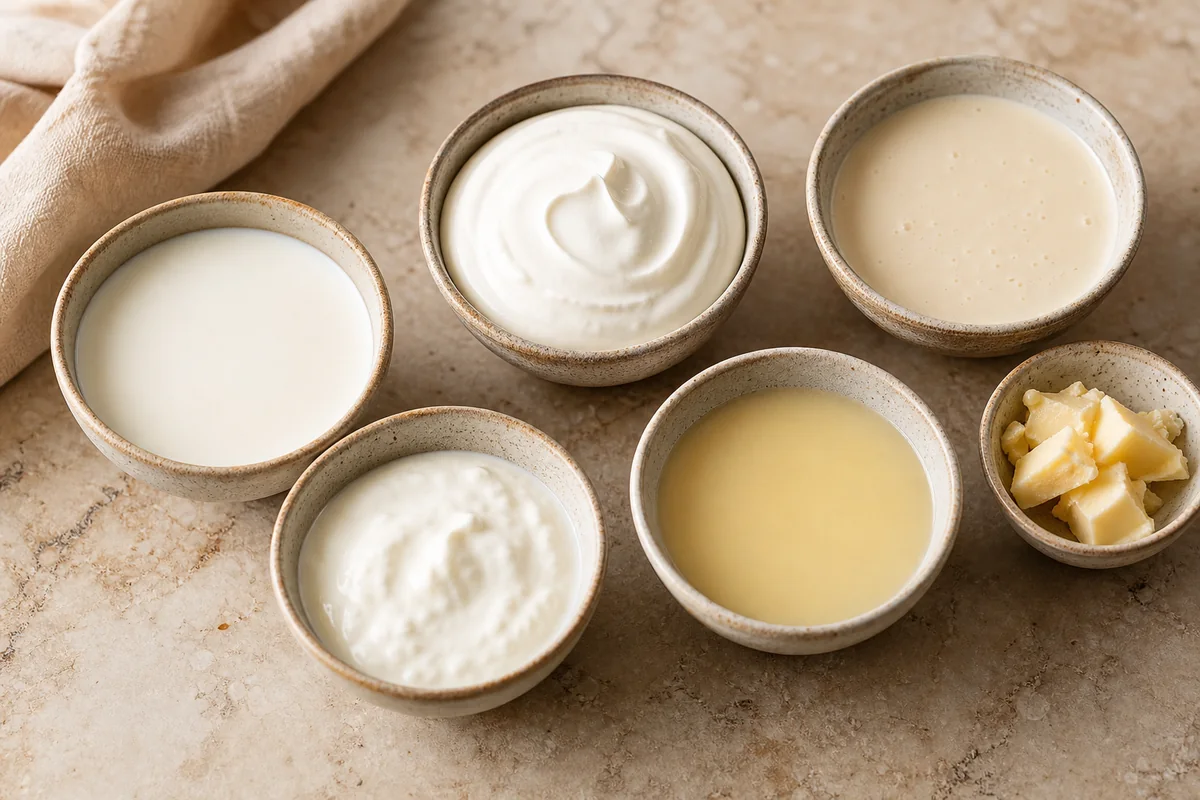
Heavy cream is the closest swap for most recipes. Whipping cream works when you reduce it gently. Crème fraîche holds up better in heat. Greek yogurt adds tang but tempers well. Milk and butter is your emergency DIY option when nothing else is in the fridge.
Choosing by use case matters more than choosing by ingredient. Cold applications need thickness.
Hot applications need heat stability. Keep both in mind before you commit to a swap.
Double Cream Swap Chart and Best Alternatives
Use this table to match each substitute to your specific recipe before reading the full breakdowns below.
| # | Substitute | Best For | Ratio | Key Note |
|---|---|---|---|---|
| 1 | Heavy Cream (UK-style) | Both | 1:1 | Closest richness, stable heat |
| 2 | Whipping Cream | Cooking | 1:1 | Reduce gently for body |
| 3 | Crème Fraîche | Cooking | 1:1 | Add off the boil |
| 4 | Greek Yogurt | Cooking | 1:1 | Temper before adding |
| 5 | Milk + Butter | Both | 3:1 milk:butter | Whisk smooth, use warm |
5 Best Double Cream Swaps Ranked by Use
1. Heavy Cream
Heavy cream (UK-style, around 36-40% fat) is the closest thing to double cream you can buy outside the UK. It pours the same way, reduces cleanly, and behaves well in choosing the right cream for rich pasta or pan sauces.
The fat content is just slightly lower, so sauces may finish a touch thinner, but most people won't notice.
Heavy Cream
Works for: creamy sauces, soups, pasta, ganache, and whipped toppings
Skip if: your recipe needs a pronounced tang or you want a lower-fat result
- Ratio: Use 1:1 in every application, no adjustment needed
- Heat: Simmer gently; it tolerates sustained heat better than most swaps
- Thickness: Reduce by 1-2 tablespoon more than double cream if you want the same body
- Storage: Check rich single-use cream dating before opening a new carton mid-recipe
2. Whipping Cream
Whipping cream runs at about 30-35% fat. It's thinner than double cream, but not by a margin that derails most recipes.
For sauces, reduce it a little longer than you would double cream and it closes the gap. The flavor is mild and clean, which is a real advantage when you don't want dairy to compete with other ingredients.
If you're curious about what this lighter cream brings to a dish before committing, that's worth a quick read. One key difference: whipping cream won't hold stiff peaks in the same way double cream does when cold, so don't count on it for a firm piped topping.
- Ratio: 1:1, then reduce an extra 2-3 minutes for sauces
- Cold use: Works for pouring over desserts, but won't whip to a thick, standing consistency
- Best in: Soups, creamy risottos, and baked custards where thickness is built by cooking
Skip if: you need a firm, spoonable cold cream that holds its shape at the table.
3. Crème Fraîche
Crème fraîche is thick, tangy, and surprisingly heat-stable. That combination makes it one of the best swaps for cooking.
It has a flavor that's a bit more complex than plain cream, which you'll notice more in delicate sauces. The tangy cultured texture actually works in its favor for mushroom sauces, chicken dishes, and anything with a savory base.
- Ratio: 1:1, but thin with 1 tablespoon milk if the texture feels too thick to stir in
- Heat timing: Stir in at the last 2-3 minutes of cooking, never at a rolling boil
- Freshness: Check this cultured dairy for freshness before using in a sauce
- Cold use: Works well dolloped over desserts or mixed into dips
Skip if: your recipe is heavy on lemon juice or vinegar and you don't want any extra tang coming through.
4. Greek Yogurt
Full-fat, strained Greek yogurt is thick enough to mimic double cream's body, but it needs careful handling around heat. The main risk is curdling.
Tempering prevents that. Take a spoonful of the hot sauce, stir it into the yogurt to warm it slowly, then pour the yogurt mixture back into the pan over low heat.
For more options in the same family, tangy dairy alternatives are worth a look if yogurt isn't working for you.
Greek Yogurt
Works for: warm sauces, dips, baked dishes, and cold dessert swirls
Skip if: you need a truly neutral flavor or a very high-heat cooking process
- Ratio: 1:1, full-fat only - low-fat versions are too watery and split faster
- Tempering: Spoon 2 tablespoon of the hot liquid into the yogurt, stir, then combine back
- Heat: Keep at a gentle simmer (not boiling) after adding; pull off heat within 2-3 minutes
- Flavor: Adds noticeable tang, so pair with lemon-forward or spiced dishes where that fits
5. Milk + Butter
This is the emergency option when the fridge has nothing else. Melt 1 tablespoon of unsalted butter and whisk it into 3 tablespoons of warm whole milk until glossy.
The result mimics the fat content of a lighter cream, not quite double cream's full richness, but close enough for sauces and baked dishes. If you've made a sauce and it's already simmering, knowing how keeping fresh dairy in rotation saves you from last-minute swaps applies here too.
- For sauces: Whisk into the pan over low heat; it emulsifies quickly and adds good body
- For baking: Use cold and mix gently - don't overstir or the butter may separate
| Use | Ratio | Notes |
|---|---|---|
| Warm sauce or soup | 3 tablespoon milk + 1 tablespoon butter | Whisk smooth before adding to pan |
| Cold bake batter | 3 tablespoon milk + 1 tablespoon melted butter | Mix gently; keep fats from separating |
| Pasta or risotto | 4 tablespoon milk + 1.5 tablespoon butter | Reduce slightly after adding for body |
Skip if: you need a thick, cold cream for piping or spooning - this mix is too liquid for that.
Making Double Cream Substitutes Work
The biggest mistake people make is adding any cream substitute at the wrong moment. Most dairy-based swaps tolerate a gentle simmer, but crack under a hard boil.
Pull the pan off the heat or drop it to low before you stir anything in. If a sauce looks like it's starting to split, lower the heat immediately and whisk continuously - that's usually enough to bring the texture back.
For thinner swaps like whipping cream or milk-and-butter, you can thicken by reducing longer, or whisk in a small cornflour slurry (1 teaspoon cornflour dissolved in 1 tablespoon cold water) and simmer for 2 minutes. Understanding the thick, spoonable base you're trying to replicate makes every adjustment easier.
- Prevent splitting: Lower heat before adding any substitute, then whisk in slowly rather than pouring all at once
- Adjust thickness: For thinner swaps, reduce by an extra 3-5 minutes or add a small starch slurry and simmer briefly
- Fix a split sauce: Remove from heat, whisk vigorously, then return to the lowest possible heat setting
Double Cream Substitute FAQs
Frequently Asked Questions
Heavy cream (UK-style or US heavy whipping cream) is the closest match for sauces. Use it 1:1 and reduce a minute or two longer if you want the same body as double cream.
Yes, at a 1:1 ratio. Add it off the boil at the end of cooking to keep it smooth - it holds up well but will add mild tang to the dish.
Temper it first: stir 2 tablespoons of hot sauce into the yogurt before adding it back to the pan. Keep heat at a low simmer and don't boil after it's in.
Use 3 tablespoons of whole milk to 1 tablespoon of melted butter. Whisk until glossy before adding to your recipe for the smoothest result.
Not on its own - it's too thin. Reduce it longer or stir in a small cornflour slurry (1 teaspoon cornflour in 1 tablespoon cold water) and simmer 2 minutes to build body.
5 Best Double Cream Substitutes That Taste Right
Ingredients
Equipment
Method
- Identify how you’re using double cream: cold topping (thickness matters most) or cooked into a sauce (heat tolerance matters most).
- Choose the closest match from the list above, then swap using the listed ratio.
- If your substitute is thicker (Greek yogurt, crème fraîche), warm it gently first; if it’s thinner (half-and-half), reduce longer or whisk in a small amount of cornflour/starch.
- Add dairy off the boil (or lower the heat to a simmer) to reduce the chance of splitting or curdling.
- Taste and adjust: add salt/seasoning to bring flavor forward, and a splash of milk/water only if the sauce becomes too heavy.
Notes
- For best results, keep heat at a gentle simmer once dairy is added.
- If using Greek yogurt, temper by stirring a spoonful of hot sauce in first, then combine back.
Tried this recipe?
Let us know how it was!
Carrie is a food writer and editor with more than 15 years of experience. She has worked for some of the biggest names in the food industry, including Bon Appétit, Food & Wine, and Martha Stewart Living.
As the Editor in Chief of EpicureDelight, Carrie oversees all of the content on the site. She also manages the team of contributing writers and editors, who help to create delicious recipes, helpful tips, and informative articles that you’ll find on the site.
A native of the Chicago area, Carrie is passionate about all things food. She loves trying new restaurants and experimenting with new recipes in her kitchen. She’s also a graduate of the Culinary Institute of America, so she knows a thing or two about food!



