
That tender-chewy pull of egg noodles in a bowl of beef stew is hard to fake. But if your pantry is bare, the right egg noodle substitute gets you close enough that nobody at the table notices.
The key is matching three things: thickness, chew, and sauce grab. Egg noodles are slightly richer than plain wheat pasta because of the yolk, but their texture is the bigger factor.
Pick a substitute that suits your dish first, then worry about flavor adjustments.
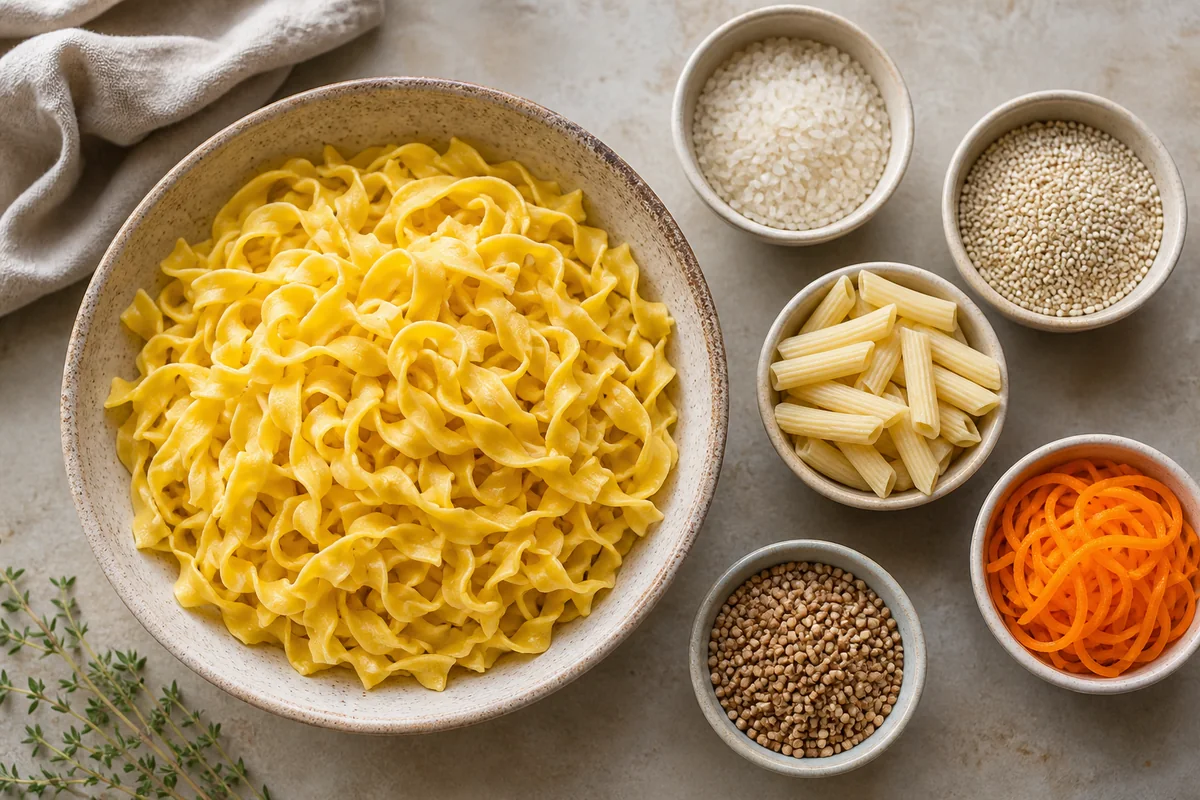
The best egg noodle substitutes are wheat pasta (fettuccine or tagliatelle) for the closest everyday swap, udon for thick soups, soba for nutty depth, rice noodles for gluten-free needs, and instant ramen in a pinch. Undercook each by 1 minute and finish in hot sauce or broth.
Egg Noodle Substitutes: Best Swaps at a Glance
Four things are worth preserving when you swap out egg noodles: chew, thickness, sauce cling, and cook method. This table covers all five substitutes so you can scan before you boil.
| # | Substitute | Best For | Ratio | Key Note |
|---|---|---|---|---|
| 1 | Wheat pasta (fettuccine/tagliatelle) | Both | 1:1 | Cook 30-60 sec less |
| 2 | Udon noodles | Soup | 1:1 | Thick; don't over-simmer |
| 3 | Soba noodles | Both | 1:1 | Nutty; adjust seasoning |
| 4 | Rice noodles | Both | 1:1 | Gluten-free; soak gently |
| 5 | Instant ramen noodles | Both | 1:1 | Rinse; skip packet |
5 Best Egg Noodle Substitutes Ranked by Dish
1. Wheat Pasta (Egg-Free)
Egg-free fettuccine or tagliatelle is the most practical swap for egg noodles. The width and thickness are nearly identical, so sauce clings in the same way.
The flavor difference is subtle. Egg noodles carry a slight yolk richness, but a butter or cream-based sauce easily closes that gap.
For a broader look at flat pasta shape options, flat ribbon swaps are worth checking before you shop.
- When to choose it: Casseroles, stroganoff, or any dish where a neutral wheat noodle works.
- Texture expectation: Firm and chewy; slightly less tender than egg noodles straight from the pot.
- Cook-time adjustment: Pull it 1 minute before the package says done, then finish in hot sauce for 30 seconds.
- Shape note: Fettuccine is slightly wider; tagliatelle is a closer match to standard egg noodle width.
Skip if: Your dish needs that egg-forward richness and you're serving it plain, without a sauce to compensate.
2. Udon Noodles
Udon is thick, bouncy, and forgiving in broth. Fresh udon especially holds its shape through long simmers without turning to mush.
If you want a deeper look at how udon behaves before committing, udon flavor profile covers its neutral-wheat character well. Dried udon needs about 8-10 minutes; fresh needs only 2-3.
- Handling tip: Drain and add to broth right before serving; don't let it sit in liquid.
- Ideal dish: Noodle soup, beef stew, or a saucy stir-fry with thick sauce.
- Cook-time direction: Cook to just tender, then toss in broth or sauce for 60 seconds max.
Skip if: You're making a delicate, quick stir-fry where very thick noodles overpower lighter ingredients.
3. Soba Noodles
Soba brings a slightly nutty, earthy note that plain egg noodles don't have. That's a real flavor shift, so your seasoning needs to work with it, not against it.
Soy, ginger, and sesame sauces pair naturally with this earthy noodle and make the swap feel intentional rather than improvised. Always check the package label, since some soba blends include wheat flour and a few include egg.
- Seasoning adjustment: Add a splash more soy or a touch of rice vinegar to balance the nuttiness.
- Best sauce pairing: Soy-ginger, miso-sesame, or any umami-forward sauce.
- Cook-time approach: Boil 5-6 minutes, drain, and rinse with cold water; then finish in sauce just before plating.
- Reheat note: Soba firms up fast on a cold plate; serve immediately after finishing in sauce.
Skip if: Your recipe needs a neutral noodle and the buckwheat nuttiness would clash with a cream or dairy-based sauce.
4. Rice Noodles
Rice noodles are the go-to gluten-free swap for egg noodles. Medium-width vermicelli or flat rice noodles match the visual width of egg noodles well.
They're more delicate than wheat-based options, so handle them gently. For a full breakdown of how they cook and taste, starchy noodle details are worth a quick read before you soak.
Rice Noodles vs. Egg Noodles
Works for: Stir-fries, lighter soups, gluten-free dishes, quick weeknight meals
Skip if: You need a springy noodle for long-simmered soups or baked casseroles
- Soak vs. boil: Flat rice noodles soak in warm water 20-30 minutes; thin vermicelli boils in 2-3 minutes.
- Texture expectation: Softer and more slippery than egg noodles; less springy bite overall.
- Sauce method: Toss immediately in hot sauce after draining to improve cling and prevent sticking.
5. Instant Ramen Noodles
The noodles themselves are fine, springy, and widely available. The problem is the sodium bomb in the packet.
Toss it, or use only a tiny pinch if your broth is already light. When you need ideas for sauces that pair well with a quick noodle swap, noodle shape tradeoffs give useful context for matching sauce weight to strand thickness.
- Seasoning packet: Discard it entirely or reserve a small amount for a sodium boost, nothing more.
- Rinse step: Rinse noodles briefly under warm water after boiling to cut alkaline flavor.
- Best dish type: Saucy stir-fries, quick noodle bowls, or casual soup where flavor is layered with your own broth.
- Cook-time direction: Boil 2-3 minutes, pull slightly early, and finish in sauce for 30 seconds.
Skip if: Your recipe has a delicate light broth and you can't mask the slightly alkaline ramen taste.
Making Egg Noodle Substitutes Work (So They Don't Turn Out Wrong)
The single biggest mistake is cooking substitute noodles to the package time and then letting them sit in hot sauce. They keep cooking in residual heat.
For more on matching noodle texture to sauce weight, rice noodle swap ideas show how even mild noodles can hold up with the right finishing method.
- Under-cook then finish: Stop boiling 1 minute before done, drain, and toss immediately in hot sauce or broth; this mimics the tender-chewy texture egg noodles get from their short boil.
- Match the thickness: If your substitute is thinner than egg noodles, start it 1 minute earlier; if thicker (udon), expect 1-2 extra minutes of boil time.
- Prevent sticking on reheats: Add a spoonful of broth or sauce (not oil alone) before reheating; oil creates a barrier that stops sauce from clinging to the noodle surface.
Egg Noodle Substitute FAQ
Udon noodles are the best match for soup because their thick, chewy texture holds up in broth without turning soft. Wheat fettuccine is a close second if udon isn't available.
Yes, medium-width rice noodles work well in stir-fry if you add them last and toss quickly in hot sauce. Avoid long frying times; they soften fast and can break apart.
Pull the pasta 30-60 seconds before the package finish time, then toss in hot sauce for the final minute. This keeps it tender without overcooking.
Udon works in casseroles but can feel dense if over-baked; undercook them before assembly and keep bake time short. Wheat pasta is a more reliable casserole swap overall.
Most substitutes absorb sauce continuously after draining, so overcooking in the pot makes the problem worse. Pull noodles early and combine with sauce right before serving.
5 Best Egg Noodle Substitutes (Quick Swaps)
Ingredients
Equipment
Method
- Identify your dish: soup/casserole wants a tender-chewy noodle, while stir-fry wants a noodle that won’t turn gummy after tossing.
- Pick your closest match: wheat pasta for the most similar bite, udon for extra chew, soba for deeper flavor, rice noodles for gluten-free, ramen for the fastest emergency option.
- Match thickness: if your substitute is thinner than egg noodles, start cooking 1 minute earlier than the egg-noodle timing.
- After draining, toss immediately with a spoon of sauce or broth (not oil-only) to improve sauce cling and prevent sticking.
- Taste and adjust: if the noodle feels too firm, simmer 30–60 seconds; if it feels soft, reduce sauce simmer time next batch.
Notes
- Most substitutions work best when you slightly undercook and finish by tossing with hot sauce/broth.
- If using instant ramen, remove or ignore the flavor packet so it doesn’t overwhelm the dish’s existing seasoning.
Tried this recipe?
Let us know how it was!
Carrie is a food writer and editor with more than 15 years of experience. She has worked for some of the biggest names in the food industry, including Bon Appétit, Food & Wine, and Martha Stewart Living.
As the Editor in Chief of EpicureDelight, Carrie oversees all of the content on the site. She also manages the team of contributing writers and editors, who help to create delicious recipes, helpful tips, and informative articles that you’ll find on the site.
A native of the Chicago area, Carrie is passionate about all things food. She loves trying new restaurants and experimenting with new recipes in her kitchen. She’s also a graduate of the Culinary Institute of America, so she knows a thing or two about food!



