
That sharp, roasted edge in your favorite brownie recipe? It usually comes from one small ingredient: espresso powder.
Finding a good espresso powder substitute matters because espresso powder does something specific. It adds concentrated dry roast bitterness without any extra liquid, and that shifts chocolate and coffee flavor in ways a regular splash of brewed coffee can't always match.
The good news is that several swaps come very close. Some are powder-for-powder and nearly invisible in the final dish.
Others introduce liquid and need a small adjustment elsewhere. Knowing which type your recipe needs saves you from a bitter overshoot or a watery batter.
The closest espresso powder substitutes are instant espresso or dark-roast instant coffee powder at a 1:1 ratio. For liquid-tolerant recipes, strong brewed coffee works at roughly 6:1 by volume. In chocolate dishes, a cocoa and instant coffee blend covers both body and bitter roast edge.
5 Best Espresso Powder Alternatives (Ranked)
The table below shows each substitute ranked by how closely it matches espresso powder's roast intensity, along with the starting ratio and whether it works in dry or liquid recipes. Read the H3 sections below for the full picture on each one.
| # | Substitute | Best For | Ratio | Key Note |
|---|---|---|---|---|
| 1 | Instant Espresso / Dark Roast Instant Coffee | Both | 1:1 | Closest dry match |
| 2 | Strong Brewed Coffee | Liquid | 6:1 | Reduce other liquids |
| 3 | Cocoa + Instant Coffee Blend | Baking | ⅔ + ⅓ | Chocolate dishes only |
| 4 | Finely Ground Coffee (strained) | Both | 1:2 | Strain for smoothness |
| 5 | Instant Coffee Granules | Liquid | 1:1 | Bloom before using |
1. Instant Espresso / Dark Roast Instant Coffee
This is the straightforward swap. Instant espresso powder and dark-roast instant coffee are both pre-brewed, dehydrated, and finely milled, which means they dissolve clean and behave exactly like espresso powder in dry ingredients. The roast bitterness is nearly identical.
Use it at a 1:1 ratio for most dry baking applications. If your recipe already leans heavily sweet, start with about ⅞ of the stated amount and taste after mixing.
Dark roast matters here. A medium-roast instant coffee will read flatter against chocolate.
Instant Espresso vs. Dark Roast Instant Coffee
Works for: brownies, chocolate cakes, coffee-forward frostings, dry rubs, and any recipe calling for espresso powder folded into dry ingredients
Skip if: your instant coffee is flavored or pre-sweetened, which will shift both sweetness and aroma in unexpected ways
- Ratio: 1:1 for most recipes; reduce by ⅛ teaspoon per teaspoon if the batter is already very sweet
- Texture: Dissolves completely, no straining needed
- Flavor: Dark roast gives the closest bitter-roast edge; avoid light roast
- Watch out: Some instant coffee brands add anti-caking agents that can mildly affect flavor
2. Strong Brewed Coffee
Strong brewed coffee is the right move when your recipe has room for extra liquid, like a chocolate sauce, a glaze, or a braising marinade. It carries genuine coffee bitterness and aroma.
The problem is volume: one teaspoon of espresso powder translates to roughly six teaspoons of brewed coffee to approximate the same intensity.
That extra liquid can loosen a batter or thin a sauce if you don't compensate. Always use room-temperature coffee.
Hot coffee can shock cold butter or scramble eggs in a custard base. If the recipe is liquid-friendly, this swap is nearly seamless.
- Ratio: ~6 parts strong brewed coffee per 1 part espresso powder (by volume)
- Temperature: Cool to room temp before adding to any fat-based or egg-based mixture
- Adjust liquids: Reduce other liquids in the recipe by roughly the same volume you're adding
- Strength: Brew it strong, like a double-strength drip or a stovetop moka pot yield
For more on concentrated roast flavor, it helps to understand how espresso powder's intensity compares to brewed coffee before you scale your swap.
Skip if: your recipe calls for espresso powder folded into dry ingredients with no liquid to absorb the extra volume.
3. Cocoa Powder + Instant Coffee Blend
This combo works specifically in chocolate-forward recipes. Unsweetened cocoa adds dark body and color, while instant coffee restores the bitter roast note that cocoa alone can't deliver.
Together, they approximate what espresso powder does in brownies, ganache, and dark chocolate frosting.
The working ratio is roughly ⅔ unsweetened cocoa to ⅓ instant coffee, measured against the total volume of espresso powder called for. Always sift the cocoa first.
Lumps in frosting or ganache are obvious and annoying to fix after the fact.
Cocoa powder has a finite shelf window, so if yours has been sitting for a while, check that aged baking cocoa is still active before blending it into your recipe.
- Ratio: ⅔ teaspoon cocoa + ⅓ teaspoon instant coffee per 1 teaspoon espresso powder
- Sift the cocoa: Prevents lumps in frostings and smooth batters
- Best applications: Brownies, chocolate cake, dark ganache, mocha-flavored sauces
Skip if: your recipe is not chocolate-based. The cocoa will make the dish noticeably chocolatey in ways that don't suit coffee-only recipes.
4. Finely Ground Coffee (Strained)
Ground coffee is not the same as espresso powder, but it can work when nothing else is available. The catch is grit. Coarse or medium grinds leave visible specks and a sandy texture in frostings and custards.
An ultra-fine grind gets you much closer.
Use ground coffee at about half the quantity of espresso powder to start, since undissolved grounds are more concentrated by volume than they taste once distributed. Bloom the grounds first by mixing them into a small splash of the recipe's liquid or warm water, then strain through a fine-mesh sieve before adding.
| Use | Ratio | Notes |
|---|---|---|
| Brownie batter | 1:2 (coffee:espresso powder) | Ultra-fine grind; grit acceptable in dense batter |
| Chocolate cake | 1:2, strained | Bloom in 1 teaspoon warm water, then strain before adding |
| Frosting / custard | 1:2, strain required | Strain through fine-mesh sieve; any grit is very noticeable |
| Sauce / glaze | 1:2, strain required | Simmer briefly to dissolve, then strain clean |
- Grind level: Use the finest grind you can get, ideally espresso-setting on a burr grinder
- Bloom first: Mix into a small amount of warm liquid before adding to the recipe
- Strain: Always strain for frostings, custards, and smooth sauces
Skip if: you only have a coarse or medium grind and you're making a smooth-finish dish like frosting or panna cotta.
5. Instant Coffee Granules
Instant coffee granules are not as finely milled as espresso powder, but they dissolve completely when given enough heat or liquid. That makes them reliable in glazes, sauces, and anything involving melted chocolate or simmered liquids.
The flavor is slightly milder than espresso powder, so you may want to go up by 25% on quantity.
- Ratio: 1:1 by volume, or up to 1.25:1 if you want stronger roast flavor
- Bloom step: Dissolve granules in 1 teaspoon warm water or butter before adding to batter or sauce
- Best applications: Glazes, sauces, melted chocolate mixtures, simmered marinades
- Timing: Add early enough in cooking that the granules fully dissolve before the dish sets
For recipes where both cocoa and coffee appear, understanding the darker powder option between Dutch-process and natural cocoa helps you balance bitterness correctly alongside instant coffee granules.
Skip if: you're folding directly into a thick, cold batter with minimal mixing time and no liquid for the granules to dissolve into.
Making Your Espresso Powder Substitute Work
Whichever substitute you choose, the first step is matching its physical form to the recipe's needs. Dry recipes need dry substitutes.
Liquid-tolerant recipes open up more options. Start with the baseline ratio, mix thoroughly, then taste before committing to the full quantity.
Espresso powder is concentrated, and overshooting bitterness early is harder to fix than adding a bit more at the end.
- Match texture first: Use a powder substitute (instant espresso or instant coffee) when the recipe calls for espresso powder blended into dry ingredients. Brewed coffee only works when liquid can be adjusted elsewhere.
- Start at the baseline ratio, then taste: Add your substitute at the listed ratio, mix well, and taste the raw batter or sauce. Add more only if the coffee note feels flat.
- Adjust liquids or strain as needed: If using brewed coffee, reduce other liquids by roughly the same volume. If using ground coffee, strain through a fine-mesh sieve for any smooth-finish dish.
Frequently Asked Questions
Yes, dark-roast instant coffee powder works at a 1:1 ratio in most baking recipes. If the recipe is already very sweet, start at ⅞ teaspoon per 1 teaspoon called for and adjust after tasting.
Dark-roast instant coffee powder is the best pick. For chocolate brownies, the cocoa-plus-instant-coffee blend also works well and adds dark color alongside roast bitterness.
It can if you don't compensate. Reduce other liquids in the recipe by roughly the same volume of brewed coffee you add to keep batter consistency intact.
Yes, bloom them in a teaspoon of warm water or melted butter first. Undissolved granules can leave bitter, uneven spots in the finished dish.
Cocoa alone is not a direct substitute. It adds chocolate flavor without the coffee bitterness. Pair it with instant coffee at a 2:1 ratio for a closer match.
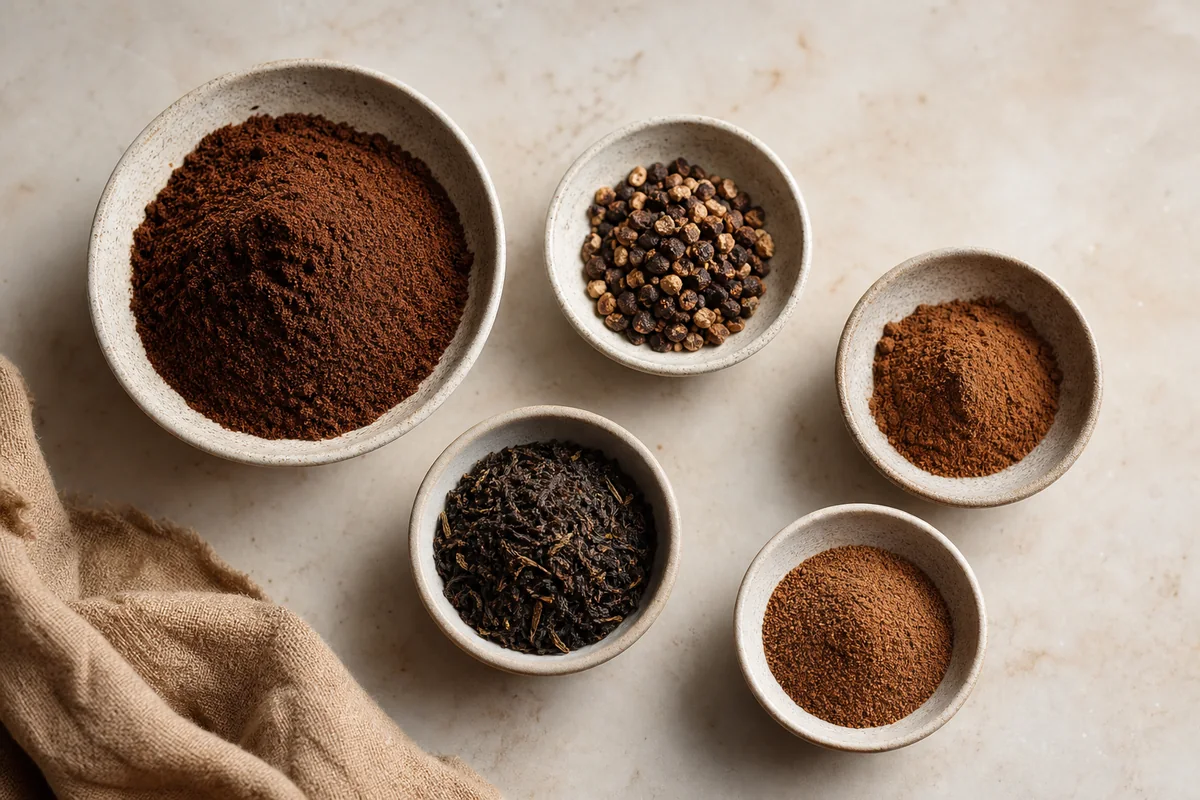
5 Best Espresso Powder Substitutes (Ranked)
Ingredients
Equipment
Method
- Identify your recipe type: dry baking (cake/brownies), thick batter (frosting), or a liquid sauce/marinade.
- Match texture needs: if the recipe uses espresso powder dry, prefer a powder-form substitute (instant espresso/coffee) rather than brewed coffee.
- Use the listed ratio as your starting point; then adjust for bitterness—add a touch more only if the flavor tastes flat after mixing.
- If your substitute is liquid (brewed coffee), reduce other liquids slightly so the final batter/sauce consistency stays the same.
- For ground-coffee swaps, mix thoroughly and strain if you need a smooth finish.
Notes
- For best results, dissolve/wet liquid substitutes before folding them into delicate batters.
- If your recipe has a lot of chocolate, a cocoa+coffee blend can be more forgiving than straight coffee.
Tried this recipe?
Let us know how it was!
Carrie is a food writer and editor with more than 15 years of experience. She has worked for some of the biggest names in the food industry, including Bon Appétit, Food & Wine, and Martha Stewart Living.
As the Editor in Chief of EpicureDelight, Carrie oversees all of the content on the site. She also manages the team of contributing writers and editors, who help to create delicious recipes, helpful tips, and informative articles that you’ll find on the site.
A native of the Chicago area, Carrie is passionate about all things food. She loves trying new restaurants and experimenting with new recipes in her kitchen. She’s also a graduate of the Culinary Institute of America, so she knows a thing or two about food!



