
Fig jam does a quiet but specific job in a recipe. It adds jammy thickness, a sweet fruit note, and a faint earthy tang that most jams don't quite replicate on their own.
The good news is that the right fig jam substitute can get you surprisingly close, as long as you account for both flavor and texture.
Texture is the part most people skip. A thinner jam will leak out of pastry, slide off a glaze, and thin your sauce.
If your substitute is runnier than fig jam, simmer it for 2 to 3 minutes before measuring.
Apricot preserves are the closest everyday swap for fig jam, matching its body and sweet-fruity flavor. Plum jam works for darker, earthier results. Raspberry or strawberry jam suit glazes and baked goods with a tang boost. Use fig preserves when you want the most faithful replacement.
5 Best Fig Jam Substitutes (and What to Swap 1:1)
Most swaps start at a 1:1 ratio. Where they differ is thickness and acidity.
The table below gives you a fast reference before you reach for a jar.
| # | Substitute | Best For | Ratio | Key Note |
|---|---|---|---|---|
| 1 | Apricot Preserves | Both | 1:1 | Add lemon juice for tang |
| 2 | Plum Jam | Both | 1:1 | Darker, tartier than fig |
| 3 | Raspberry Jam | Glazes | 1:1 | Bright tang, simmer to thicken |
| 4 | Strawberry Jam | Baking | 1:1 | Sweeter; needs acidity tweak |
| 5 | Fig Preserves | Both | 1:1 | Chunkier; warm and stir smooth |
Understanding the tangy spread's flavor profile helps you decide which swap fits your dish before you start cooking.
1. Apricot Preserves
Apricot preserves are the most practical everyday replacement for fig jam. They have a similarly thick, jammy body, and their sweet-fruity flavor sits in the same general territory. The main difference is that apricot leans a little brighter and more peach-like, so one small tweak closes the gap.
- Swap ratio: 1:1 in any recipe calling for fig jam
- Tang fix: Add ½ teaspoon lemon juice per ½ cup preserves to recreate fig's faint earthiness
- Texture check: If the preserves feel loose, simmer for 2 minutes before measuring into your recipe
- Best roles: Pastry fillings, cheese boards, glazed chicken, thumbprint cookies
Skip if: you need an exact earthy fig flavor in a delicate dessert. Apricot is sweeter and won't replicate that subtle fig depth.
2. Plum Jam
Plum jam has a "dark fruit" quality that gets closer to fig than most other swaps. It shares fig jam's deeper tone and works especially well in savory glazes, turnovers, and roasted meat sauces.
The difference is tartness. Plum can be noticeably more acidic, which matters in delicate bakes.
For a closer comparison of plum spread options, it helps to know how plum butter differs before you pick your jar.
- Swap ratio: Start at 1:1, then taste before committing
- Too tart? Stir in 1 teaspoon sugar per ½ cup jam and let it dissolve off heat
- Too thick? Thin with 1 to 2 teaspoons water until it spreads like fig jam
- Best roles: Savory glazes, pork roasts, fruit-filled pastries, turnover fillings
Skip if: your recipe is a light sponge cake or a dessert where fig's subtle tang is the point. Plum's acidity reads darker and more assertive.
3. Raspberry Jam
Raspberry jam trades fig's earthy sweetness for something brighter and more forward. It works in glazes and quick pan sauces where you want a glossy, tangy finish.
The color is bolder and the flavor is more distinctly "berry," so it reads differently in a tasting.
Fig Jam
Works for: earthy-sweet fillings, savory pairings, muted fruit notes in baking
Skip if: you want bright berry punch in a glaze or sharp fruit shine
Raspberry Jam
Works for: glossy glazes, tart sandwich fillings, cookie bars where tang is welcome
Skip if: the dish needs a dark, muted fruit flavor without any berry brightness
If you're baking with raspberry jam, use the same 1:1 ratio and check thickness before spreading.
- Swap ratio: 1:1 in glazes, fillings, and spreads
- Tone down sharpness: Simmer 2 minutes with a pinch of sugar, or whisk in 1 teaspoon honey per ½ cup
- Texture fix: Raspberry jam is often thinner; simmer briefly to reduce before filling pastry
Skip if: the dish needs a muted, earthy fruit base. Raspberry is berry-forward and will read that way in the finished dish.
4. Strawberry Jam
Strawberry jam is the most common jar in most pantries, which makes it a natural go-to. It is sweeter than fig jam and more floral, so it needs a small acidity correction to behave correctly in most recipes. Without that fix, it can make baked goods taste one-dimensionally sweet.
- Swap ratio: 1:1, but expect it to be sweeter out of the jar
- Tang correction: Add ½ teaspoon lemon juice per ½ cup jam to bring it closer to fig's balance
- Thickness fix: Simmer 2 to 3 minutes if the jam seems thin for your recipe
- Best roles: Thumbprint cookies, crumble layers, quick toast spreads, simple cake fillings
Skip if: the recipe is a savory glaze for meat or a spiced roast. Strawberry's floral sweetness clashes with warm spices in ways that fig jam does not.
5. Fig Preserves
Fig preserves are the most faithful stand-in because the base ingredient is the same. The difference is texture.
Preserves tend to be chunkier, with visible fruit pieces, while jam is smooth and uniform. A quick warm-up fixes that.
| Amount | Adjustment | Notes |
|---|---|---|
| ¼ cup | Add 1 teaspoon water if chunky | Warm 10-15 sec, stir smooth |
| ½ cup | Add 1-2 teaspoon water if chunky | Warm 20 sec, stir before measuring |
| 1 cup | Thin with 1 tablespoon water if needed | Warm 30 sec; strain if ultra-smooth texture required |
If your recipe stores fruit jam before baking, storing it correctly matters as much as the swap ratio.
- Swap ratio: 1:1 if preserves are already thick; thin with 1 teaspoon water per ¼ cup if chunky
- Warming tip: Microwave 15 to 30 seconds, then stir until smooth before spreading or filling
- Best roles: Pastry fillings, cheese pairings, glazed roasts, tart bases
Skip if: your recipe requires a completely smooth gel, like a mirror glaze. Preserves may stay slightly textured even after warming.
Making Fig Jam Substitutes Work (Texture + Flavor Tweaks)
Every substitute in this list has two variables worth controlling: thickness and acidity. Most swap failures come from one of those, not from choosing the wrong fruit.
A jam that's too thin will leak out of puff pastry; one that's too sweet will flatten the flavor of your whole dish. Small, precise tweaks fix both problems fast.
If you are also adjusting other acidic ingredients in your recipe, knowing bright acid options gives you more flexibility.
- Check and fix thickness first: If your substitute flows more than fig jam does, simmer it in a small pan over medium-low heat for 2 to 4 minutes without a lid, stirring occasionally, until it mounds slightly on a spoon.
- Correct sweetness and tang in small steps: Add lemon juice ½ teaspoon at a time for more tang, or stir in 1 teaspoon sugar for less sharpness. Taste after each addition before adding more.
- Match your technique to the recipe type: For baking, measure the adjusted jam cold; for glazes and sauces, warm the jam 15 to 30 seconds before brushing or stirring in; for spreads, use straight from the jar after the thickness check.
Frequently Asked Questions
Yes, a 1:1 ratio works as a starting point for most baked goods. Just check the substitute's thickness first and simmer briefly if it runs thinner than fig jam.
Apricot preserves give the best glaze result. They melt evenly, hold their sheen, and the flavor stays neutral enough not to overpower savory or sweet dishes.
Simmer the jam in a small saucepan over medium-low heat for 2 to 4 minutes without a lid. Stir as it reduces and test by spooning a small amount onto a cold plate.
Yes. Both are noticeably brighter and more berry-forward than fig jam. Add a small amount of lemon juice and reduce slightly to bring the flavor closer to fig's balance.
Fig preserves are better for flavor accuracy, but standard smooth jam is better for texture. Warm preserves and stir to smooth them if the chunky texture is a concern.
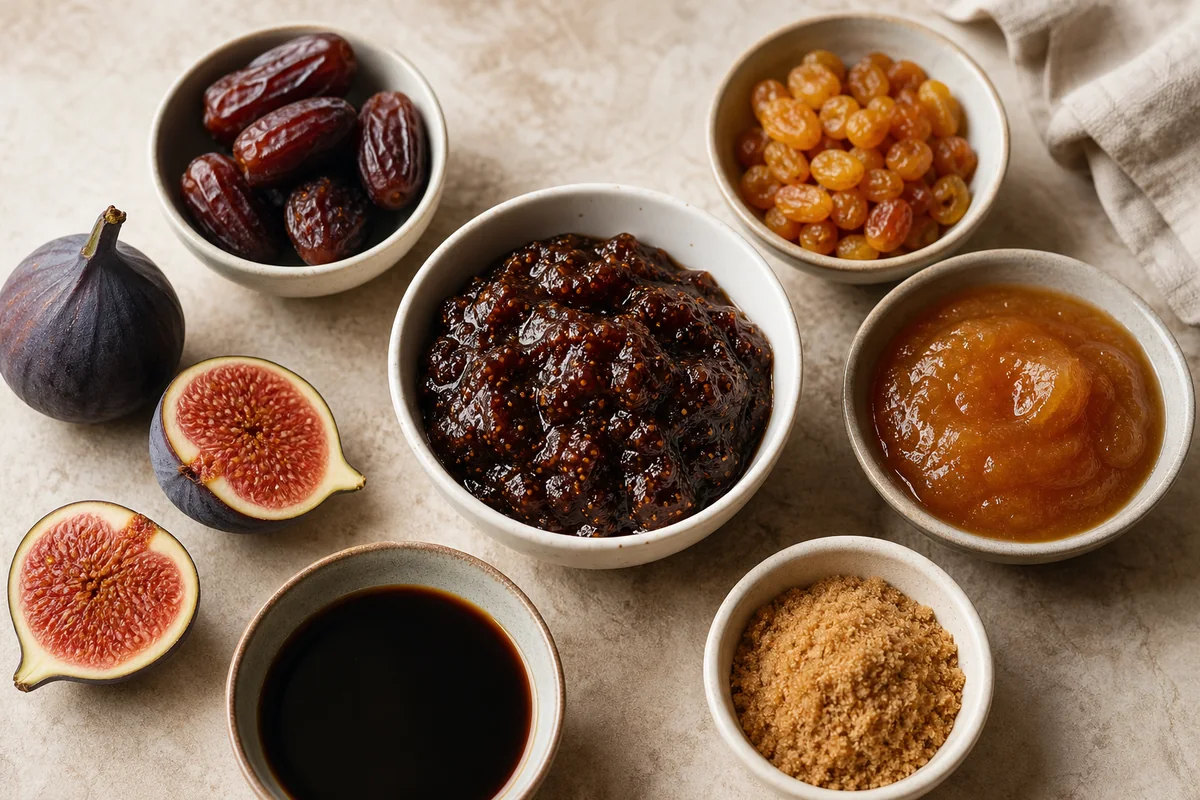
5 Best Fig Jam Substitutes That Taste Right
Ingredients
Equipment
Method
- Choose your swap based on what you need most: earthy depth (plum/apricot) or bright tang (raspberry/strawberry).
- Use the table’s 1:1 swap ratio first, then adjust thickness by simmering 2–4 minutes or thinning with 1–2 teaspoons water.
- If the substitute tastes too sweet, add lemon juice ½ teaspoon at a time; if too sharp, stir in 1 teaspoon sugar.
- For baking, measure before heating; for glazes or sauces, warm the jam 15–30 seconds to spread evenly.
- Taste once mixed into your batter or sauce—fig jam is both sweet and slightly tangy, so minor acidity tweaks matter.
Notes
- Thick preserves give the closest spreadable texture; watery jams need a quick simmer.
- Fig jam’s flavor is sweet-fruity with a subtle tang—adjust with lemon juice if needed.
Tried this recipe?
Let us know how it was!
Carrie is a food writer and editor with more than 15 years of experience. She has worked for some of the biggest names in the food industry, including Bon Appétit, Food & Wine, and Martha Stewart Living.
As the Editor in Chief of EpicureDelight, Carrie oversees all of the content on the site. She also manages the team of contributing writers and editors, who help to create delicious recipes, helpful tips, and informative articles that you’ll find on the site.
A native of the Chicago area, Carrie is passionate about all things food. She loves trying new restaurants and experimenting with new recipes in her kitchen. She’s also a graduate of the Culinary Institute of America, so she knows a thing or two about food!



