
That glossy, dimpled slab with olive oil pooling in every hole is genuinely hard to fake. But when you need the same chewy crumb and salty-oily bite without a two-hour proof, the right focaccia substitute gets you most of the way there.
These swaps cover baking, warming, and assembly. Some need a quick brush of oil.
Others just need five minutes in a hot pan.
The best focaccia substitutes are pizza dough, ciabatta dough, naan, pita, and thick sandwich rolls. Each one works differently depending on whether you need a chewy sandwich base, an open crumb for dipping, or a fast warm bread for a side dish. Finish every option with olive oil and flaky salt to close the flavor gap.
5 Best Focaccia Substitutes Ranked by Use
Every substitute below is rated by how closely it matches focaccia's three key qualities: chew, olive-oil finish, and structure. The table gives you the quick comparison.
Each H3 below adds the exact prep steps and a "Skip if" note so you can rule out the wrong option fast.
| # | Substitute | Best For | Ratio | Key Note |
|---|---|---|---|---|
| 1 | Pizza Dough | Baking | 1:1 | Oil + salt finish is key |
| 2 | Ciabatta Dough | Baking | 1:1 | Open crumb, airy texture |
| 3 | Naan | Warming | 1:1 | Fastest ready bread |
| 4 | Pita | Dipping | 1:1 | Toast for better chew |
| 5 | Thick Sandwich Rolls | Emergency | 1:1 | Slice, oil, toast quickly |
Note that these swaps all depend on yeast-leavened or similarly structured wheat doughs. Skip them if you are working around a yeast-free diet.
1. Pizza Dough
Pizza dough is the most direct swap because it already targets the same chewy interior and oven expansion that focaccia relies on. The dough handles an oil-heavy finish well, and it bakes up with enough bounce that slices hold together for sandwiches.
To use it, stretch the dough to focaccia thickness (roughly an inch) in an oiled pan. The key move for a dough with good tangy structure is to let it rest 20 minutes before baking so the gluten relaxes and the surface dimples properly.
Pizza Dough
Works for: sandwiches, pan-press slices, herb-topped sharing bread
Skip if: you need very tall, airy focaccia - pizza dough pulls a bit tighter than the real thing
- Oil generously: Brush at least 2 tablespoon olive oil over the top before baking
- Add flaky salt and rosemary right before the oven so they don't sink
- Bake at 425°F for 20-22 minutes until the edges are golden and pull away from the pan
2. Ciabatta Dough
Ciabatta dough has a more open crumb than pizza dough, which puts it closer to focaccia's airy interior. It tears and scoops well, making it a strong pick for dipping into olive oil or broth.
The main thing to know about the ciabatta tradeoff is hydration - ciabatta dough is wetter than pizza dough, so handle it gently and shape in the pan rather than on a board.
- Brush with oil after shaping, not before, so the surface doesn't absorb too slowly
- Shorten bake time by 3-4 minutes compared with a dense loaf - pull when the top is just set
- Rest 10 minutes before slicing so the open crumb holds its structure
Skip if: you need a crackly, blistered top - ciabatta stays softer unless you toast the slices after baking.
3. Naan
Naan is already soft and slightly chewy, so the olive-oil brush does most of the heavy lifting. Warming it in a dry pan for 90 seconds per side firms the surface just enough to feel like a toasted focaccia edge.
For a guide on mixing other fat-based finishing choices, the same brushing logic applies when olive oil is unavailable.
- Brush warm naan with 1 tablespoon olive oil per piece while it's still hot from the pan
- Sprinkle flaky salt immediately so it sticks before the oil absorbs
- Slice into wedges so it scoops and serves the way focaccia slices do at the table
- Add dried rosemary or a pinch of garlic flakes if you want the classic herb note
Skip if: you need a dimpled, crackly crust - naan won't develop that blistering texture without heavy toasting.
4. Pita
Pita is the sturdiest option for dips and spreads. It holds up where naan goes soft and where ciabatta can tear unevenly.
The catch is that cold pita feels dry and flat, so warming is not optional here.
A quick look at the pita alternative shows it sits closer to a flatbread than a leavened loaf. That means texture expectations need adjusting - you are trading the open crumb for reliable structure.
- Brush lightly with olive oil on both sides before warming so the edges firm up
- Toast for 2 minutes per side in a dry skillet or under a broiler until edges crisp
- Cut into strips or triangles for scooping - whole rounds are harder to handle than focaccia slices
Skip if: you need an airy, pull-apart crumb - pita's pocket structure is nothing like focaccia's interior.
5. Thick Sandwich Rolls
When you have no dough and no flatbread, thick sandwich rolls are the emergency option. They are denser than focaccia, but a quick slice-and-toast with olive oil gets the surface crunchy in a way that reads as "oily, salty bread" to most people at the table.
| Use | Ratio | Notes |
|---|---|---|
| Sandwich base | 1 roll = 1 focaccia slice | Slice thick, oil both cut faces |
| Dipping bread | 1 roll = 2 focaccia wedges | Toast until edges crisp, serve warm |
| Side bread | 1 roll per person | Brush top with oil, add flaky salt |
- Slice open-faced and brush each cut side with 1-2 teaspoon olive oil before toasting
- Toast at 400°F for 6-8 minutes until the edges are golden and the oil is absorbed
- Add flaky salt and rosemary immediately after the oven so the topping sticks
Skip if: you want an authentic chewy, open crumb - rolls are denser and won't pull apart the way focaccia does.
Making a Focaccia Substitute Work
The single biggest step across all five swaps is olive oil plus flaky salt, applied while the bread is warm. That combination does more for flavor than any extra baking time.
If the substitute feels too soft, run it under a broiler for 2 minutes. If it feels dry, add oil after warming rather than before so it stays on the surface.
- Match the sub to the job first: pizza or ciabatta dough for baking, naan or pita for warming, rolls for emergency service
- Oil after warming for flat breads - naan, pita, and rolls absorb oil better when already warm
- Keep finish toppings simple: flaky salt, rosemary, and garlic cover 90% of focaccia flavor cues
Frequently Asked Questions
Pizza dough is the closest match. Stretch it to about one inch thick, bake in an oiled pan, and finish with flaky salt for a sandwich base that mimics focaccia's chew.
Yes. Warm naan in a dry skillet, brush with olive oil, and sprinkle flaky salt. It works as a fast side bread or dipping bread without any oven time.
Use at least 3 tablespoon olive oil in the pan before baking, dimple the surface, and top with rosemary and flaky salt. The oil-soaked crust is what makes it read as focaccia.
Both work. Brush with olive oil and toast in a skillet for 2 minutes per side. Pita holds up better to thick dips; tortillas are thinner but faster.
Wrap in foil and warm at 325°F for 8 minutes, or use a skillet over low heat. Add a small drizzle of olive oil before reheating to keep the surface from drying out.
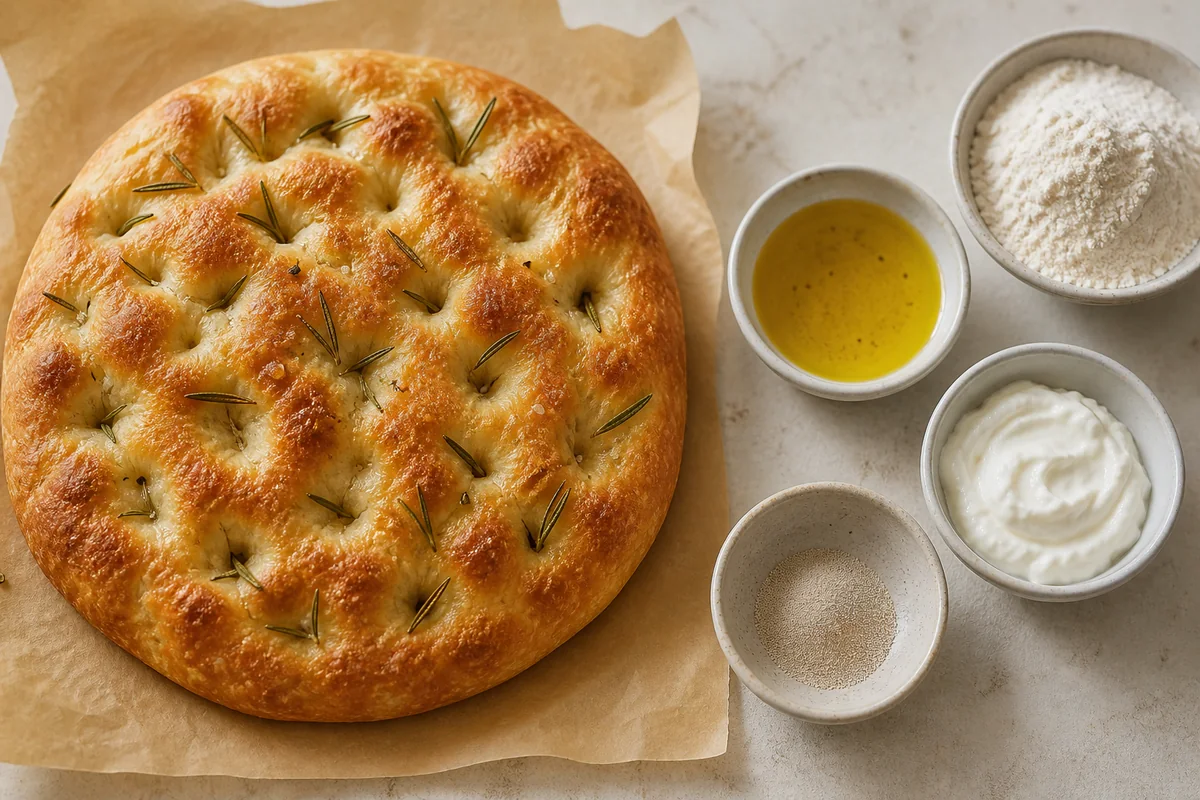
5 Best Focaccia Substitutes (Pantry Swaps)
Ingredients
Equipment
Method
- Match your use: for sandwiches, pick pizza dough; for dippable open-chew, pick ciabatta dough; for instant warm bread, pick naan or pita.
- Swap by quantity using the listed ratio (use equal dough/bread mass/loaf portion as the starting point).
- Finish like focaccia: brush with olive oil and sprinkle flaky salt; add garlic, rosemary, or both if you want the classic flavor cue.
- Adjust the format: if using flat bread (naan/pita/tortilla), warm and then slice or fold to mimic focaccia’s scooping shape.
- If your substitute is denser than focaccia, keep oven time shorter and rest briefly after warming so the crumb doesn’t dry out.
Notes
- For best results, choose substitutes that are already risen/proofed when possible; that’s what gives focaccia its chewy, airy bite.
- Olive oil + flaky salt is the “flavor bridge” across most substitutes—use it to close the gap even when texture differs.
Tried this recipe?
Let us know how it was!
Carrie is a food writer and editor with more than 15 years of experience. She has worked for some of the biggest names in the food industry, including Bon Appétit, Food & Wine, and Martha Stewart Living.
As the Editor in Chief of EpicureDelight, Carrie oversees all of the content on the site. She also manages the team of contributing writers and editors, who help to create delicious recipes, helpful tips, and informative articles that you’ll find on the site.
A native of the Chicago area, Carrie is passionate about all things food. She loves trying new restaurants and experimenting with new recipes in her kitchen. She’s also a graduate of the Culinary Institute of America, so she knows a thing or two about food!



