
Fromage frais sits in a strange middle ground. It has the tang of yogurt but the body of a soft cheese, and most supermarkets outside France stock it inconsistently.
If your recipe calls for it and the dairy aisle has let you down, the right fromage frais substitute depends on two things: how thick you need it and how much acidity the dish can carry.
Swaps behave differently in heat. Some hold up in baked fillings; others split if the temperature climbs.
This guide covers both baking and cooking uses, so you can pick based on what you're actually making.
The best fromage frais replacements are strained Greek yogurt and skyr for tang and body. Labneh works when you need thickness. Cream cheese thinned with milk is the most available swap. Cottage cheese blended smooth fills in for fillings and spreads.
5 Best Fromage Frais Substitutes Ranked by Texture and Tang
One rule before you pick: spoonability comes first, tang second. A substitute that is too thin will ruin a baked filling even if the flavor is perfect.
The table below maps each option to the right recipe type so you can scan before you commit.
| # | Substitute | Best For | Ratio | Key Note |
|---|---|---|---|---|
| 1 | Strained Greek Yogurt | Both | 1:1 | Strain 20 min for body |
| 2 | Skyr (plain) | Both | 1:1 | Stir well before using |
| 3 | Labneh | Cooking | 1:1 | Thin with milk if needed |
| 4 | Cottage Cheese (blended) | Both | 1:1 | Blend fully, no lumps |
| 5 | Cream Cheese + Milk | Both | ¾:1 | Add milk 1 teaspoon at a time |
1. Strained Greek Yogurt
Full-fat Greek yogurt is the closest all-purpose stand-in for fromage frais. It has a similar tang and, once strained through a fine sieve for 20 minutes, lands at the right spoonable consistency for most recipes.
If you want a deeper look at tart fermented dairy and how it differs from creamier options, that breakdown helps you decide how much straining your dish needs.
Strained Greek Yogurt
Works for: baked cheesecakes, dips, creamy sauces, cold dessert fillings
Skip if: you need an ultra-smooth spreadable filling and can't strain; use labneh instead
- Straining time: 20-30 minutes through muslin or a fine sieve removes enough whey to match fromage frais body.
- Baking tip: Bring it to room temperature before folding into batters; cold yogurt can cause uneven mixing.
- Ratio: Use 1:1, but taste first and add a pinch of salt if the tang feels flat after baking.
- Sauce use: Stir in off the heat; direct high heat will cause it to split.
2. Skyr (Plain)
Skyr is thicker than most yogurts and carries a clean, mild tang that sits close to fromage frais without overwhelming a recipe. It is especially good for cold applications.
If you're choosing between strained dairy options and protein content matters, skyr pulls ahead of regular yogurt.
- Best uses: Cold dips, no-bake cheesecakes, spoon toppings on fruit or grain bowls.
- Smoothing tip: Stir vigorously before measuring; skyr can feel dense and slightly grainy straight from the tub.
- Temperature: Warm it to room temperature for baked recipes to avoid seizing in the batter.
- Ratio: 1:1 with fromage frais works in almost every case.
Skip if: you need a butterfat-forward richness; cream cheese will feel closer for that purpose.
3. Labneh
Labneh is strained yogurt taken further than Greek yogurt, which gives it a silkier, denser feel. For savory bakes or lemony sauces, these two thick dairy spreads behave differently under heat, and labneh holds its shape a little better.
Thin it with 1 teaspoon of milk at a time until it reaches the spoonability you want.
- Consistency fix: Whisk with a fork after adding milk to keep it smooth, not lumpy.
- Best uses: Savory spreads, lemony herb sauces, baked vegetable dishes, cold mezze-style dips.
- Flavor note: Labneh has a slightly more pronounced tang than fromage frais; taste and balance with a pinch of sugar in sweet recipes.
- Ratio: Start at 1:1 and loosen only if the recipe is a pourable sauce.
Skip if: you want a lower-fat option; labneh can feel richer than fromage frais, so use skyr instead.
4. Cottage Cheese (Blended)
Cottage cheese is grainy straight from the tub, but a 60-second blitz in a blender turns it into a surprisingly smooth, lightly tangy cream. It is the most budget-friendly swap here and works well in fillings and quick spreads.
If you're concerned about storing blended cottage cheese before using it, keeping it refrigerated in a sealed jar holds it for up to 3 days.
- Blend fully: Any remaining curds will turn rubbery in baked dishes; run the blender until completely smooth.
- Strain if needed: For a thicker result, pour through a sieve for 10 minutes after blending.
- Best uses: Lasagne fillings, quick dips, baked cheesecakes when combined with an egg to bind.
- Ratio: 1:1 after blending.
Skip if: you have no blender available; strained Greek yogurt gives a smoother result with no equipment needed.
5. Cream Cheese + Milk
Cream cheese is richer and less tangy than fromage frais, but it is in almost every fridge and handles heat well. This firm spreadable dairy needs loosening before it behaves like fromage frais; add whole milk one teaspoon at a time, stirring between additions, until you reach a soft, spoonable consistency.
Cream Cheese + Milk
Works for: baked fillings, cheesecakes, cream sauces, savory tarts, dips
Skip if: the dish must taste tang-forward; add a small lemon juice splash to compensate
- Starting ratio: Use ¾ of the fromage frais amount in cream cheese, then add milk to reach the right consistency.
- For baking: Soften fully at room temperature first; cold cream cheese won't incorporate evenly into batters.
- For cooking: It holds in warm sauces better than yogurt; stir over low heat and don't boil.
- Tang fix: Add 1 teaspoon of lemon juice per 100g of cream cheese to bring the acidity closer to fromage frais.
- Salt balance: Taste before serving; cream cheese already carries salt, so season carefully.
Making the Substitute Work in Baking or Cooking
The general rule is straightforward: match thickness first, then adjust tang at the end. Any substitute that is thinner than fromage frais will make baked goods wet in the center, so drain or strain before measuring.
For warm sauces, checking freshness before adding dairy to heat matters more than people expect, since older yogurt-based products split faster.
- Start at 1:1: Use the full amount called for, then reduce by 1-2 tablespoons only if your substitute is noticeably looser than fromage frais.
- Adjust texture before adding to heat: Strain thicker options or whisk thinner ones; do not try to fix consistency inside a hot pan.
- Add acid last: Stir in lemon juice or a pinch of salt after the heat is off; acid added early to a warm dairy product increases the chance of graininess.
Frequently Asked Questions
Yes, for most recipes. Start 1:1 and strain your substitute if it is looser than fromage frais; excess moisture causes soggy bakes.
Strained Greek yogurt is slightly closer in fat and tang. Skyr is thicker and milder, so it suits recipes where you want a subtler flavour.
Remove the pan from heat immediately and whisk fast. Adding a teaspoon of cornstarch slurry before heating helps stabilise yogurt-based substitutes.
Yes, it holds in heat better than yogurt. Thin with milk and add lemon juice to replace the tang fromage frais naturally provides.
Refrigerate and consume within 2-3 days. Yogurt-based mixes weep liquid faster than cream cheese-based ones, so press a layer of cling film directly onto the surface.
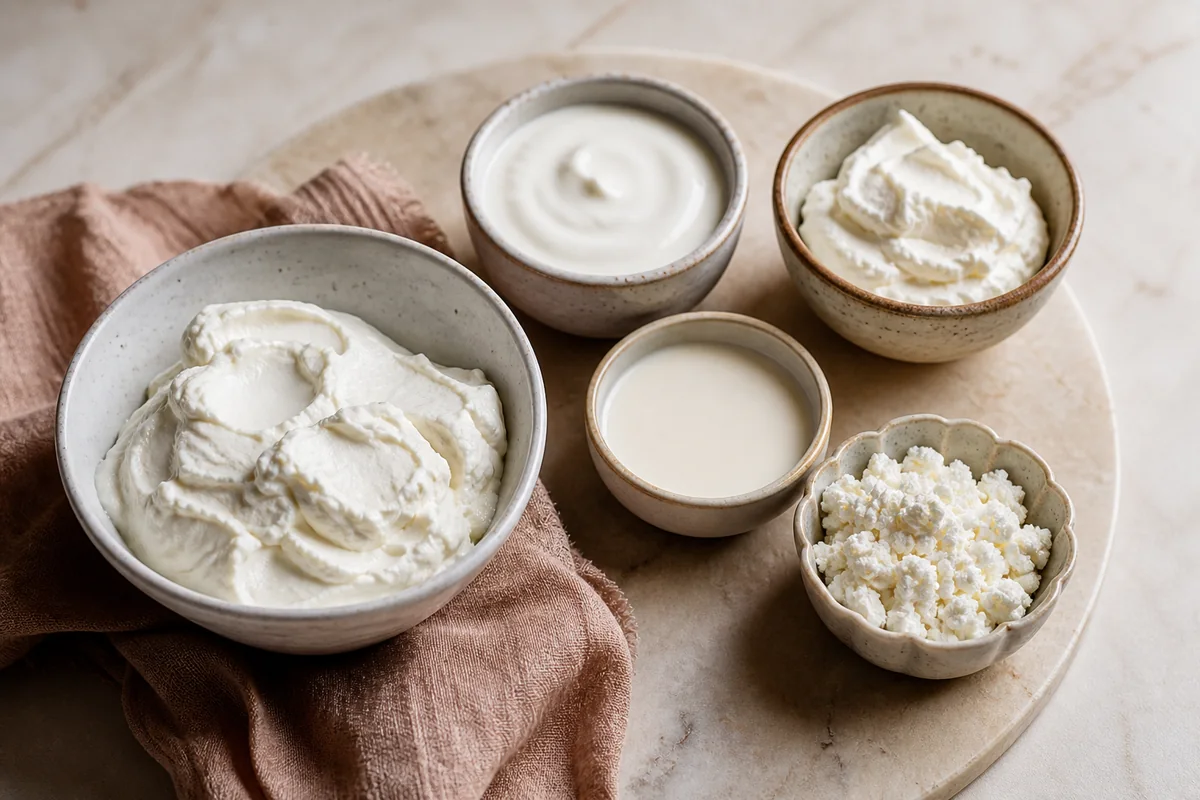
5 Best Fromage Frais Substitutes Worth Trying
Ingredients
Method
- Decide what you’re making: dip/sauce (needs spoonable thickness), baking (needs smooth texture), or batter (can be slightly looser).
- Start with the closest match from the ingredient list and use the listed ratio as your baseline.
- If your substitute is thicker than fromage frais, loosen it with 1–2 teaspoon milk at a time; if it’s looser, reduce by draining or simmering (for sauces).
- For baking, warm the substitute to room temperature and mix gently to reduce graininess or curdling.
- Taste and adjust acidity: add a tiny splash of lemon juice for extra tang, or a pinch of salt to boost overall flavor.
Notes
- For best results, match thickness first—taste comes second.
- If using dairy substitutes, avoid boiling after adding them; warm gently instead.
Tried this recipe?
Let us know how it was!
Carrie is a food writer and editor with more than 15 years of experience. She has worked for some of the biggest names in the food industry, including Bon Appétit, Food & Wine, and Martha Stewart Living.
As the Editor in Chief of EpicureDelight, Carrie oversees all of the content on the site. She also manages the team of contributing writers and editors, who help to create delicious recipes, helpful tips, and informative articles that you’ll find on the site.
A native of the Chicago area, Carrie is passionate about all things food. She loves trying new restaurants and experimenting with new recipes in her kitchen. She’s also a graduate of the Culinary Institute of America, so she knows a thing or two about food!



