
Most dishes built on an aromatic base need both ginger and garlic working together-separate, they taste flat or sharp; combined into a paste, they build something rounded and complex. Finding the right ginger garlic paste substitute means matching two things at once: flavor punch and paste-like texture.
A watery swap or a bone-dry powder tossed in raw can throw off the whole dish.
The key is understanding that paste behaves differently than loose minced aromatics or dry powder. It coats the pan evenly, releases slowly in oil, and doesn't dump excess liquid into a sauce.
Every substitute below comes with a ratio and a quick note on cooking method, so you know exactly how to treat it.
The best ginger garlic paste substitutes are fresh minced ginger and garlic (1:1), grated and squeezed aromatics (1:1), jarred ginger-garlic paste (1:1), reconstituted powder slurry (¾:1), and ginger paste plus garlic powder. Cook every swap briefly in oil to remove raw bite before adding other ingredients.
5 Best Ginger Garlic Paste Substitutes Ranked
Fresh minced, grated, jarred, reconstituted powder, and combined bases all work. The right one depends on what you have and how much time you have.
| # | Substitute | Best For | Ratio | Key Note |
|---|---|---|---|---|
| 1 | Fresh minced ginger + garlic | Both | 1:1 | Mince very fine, cook in oil |
| 2 | Grated ginger + garlic (squeezed) | Both | 1:1 | Squeeze before mixing |
| 3 | Jarred ginger-garlic paste | Both | 1:1 | Taste first, brands vary |
| 4 | Ginger garlic powder (slurry) | Cooked | ¾:1 | Mix with warm water first |
| 5 | Ginger paste + garlic powder | Cooked | 1:1 | Emergency blend, adjust balance |
1. Fresh Minced Ginger + Garlic
Fresh minced ginger and garlic is the strongest-tasting option here. It delivers the same aromatic punch as paste, without any added preservatives or moisture from a jar.
The trick is mince size. Coarse chunks won't behave like paste; they stay grainy and don't dissolve into the oil properly.
If you're choosing between picking fresh ginger or swapping the root entirely, reviewing the best options for picking fresh alternatives can save you a trip.
- Mince size: Aim for pieces under 1mm. Use a sharp knife and run the blade through twice, or rock-chop until the pile looks almost paste-like.
- Ratio: Use 1:1 by volume. One tablespoon of paste equals one tablespoon of finely minced ginger and garlic combined.
- Cooking step: Add to hot oil and cook 25-35 seconds, stirring constantly. Stop when it smells fragrant, not when it browns.
Skip if: You don't have time to mince very fine. Choose the grated-and-squeezed method or jarred paste for a closer texture.
2. Grated Ginger + Garlic (Squeezed)
Squeezing grated aromatics removes most of the water that would otherwise thin your sauce. This is what separates a gummy, usable substitute from a watery mess that splits the base.
Grate both on the fine side of a box grater, then bundle them in a cloth or a paper towel and squeeze firmly. You'll lose some volume, so grate about 15% extra to account for it.
For sauces that already have plenty of liquid, using a punchy liquid swap may be smarter than adding more wet aromatics.
- Squeeze goal: Discard the expressed liquid. The remaining paste should feel barely moist, not wet.
- Ratio: Use 1:1 by volume after squeezing. The texture is very close to commercial paste.
- Cooking time: Cook in oil for 30-40 seconds over medium heat before adding anything else.
Skip if: Your dish is already very liquidy. Use jarred paste or powder slurry to avoid thinning it further.
3. Jarred Ginger-Garlic Paste
Jarred paste is the most convenient swap, but brands vary more than you'd expect. Some are sweeter, some are saltier, and a few have a faint vinegary bite from preservatives.
Always stir the jar before measuring, since solids settle. Taste a tiny amount before adding the full measure, and adjust down by about 10% if it tastes sharper or saltier than expected.
For context on how jarred garlic behaves on its own, the pungent jarred spread profile explains what to expect from most commercial versions.
- Ratio: Start at 1:1. Add a little less if the brand tastes intense; add a little more if it's mild.
- Opening tip: Store opened jars in the fridge and use within 3 weeks. Smell before each use.
- Cooking step: Cook in oil for 20-30 seconds on medium heat to soften the raw edge, even though it's technically pre-processed.
Skip if: Your recipe is sensitive to sweetness. Switch to fresh-minced or reconstituted powder instead.
4. Ginger Garlic Powder (Slurry)
Powder is useful, but it needs water to behave like paste in the pan. Sprinkled dry into a sauce, it stays powdery, clumps in hot oil, and never fully integrates the way a slurry does.
When you're deciding between choosing a sharper powder swap or going with a paste-first approach, slurry always gives better results in wet dishes.
Sprinkle Dry
Works for: dry rubs, spice blends, quick marinades with no oil-fry step
Skip if: you need the aromatics to bloom in oil and dissolve into a sauce base
Slurry Then Cook
Works for: curries, stir-fries, braised dishes-any recipe calling for paste in hot oil
Skip if: you're in a rush with no time to let the slurry cook through properly
- Mixing method: Combine equal parts ginger powder and garlic powder. Add warm water a few drops at a time until it reaches a thick, spreadable paste. It should hold its shape on a spoon.
- Ratio: Use ¾ tablespoon of slurry for every 1 tablespoon of paste called for.
- Cooking time: Cook in oil for 45-60 seconds over medium-low heat, longer than fresh, to cook out the raw powder edge.
Skip if: Your dish cooks for only a few minutes total. Choose jarred or fresh-minced instead.
5. Ginger Paste + Garlic Powder
This is the emergency option when you have ginger paste in a tube but no fresh garlic. It works, and it works fast.
The ginger paste handles the moisture and most of the body; garlic powder brings the allium bite without adding liquid.
| Component | Ratio | Notes |
|---|---|---|
| Ginger paste (tube/jar) | ¾ tablespoon per 1 tablespoon paste needed | Leads the base; provides moisture and punch |
| Garlic powder | ¼ teaspoon per 1 tablespoon paste needed | Add after mixing; adjust up if garlic flavor is too faint |
| Neutral oil | ½ teaspoon optional | Helps the slurry coat the pan without sticking |
- Starting ratio: Combine ¾ tablespoon ginger paste with ¼ teaspoon garlic powder per tablespoon of paste needed. Stir until smooth.
- Thickening: If too runny, add a tiny drizzle of neutral oil and stir. If too thick, add 2-3 drops of warm water.
- Cooking step: Add to medium-hot oil and cook 20-30 seconds. The powder needs that brief heat to lose its raw, dusty flavor.
Skip if: Your dish depends on very mellow garlic flavor. Garlic powder is more assertive than fresh when heat-bloomed, so use grated or jarred paste instead.
Making Ginger Garlic Paste Substitutes Work
Every substitute above works best when you treat it as a base that needs a moment in oil, not an ingredient you can throw in at any stage. For whole-clove swap decisions or powder situations, the logic is the same: bloom the aromatics first.
If your base looks watery before you even add liquid, you've already lost some control over texture.
- Match texture first: Paste-like substitutes (grated-squeezed, jarred, or slurry) work in any dish. Dry powder used without reconstitution belongs only in rubs and dry brines, not in oil-based aromatic bases.
- Quick-cook timing in oil: Fresh and grated: 25-40 seconds. Jarred: 20-30 seconds. Powder slurry: 45-60 seconds. Pull it when fragrant, not brown. Burnt aromatics can't be corrected.
- Fix flavor or texture mid-cook: Too sharp? Cook an extra 15-20 seconds in oil. Too mild? Add a small pinch of salt or a few extra drops of the same substitute. Sauce too watery? Simmer uncovered for 2-3 minutes; do not add more aromatics to fix dilution.
Frequently Asked Questions
Yes, a 1:1 swap works well if you mince both very finely. Coarse pieces won't integrate the same way, so spend an extra minute running your knife through the pile.
Bundle the grated aromatics in a paper towel and squeeze firmly before mixing. Discard the expressed liquid so it doesn't thin your sauce base.
Use ¾ tablespoon of reconstituted powder slurry for every 1 tablespoon of paste. Mix equal parts ginger and garlic powder with warm water until thick before adding to the pan.
Yes, cook it 20-30 seconds in hot oil even though it's pre-processed. That brief heat removes any lingering raw edge and helps it meld into the base.
Combine ¾ tablespoon ginger paste with ¼ teaspoon garlic powder per tablespoon needed. Stir, then cook in oil for 25-30 seconds before building the rest of the dish.
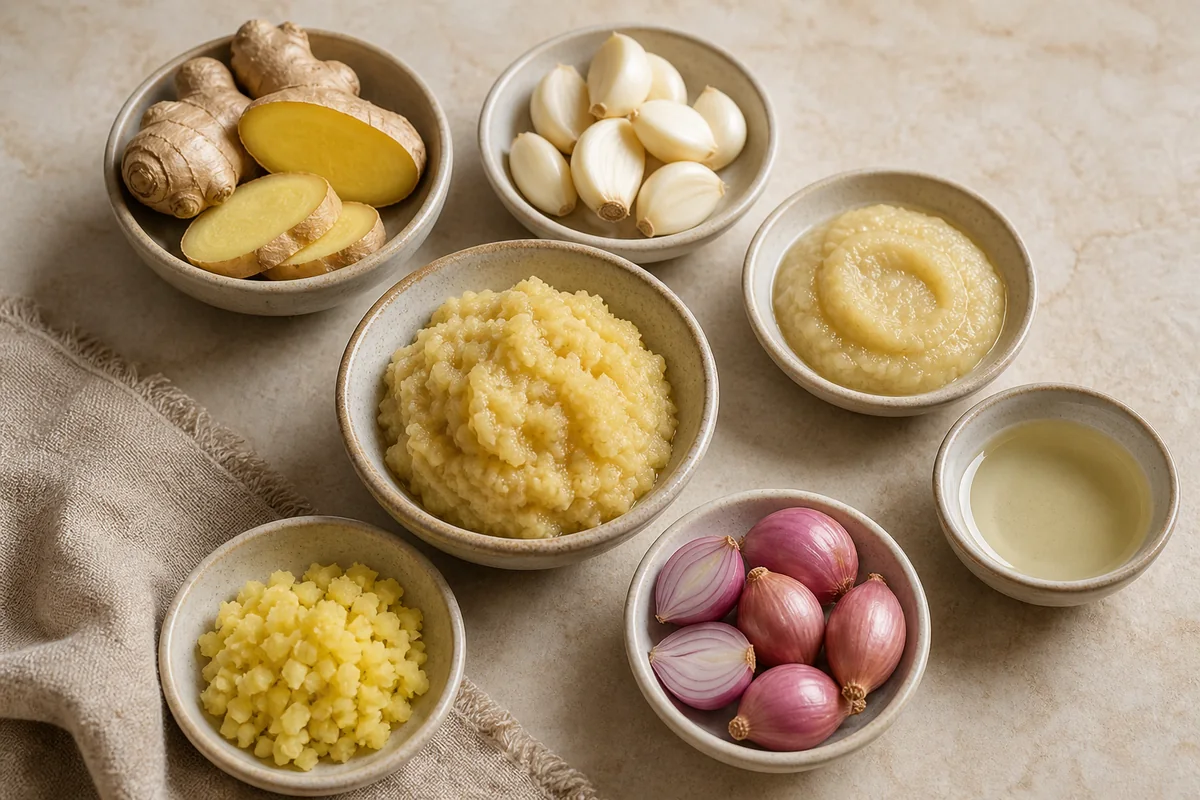
5 Best Ginger Garlic Paste Substitutes (Easy Swaps)
Ingredients
Equipment
Method
- Choose the closest texture to paste: minced/grated (squeeze lightly) or jarred/powder reconstituted into a thick slurry.
- Apply using the listed ratio, then add a splash of water or oil only if the base looks dry and not coating the pan.
- Cook the swap briefly in oil (20–60 seconds) to reduce raw bite; stop once it smells fragrant, not burnt.
- If it tastes too sharp, reduce by cooking longer in oil; if it tastes bland, add a pinch of salt or a tiny extra amount next round.
- For watery substitutes (grated ginger/garlic), squeeze before mixing and discard excess juice so your sauce doesn’t split.
Notes
- Paste behavior matters: mince/grate finely and cook briefly in oil to mimic the aromatics release of true paste.
- Avoid watery swaps—squeeze grated ginger/garlic and reconstitute powder thick, not thin.
Tried this recipe?
Let us know how it was!
Carrie is a food writer and editor with more than 15 years of experience. She has worked for some of the biggest names in the food industry, including Bon Appétit, Food & Wine, and Martha Stewart Living.
As the Editor in Chief of EpicureDelight, Carrie oversees all of the content on the site. She also manages the team of contributing writers and editors, who help to create delicious recipes, helpful tips, and informative articles that you’ll find on the site.
A native of the Chicago area, Carrie is passionate about all things food. She loves trying new restaurants and experimenting with new recipes in her kitchen. She’s also a graduate of the Culinary Institute of America, so she knows a thing or two about food!



