
Grapefruit juice is one of those ingredients that sounds easy to swap until you actually try. The flavor is doing two things at once: tart acidity and a faint, pleasant bitterness.
Most citrus substitutes cover one of those but not both.
The best grapefruit juice substitute depends on which job the juice is doing. In glazes and citrus cakes, you mostly need the bright tang.
In creamy dressings or more complex bakes, that mild bitterness matters more.
For baking, orange juice plus a lemon splash is the closest 1:1 match for grapefruit juice's tart-sweet profile. Lime juice diluted with water works when acidity is the priority. For a milder swap, try tangerine juice or white grape juice with lemon - just reduce added sugar slightly.
5 Best Grapefruit Juice Substitutes Ranked by Flavor Match
| # | Substitute | Best For | Ratio | Key Note |
|---|---|---|---|---|
| 1 | Orange juice + lemon | Both | 1:1 | Closest sweet-tart match |
| 2 | Lime juice (diluted) | Both | 1:1 | Sharp acidity, less bitter |
| 3 | Tangerine/mandarin juice | Both | 1:1 | Reduce sugar slightly |
| 4 | White grape juice + lemon | Both | ¾:1 | Mild, no bitterness |
| 5 | Grapefruit soda (diluted) | Both | 1:1 | Rest before mixing |
These are ordered closest-to-grapefruit first, then milder or emergency-level options. Read each one to match your specific recipe.
1. Orange Juice + Lemon Splash
Orange juice on its own is sweeter and less bitter than grapefruit. Adding a small splash of lemon pulls it back toward that tart, slightly sharp profile that grapefruit delivers.
Start with a better orange juice pick if you're working from a carton rather than fresh-squeezed. Fresh makes a real difference in baked glazes.
Orange Juice + Lemon vs. Grapefruit Juice
Works for: citrus cakes, scone glazes, muffin batters, frostings needing bright tang
Skip if: recipe needs grapefruit's faint bitterness specifically - this combo stays on the sweet side
- Ratio: Use orange juice at 1:1 for grapefruit juice, then add lemon juice in 1-teaspoon increments until the tang feels right
- For tang-forward recipes: Add up to 1 tablespoon lemon per half-cup of orange juice
- For sweetness-forward recipes: Keep the lemon minimal - just a teaspoon - so it brightens without sharpening
- In glazes: Mix before adding powdered sugar; taste the liquid base first and adjust lemon there
Skip if: your recipe specifically needs grapefruit's faint bitterness. This combination stays bright and sweet, not bitter.
2. Lime Juice (Diluted)
Lime juice is sharper and more acidic than grapefruit, but it carries none of grapefruit's bitterness. Diluting it slightly smooths the harsh edge and makes it usable in batters without overpowering other flavors.
If you're using fresh lime and want to understand how long it stays useful, storing citrus juice properly keeps acidity consistent. Stale lime juice can taste flat in baked goods.
- Ratio: Use lime juice at 1:1, but stir in 1-2 teaspoons of water per quarter-cup to soften the sharpness
- Best uses: Glazes, citrus cakes, and any recipe where lemon zest is already in the batter
- Avoid in delicate crumbs: Undiluted lime can make the crumb taste sour rather than bright
- Pair with vanilla: A drop of vanilla extract rounds out lime's sharp edge in icings
Skip if: the recipe depends on grapefruit's bitterness. Lime reads as sharply acidic, not bitter, and the difference is noticeable in simple recipes.
3. Tangerine/Mandarin Juice
Tangerine juice is the gentlest citrus swap on this list. It's genuinely sweet, low on bitterness, and soft in acidity.
That makes it easy to work with, but it does shift the flavor profile toward sweet-orange rather than tart-grapefruit.
Because tangerine is sweeter, you'll need to pull back on added sugar. In icings and quick breads, reduce the sugar by about 1 tablespoon per half-cup of juice.
Also pair it with tart acid swaps if the final batter tastes too flat.
- Ratio: 1:1 for grapefruit juice, no dilution needed
- In icings: Reduce powdered sugar by roughly 10% to compensate for added sweetness
- In quick breads: Reduce any added sugar by 1 tablespoon and taste the batter before baking
- Best recipes: Pound cake, citrus muffins, orange-style glazed scones
Skip if: your recipe's character depends on bitterness. Tangerine juice is primarily sweet and will make a notably softer, milder final product.
4. White Grape Juice + Lemon
White grape juice is mild, smooth, and almost neutral compared to grapefruit. It brings a soft sweetness and very little acidity on its own.
Adding lemon juice brings it to life.
This swap works best when you need a lighter background flavor. Think delicate pound cake, subtle glazes, or any bake where grapefruit bitterness would actually be too much.
For more on white grape variety differences before you buy, the grape variety breakdown is worth a quick scan.
- Ratio: Use white grape juice at ¾ of the grapefruit juice amount, then add fresh lemon juice to taste
- Tang target: Start with 1 teaspoon lemon per 3 tablespoons grape juice; increase by half-teaspoons until bright
- Best uses: Light glazes, angel food cake, chiffon cake, white-crumb muffins
- Avoid in strongly flavored batters: The mild grape base gets lost next to spices or chocolate
Skip if: you want any trace of grapefruit's bitter edge. This combination is mellow and smooth, which is exactly its strength in delicate recipes.
5. Grapefruit Soda (Diluted)
This is an emergency swap, not an ideal one. Grapefruit-flavored soda does carry some of the bitterness and citrus flavor, but it's also sweet and carbonated.
Both of those need managing before it goes into a batter.
| Use | Ratio | Notes |
|---|---|---|
| Glazes | 1:1 (rested) | Let sit 8 min; stir before measuring |
| Muffin batter | 1:1 (rested) | Rest 10 min; reduce added sugar by 1 tbsp |
| Citrus cake | ¾:1 + lemon | More dilution; add lemon to sharpen taste |
Let the soda rest in an open bowl for at least 5 to 10 minutes before measuring. Most of the larger bubbles will break down, and the remaining carbonation is manageable in most batters.
- Sweetness control: If the soda tastes very sweet on its own, dilute it with an extra tablespoon of water and add a small squeeze of lemon
- Texture note: Residual carbonation can add slight lift in quick breads - often a benefit, not a problem
- Check labels: Use a lightly sweetened grapefruit soda, not a syrupy version; the flavor profile is closer to fresh juice
Skip if: your batter is foam-structured or relies on whipped proteins for lift. Carbonation can disrupt delicate structure in chiffon or angel food batters.
Getting Grapefruit Substitutes to Taste Right
Small adjustments after the swap are what separate a recipe that tastes slightly off from one that tastes intentional. When using fresh-squeezed bright citrus as your acidity base, always taste the juice on its own before it goes into the batter.
A flat or sour base will produce a flat or sour final product.
- To boost tang: Add lemon juice in half-teaspoon increments, stirring and tasting before each addition; do not overshoot
- To add bitterness: A tiny amount of lemon or orange zest (¼ teaspoon) adds faint bitter oils that most juice substitutes lack
- To reduce sweetness: Cut added sugar by 1 tablespoon at a time when using tangerine or white grape juice; taste the batter if possible before baking
Strain any substitute through a fine mesh before adding it to smooth batters or glazes. Pulp fragments can affect texture in ways that show up in the finished crumb.
Frequently Asked Questions
Orange juice with a small lemon splash is the closest 1:1 swap. It covers grapefruit's sweet-tart profile well in glazes, cakes, and muffin batters.
Yes, especially with tangerine juice. Reduce added sugar by about 1 tablespoon per half-cup of juice to keep the final bake from tasting overly sweet.
Add a small amount of lemon or orange zest - about ¼ teaspoon - to introduce bitter citrus oils that juice substitutes naturally lack.
Yes, but rest it in an open bowl for 5 to 10 minutes first. This reduces carbonation enough to prevent texture issues in most batters.
Diluted lime juice works well for pure acidity. Apple cider or diluted apple cider vinegar also delivers reliable tartness when no citrus options are available.
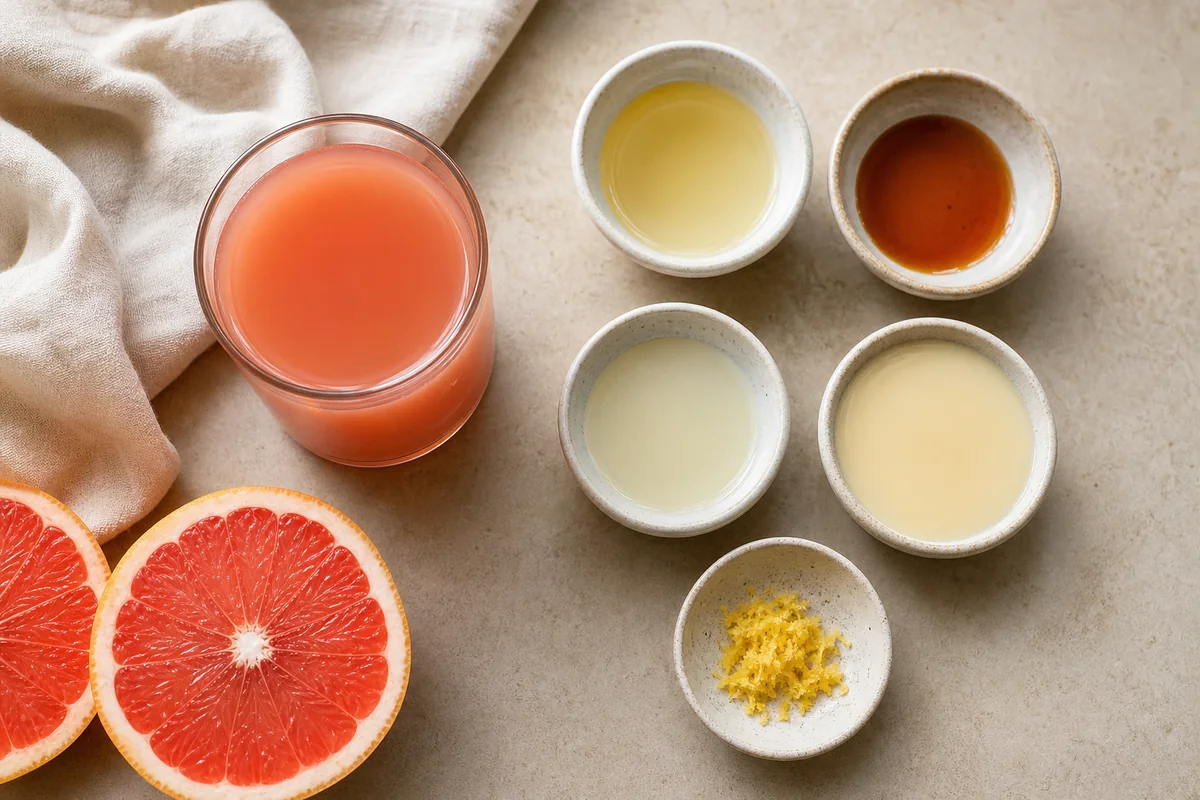
5 Best Grapefruit Juice Substitutes (That Actually Work)
Ingredients
Equipment
Method
- Decide if you need grapefruit’s bitterness (closer match) or mostly its tart lift (safe for most cakes, muffins, and glazes).
- Use the listed ratio as your starting point, then adjust by adding lemon juice (more tang) or a small pinch of sugar (less sharp).
- If the substitute has solids or strong pulp, strain before mixing to keep batters and glazes smooth.
- For baked goods with rising/structure needs, avoid overly acidic substitutes concentrated with vinegar; dilute and taste the batter if possible.
- After baking, evaluate the finished flavor; next time, fine-tune by tiny increments of lemon or sugar rather than big changes.
Notes
- Goal match: grapefruit juice = bright acidity + light bitterness. Choose the substitute that best matches the bitterness requirement for your recipe.
Tried this recipe?
Let us know how it was!
Carrie is a food writer and editor with more than 15 years of experience. She has worked for some of the biggest names in the food industry, including Bon Appétit, Food & Wine, and Martha Stewart Living.
As the Editor in Chief of EpicureDelight, Carrie oversees all of the content on the site. She also manages the team of contributing writers and editors, who help to create delicious recipes, helpful tips, and informative articles that you’ll find on the site.
A native of the Chicago area, Carrie is passionate about all things food. She loves trying new restaurants and experimenting with new recipes in her kitchen. She’s also a graduate of the Culinary Institute of America, so she knows a thing or two about food!



