
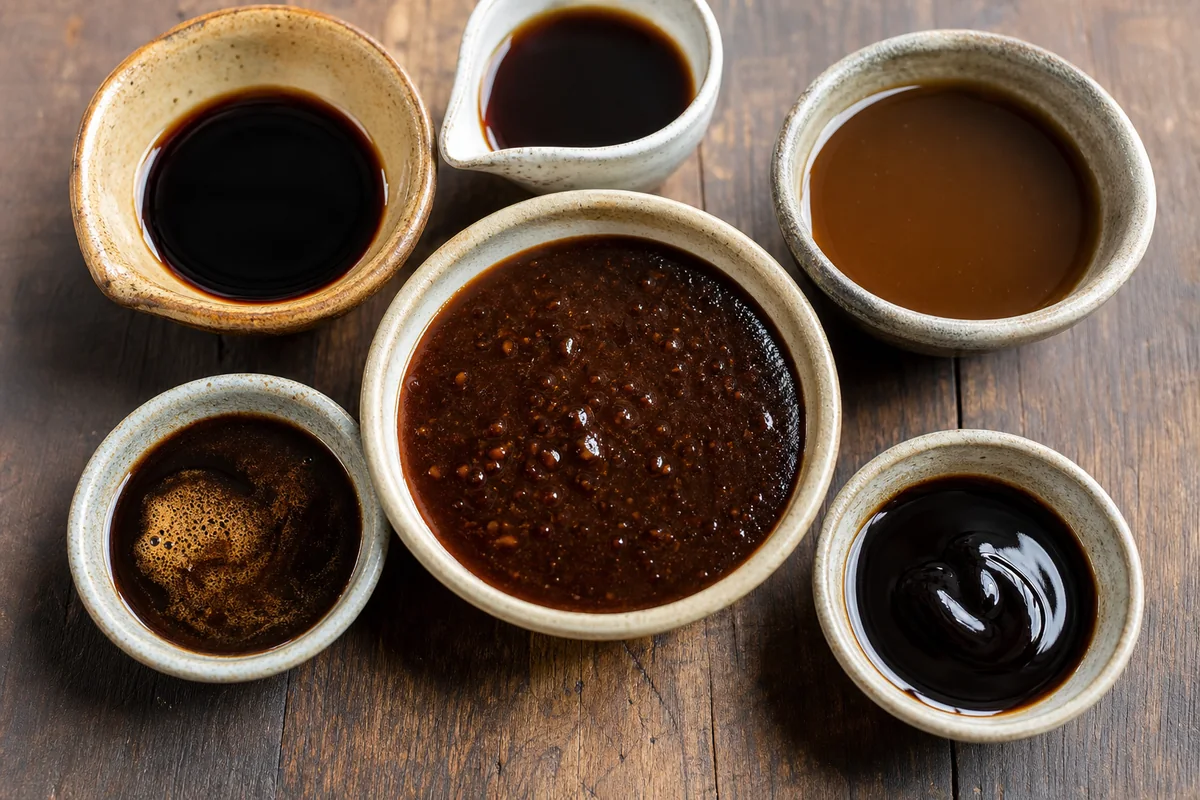
That deep mahogany color in great gravy doesn't happen by accident. Gravy Master is a seasoning and browning concentrate that does three jobs at once: it darkens the color, adds savory depth, and helps build body in pan-based gravies. When you're out of it, the right swap depends on which of those three jobs matters most in your recipe.
Some substitutes handle color only. Others add savoriness but leave the gravy thin.
A few do all three, but with different flavor profiles. Knowing what your gravy actually needs is the fastest way to pick the right stand-in.
The best gravy master substitute depends on whether your gravy needs dark color, savory depth, or thicker body. Brown roux covers all three but takes time. Concentrated bouillon adds savoriness fast. Cornstarch slurry thickens quickly. Onion soup mix is a one-packet fix. Reduced pan drippings are the from-scratch win.
5 Best Gravy Master Substitutes for Any Recipe
The table below maps each substitute to the specific job it does. A substitute that only darkens color won't fix thin, bland gravy.
Match the column to your recipe's gap first, then read the full section for build notes.
| # | Substitute | Best For | Ratio | Key Note |
|---|---|---|---|---|
| 1 | Brown Roux + Beef Stock | Color + Body | 1:1 fat:flour | Cook flour medium-brown |
| 2 | Cornstarch Slurry + Stock Reduction | Thickening | 1 tbsp:2 tablespoon water | Add cold, simmer to set |
| 3 | Concentrated Beef Bouillon | Savoriness | ½ teaspoon per cup | Pair with thickener if thin |
| 4 | Onion Soup Mix | Flavor + Color | 1 packet per 2 cups | Watch salt levels closely |
| 5 | Reduced Pan Drippings | All Three | Reduce by half | Needs real roast fond |
If your gravy is thin and bland, avoid starting with a color-only fix. Pair any darkening agent with a thickener or you'll end up with dark, watery gravy.
1. Brown Roux + Beef Stock
A brown roux is the most complete gravy master replacement you can make from scratch. Equal parts butter and flour, cooked over medium heat until the mixture turns a medium-brown color, builds both the body and the color that Gravy Master usually provides.
Understanding the brown vs. white gravy contrast helps you decide exactly how dark to cook your roux before adding stock.
The savoriness comes from your beef-style stock. Use a good-quality stock, not a diluted carton, and the final gravy will taste close to a Gravy Master-built version.
- Start the roux: Melt 2 tablespoon butter in a heavy pan over medium heat, then whisk in 2 tablespoon flour.
- Cook to color: Stir constantly for 4-6 minutes until the roux smells nutty and turns medium brown. Pale roux tastes like raw flour.
- Add stock gradually: Pour in warm beef stock in a slow stream, whisking as you go to prevent lumps.
- Simmer to thicken: Keep on low heat for 3-5 minutes, stirring until the gravy coats a spoon.
Brown Roux + Beef Stock
Works for: roast beef, turkey drippings, rich stew-style gravies, any recipe needing full body and dark color
Skip if: you're short on time. This needs 5-8 minutes of active stirring before you add any liquid.
2. Cornstarch Slurry + Stock Reduction
When you need thickness fast and your gravy already has decent flavor, a cornstarch slurry is the cleanest option. It adds no color and no savoriness by itself, so it works best when your base is already dark-enough from drippings or stock.
The key is always mixing cornstarch into cold water first. Hot liquid cooks the starch instantly and causes lumps before it disperses.
- Mix the slurry: Whisk 1 tablespoon cornstarch into 2 tablespoon cold water until fully dissolved and milky-looking.
- Add gradually: Pour the slurry into simmering gravy in a slow stream, not all at once. Start with half and check texture.
- Simmer 30-60 seconds: Stir constantly until the gravy clears slightly and thickens. Undercooked cornstarch tastes chalky.
- Check before adding more: Gravy continues to set as it cools, so pull back early if it seems almost thick enough.
Skip if you need brown gravy flavor depth. Cornstarch thickens but adds nothing to color or savoriness on its own.
3. Concentrated Beef Bouillon
If the problem is flat flavor and the texture is already fine, concentrated beef bouillon is the right tool. A half teaspoon dissolved into a cup of hot gravy adds the kind of savory, slightly caramel-forward depth that makes Gravy Master useful in the first place.
Simmer the bouillon in a small amount of water first to reduce it slightly. That concentrates the flavor and rounds out the saltiness before you add it to the full batch.
- Start small: Dissolve ½ teaspoon bouillon paste (or one cube) in 2 tablespoon hot water. Taste before adding to the full pot.
- Add in stages: Stir in half, simmer for one minute, taste, then decide if you need more. This prevents oversalting.
- Pair with thickener if needed: If your gravy is also thin, add a cornstarch slurry after the bouillon is incorporated.
- Low-sodium option: Use a low-sodium bouillon and adjust salt at the end after all components are combined.
Skip if your gravy is already salty. Start with a low-sodium stock instead and add bouillon only at the very end, a tiny bit at a time.
4. Onion Soup Mix
A dry onion soup packet is a legitimate one-stop gravy fix. It brings dehydrated onion, caramelized onion powder, salt, and beef-style flavoring together in a way that mimics the savory grab of Gravy Master surprisingly well.
If you're open to swapping out soup mix in other recipes, you already know how much flavor it throws into a dish.
One packet handles about 2 cups of gravy base.
- Whisk into hot liquid: Stir the dry mix directly into hot stock, not cold water, so the dehydrated onion softens faster.
- Simmer 3-4 minutes: Let the mix hydrate fully before judging the flavor. Raw onion powder tastes sharp at first.
- Strain if needed: If you want a smooth gravy, pour it through a fine mesh strainer to remove any onion bits.
- Hold the extra salt: Don't add any salt until you've tasted the finished gravy. The packet brings plenty.
Skip if you want a clean pan-drippings flavor. Onion soup mix changes the flavor direction noticeably.
5. Reduced Pan Drippings
Nothing in this list beats real pan drippings for building Gravy Master-style color, body, and savoriness without any packets or powders. The fond stuck to the bottom of your roasting pan is essentially concentrated, caramelized meat flavor.
Deglazing with a splash of stock lifts it, and a short reduction does the rest.
- Remove excess fat: Spoon off most of the fat from the drippings, leaving about 2 tablespoon behind for richness.
- Deglaze: Pour ½ cup stock into the hot pan and scrape the fond from the bottom with a wooden spoon.
- Reduce: Simmer over medium heat until the liquid reduces by half and the color deepens visibly.
- Build from there: Add more stock, whisk in a slurry if you need more body, and season at the end.
| Use | Ratio | Notes |
|---|---|---|
| Thin, light gravy | Reduce by 50% | Deep color, strong flavor |
| Already thick gravy | Add as-is | Don't reduce further |
| Thin, dark gravy | Add cornstarch slurry | Skip extra reduction |
Skip if you don't have drippings or fond. This method depends entirely on real roast flavor from the pan.
Making Any Gravy Master Substitute Work
The technique matters as much as the ingredient. Add your substitute gradually, never all at once, and whisk continuously so it incorporates before you judge whether to add more.
A brief simmer after adding any thickener or concentrate lets the flavors mellow and the texture stabilize. Understanding the concentrated, savory character of the original helps you calibrate how much of a substitute is enough before you overshoot.
- Start with less: Use half the estimated amount of any substitute first, taste, then adjust. Most over-thick or over-salty gravies happen from adding too much at once.
- Simmer before judging: Give any thickener 60 seconds of active simmering before you decide it's not working. Cornstarch and roux both need heat to fully activate.
- Thin carefully: If the gravy thickens more than expected as it cools, whisk in warm stock a tablespoon at a time rather than adding cold water, which can break the texture.
Frequently Asked Questions
A brown roux gives the most reliable thickness with added color and richness. For speed, a cornstarch slurry thickens in under 60 seconds with no flavor change.
A well-cooked brown roux or reduced pan drippings both darken gravy naturally. Neither requires food coloring or any additional seasoning packets.
Yes, if you use it sparingly. Start with half a teaspoon per cup of gravy, taste, and add more only if the flavor still tastes flat.
Always mix cornstarch or gravy powder into cold liquid before adding to a hot pan. Pouring dry starch directly into simmering liquid causes instant clumping.
Add unsalted stock or a splash of water to dilute, then thicken again if needed. A small diced potato simmered in the gravy for 10 minutes also pulls excess salt.
5 Best Gravy Master Substitutes for Any Recipe
Ingredients
Equipment
Method
- Decide what your gravy is missing: dark color, savory depth, or thick body (or multiple).
- Choose the closest substitute: use roux for richness/thickening, cornstarch slurry for speed, bouillon for savoriness, or onion soup mix for a quick all-in-one boost.
- Add gradually (start small), whisk well, and simmer briefly so the gravy’s texture stabilizes.
- Adjust in the right direction: add a splash of stock for thinness, more thickener if it’s watery, or an extra pinch of seasoning if it tastes flat.
- Stop when it coats a spoon; gravy thickens slightly as it cools.
Notes
- If your gravy is already thick, prioritize color/seasoning swaps over thickener-heavy options.
- If you’re starting from drippings, taste first—pan drippings are often salty and strongly flavored.
Tried this recipe?
Let us know how it was!
Carrie is a food writer and editor with more than 15 years of experience. She has worked for some of the biggest names in the food industry, including Bon Appétit, Food & Wine, and Martha Stewart Living.
As the Editor in Chief of EpicureDelight, Carrie oversees all of the content on the site. She also manages the team of contributing writers and editors, who help to create delicious recipes, helpful tips, and informative articles that you’ll find on the site.
A native of the Chicago area, Carrie is passionate about all things food. She loves trying new restaurants and experimenting with new recipes in her kitchen. She’s also a graduate of the Culinary Institute of America, so she knows a thing or two about food!



