
Ground mustard has a dry, concentrated punch that prepared mustard just can't replicate directly. It adds pungency without extra liquid, which matters a lot in dry rubs, spice blends, and baked goods where moisture changes texture.
Knowing what you're actually replacing, flavor or form or both, is what makes the difference between a dish that works and one that falls flat.
The right ground mustard substitute depends on whether your recipe needs dry spice bite, mild tang, or just heat. Powder-for-powder swaps preserve texture best.
Prepared mustards trade some spice for tang and always bring extra moisture.
For dry spice bite, swap in mustard powder or yellow mustard powder at a 1:1 ratio. When only prepared mustard is available, use Dijon or yellow mustard at half the amount. For heat with no mustard products at all, try wasabi powder at ¼:1 or horseradish powder at ⅓:1.
5 Best Ground Mustard Substitutes Ranked
These five swaps cover every situation you're likely to face. Pick by form first, then adjust by taste.
| # | Substitute | Best For | Ratio | Key Note |
|---|---|---|---|---|
| 1 | Mustard Powder | Both | 1:1 | Closest dry flavor match |
| 2 | Yellow Mustard Powder | Both | 1:1 | Slightly sharper when bloomed |
| 3 | Prepared Dijon Mustard | Both | ½:1 | Adds tang and moisture |
| 4 | Prepared Yellow Mustard | Both | ½:1 | Milder, slightly sweeter |
| 5 | Wasabi Powder | Heat only | ¼:1 | Heat not mustard flavor |
1. Mustard Powder
Mustard powder is ground mustard's closest sibling. It is dry, pungent, and concentrated in exactly the same way, so the flavor profile matches better than any prepared option.
Start with a 1:1 swap and taste before adding more, because the bite can build fast over heat.
Understanding flour vs. powder differences helps you pick the right jar at the store, since labels aren't always consistent.
- Best for: Spice rubs, cheese sauces, dry blends, baked savory goods
- How to use: Measure 1:1, then bloom briefly in warm liquid before combining fully
- Adjust: Pull back by ¼ teaspoon if the sauce starts tasting sharp after simmering
Skip if: your recipe is already built around prepared mustard and needs that emulsified, spreadable texture.
2. Yellow Mustard Powder (Finely Ground)
Yellow mustard powder is very close to plain mustard powder but can read slightly more pungent once it hits hot liquid. The difference is small in cold preparations but noticeable in cooked sauces.
Use it 1:1 to start, then reduce by about ¼ if the sauce tastes too sharp after simmering.
Yellow Mustard Powder vs. Mustard Powder
Works for: marinades, dry rubs, seasoning blends, vinaigrettes where a little extra heat is fine
Skip if: your dish needs to stay mild or you're cooking for guests sensitive to sharp spice
- Best for: Marinades, spice blends, and any sauce you're simmering down
- Flavor tip: Mix with a small amount of cold water before adding to hot liquid to reduce clumping
- Adjust: If your dish already has vinegar, go lighter since acidity amplifies the sharpness
For recipes where yellow mustard flavor is core to the dish, reading about yellow mustard's flavor profile helps you decide how much adjustment you need.
3. Prepared Dijon Mustard
Dijon is the most fridge-friendly swap most home cooks already have. It brings real mustard flavor, but it also carries water, vinegar, and emulsifiers, so it always adds moisture and brightness that ground mustard does not.
Start at ½ teaspoon Dijon for every 1 teaspoon ground mustard. Taste after mixing.
Go up in ¼ teaspoon increments only, since the tang compounds quickly in warm dishes.
The moisture matters most in dry rubs and spice pastes. A small amount of Dijon won't ruin a sauce or dressing, but it will thin a rub significantly.
If you're making something dry, blot the Dijon lightly or reduce another liquid in the recipe by about 1 teaspoon per tablespoon of Dijon added.
If you're unsure how long your jar has been open, checking how long Dijon stays fresh before using it in a recipe is worth a quick look. The sharp, briny spread loses edge as it ages, which affects how much you'll need to add.
Skip if: your recipe requires dry powder texture, such as a spice rub that needs to stay dry on meat overnight.
4. Prepared Yellow Mustard
Yellow mustard is smoother and slightly sweeter than Dijon, making it a gentler swap. It works best in dressings, glazes, and slow-cooked sauces where the extra vinegar note has time to mellow.
The mustard flavor is present but quieter.
| Use | Ratio | Notes |
|---|---|---|
| Salad dressing | ½:1 | Yellow mustard; add at the end for brightness |
| Glaze or marinade | ½:1 | Yellow mustard; add early so tang mellows in heat |
| Cheese sauce | ⅓:1 | Yellow mustard; go lighter to avoid sweetness |
- Add timing: Early in cooking mellows the tang; late keeps it bright and vinegary
- Texture tip: If a sauce thins too much, reduce heat and simmer uncovered for 2 extra minutes
Knowing choosing the right yellow mustard option for your dish helps when you want to swap in the other direction too. Skip if: your dish needs sharp mustardy bite without any sweetness or vinegar tang.
5. Wasabi Powder
Wasabi powder won't replicate ground mustard's classic spice flavor. What it does is provide the sharp sinus-clearing heat that ground mustard delivers, which can be enough in some savory dishes.
Think of it as covering the kick, not the full flavor.
- Pre-mix step: Always stir wasabi powder with 3-4 drops of water first before adding to your dish, which prevents dry clumps and harsh raw spots
- Ratio: Use ¼ teaspoon wasabi powder for every 1 teaspoon ground mustard called for
- Best in: Dipping sauces, Asian-leaning glazes, savory dressings where mustard flavor is background heat only
- Avoid in: Baked goods, cheese sauces, or anything where mustard's specific spice character is essential
For a broader emergency pantry approach, exploring prepared mustard swaps gives you more options before reaching for wasabi. Skip if: you need true mustard flavor and not just sharp heat.
Making Ground Mustard Substitutes Work
The single most useful rule is to match form to function. Dry powder swaps keep texture intact.
Prepared mustard swaps change moisture and emulsification. Once you pick the right form, the rest is timing and tasting.
Mustard's pungent spice notes bloom best when the powder hits warm liquid briefly before the dish finishes cooking. If you add powder to a cold mix, the flavor stays muted. Adding at the very end keeps the bite sharp and raw-tasting, which can read harsh. Somewhere in the middle of cooking is usually right. If you want to add depth without sharp bite, the earthy golden spice pairs well in small amounts alongside mustard substitutes in rubs and sauces.
- Measure carefully: Start at the lower end of the ratio, then add in ¼ teaspoon increments after tasting
- Bloom dry powders: Stir into 1 teaspoon of warm water or broth before combining with other ingredients
- Compensate for moisture: When using prepared mustard, reduce another liquid in the recipe by about 1 teaspoon per full tablespoon of prepared mustard added
Frequently Asked Questions
Yes, mustard powder swaps in at 1:1 and is the closest match in both flavor and texture. Taste after mixing and reduce by ¼ if the dish tastes sharp.
Start with ½ teaspoon Dijon for every 1 teaspoon ground mustard. Dijon adds moisture and tang, so going lower first prevents a thin or overly sharp result.
Horseradish powder tastes sharp and bright rather than bitter, but it won't replicate mustard's spice character. Use ⅓:1 and add a small pinch of turmeric to warm the color.
Add dry powder mid-cook for rounded flavor or at the end for sharper bite. Prepared mustard is best added early so the vinegar mellows in heat.
Add a small amount of fat (butter or cream) or a pinch of sugar to blunt sharpness. Simmering longer also mellows bitterness from overused mustard-based substitutes.
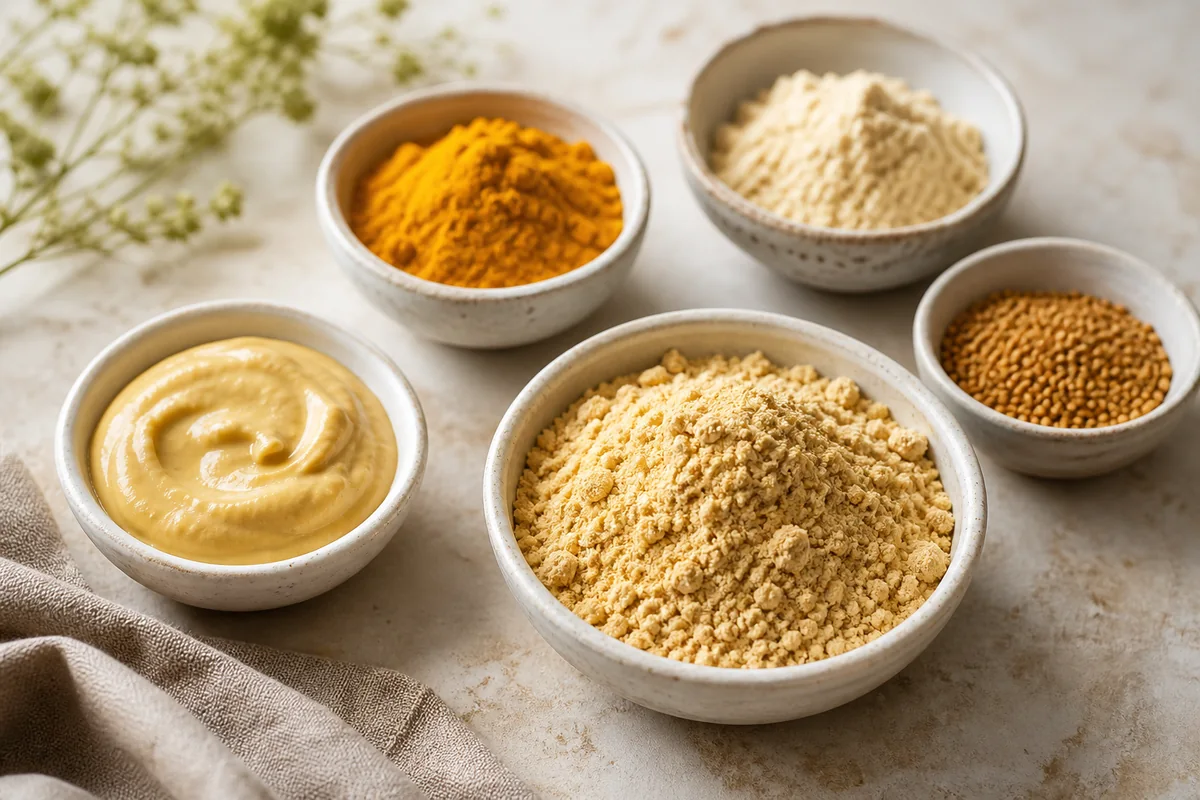
5 Best Ground Mustard Substitutes for Better Results
Ingredients
Equipment
Method
- Decide what you need most: dry mustard spice (use mustard powder/yellow mustard powder) or tang + moisture (use Dijon or yellow prepared mustard).
- Use the listed ratio, then mix thoroughly into the sauce, marinade, or dry rub base so the flavor blooms evenly.
- If using prepared mustard, reduce slightly (start at the lower ratio) and adjust recipe liquid as needed for the correct thickness.
- Taste after mixing (before final cooking if possible). Add small pinches only—ground mustard can turn bitter when overdone.
- For heat control, separate “mustardy bite” from “background tang”: increase mustardy spice with powder swaps, but use prepared mustard in smaller increments.
Notes
- If the original recipe uses ground mustard specifically for dryness/spice, prioritize mustard powder over prepared mustard.
- When swapping prepared mustard, reduce the amount and account for added moisture to avoid thinning sauces.
Tried this recipe?
Let us know how it was!
Carrie is a food writer and editor with more than 15 years of experience. She has worked for some of the biggest names in the food industry, including Bon Appétit, Food & Wine, and Martha Stewart Living.
As the Editor in Chief of EpicureDelight, Carrie oversees all of the content on the site. She also manages the team of contributing writers and editors, who help to create delicious recipes, helpful tips, and informative articles that you’ll find on the site.
A native of the Chicago area, Carrie is passionate about all things food. She loves trying new restaurants and experimenting with new recipes in her kitchen. She’s also a graduate of the Culinary Institute of America, so she knows a thing or two about food!



