
Hakka noodles have a specific spring to them. That bounce is what makes them hold sauce without going limp after a minute in the wok.
Finding the right hakka noodle substitute means matching that chew first, then worrying about flavor.
Most swaps work at a 1:1 weight ratio. The bigger variable is cook time: under-cook slightly, then finish the noodles in sauce over high heat.
That 30-90 second toss is what separates a good swap from a soggy one.
Lo mein noodles are the closest match for stir-fry and saucy toss dishes. Rice sticks work well for a gluten-free swap. Spaghetti is the best pantry fallback. Cook all substitutes slightly under, then finish in sauce for 30-90 seconds on high heat.
5 Best Hakka Noodle Substitutes (with Ratios)
| # | Substitute | Best For | Ratio | Key Note |
|---|---|---|---|---|
| 1 | Lo Mein Noodles | Stir-fry & Toss | 1:1 | Closest chew; cook until springy |
| 2 | Rice Stick Noodles | Stir-fry & Soup | 1:1 | Soak briefly; finish in sauce |
| 3 | Soba Noodles | Savory Toss | ¾:1 | Nutty flavor; rinse after cooking |
| 4 | Spaghetti | Stir-fry & Toss | 1:1 | Under-cook; toss fast in sauce |
| 5 | Udon Noodles | Soup & Stir-fry | ¾:1 | Thicker; toss longer for sauce cling |
Pick a substitute that matches your dish type, then follow the ratio and skip-if note for each item below.
1. Lo Mein Noodles
Lo mein is the closest noodle to hakka in both structure and behavior. It stays springy when cooked until just tender, and it coats fast when you swap in a similar wheat noodle and toss immediately over high heat.
Lo Mein vs. Hakka Noodles
Works for: stir-fry, saucy toss, any dish where springy chew and fast coating matter most
Skip if: you need gluten-free, or you want a thinner, more delicate noodle texture
- Cook time: Boil 3-4 minutes for dried, 1-2 minutes for fresh; pull when just springy, not soft.
- Toss window: Add to the wok immediately and toss for 45-60 seconds on high heat.
- Sauce ratio: Use the same sauce quantity as you would for hakka noodles; lo mein absorbs at a similar rate.
- Ratio: 1:1 by weight.
Skip if you need a rice-based or gluten-free noodle. Lo mein contains wheat.
2. Rice Stick Noodles
Rice sticks are the top gluten-free swap when you need a noodle that holds its shape in a toss. Under-soak them by 1-2 minutes so they finish cooking in the sauce rather than going soft in water.
If your leftover stir-fry dish needs reheating, rice sticks hold up better than most alternatives.
- Soak time: Hot water for 5-6 minutes (vs. the package's 8), then drain.
- Finish in sauce: Toss for 30-60 seconds in your sauce on medium-high; they'll absorb quickly.
- Width matters: Use medium-width (3-5mm) sticks for the closest texture to hakka noodles.
- Ratio: 1:1 by weight.
Skip if your sauce is very watery. Thin broth will over-saturate rice sticks and make them fall apart.
3. Soba Noodles
Soba has a firmer, slightly grainier bite than hakka noodles, and it brings a mild nutty flavor to whatever sauce you use. That flavor is not neutral, so it works best with bold, savory sauces.
If you want to know more about buckwheat noodle flavor profiles, that page covers what to expect before you cook.
- Cook time: Boil 5-6 minutes (not the full package time); pull 1 minute early.
- Rinse rule: Rinse under cold water immediately to stop cooking and remove excess starch.
- Sauce pairing: Strong soy, spicy sesame, or dark vinegar sauces balance soba's nuttiness best.
- Ratio: Use ¾ the amount of soba you would use of hakka noodles by weight; soba is denser and fills the dish faster.
- Skip if: Your dish is meant to taste neutral or lightly sauced. Soba will dominate a delicate flavor base.
4. Spaghetti
Spaghetti is the pantry swap most people already have, and it performs better than expected in a stir-fry context. The pasta shape tradeoff matters here: thinner spaghetti (spaghettini) coats more evenly and stays springier than standard thickness.
Spaghetti as a Hakka Swap
Works for: stir-fry, saucy toss dishes, any recipe where sauce volume is medium-high and toss time is short
Skip if: you need an authentic springy Asian-wheat bounce-spaghetti is slightly smoother and less elastic
- Under-cook by 2 minutes: Pull spaghetti when it is still firm at the center (al dente minus one step).
- Rinse only if sticky: A quick cold rinse removes surface starch so the noodles don't clump in the wok.
- Toss fast: 60-90 seconds on high heat is the limit before spaghetti starts to soften further.
- Ratio: 1:1 by weight.
Skip if your goal is the classic bouncy hakka chew. Spaghetti is closer to a silky sauce-pasta than a springy Asian wheat noodle.
5. Udon Noodles
Udon is thicker and chewier than hakka noodles, which changes how sauce clings to it. You need slightly less udon by weight and a longer toss time so the sauce can work into the noodle's surface.
If you are considering swapping thick wheat noodles in general, the same rules about sauce reduction apply.
| Use | Ratio | Notes |
|---|---|---|
| Stir-fry | ¾:1 | Toss 60-90 sec on high heat; use a thicker sauce |
| Soup | ¾:1 | Add udon last; simmer no more than 2 minutes |
| Saucy toss | ¾:1 | Rinse briefly, then coat fast before noodles cool |
- Rinse after boiling: A cold rinse stops cooking and keeps udon from sticking together in the pan.
- Brief reheat only: Toss in the wok for 60-90 seconds max; over-simmering makes udon gummy.
- Sauce texture: Use a slightly thicker sauce than you would for hakka noodles so it clings to udon's wider surface.
Skip if you want thin, springy noodles. Udon will make the dish noticeably chunkier in texture.
Making the Swap Work: Ratios, Cooking, and Tossing
The ratio on the table is your starting point, but the real work happens after the water drains. Most swaps fail because the noodle finishes cooking in the sauce instead of arriving at the wok already close to done.
Pull the noodle early, rinse when it feels sticky, and get it into a hot pan fast. If you want to understand buckwheat-based noodle alternatives beyond soba, that page covers a few more angles worth knowing before you shop.
- Under-cook by 1-2 minutes: The noodle finishes in the sauce; it should feel firm, not raw, when it leaves the boiling water. Look for a slight white core if you bite one.
- Toss on high heat, 30-90 seconds: High heat helps the sauce cling rather than pool. Pull the pan the moment every noodle strand looks coated and glossy.
- Adjust sauce thickness: If the noodles look dry after 60 seconds, add 1-2 tablespoon of stock or water. If they look wet and limp, crank heat for 20 more seconds and toss harder to cook off the liquid.
Frequently Asked Questions
Lo mein noodles are the closest 1:1 swap for stir-fry. They match hakka noodles in chew, cook fast, and coat evenly when tossed in a hot wok for 45-60 seconds.
Yes, soak in hot water for 5-6 minutes and pull them while still slightly firm. Over-soaking makes rice sticks mushy before they even hit the pan.
Rinse cellophane noodles under cold water right after cooking, then toss in sauce for no more than 30-45 seconds. Long stir-frying turns them gummy.
Use udon at a ¾:1 ratio for soup and add it last. Simmer for no more than 2 minutes so it stays firm rather than bloated.
Rice stick noodles and cellophane noodles (mung bean vermicelli) are both gluten-free. Lo mein, soba, spaghetti, udon, and ramen all contain wheat.
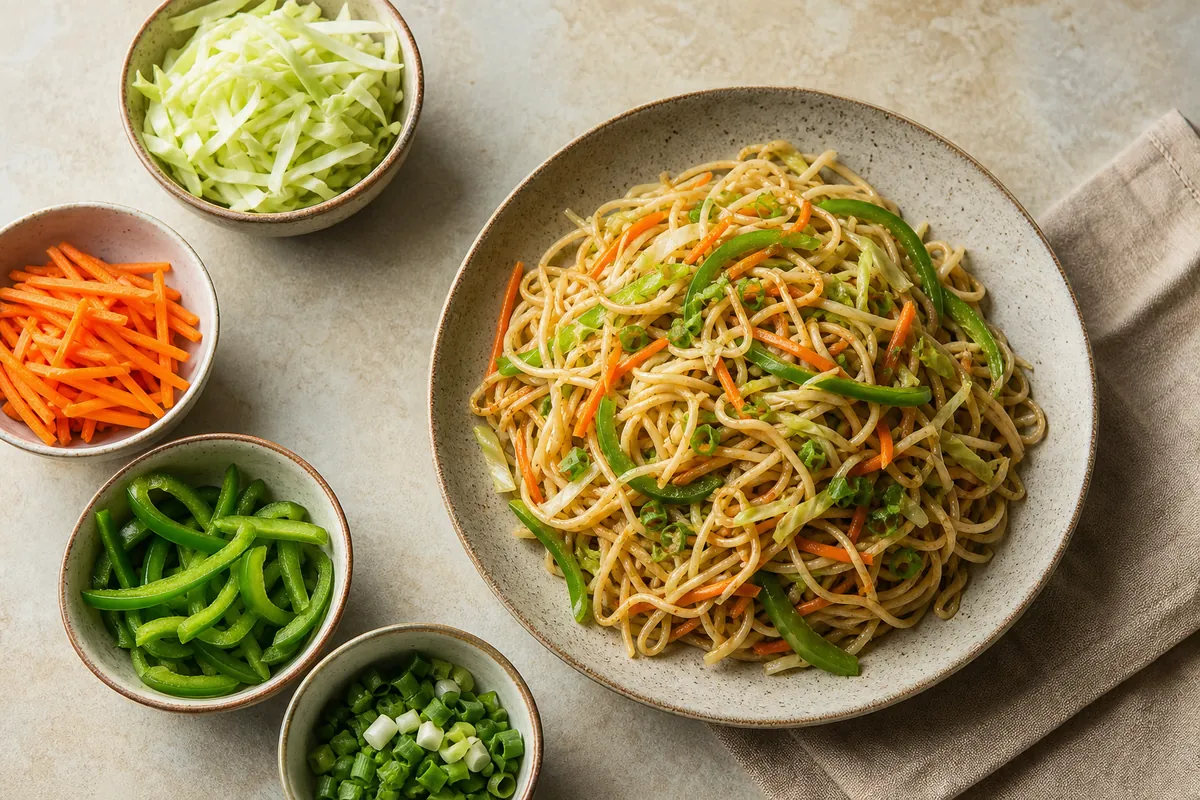
5 Best Hakka Noodle Substitutes (with Ratios)
Ingredients
Equipment
Method
- Choose the swap based on your dish: stir-fry (lo mein or spaghetti), soup (udon or rice sticks), or saucy toss (rice sticks or lo mein).
- Use the ratio for the noodle weight you would have used for hakka noodles.
- Cook only until springy/just tender (especially for rice sticks and soba), then drain and rinse when the noodles feel sticky.
- Toss noodles in the sauce for 30–90 seconds on high heat so they coat without turning mushy.
- If the noodles are too soft, shorten cooking next time; if they’re slippery, toss with a splash more sauce or a spoon of stock.
Notes
- For rice stick and vermicelli: under-cook, then finish in the sauce briefly for better chew.
- For stir-fry: pre-cook and drain fully; add sauce at the end so noodles don’t steam themselves soft.
Tried this recipe?
Let us know how it was!
Carrie is a food writer and editor with more than 15 years of experience. She has worked for some of the biggest names in the food industry, including Bon Appétit, Food & Wine, and Martha Stewart Living.
As the Editor in Chief of EpicureDelight, Carrie oversees all of the content on the site. She also manages the team of contributing writers and editors, who help to create delicious recipes, helpful tips, and informative articles that you’ll find on the site.
A native of the Chicago area, Carrie is passionate about all things food. She loves trying new restaurants and experimenting with new recipes in her kitchen. She’s also a graduate of the Culinary Institute of America, so she knows a thing or two about food!



