
Halibut's mild flavor and dense, flaky texture are easy to replicate-if you pick the right substitute for your cooking method. The wrong swap can turn mushy under a broiler or fall apart in a pan sauce.
The key is matching cooking behavior, not just mild flavor. A fish that handles high heat without losing structure is not the same as one that works in a gentle poach.
If your recipe needs thick, clean flakes for roasting or searing, choose a firm white fish. For lighter preparations, softer options open up.
The best halibut substitute depends on your cooking method. Cod (thick fillets) is the closest all-around match for baking, broiling, and searing. Orange roughy or sablefish stays tender under high heat. Hake, pollock, and tilapia work well with gentler methods and light sauces. All swap 1:1 by weight.
The Best Halibut Substitutes (By How They Cook)
| # | Substitute | Best For | Ratio | Key Note |
|---|---|---|---|---|
| 1 | Cod (thick fillets) | Both | 1:1 | Closest flake, go thick |
| 2 | Orange Roughy / Sablefish | Both | 1:1 | Forgiving under high heat |
| 3 | Hake | Baking | 1:1 | Light sauces, sheet pan |
| 4 | Pollock (center-cut) | Baking | 1:1 | Watch for mushiness |
| 5 | Tilapia | Gentle cook | 1:1 | Less dense, add fat |
1. Cod (Thick Fillets)
Cod is the closest all-around halibut replacement you'll find at any grocery store. Its mild flavor and firm, clean flake hold up well across roasting, broiling, and pan-searing.
When storing white fish before cooking, treat cod the same way you'd handle halibut.
Pick thick center-cut fillets over thin tail pieces. Thin cod overcooks fast and loses that clean flake before you can pull it from the pan.
Cod (Thick Fillets)
Works for: roasting, pan-searing, broiling, and baked dishes needing a firm, structured fillet
Skip if: fillets are thin-reduce cook time significantly or they'll dry before they flake properly
- Texture: Dense and firm, flakes clean in large sections-mirrors halibut closely
- Best cook method: Pan-sear in butter at medium-high, or roast at 400°F (200°C) until just opaque
- Flavor note: Very mild, takes seasoning well, pairs cleanly with lemon butter or herb sauces
2. Orange Roughy or Sablefish
Both options are genuinely forgiving under high heat, which makes them useful when you're broiling or roasting and don't want to babysit the pan. Sablefish (black cod) has a slightly richer, buttery quality-you can read more about that buttery, silky texture before deciding if it fits your dish.
- Flavor direction: Orange roughy is neutral and mild; sablefish is richer with a slight natural fat
- Cook style: Both do well broiled or roasted-watch this delicate ocean fish closely as it cooks fast
- Doneness cue: Pull from heat as soon as the center goes from translucent to opaque white
Skip if: your fillets are ultra-thin. Both orange roughy and sablefish can overcook in under 3 minutes at high heat when cut thin.
3. Hake
Hake flakes well and stays pleasant with simple aromatics and light acidity-it pairs naturally with dishes that lean on lemon, capers, or a thin cream sauce. If you want a deeper read on its flavor profile, the mild white fish options page covers it well, especially for comparing sauce compatibility.
- Ideal dish types: Sheet-pan bakes, foil packets, and light sauce dishes where you don't need a heavy crust
- Texture after baking: Soft flake, slightly more delicate than halibut-handle gently when plating
- Seasonings that pair well: Lemon zest, fresh dill, white wine, and a light olive oil drizzle
Skip if: you're aiming for a firm sear crust. Hake is best cooked to a gentle flake, not aggressively browned.
4. Pollock (Center-Cut Fillets)
Pollock is mild and affordable, but it is softer than halibut. The risk is mushiness, especially if you cook it past just-set or leave it in a sauce too long.
Use the flake test at the thickest part-when it separates cleanly with a fork, pull it immediately. If you're weighing whether to use it or try something firmer, picking a different fish is worth considering for thick-fillet bakes.
Center-cut sections hold up better than tail fillets. They're thicker, more uniform, and cook more evenly without collapsing.
| Use | Ratio | Notes |
|---|---|---|
| Baked (thick fillets) | 1:1 | Center-cut only; 400°F for 10-12 min max |
| Pan-seared | 1:1 | Medium heat; flip once, remove at first flake |
| Light sauce dishes | 1:1 | Add to sauce last 3-4 min to prevent softening |
- Best method: Quick roast or gentle sear at medium heat-not slow braises
- Overcooking warning: Pollock turns watery and breaks apart fast; use a timer and the flake test together
- Seasonings: Garlic butter, paprika, and fresh parsley work well and don't overwhelm its mild base
Skip if: you can't monitor cook time closely. Long bakes or covered dishes at low heat will turn pollock soft before you notice.
5. Tilapia (Gentle Cook)
Tilapia has less density than halibut, so it needs a gentler hand. It can dry out and break down faster, especially under a broiler or in a hot dry pan.
If you're already considering swaps for a milder fish, cooking tilapia differently covers the options clearly for light preparations.
The best approach is to poach it, bake it covered in foil with a little fat, or use it in a dish where moisture is built into the method.
Tilapia
Works for: poaching, foil-baking, and gentle pan-cooking with butter or light sauces
Skip if: your recipe needs a thick, structured fillet-tilapia can break apart before it finishes browning
- When to use it: Poach in broth or white wine, or bake covered at 375°F with a thin layer of butter and herbs
- Keeping it moist: Add 1-2 tablespoons of fat or cover with foil for the first two-thirds of cook time
- Seasoning adjustment: Tilapia has almost no natural flavor-season more assertively with salt, acid, and aromatics
Making Your Halibut Substitute Taste Right
Getting the swap right is mostly about timing and fat. Every fish on this list has a different moisture level and flake threshold, so cooking by clock alone is the fastest way to go wrong.
Use the flake test at the thickest point-a fork inserted gently should meet no resistance and the flesh should separate into clean sections. Thickness matters more than species here.
A 1-inch cod fillet and a ½-inch tilapia fillet cook in completely different windows, even at the same oven temperature. Start checking doneness 2 minutes before you expect the fish to be done, and pull it from the heat as soon as it flakes.
Carryover will finish the center.
- Adjust cook time by thickness: For every ½ inch of fillet, expect roughly 4-5 minutes at 400°F; reduce to 3-4 minutes for softer fish like pollock or tilapia
- Balance flavor with fat and acid: A squeeze of lemon and a tablespoon of butter added at the end works across all five substitutes and replaces the natural richness halibut carries
- Season more with mild swaps: Tilapia and pollock have less inherent flavor than halibut-add an extra pinch of salt and a small amount of white wine or citrus to pull the dish together
Frequently Asked Questions
Yes, thick-cut cod is a 1:1 swap by weight for baking. Pick center-cut fillets at least ¾ inch thick so they hold their flake and don't dry out before the center is done.
Cod gives the cleanest flake after pan-searing. Sablefish is a close second and stays more moist if you pull it a touch early from the heat.
Use center-cut fillets and cook at medium-high heat for a short window. Pull pollock as soon as it flakes at the thickest point-even 1 extra minute makes it watery.
Not ideal. Tilapia is thinner and less dense, so it dries fast under a broiler. Use cod or orange roughy instead for broiled preparations.
Not much, but milder fish like tilapia and pollock benefit from a bit more salt and acid. Lemon juice or white wine added at the end closes the flavor gap quickly.
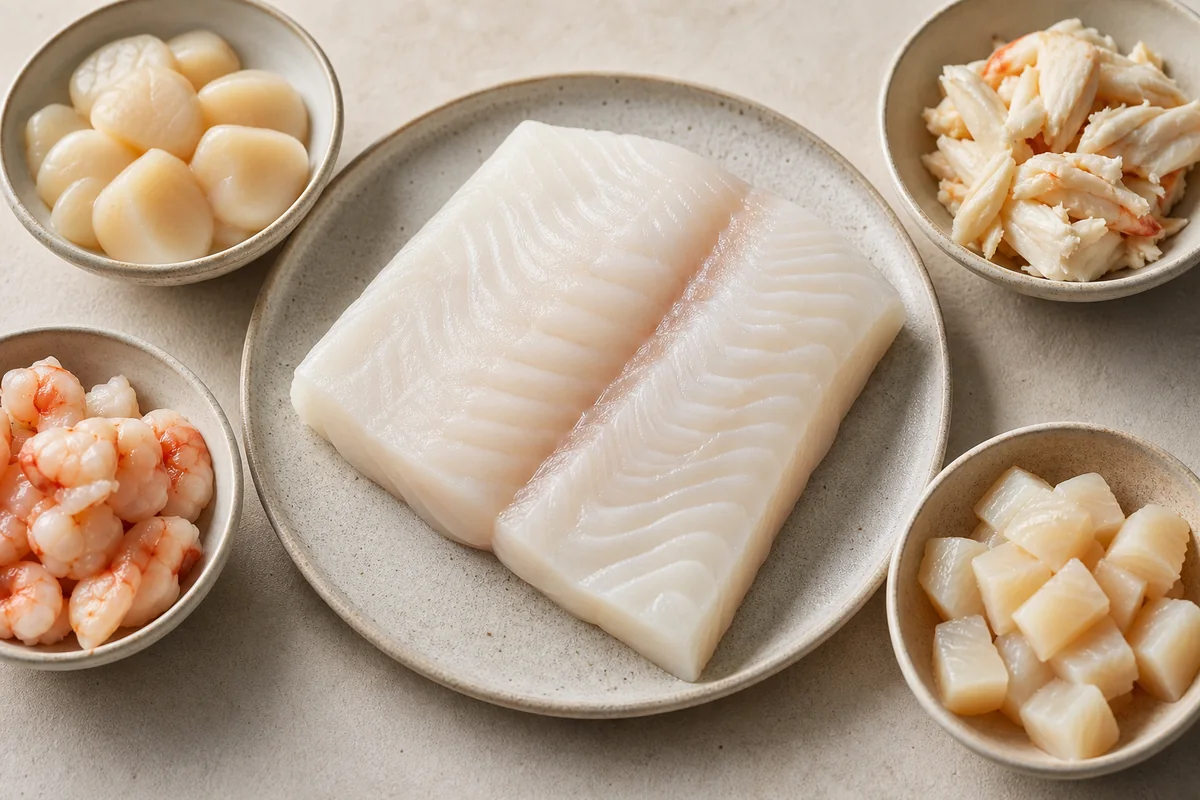
5 Best Halibut Substitutes for Better Results
Ingredients
Equipment
Method
- Match the cooking method first: for roast/broil choose cod or orange roughy; for gentle pan-cook choose hake or pollock.
- Use the listed ratio (1:1) and weigh if your recipe calls for a specific amount of halibut.
- If the substitute is softer (pollock/tilapia), cook until it flakes at the thickest part, then stop—carryover will finish it.
- Season the same way, but add a little extra fat or cover while cooking if your substitute tends to dry out.
- Test doneness by flake test (fork gently), not just by time, because fillet thickness varies.
Notes
- Thicker fillets hold shape better across substitutes; thin fillets require shorter cooks.
Tried this recipe?
Let us know how it was!
Carrie is a food writer and editor with more than 15 years of experience. She has worked for some of the biggest names in the food industry, including Bon Appétit, Food & Wine, and Martha Stewart Living.
As the Editor in Chief of EpicureDelight, Carrie oversees all of the content on the site. She also manages the team of contributing writers and editors, who help to create delicious recipes, helpful tips, and informative articles that you’ll find on the site.
A native of the Chicago area, Carrie is passionate about all things food. She loves trying new restaurants and experimenting with new recipes in her kitchen. She’s also a graduate of the Culinary Institute of America, so she knows a thing or two about food!



