
That glossy, dark-brown spoonful does a lot of heavy lifting. Hoisin sauce substitute searches spike whenever a recipe calls for exactly one tablespoon and the bottle in the back of the fridge is empty. Hoisin brings sweetness, savory salt, a fermented bean depth, and a thick cling that coats noodles or glazes meat without running off.
The swaps below are matched to those specific functions. Some are single ingredients.
Others are quick two-part mixes. All are tuned to give you the same sweet-savory-thick result.
Hoisin sauce is sweet, savory, thick, and slightly fermented. The best pantry swaps are Peking duck sauce (closest match), teriyaki plus black bean paste (most bean-like), and soy sauce plus brown sugar (simplest DIY). Adjust salt and sweetness after mixing, and simmer thin sauces briefly for cling.
5 Best Hoisin Sauce Substitutes (Ranked by Flavor Match)
Start with whichever swap best matches your use. Glazing or stir-frying?
Prioritize thickness and sweet-savory balance. Baking?
Sweetness stability matters more than fermented depth. The table below shows all five at a glance, then each section covers the details.
| # | Substitute | Best For | Ratio | Key Note |
|---|---|---|---|---|
| 1 | Peking Duck Sauce | Both | 1:1 | Closest sweet-savory depth |
| 2 | Teriyaki + Black Bean Paste | Cooking | 1:1 | Most fermented bean depth |
| 3 | Soy Sauce + Brown Sugar | Both | 1:1 | Easiest pantry DIY |
| 4 | BBQ Sauce + Soy Sauce | Cooking | 1:1 | Smoky-sweet glaze swap |
| 5 | Ketchup + Soy Sauce | Cooking | 1:1 | Fast emergency drizzle |
1. Peking Duck Sauce
Peking duck sauce is the single closest swap for hoisin. It shares the same glossy sweet depth and thick body, so it slides into glazes, stir-fries, and dipping sauces with almost no adjustment.
The sweetness level is similar, and the savory undertone holds up when cooked.
Peking Duck Sauce
Works for: glazing roasted meats, stir-fry sauce base, noodle toss, dipping sauce, spring roll accompaniment
Skip if: you need fermented-bean depth and the duck sauce you have is purely sweet fruit-based, with no savory backbone
- Ratio: Use 1:1 with no other changes for most dishes
- Texture: Already thick; no simmering step needed in most cases
- Flavor nudge: If it tastes too sweet, stir in ½ teaspoon soy sauce per tablespoon of duck sauce
- Storage: Check this glazed sauce's fridge life before using an old jar
2. Teriyaki + Black Bean Paste
This two-part mix is the best way to replicate hoisin's fermented, bean-forward character. Teriyaki supplies sweetness and some viscosity, while swapping teriyaki components helps you understand what each element contributes before you blend.
Black bean paste fills in the savory, fermented layer that teriyaki alone misses.
- Starting ratio: Mix 3 parts teriyaki to 1 part black bean paste, then taste
- Too salty? Add ½ teaspoon sugar or a small drizzle of honey to balance
- Too thin? Simmer the blend for 1-2 minutes over medium heat until it coats a spoon
- Best dishes: Stir-fry, noodle sauce, braised proteins, lettuce-wrap filling
Skip this if you dislike fermented flavors. The black bean paste makes the combination distinctly savory and funky, closer to hoisin than any other swap but not for everyone.
3. Soy Sauce + Brown Sugar
The mechanics here are straightforward: soy provides savory salt and a dark color, while brown sugar (or honey) rebuilds hoisin's sweetness. It lacks the fermented-bean depth, but for most glazes and stir-fries, it is close enough to satisfy.
A baseline of 1 tablespoon soy to 1 tablespoon brown sugar produces a solid starting glaze. If you find the salt-forward alternatives overwhelming, trim the soy by 1 teaspoon and compensate with a pinch of extra sugar.
- Thickening: Whisk in ½ teaspoon cornstarch slurry and simmer 1 minute for hoisin-like cling
- Honey swap: Honey works in place of brown sugar and adds a mild floral note
- Best dishes: Glazed chicken, roasted vegetables, quick noodle sauces, baked pork tenderloin
- Skip if: your recipe needs bean complexity; add a small spoonful of duck sauce to close the gap
4. Barbecue Sauce + Soy Sauce
A mild barbecue sauce plus soy sauce is a solid sticky-glaze swap. Barbecue sauce handles sweetness and body; soy rounds out the savory side and adds the darker color hoisin is known for.
Use a mild, low-smoke variety, because a heavily hickory-smoked barbecue sauce can overpower whatever you're cooking.
If your barbecue sauce is tangy, reduce the mixture for 2 minutes and stir in 1 teaspoon of brown sugar to restore a more hoisin-like sweetness. You can read about switching barbecue bases if you want a less-smoky starting point.
- Ratio: 2 parts mild BBQ sauce to 1 part soy sauce
- Smoke warning: Taste the BBQ sauce first; if it's strongly smoky, reduce to 1.5 parts BBQ to 1 part soy
- Best dishes: Pork ribs glaze, chicken basting, stir-fry finishing sauce
- Skip if: you need a clean, non-smoky flavor; choose soy plus brown sugar instead
5. Ketchup + Soy Sauce
Ketchup delivers sweetness and tomato tang, while soy pulls the flavor toward savory. The result is thinner and more acidic than hoisin, but a quick simmer fixes both problems.
When you're choosing a tomato base for this blend, pick the plainest ketchup available.
- Ratio: Equal parts ketchup and soy sauce, then taste
- Thickening: Simmer 1-2 minutes to reduce acidity and improve cling
- Tomato-forward fix: Add ½ teaspoon brown sugar and a drop of rice vinegar to shift flavor away from pizza-sauce territory
- Best dishes: Basting, last-minute drizzle, quick dipping sauce
- Skip if: you're baking something that needs dark, bean-like depth; use soy plus brown sugar instead
Making Hoisin Substitutes Work (Sweet, Savory, Thick)
Every swap on this list needs at least one small adjustment before it behaves like hoisin. The three levers are salt, sweetness, and thickness.
Pull the right one and the sauce clicks into place. Before you start adjusting, it helps to know what storing hoisin long-term does to its flavor profile, since an aged hoisin can taste different from a fresh bottle.
You can also reference the fermented-savory character of hoisin to set a clear flavor target before tweaking.
- Balancing salt and sweet: Add soy sauce 1 teaspoon at a time to increase saltiness; add brown sugar or honey 1 teaspoon at a time for more sweetness. Always taste after each addition.
- Thickening for cling: Simmer the substitute 1-2 minutes over medium heat, or whisk in a cornstarch slurry (1 teaspoon cornstarch dissolved in 1 tablespoon cold water) and stir until glossy.
- Adjusting by dish type: For glazing and stir-fries, prioritize thickness and sweetness. For baking, focus on sweetness stability and reduce salt slightly, since oven heat concentrates soy's sodium quickly.
Frequently Asked Questions
Peking duck sauce is the nearest match for stir-fry. Use it 1:1 and add a small splash of soy sauce if the sweetness feels too forward.
Yes, but teriyaki alone lacks hoisin's fermented depth. Stir in a small amount of black bean paste to get closer to the right savory complexity.
Simmer the substitute for 1-2 minutes, or whisk in a cornstarch slurry (1 teaspoon cornstarch in 1 tablespoon cold water). The sauce should coat a spoon before you use it.
Soy sauce plus brown sugar is the most reliable for baking. The sweetness stays stable under heat and you can reduce salt to prevent over-concentration.
Too salty: add 1-2 teaspoon brown sugar or honey per cup. Too sweet: add 1-2 teaspoon soy sauce per cup. Adjust in small steps and taste after each addition.
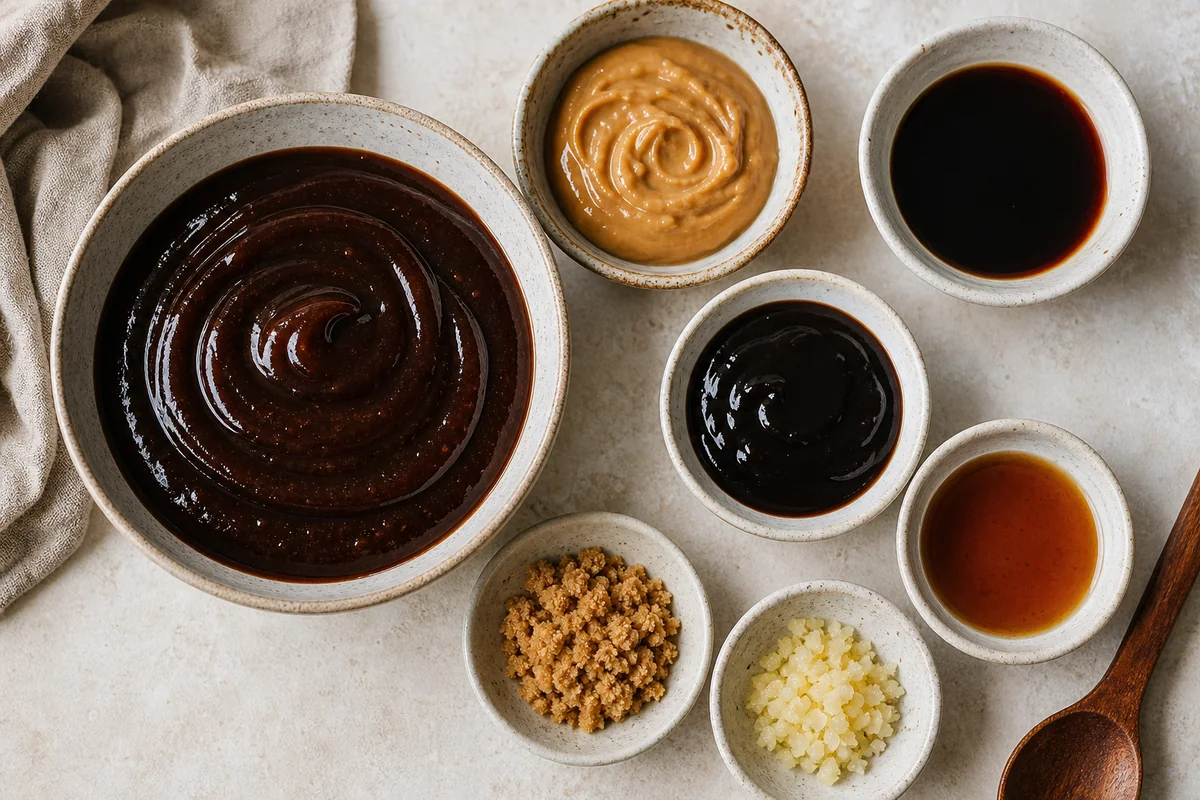
5 Best Hoisin Sauce Substitutes (Pantry Swaps)
Ingredients
Equipment
Method
- Match your use: for glazing and stir-fries, pick the closest sweet-savory option (Peking duck sauce or teriyaki+bean paste).
- Use the table ratio (1:1) as your starting point, then adjust thickness and sweetness to match your dish.
- If your substitute is thinner than hoisin, simmer 1–2 minutes or whisk in a pinch of cornstarch slurry (1 teaspoon cornstarch + 1 tablespoon cold water).
- If it’s too sweet, add 1–2 teaspoons soy sauce per cup; if too salty, add 1–2 teaspoons brown sugar per cup.
- Taste once cooked (not raw) and aim for hoisin’s balance: sweet first, then savory depth, with a thick, glossy finish.
Notes
- If you need the exact bean-paste tang, add a small amount of black bean paste or blend in a little fermented-style condiment (sparingly).
- For baking, choose the substitute that won’t be overly sharp (balance acidity with a bit of sugar if needed).
Tried this recipe?
Let us know how it was!
Carrie is a food writer and editor with more than 15 years of experience. She has worked for some of the biggest names in the food industry, including Bon Appétit, Food & Wine, and Martha Stewart Living.
As the Editor in Chief of EpicureDelight, Carrie oversees all of the content on the site. She also manages the team of contributing writers and editors, who help to create delicious recipes, helpful tips, and informative articles that you’ll find on the site.
A native of the Chicago area, Carrie is passionate about all things food. She loves trying new restaurants and experimenting with new recipes in her kitchen. She’s also a graduate of the Culinary Institute of America, so she knows a thing or two about food!



