Jam sugar pulls double duty in every jar and pastry filling it touches. It is sweetness and a setting agent in one bag, which is why this gel-forming sugar behaves differently from plain granulated the moment heat and fruit meet it.
Choosing a jam sugar substitute means deciding whether your recipe needs pectin-driven set, bare sweetness, or both.
That decision changes everything. A cookie filling that stays soft can get away with plain sugar and maybe a touch of cornstarch.
A sliceable tart layer cannot.
Jam sugar is a sugar-pectin blend built to gel when cooked with fruit. The closest swaps are jam-making sugar (another pectin blend) or plain sugar plus added pectin. For baking fillings only, honey or golden syrup with a binder can work in a pinch.
Jam Sugar Substitute Table (5 Pantry Swaps)
Not every swap matches jam sugar on both fronts. Some nail sweetness but miss the gel; some hit the gel but shift the flavor.
Your swap choice directly changes texture in baked fillings, especially after cooling.
The table below sorts options by their strongest trait. Swaps rated for set are useful in tarts, pastries, and cakes.
Swaps rated for sweetness alone work when the recipe already has enough thickening elsewhere. If you are working a fruit-based filling into a bake where switching your binder is on the table, that flexibility helps.
| # | Substitute | Best For | Ratio | Key Note |
|---|---|---|---|---|
| 1 | Jam-Making Sugar | Both | 1:1 | Closest pectin match |
| 2 | Sugar + Added Pectin | Both | 1:1 | Measure pectin by label |
| 3 | Powdered Fruit Pectin | Set | Per label | Mix with sugar first |
| 4 | Low-Sugar Pectin | Set | ¾:1 | Follow sweetener targets |
| 5 | Honey + Binder | Baking | ¾:1 | Softer set, not sliceable |
1. Jam-Making Sugar
Jam-making sugar is the most direct replacement because it is already a pectin-sugar blend. The exact pectin level varies by brand, but the set behavior is similar enough that most fillings and pastry recipes need almost no adjustment.
- When to use it: Jam-like fillings in cookies, pastries, and layer cakes where set is important.
- Starting ratio: 1:1 by weight for the most predictable result.
- Baking adjustment: If the filling cooks inside the pastry, reduce simmer time by 1-2 minutes to avoid over-firming on cooling.
- Acidity note: Add lemon juice if your fruit is low-acid; pectin needs acidity to set.
Skip if the jam-making sugar you found doesn't list pectin on the label, or if the pectin type (HM vs. LM) doesn't match your recipe's requirements.
2. Regular Granulated Sugar + Added Pectin
Plain sugar matches jam sugar's sweetness exactly, but it brings zero gel on its own. The swap becomes functional once you add powdered pectin to hit the setting behavior your recipe needs.
- Baseline ratio: Use sugar 1:1 by weight, then add pectin per the product's fruit-quantity directions.
- Pairing tip: Stir pectin into the dry sugar before adding fruit; this prevents clumps.
- Too runny after cooling? Your heat time was probably short or acidity was low. Simmer an extra 2 minutes and add a teaspoon of lemon juice, then re-cool.
- Too stiff? You likely used too much pectin. Reduce by 10-15% next batch.
Skip if you can't add separate pectin, or your recipe's instructions explicitly avoid pectin additions (some older canning recipes conflict with modern pectin formulas).
3. Powdered Fruit Pectin
Pectin Alone
Works for: providing gel structure when paired with the right amount of sugar and fruit acid
Skip if: you use it without sugar - pectin gelling requires sugar to function correctly
Pectin + Sugar (Combined)
Works for: fully recreating jam sugar's two functions in recipes where you can measure separately
Skip if: your pectin type needs different cooking temps or calcium activation (like Pomona's)
The technique matters here. Blend pectin with part of the dry sugar before it touches liquid; that single step stops lumps from forming in your filling.
- When it works best: Fresh fruit fillings with natural acidity, cooked on the stovetop before baking.
- Lump prevention: Mix 1 tablespoon pectin into 2 tablespoon of the measured sugar, then stir into the rest.
- Set expectation: The filling will still look slightly loose when hot. Cool completely before judging firmness.
Skip if you are using a calcium-activated or low-methoxyl pectin without adjusting the recipe's acid and calcium balance first.
4. Low-Sugar Pectin
Low-sugar pectin is formulated specifically for recipes where the sweetener amount is reduced. Using it with full-sugar quantities can actually throw off the gel, making it firmer or grainier than expected.
- When to choose it: Reduced-sugar baking where you want a stable filling without a heavy sweetness load.
- How to adjust: Follow the label's sweetener target exactly. If the label says use ¾ cup sugar per 2 cups fruit, stay there.
- Set expectation: The set is often slightly softer than standard jam sugar. Allow full cooling (at least 2 hours) before cutting into a pastry.
- Texture note: Some brands produce a more elastic gel than jam sugar. Test a small batch first.
Skip if your recipe doesn't allow sweetener reduction, or you cannot hit the pectin label's minimum sweetener level for proper activation.
5. Honey (or Golden Syrup) with a Thickening Binder
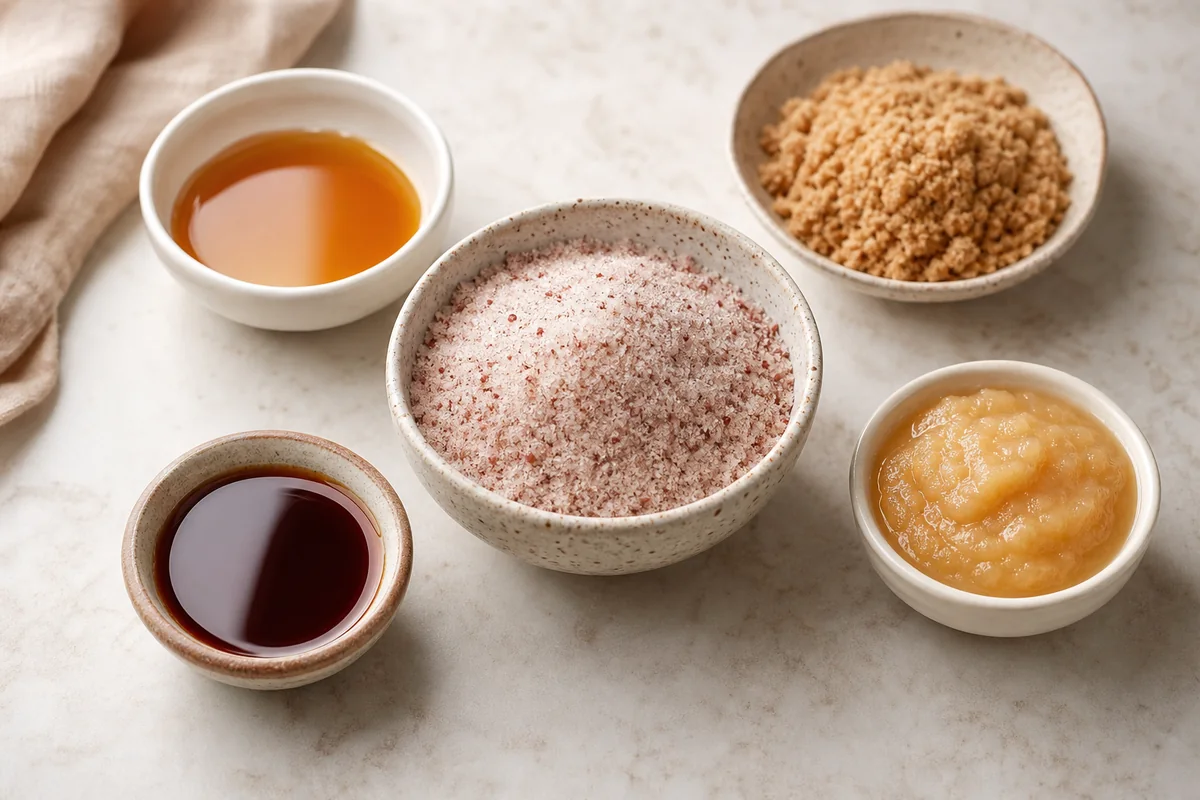
Honey and golden syrup are real emergency options. They thicken and sweeten, and they add a distinct flavor that can actually work well in certain fruit fillings.
But neither replicates the clean, sliceable set that pectin delivers.
Pair this amber sweetener with chia seeds or gelatin to bring the filling closer to a set texture. The result is softer and more spoonable than true jam sugar set.
| Use | Ratio | Notes |
|---|---|---|
| Spoonable filling (cake, toast) | ¾ cup honey + 1 tablespoon chia | Chia gives body; texture is jammy but soft |
| Pastry filling (baked in) | ¾ cup honey + 1 teaspoon gelatin | Gelatin sets firmer; bloom in cold water first |
| Golden syrup version | ¾ cup syrup + 1 tablespoon chia | Milder flavor; slightly looser set than honey |
- When the binder is enough: Soft-baked thumbprint cookies, crumble toppings, and no-bake bars where a loose fill is fine.
- When it won't be enough: Any recipe needing a firm, sliceable jam layer. Expect it to ooze slightly when cut.
Skip if your recipe calls for a clean jam layer in a tart or layer cake. A binder-only approach stays too soft for that job.
Making Jam Sugar Substitutes Work in Baking
The biggest mistake with any of these swaps is judging the set too early. Pectin sets only after cooling, so a filling that looks thin at 180°F may be perfectly firm two hours later. Test thickness by spooning a small amount onto a cold plate and letting it sit for 60 seconds before you decide to adjust.
Three levers matter most: pectin amount, acidity, and simmer time. Get all three right and most of these swaps perform cleanly.
- Choose based on set goal first: If your recipe needs a sliceable layer, use a pectin-containing swap (options 1-4). If it just needs a sweet filling, honey or plain sugar is fine.
- Add pectin safely: Always pre-mix powdered pectin with dry sugar before liquid contact to prevent clumping and uneven gel.
- Cool-test and adjust: After your first batch, note whether the set was too firm or too loose, then adjust pectin amount by 10-15% in the next batch rather than guessing.
Frequently Asked Questions
Yes, but plain sugar won't set a jam-like filling on its own. If your recipe relies on a gel or firm texture, add powdered pectin alongside the sugar.
Only if your recipe needs a set filling. Sweetness-only uses like glazes or syrups don't require pectin, but fillings meant to hold their shape do.
Jam-making sugar (a store-bought sugar-pectin blend) is the closest 1:1 option. It replicates both sweetness and gel behavior with minimal adjustment needed.
Low acidity and short simmer time are the usual causes. Add a teaspoon of lemon juice and simmer 2 extra minutes, then cool fully before checking the set again.
Yes, but only when you are also reducing your sweetener. Using low-sugar pectin with full sugar amounts often produces an overly firm or grainy set.
5 Best Jam Sugar Substitutes (Pantry Swaps)
Ingredients
Equipment
Method
- Check what your recipe is trying to do: set a jam-like filling (needs pectin) or just add sweetness (may not).
- Pick the closest match from the table: closest pectin blend for set, or plain sugar if you can add pectin separately.
- Use the swap ratio shown; if the substitute is less sweet, slightly increase sugar or sweetened fruit quantity.
- If your recipe needs setting, add pectin and simmer to your target thickness; cool to confirm the final set.
- Taste and adjust acidity (a splash of lemon) before final thickening—pectin set is strongly acidity-dependent.
Notes
- Jam sugar replacements work best when you mirror both sweetness and pectin behavior.
- If substituting for jam filling in baking, cool-testing thickness often matters as much as heat-time.
Tried this recipe?
Let us know how it was!
Carrie is a food writer and editor with more than 15 years of experience. She has worked for some of the biggest names in the food industry, including Bon Appétit, Food & Wine, and Martha Stewart Living.
As the Editor in Chief of EpicureDelight, Carrie oversees all of the content on the site. She also manages the team of contributing writers and editors, who help to create delicious recipes, helpful tips, and informative articles that you’ll find on the site.
A native of the Chicago area, Carrie is passionate about all things food. She loves trying new restaurants and experimenting with new recipes in her kitchen. She’s also a graduate of the Culinary Institute of America, so she knows a thing or two about food!