
Kirsch has a smell that's hard to fake: tart, floral, faintly boozy, and distinctly cherry without tasting like candy. That dryness is the tricky part.
Most swaps lean sweet, and a sweet sub in the wrong recipe can turn a clean fruit dessert into something cloying.
The good news is that the right kirsch substitute can carry both the aroma and the acidity, especially if you reduce it slightly or pair it with a small acid boost. The key is matching the dry, tart character first, then worrying about sweetness second.
Before picking your swap, know what your recipe actually needs from kirsch: fruit aroma, alcohol lift, or just liquid volume. For example, swapping into a fondue works differently than swapping into a sponge soak, and fondue swap options have their own quirks worth checking.
Kirsch is a dry, tart cherry spirit. Your best swaps are dry cherry brandy or liqueur (1:1) and reduced Morello cherry juice (1:1). Sweet syrups like maraschino work but need a 25% reduction in quantity and a sugar adjustment. Cherry extract plus water is the go-to alcohol-free option.
5 Kirsch Substitutes Ranked by Flavor Match
| # | Substitute | Best For | Ratio | Key Note |
|---|---|---|---|---|
| 1 | Dry Cherry Brandy / Liqueur | Both | 1:1 | Closest aroma, pick dry style |
| 2 | Morello Cherry Juice (Reduced) | Baking | 1:1 | Reduce 2-5 min first |
| 3 | Amaretto + Cherry Juice | Both | 1:1 | Watch almond-forward flavor |
| 4 | Maraschino Cherry Syrup | Baking | ¾:1 | Reduce; cut added sugar |
| 5 | Cherry Extract + Water | Both | 1:1 | Alcohol-free; dilute well |
Each substitute below covers how to use it, when it shines, and when to skip it entirely.
1. Dry Cherry Brandy / Liqueur
Dry cherry brandy is the substitute that lands closest to kirsch's actual flavor profile. It has the same alcohol lift, a similar tart cherry aroma, and won't dump extra sweetness into a recipe that doesn't need it.
Use it 1:1 in any batter, sauce, or soak. If your bottle tastes noticeably syrupy or sweet after a quick taste, pull back by 10-25% and reduce the added sugar in your recipe by the same margin.
A brandy vs. liqueur tradeoff is worth knowing before you shop, since Cherry Heering is richer and sweeter than a dry brandy.
- Batter: Add at the same stage kirsch would go in, usually after creaming butter and sugar.
- Cake soak: Use 1:1, brush on warm, then let it absorb before adding cream or ganache.
- Sauce or glaze: Add off-heat to preserve the aroma; heat drives off the top notes fast.
- Sweetness check: Taste the brandy first. If it reads like a dessert wine, cut the amount by 20%.
Dry Cherry Brandy
Works for: batter, soaks, sauces where kirsch aroma is the main goal
Skip if: you need an alcohol-free swap or your recipe uses no spirits at all
Sweet Cherry Liqueur
Works for: fruit trifles, chocolate desserts where extra sweetness is welcome
Skip if: the recipe already has a heavy sugar load or needs a dry finish
2. Morello Cherry Juice (Reduced)
Morello cherry juice is tart in a way that most cherry juices aren't. That sharp, almost sour edge is exactly what kirsch brings to a batter or soak, which is why this is the best alcohol-free option for flavor accuracy.
The catch: straight from the bottle, it's too thin and too diluted to behave like a liqueur. Simmering it for 2-5 minutes concentrates the flavor and thickens it slightly so it disperses through batter or soaks the way kirsch does.
Check sour cherry flavor differences before buying, because sweet cherry juice won't give you the same result.
- Reducing: Simmer over medium heat until it reduces by about one-quarter. Cool before using.
- Ratio: Use 1:1 after reducing. If still thin, reduce another minute or two.
- Baking use: Add to batter where kirsch would go; no timing changes needed.
- Soak use: Brush on warm cake layers; the tartness will brighten cream fillings.
Skip if: your juice is already sweetened or labeled "cherry cocktail." You'll end up with a sugary soak that doesn't match the dry kirsch profile at all.
3. Amaretto + Cherry Juice
Amaretto on its own reads almond, not cherry. But it has a similar aromatic intensity to kirsch, and when you blend it with cherry juice, the fruit note moves to the front.
The result isn't identical to kirsch, but it's a solid stand-in when cherry brandy isn't available.
The ratio is 1:1 overall: use roughly two-thirds amaretto and one-third tart cherry juice. If you need more cherry and less almond, flip that to half-and-half.
For almond liqueur options that work in similar ways, there are a few non-amaretto routes worth knowing.
Add this blend after mixing dry ingredients so the aroma doesn't cook off before the batter comes together. The almond note in amaretto actually pairs well with chocolate cake and cherry preserves, so this substitute works best in layered desserts.
Skip if: your recipe is a simple cherry-forward tart or compote where almond flavor would clash with the fruit.
4. Maraschino Cherry Syrup
Maraschino syrup is genuinely useful here, but only if you treat it carefully. It's much sweeter than kirsch, and using it straight at a 1:1 ratio almost always makes the finished dish taste like a carnival sundae rather than a European fruit dessert.
The syrup from a jar of maraschino cherries works, and so does the syrup versus grenadine choice if you're in a bar-style recipe. Either way, reduce it first.
- Reduce first: Simmer the syrup 2-4 minutes until slightly thicker. Cool completely.
- Ratio: Start at ¾ teaspoon syrup for every 1 teaspoon kirsch called for.
- Sugar adjustment: Cut the recipe's sugar by 1-2 tablespoon to compensate.
- Best use: Cake soaks, fruit compotes, or glazes where a little sweetness is fine.
Skip if: your recipe demands a dry kirsch character. Maraschino syrup won't get there, even reduced.
5. Cherry Extract + Water
Pure cherry extract is the most direct alcohol-free route to kirsch's aroma, but it's more concentrated than any spirit, so dilution is essential. A few drops too many and the batter tastes artificial; the right amount lands surprisingly close to the real thing.
The standard starting point is 1:1 by volume: for every tablespoon of kirsch, use one tablespoon of the extract-and-water mixture. The exact split depends on your extract's strength, so taste first.
| Use | Ratio | Notes |
|---|---|---|
| Cake batter | ¼ teaspoon extract + ¾ tablespoon water per 1 tablespoon kirsch | Stir into wet ingredients before adding to dry |
| Cake soak | ½ teaspoon extract + 1½ tablespoon water per 2 tablespoon kirsch | Brush warm; let absorb fully before frosting |
| Glaze or sauce | ¼ teaspoon extract + ¾ tablespoon water per 1 tablespoon kirsch | Add off-heat so aroma stays sharp |
- Brand matters: Lorann and Nielsen-Massey are more concentrated than grocery-store brands; start with less.
- Dispersal: Always mix extract into water first, then add. Concentrated extract dropped directly into batter can create a pocket of artificial flavor.
- Tartness boost: Add a few drops of lemon juice to the water if you want the sour edge kirsch brings.
Skip if: you need the fermented, spirit-like complexity of kirsch for something like a classic Black Forest cake. Extract nails the cherry flavor but not the boozy depth.
Making Any Kirsch Substitute Taste Right
The single most useful decision you can make is separating dry substitutes from sweet ones before you commit. Dry cherry brandy and reduced Morello juice land close to kirsch without touching your sugar balance.
Sweet syrups and jam swaps always need a quantity cut, and often a sugar reduction too. If you're unsure which category your swap falls into, taste it straight and ask: does it remind you more of a fruit candy or a tart stone fruit?
That one test saves most of the guesswork. For recipes where vanilla plays a secondary role alongside kirsch, it's worth knowing vanilla's flavor profile so you don't accidentally double up on sweetness.
- Concentrate thin liquids: Any juice or syrup substitute should be simmered 2-5 minutes before use. Thin swaps dilute your batter and deliver weak cherry flavor.
- Add at the right stage: Put your substitute exactly where kirsch would go in the original method. Early adds lose aroma; late adds in a sauce keep it bright.
- Brighten flat cherry flavor: If the finished batter or sauce reads dull after tasting, add a small squeeze of lemon or a pinch of salt. Both pull cherry notes forward without changing the overall recipe.
Frequently Asked Questions
Dry cherry brandy or a dry cherry liqueur used at a 1:1 ratio is the closest match. It preserves the tart cherry aroma and alcohol lift without adding unwanted sweetness.
Yes, but reduce it first. Simmer Morello cherry juice 2-5 minutes to concentrate it so the flavor intensity matches a liqueur rather than a diluted fruit drink.
Start at ¾ the kirsch amount, reduce the syrup 2-4 minutes to thicken it, and cut the recipe's added sugar by 1-2 tablespoon to compensate for the extra sweetness.
Cherry extract diluted in water works well. Use about ¼ teaspoon extract per tablespoon of kirsch, mix into water first, and add a few drops of lemon juice for tartness.
Add it exactly where the original recipe calls for kirsch. In sauces, add off-heat to keep the cherry aroma sharp; in batter, add with the wet ingredients.
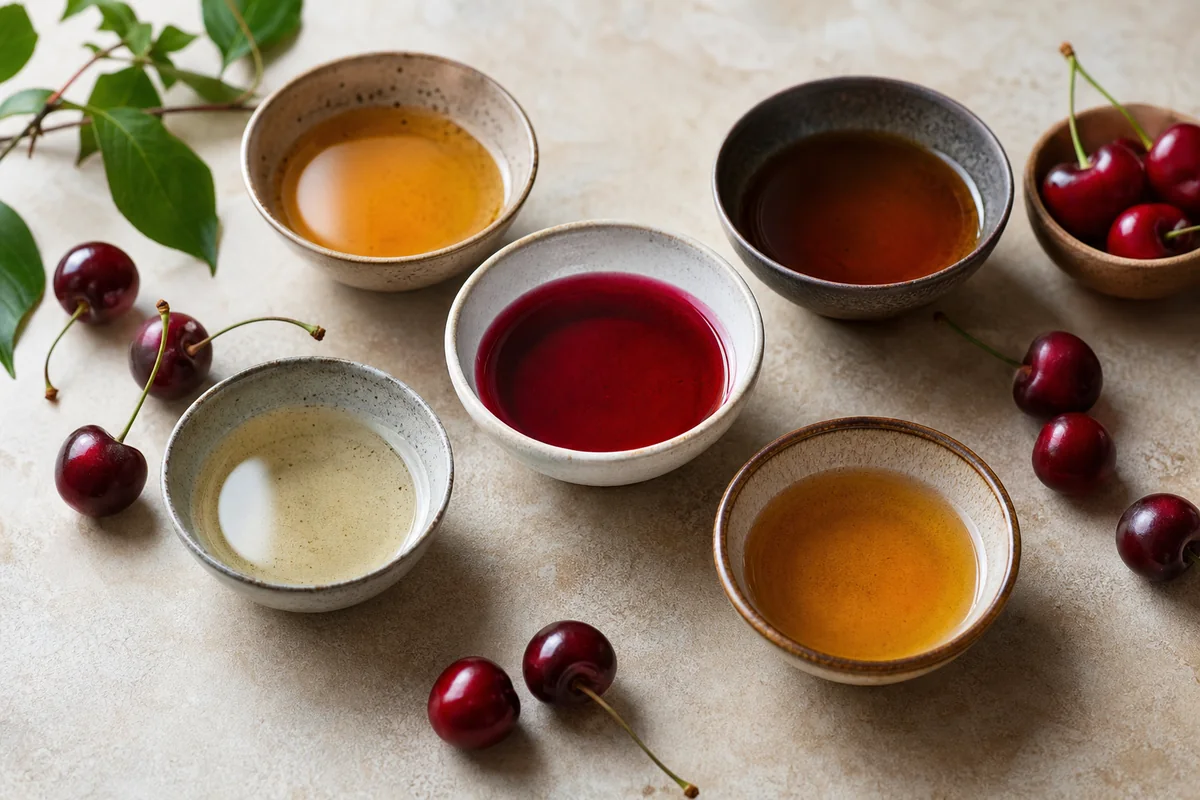
5 Best Kirsch Substitutes for Any Recipe
Ingredients
Equipment
Method
- Identify your use: baking (sponge, cake, sauces) vs. finishing (drizzle/soak), because alcohol-free swaps need extra fruit intensity.
- Start with the listed ratio for your substitute, then adjust sweetness: if it’s sweeter than kirsch, reduce the amount (or reduce added sugar).
- If using a juice/syrup/thinned jam, simmer or reduce 2–5 minutes until more concentrated so flavor lands like a liqueur.
- Add your substitute at the stage the original kirsch would be added (mix-in for batter; last-minute for glazes/soaks).
- Taste the final batter/sauce: brighten with a tiny squeeze of lemon or a pinch of salt if cherry reads flat.
Notes
- For tartness, favor Morello-style cherry options (or reduce cherry juice) rather than overly sweet cherry syrups.
- Kirsch is relatively dry compared to many cherry liqueurs—if your substitute is sweet, compensate by using less or reducing added sugar.
Tried this recipe?
Let us know how it was!
Carrie is a food writer and editor with more than 15 years of experience. She has worked for some of the biggest names in the food industry, including Bon Appétit, Food & Wine, and Martha Stewart Living.
As the Editor in Chief of EpicureDelight, Carrie oversees all of the content on the site. She also manages the team of contributing writers and editors, who help to create delicious recipes, helpful tips, and informative articles that you’ll find on the site.
A native of the Chicago area, Carrie is passionate about all things food. She loves trying new restaurants and experimenting with new recipes in her kitchen. She’s also a graduate of the Culinary Institute of America, so she knows a thing or two about food!



