
Light cream is one of those ingredients that hides in plain sight until you need it and don't have it. The good news: several substitutes hit close enough to its fat content and body that your sauce or batter won't notice the difference.
Light cream typically has around 18-30% fat, placing it solidly between whole milk and heavy cream. The best light cream substitute is usually already in your fridge.
Half-and-half is the closest swap at a 1:1 ratio. For a DIY match, whisk melted butter into whole milk. Evaporated milk works well in baking. Greek yogurt needs tempering. Full-fat coconut milk is the best non-dairy backup when flavor won't clash.
5 Best Light Cream Substitutes (with Ratios)
Most of these swaps use a straight 1:1 ratio, but a few need a quick technique adjustment to match light cream's texture. The table below is your fast reference before you commit to one.
| # | Substitute | Best For | Ratio | Key Note |
|---|---|---|---|---|
| 1 | Half-and-half | Both | 1:1 | Neutral, no adjustments needed |
| 2 | Whole milk + butter | Both | 1:1 | Whisk off-heat before adding |
| 3 | Evaporated milk | Baking | 1:1 | Thicker; stir continuously in heat |
| 4 | Greek yogurt (thinned) | Cooking | 1:1 | Temper first to avoid curdling |
| 5 | Canned coconut milk | Both | 1:1 | Adds coconut flavor; savory dishes best |
1. Half-and-Half
Half-and-half is the most reliable light cream substitute you can reach for, mainly because it sits at roughly 10-18% fat and has a neutral dairy flavor that won't shift the dish. It moves through sauces and soups almost identically to light cream, so there's no adjustment to make.
Understanding the role half and half plays in dairy-forward recipes helps here - it keeps sauces smooth without adding the richness of heavy cream.
- When to use: Sauces, soups, coffee-based recipes, and most baking applications
- Texture: Slightly more fluid than light cream, but the difference is minor in most dishes
- Heat note: Holds up well over medium heat; avoid aggressive boiling to preserve creaminess
- Baking: Use at the same ratio with no extra adjustments needed
Skip if: your recipe needs a noticeably thick finish - half-and-half may leave the sauce a little thinner than expected.
2. Whole Milk + Melted Butter
This combo is a controlled fat match: whole milk brings the dairy base, and melted butter closes the gap to reach light cream's fat percentage. Use ¾ cup whole milk plus 1½ tablespoons melted butter to replace 1 cup of light cream.
For questions about keeping butter fresh for exactly this kind of last-minute cooking fix, a quick read on keeping butter fresh is worth bookmarking.
Whole Milk + Butter vs. Half-and-Half
Works for: recipes where you need to match fat precisely; also good when half-and-half is unavailable
Skip if: you want zero effort - this requires whisking and blending before adding to a hot mixture
- How to blend: Melt butter first, let it cool slightly, then whisk it into milk until it looks uniform
- Best use cases: Cream sauces, pasta, savory bakes, and custard bases
- Thickness fix: Add 1 extra teaspoon of butter per cup if the sauce looks too thin after simmering
Skip if: you need a quick pour-and-go swap - this one rewards a bit of prep work.
3. Evaporated Milk
Evaporated milk has a slightly caramelized flavor from the canning process, which makes it noticeable in delicate recipes. It is also thicker than light cream, so it reduces faster and can over-concentrate sauces if you're not watching.
Knowing whether you need replacements for whole milk elsewhere in the same dish can help you balance the overall dairy profile.
- Where it shines: Baked goods, creamy soups, casseroles, and mac and cheese sauce
- Heat handling: Stir continuously over medium heat and avoid boiling to prevent a scorched flavor
- Ratio: Use 1:1, but pull the heat earlier than you normally would since it thickens faster
- Flavor note: Works best in dishes with strong savory seasoning that can mask the subtle sweetness
Skip if: the recipe is very neutral or delicate, like a simple cream broth, where the flavor shift would stand out.
4. Greek Yogurt (Thinned)
Greek yogurt adds a mild tang and a thick, protein-heavy texture that needs two adjustments before it behaves like light cream: thin it out and temper it. For every 1 cup of light cream, use ¾ cup full-fat Greek yogurt whisked with ¼ cup whole milk.
If you're curious about the taste of greek yogurt and how its acidity affects sauces before you commit, that background will save you a failed batch.
| Use | Ratio | Notes |
|---|---|---|
| Cream sauces | ¾ cup yogurt + ¼ cup milk per 1 cup cream | Temper first; add off-boil |
| Baked goods | 1:1 thinned yogurt | Adds slight tang; works well in savory bakes |
| Soups | ¾ cup yogurt + ¼ cup milk per 1 cup cream | Stir in at the end, heat gently |
- Tempering: Whisk 2-3 tablespoons of warm liquid from the pot into the yogurt before adding it back
- Safe heating: Add the tempered yogurt off direct heat and stir on the lowest setting only
- Flavor balance: A pinch of sugar or a squeeze of lemon can soften or complement the tang depending on the dish
Skip if: you're doing a long simmer or an aggressive reduction - yogurt is not heat-stable enough for that.
5. Full-Fat Canned Coconut Milk
Full-fat coconut milk is the best non-dairy backup for light cream, and it has real body. It mimics the fat content closely enough that it holds sauces together, thickens soups, and keeps baked goods moist.
The catch is the flavor: it tastes like coconut, and that works brilliantly in curries, Thai-inspired soups, and chocolate desserts but can feel out of place elsewhere. For recipes where you're already leaning non-dairy, a wider look at coconut milk in dairy recipes gives solid context.
- When to use: Savory coconut-forward dishes, chocolate bakes, spiced soups, and dairy-free cream sauces
- Preventing separation: Stir the can well before opening and add to warm (not boiling) liquid to keep it emulsified
- Flavor adjustment: Taste after cooking and add a small pinch of salt to cut the coconut sweetness if needed
- Ratio: Use 1:1 with no other changes for most applications
Skip if: coconut flavor would conflict - vanilla cream sauce, subtle white wine reductions, and neutral custards are not the place for this swap.
Making Light Cream Substitutes Work
The most common mistake is adding a substitute straight into a boiling pan. All dairy-based swaps are smoother when you reduce heat first, then stir in gradually.
For baking specifically, understand heavy cream swaps that work alongside these options if your recipe happens to call for both types.
- Ratio check: Start at 1:1 for every substitute listed here, then taste and adjust before the dish finishes cooking
- Heat control: Pull the pan off full heat before adding any dairy substitute; return to low and stir until incorporated
- Thickness fix: If the substitute feels thin, reduce by simmering uncovered for 2-3 extra minutes; if too thick, stir in 1 tablespoon of milk at a time
Frequently Asked Questions
Yes, half-and-half works at a 1:1 ratio in baking with no changes needed. It is slightly lower in fat than light cream but the difference rarely affects baked goods.
Half-and-half is the smoothest option for cream sauces. The whole milk and butter blend also works well if you whisk it thoroughly before adding it to the pan.
Evaporated milk rarely curdles but it can scorch. Keep the heat at medium or lower and stir continuously to avoid graininess or a scorched bottom layer.
Temper it first by stirring in a few tablespoons of warm liquid before adding it to the pot. Add it off full heat and keep the burner on low only.
Full-fat canned coconut milk is the most reliable non-dairy swap at a 1:1 ratio. It has enough fat and body to hold sauces and baked goods together.
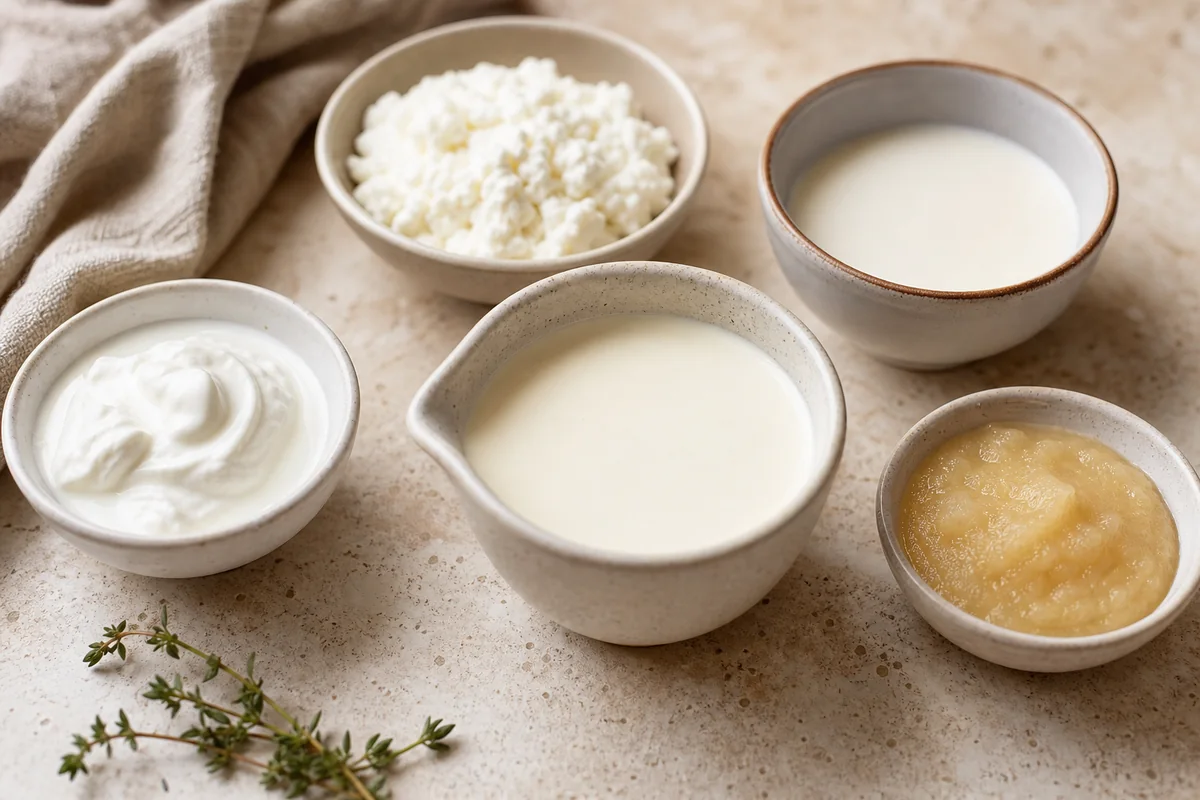
5 Best Light Cream Substitutes (with Ratios)
Ingredients
Equipment
Method
- Match the substitute to your use: for light, neutral creaminess choose half-and-half or the milk+butter blend.
- Use the listed ratio (1:1) and mix off-heat if the substitute is thicker (evaporated milk, coconut milk).
- If your substitute is prone to curdling (Greek yogurt), temper first: whisk in a splash of warm liquid, then add to the pot gradually.
- For baking, start with the same ratio and check batter/sauce thickness; add 1–2 teaspoon water or milk if it looks too thick.
- Taste and adjust salt and sweetness after cooking, since some swaps (evaporated milk, coconut milk) shift flavor.
Notes
- If your recipe requires heat, avoid adding yogurt directly to a boil; temper it first to prevent curdling.
- When using evaporated milk or coconut milk, stir more often at medium heat for smoother texture.
Tried this recipe?
Let us know how it was!
Carrie is a food writer and editor with more than 15 years of experience. She has worked for some of the biggest names in the food industry, including Bon Appétit, Food & Wine, and Martha Stewart Living.
As the Editor in Chief of EpicureDelight, Carrie oversees all of the content on the site. She also manages the team of contributing writers and editors, who help to create delicious recipes, helpful tips, and informative articles that you’ll find on the site.
A native of the Chicago area, Carrie is passionate about all things food. She loves trying new restaurants and experimenting with new recipes in her kitchen. She’s also a graduate of the Culinary Institute of America, so she knows a thing or two about food!



