
Zesting a lime does something a squeeze of juice never quite does. That little rasp across the peel releases volatile oils that carry the real aromatic punch, and the moment you smell it, you know why bakers, bartenders, and sauce makers call for it specifically.
A lime zest substitute has to work on the same principle: you're replacing fragrance first, and a little tart edge second.
Most recipes that list zest are after its perfume, not extra liquid. That matters because juice is mostly acid and water, while zest oil is mostly limonene and other aromatic compounds.
These two things behave differently under heat, in dairy, and over time.
Lime zest's job is aroma first, tang second. Lemon zest or key lime zest are the closest swaps at a 1:1 ratio. Orange or tangerine zest work with a small quantity cut. When you have only juice, reduce it or add a tiny citric acid pinch to boost brightness.
Skip if: your recipe needs visible zest texture in a topping or crust and you only have juice. Juice-based swaps won't replicate grated peel's visual or textural role.
5 Best Lime Zest Substitutes Ranked by Aroma
Every swap below is sorted by how closely it mirrors that bright, oily citrus perfume. The ones at the top preserve zest character best.
The ones further down trade some aroma for convenience. The sub-table offers a quick glance before you read the full notes, and if you want to understand what the tart, sharp, distinctly thin citrus liquid contributes separately, it helps to separate juice from peel in your mind before picking a swap.
| # | Substitute | Best For | Ratio | Key Note |
|---|---|---|---|---|
| 1 | Lemon Zest | Both | 1:1 | Closest aroma match |
| 2 | Key Lime Zest | Both | 1:1 | True lime-adjacent perfume |
| 3 | Orange Zest | Both | 1:1 | Sweeter; cut in savory |
| 4 | Tangerine/Mandarin Zest | Both | 1:1 | Floral, softer edge |
| 5 | Reduced Lime Juice + Sugar | Both | ¾:1 | Emergency no-zest swap |
1. Lemon Zest
Fresh lemon zest is the most practical everyday swap. Both lemon and lime peel carry the same family of citrus oils, and when you grate either finely, the burst of aroma reads as bright and clean to most palates.
The difference is character: lemon leans slightly more floral and less tart, while lime zest has a sharper, almost grassy edge. For most uses, that gap is small enough to ignore.
We prefer lemon zest in baking, marinades, and vinaigrettes where the recipe doesn't hinge on a specifically lime flavor. The fine grating matters here.
A freshly grated citrus peel releases far more oil than pre-grated or dried versions, so always use it right before mixing.
- Ratio: Use 1:1 - 1 teaspoon lemon zest for every 1 teaspoon lime zest called for.
- Best in: Cakes, cookies, salad dressings, seafood marinades.
- Texture match: Nearly identical when finely grated on a microplane.
Skip if: The dish is a key lime pie or mojito-style recipe where lime identity is the whole point. Lemon will shift the flavor profile noticeably in those contexts.
2. Key Lime Zest
Key limes are smaller, more aromatic, and slightly more floral than Persian limes (the common grocery-store variety). Their zest is the single closest match to regular lime zest you can find, because you're staying within the same fruit family.
The main catch is yield. Key limes are tiny, so plan to zest several to match a typical recipe amount.
The flavor is also slightly more intense and bitter, so taste after mixing before adding more.
- Ratio: 1:1, but taste first - key lime zest is stronger, so you may stop at ¾ tsp.
- Best in: Lime-forward desserts, ceviche, Thai sauces, cocktail rims.
- Tool tip: Use a fine microplane - their thin peel tears easily on coarser graters.
Skip if: You only have bottled key lime juice. That won't replace zest's aroma. Use the juice-reduction method further down this list instead.
3. Orange Zest
Orange zest carries the same limonene-family oils as lime, and it grates with exactly the same texture. The key difference is sweetness.
Orange peel has a warmer, sweeter citrus scent compared to lime's sharper edge. In baked goods, that shift is usually welcome.
In savory sauces or slaws, it can read as slightly off.
Orange Zest in Sweet Dishes
Works for: cakes, muffins, citrus glazes, dessert creams, and fruit salads where a sweeter citrus note is acceptable.
Skip if: the recipe has a prominent sugar component already - the combined sweetness can tip too far.
Orange Zest in Savory Dishes
Works for: duck marinades, grain salads, roasted carrot dishes, and mole-style sauces where a warm citrus note works.
Skip if: the dish is salt-forward and lime-bright - use lemon or key lime zest for better sharpness.
For those interested in the fresh-vs-dried debate, the dried vs. fresh orange peel comparison breaks down how much aroma you lose when switching forms.
- Ratio: 1:1 in sweet recipes; drop to ¾:1 in savory ones.
- Best in: Citrus cakes, glazed proteins, dessert bars, fruit tarts.
Skip if: Your recipe is savory and salt-focused. Orange's sweetness will fight the dish.
4. Tangerine or Mandarin Zest
Tangerine and mandarin zest are aromatic and a little floral, somewhere between orange and lime in character. They work well when you need zest-like fragrance but can tolerate a slightly softer, sweeter finish.
Think of them as a middle option: more interesting than orange, but not as sharp as lemon or key lime.
We reach for tangerine zest most often in dressings, noodle sauces, and light desserts. It plays well with ginger, sesame, and fish sauce.
In a coconut-lime cake, though, it would shift the flavor just enough that you'd notice. Add it at the last possible moment before serving, because tangerine's volatile oils fade faster than lime oils under heat.
- Ratio: 1:1, but expect a softer finish. Plan to add a squeeze of lime juice to sharpen.
- Best in: Noodle salads, vinaigrettes, ginger-forward dishes, light tarts.
Skip if: You need a sharp, acidic edge. The floral softness of mandarin zest won't carry savory dishes that lean on lime's tartness.
5. Lime Juice Reduced + Pinch of Sugar
When there's no fresh citrus peel in sight, reduced lime juice is your best move. Simmering lime juice for 3 to 5 minutes drives off water and concentrates the aromatic compounds that normally sit in the peel oils.
It won't fully replace zest's fragrance, but it gets closer than straight juice, and the sugar balances the sharpness that comes from concentrating the acid.
Keep the heat low and watch closely. You want the juice reduced by roughly half, not caramelized.
Once it cools, taste it. The goal is a syrupy, tart concentrate that smells notably more lime-forward than the raw juice.
The full flavor profile of bright, oily citrus peel won't be there, but the brightness will.
- Ratio: Use ¾ teaspoon reduced juice per 1 teaspoon zest called for.
- Sugar amount: Add just a small pinch (⅛ teaspoon or less) to balance.
- Best in: Sauces, dressings, marinades, no-bake desserts.
- Heat note: Simmer on low; high heat burns off flavor quickly.
Skip if: The dish can't handle extra sweetness. In that case, drop the sugar and add a tiny pinch of salt to sharpen instead.
Making Lime Zest Substitutes Work in Real Recipes
The swap itself is just step one. Timing and intensity matter almost as much as which substitute you pick, and understanding the zest versus juice tradeoff in citrus fruits is useful here because the same principle applies to limes.
If you're working in a recipe that relies on a long bake or extended simmer, know that fresh-zest substitutes lose aroma faster than juice reductions do. Plan to add a second small hit of your substitute near the end of cooking when possible.
- Add grated zest late: Stir in fresh-zest substitutes at the end of cooking to preserve aroma - heat kills volatile oils fast.
- Scale cautiously: Sweeter substitutes like orange or tangerine zest should start at ¾ the called-for amount; taste before adding the last quarter.
- Sharpen with salt or acid: If your swap reads too sweet or flat, a small pinch of salt or a short squeeze of lime juice pulls the brightness back up without adding liquid bulk.
Frequently Asked Questions
Lime juice replaces tang but not aroma. If you reduce the juice by half first, you get closer to zest's concentrated citrus punch. For dishes that need citrus oil fragrance, juice alone will fall short.
Lemon zest at a 1:1 ratio is the best baking swap. It has nearly the same oil structure and grates with identical texture, making it almost invisible in finished baked goods.
Cut the amount to ¾ of the original measurement and add a small squeeze of lemon or lime juice. That extra acid balances the sweeter character of orange peel.
Reduce bottled lime juice by half over low heat, then add a tiny pinch of citric acid. This combination gives the closest brightness to fresh zest without any peel.
Fresh zest fades noticeably within 30 to 60 minutes once mixed into a wet dish. Add it as late as possible, and storing unused zest in an airtight container slows that loss for up to a week.
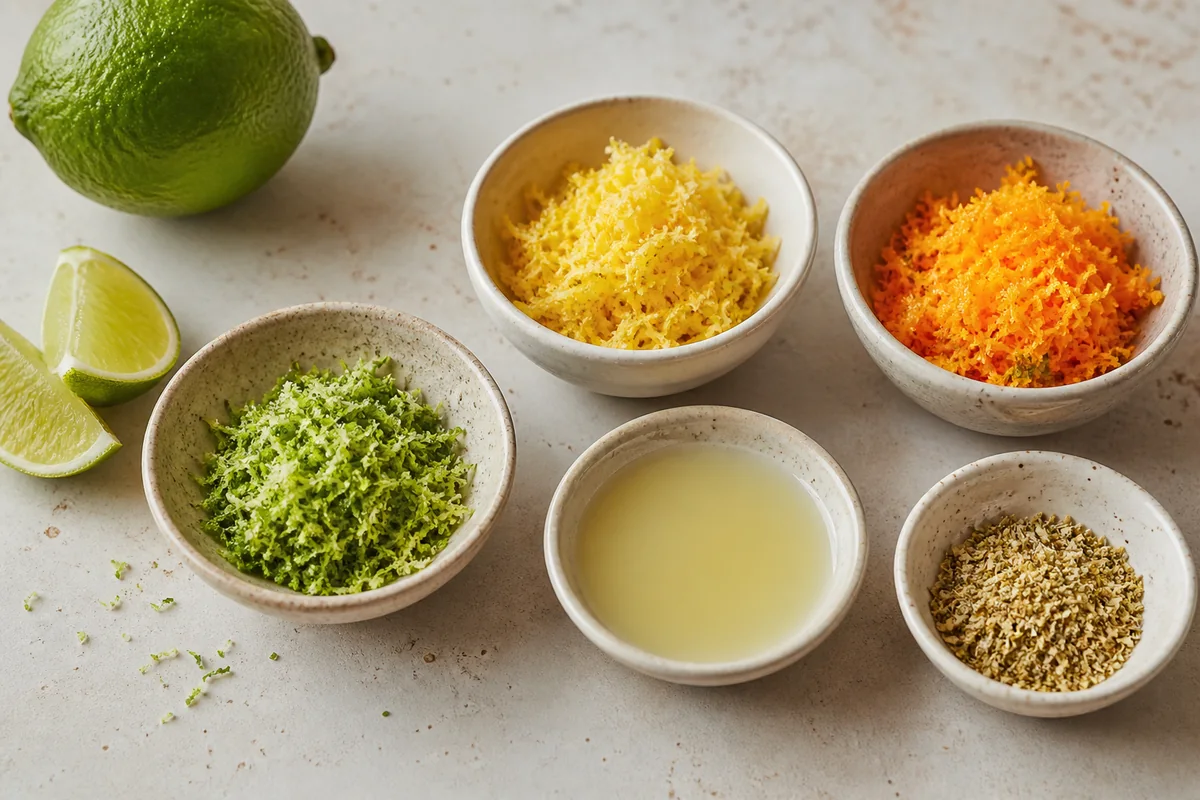
5 Best Lime Zest Substitutes (Tested Swaps)
Ingredients
Equipment
Method
- Choose the substitute closest to fresh zest (lemon/key lime first); if using juice-based options, plan to boost intensity.
- Measure using the listed ratio; if your substitute is sweeter (orange/tangerine), start with slightly less.
- Prep for zest-like texture: grate zest very finely with a microplane, or reduce juice until it tastes more concentrated and less watery.
- Taste-adjust: add a small pinch of salt to sharpen, or a micro-splash more lime to regain tang.
- Use promptly in cooked mixtures (especially dairy and eggs) to preserve bright aroma.
Notes
- Fresh finely grated zest performs best because zest carries aromatic oils.
- If your dish is savory, lean toward lemon/key lime rather than orange/tangerine.
Tried this recipe?
Let us know how it was!
Carrie is a food writer and editor with more than 15 years of experience. She has worked for some of the biggest names in the food industry, including Bon Appétit, Food & Wine, and Martha Stewart Living.
As the Editor in Chief of EpicureDelight, Carrie oversees all of the content on the site. She also manages the team of contributing writers and editors, who help to create delicious recipes, helpful tips, and informative articles that you’ll find on the site.
A native of the Chicago area, Carrie is passionate about all things food. She loves trying new restaurants and experimenting with new recipes in her kitchen. She’s also a graduate of the Culinary Institute of America, so she knows a thing or two about food!



