
That sweet-sharp hit of cold limoncello is surprisingly hard to fake. Most swaps fall short because they fix one thing (lemon) and miss another (sweetness or alcohol), leaving your cocktail flat or your glaze off-balance.
The good news is that knowing which dimension to fix first makes any limoncello substitute work reliably.
Limoncello has three moving parts. It is lemon-forward, moderately sweet, and around 25-30% ABV.
Miss any one of those and the dish notices. Picking the right swap means deciding which of the three matters most for your recipe.
The best swaps match limoncello's lemon aroma, sweetness, and alcohol level. For cocktails, a store-bought lemon liqueur or boozy lemon syrup hits closest. For baking, lemon extract plus simple syrup works well. Lemon juice and sugar is your last-resort, no-alcohol option.
5 Best Limoncello Substitutes Ranked by Flavor Match
Before choosing, check whether your recipe needs alcohol to carry aroma or just needs sweet lemon flavor. The table below shows how each substitute lines up so you can pick before reading further.
| # | Substitute | Best For | Ratio | Key Note |
|---|---|---|---|---|
| 1 | Store-Bought Lemon Liqueur | Both | 1:1 | Closest overall swap |
| 2 | Similar Lemon Liqueur + Zest | Both | 1:1 | Adjust zest to taste |
| 3 | Lemon Syrup + Vodka | Both | ¾:1 | Homemade boozy version |
| 4 | Lemon Extract + Simple Syrup | Baking | 1:1 | Best alcohol-free pick |
| 5 | Lemon Juice + Sugar | Baking | 1:1 | Emergency baking only |
1. Store-Bought Lemon Liqueur
Any commercially produced lemon liqueur is the easiest drop-in because the format is identical: alcohol, lemon oil, sugar. When squeezing fresh citrus into a cocktail alongside it, remember you're already adding acidity, so let the liqueur handle the sweetness.
The same applies to glazes: the liqueur will carry lemon aroma through heat better than juice will.
- Cocktails: Swap 1:1. No adjustment needed for most recipes.
- Baked glazes: Use 1:1, but reduce added sugar in the recipe by 1 teaspoon per 2 tablespoon of liqueur.
- Taste check: If the brand runs sweeter than limoncello, add a small squeeze of lemon juice to rebalance.
- Alcohol: Most lemon liqueurs are 24-30% ABV, so alcohol presence is comparable.
Skip if: you need an alcohol-free option or your recipe is sensitive to any spirit.
2. Similar Lemon Liqueur + Zest
Some lemon liqueurs are milder or sweeter than limoncello, and that gap is easy to close. A pinch of fresh bright citrus peel stirred into your mix pulls the aroma up fast.
- Ratio: Swap 1:1, then add ¼ teaspoon fresh lemon zest per 2 tablespoon of liqueur.
- Too sweet: Cut sweetness by adding ½ teaspoon fresh lemon juice.
- Too sharp: Stir in a drop of simple syrup and taste before adding more.
- Baking: Add zest directly to the batter or glaze alongside the liqueur.
Skip if: you can't taste-test as you go. This swap depends on adjusting by palate, not by formula.
3. Lemon Syrup + Vodka
This is the best homemade route when you have no lemon liqueur but do have a neutral spirit. Steep lemon zest in warm simple syrup for 20 minutes, strain, then combine with vodka.
If you are already considering swapping the spirit itself, a light white rum or grain alcohol works in the same ratio.
- Ratio: Mix 1 part lemon zest syrup to 1 part vodka. Use ¾ of this blend for every 1 part limoncello called for.
- Syrup: Combine ½ cup water, ½ cup sugar, and the zest of 2 lemons. Heat until sugar dissolves, then steep 20 minutes.
- Sweetness: Add 1 tablespoon more sugar to syrup if your recipe needs that candy-lemon sweetness limoncello carries.
- Storage: Keep the syrup refrigerated and use within 2 weeks.
Skip if: you're out of vodka or don't have 30 minutes to steep and cool the syrup.
4. Lemon Extract + Simple Syrup
Lemon extract carries the lemon oil aroma without any alcohol, and extract flavor notes are more concentrated than juice. Pair it with simple syrup and you rebuild both the sweetness and the lemon punch.
The key risk is overdoing the extract, which turns sharp and chemical very fast.
Lemon Extract + Simple Syrup
Works for: baking, sauces, no-bake desserts, non-alcoholic cocktails
Skip if: recipe needs alcohol to lift aroma (custards, flambés, boozy glazes)
- Ratio: Mix ¼ teaspoon lemon extract with 2 tablespoon simple syrup to replace 2 tablespoon limoncello.
- Do not exceed: ½ teaspoon extract per ¼ cup of syrup or bitterness appears.
- Thin if needed: Add 1 teaspoon water to loosen the mix if your recipe needs a pourable liquid.
- Baking: Works well in cakes, tarts, and icings where alcohol would cook off anyway.
Skip if: the recipe depends on alcohol for texture, moisture lift, or flambé effect.
5. Lemon Juice + Sugar
This is a pure pantry save. It is less aromatic than limoncello, but sweetener balance options help you get close enough for baking.
Use it in applications where the lemon flavor is a background note, not the star.
| Use | Ratio | Notes |
|---|---|---|
| Small batch (1-2 tbsp) | 1 tablespoon juice + 1 teaspoon sugar | Add ¼ teaspoon zest for aroma |
| Medium batch (¼ cup) | 3 tablespoon juice + 1 tablespoon sugar | Reduce liquid in recipe by 1 tbsp |
| Glaze or drizzle | 2 tablespoon juice + 2 teaspoon sugar | Simmer 1 min to dissolve and slightly reduce |
- Aroma fix: Always add lemon zest. Lemon juice alone is far less fragrant than limoncello.
- Too sour: Add sugar in ½ teaspoon increments until the sharp edge softens.
- Too flat: A drop of vanilla extract alongside the zest rounds out the flavor.
Skip if: you're making cocktails. The missing alcohol and low aroma will be obvious in the glass.
Making Limoncello Substitutes Work in Any Recipe
Every swap comes down to three checks: lemon aroma, sweetness level, and whether alcohol has a structural job in the recipe. For cocktails and finishing sauces, storing lemon extract correctly ensures it stays potent enough to compensate when alcohol is absent.
For baking, the alcohol usually cooks off anyway, so the syrup-and-extract path is almost always clean.
- Check aroma first: Smell the substitute before using it. If it smells flat, add ¼ teaspoon fresh lemon zest.
- Check sweetness second: Taste a small spoonful. Adjust with simple syrup (too sharp) or a squeeze of lemon juice (too sweet).
- Check alcohol last: If the recipe is a cocktail or flambé, use an alcohol-based swap. Syrup and extract are better for baked and no-cook applications.
Frequently Asked Questions
Yes, a 1:1 swap works well for most cocktails. If the liqueur is sweeter than limoncello, add a small squeeze of lemon juice to rebalance the flavor.
Lemon extract mixed with simple syrup is the most reliable option. Use ¼ teaspoon extract plus 2 tablespoon syrup to replace every 2 tablespoon of limoncello.
Too sweet: add a squeeze of fresh lemon juice. Too sharp: stir in simple syrup in ½ teaspoon increments until the edge softens.
It works if the lemon flavor is background, not the focus. Add lemon zest to compensate for the missing aromatic oils that juice alone can't supply.
For syrups and juice swaps, reduce added liquid elsewhere by 1-2 tablespoon to keep the recipe's moisture balance. Liqueur-based swaps generally need no adjustment.
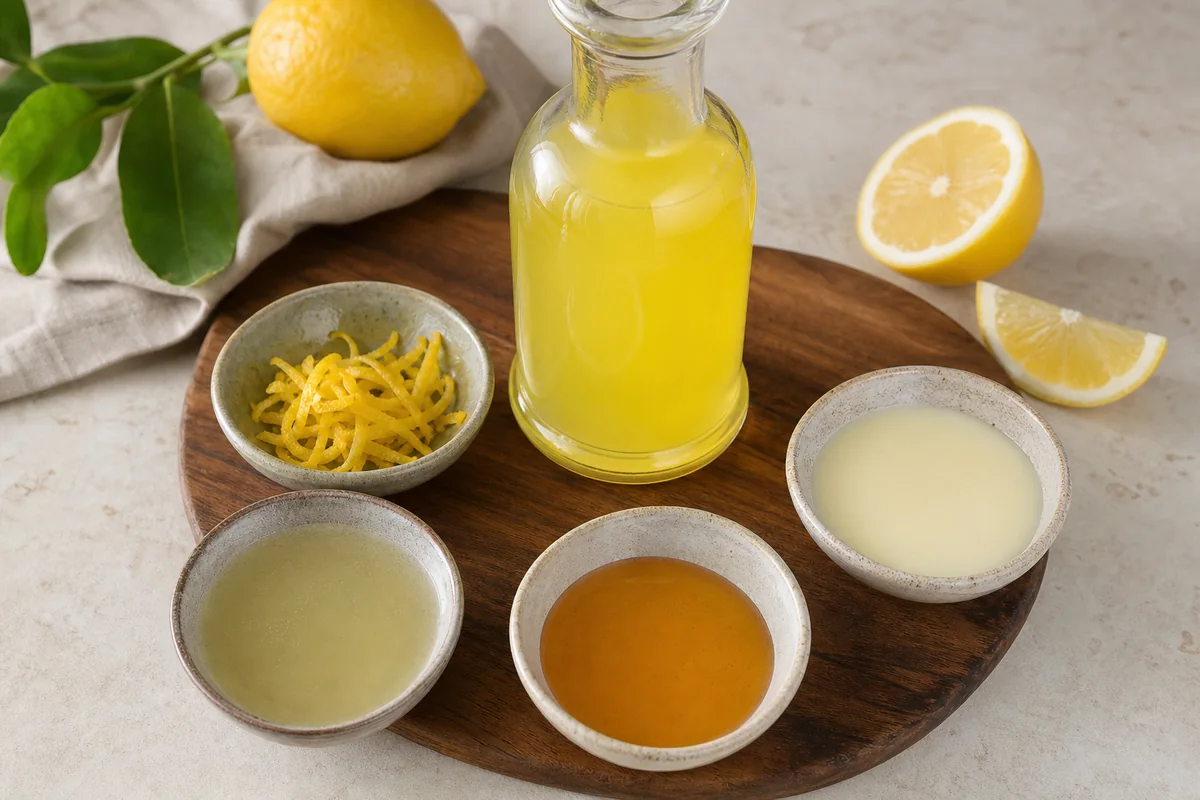
5 Best Limoncello Substitutes in Every Recipe
Ingredients
Equipment
Method
- Decide if your recipe needs alcohol (cocktails, drizzles, bright sauces) or just lemon sweetness (baking).
- Match the swap by structure: liqueur-for-liqueur (1:1) or boozy syrup-for-liqueur (use the provided ratio and adjust sweetness).
- Boost aroma with lemon zest when switching from real limoncello to mixes that are more sour or less fragrant.
- If the substitute tastes too sharp or watery, thicken with a small amount of simple syrup; if too sweet, add a squeeze of lemon juice.
- Taste before adding to high-visibility final steps (glazes, drinks, finishing sauces) and adjust once.
Notes
- For cocktails, prioritize lemon-lift aroma and alcohol strength.
- For baking, favor lemon zest and sweetness; alcohol role is smaller once heat is applied.
Tried this recipe?
Let us know how it was!
Carrie is a food writer and editor with more than 15 years of experience. She has worked for some of the biggest names in the food industry, including Bon Appétit, Food & Wine, and Martha Stewart Living.
As the Editor in Chief of EpicureDelight, Carrie oversees all of the content on the site. She also manages the team of contributing writers and editors, who help to create delicious recipes, helpful tips, and informative articles that you’ll find on the site.
A native of the Chicago area, Carrie is passionate about all things food. She loves trying new restaurants and experimenting with new recipes in her kitchen. She’s also a graduate of the Culinary Institute of America, so she knows a thing or two about food!



