
Little gem lettuce has a particular quality that's hard to pin down until it's gone. Each leaf is compact and sweet, with a crunch that stays firm under dressing and still feels tender against the palate.
When a recipe calls for it and you're staring at a half-empty produce section, picking the right little gem lettuce substitute matters more than it seems.
The swap you choose should match how you're using it. Grilled halves and lettuce cups need a leaf with enough structure to hold its shape.
Chopped salads and tossed sides need crunch first, sweetness second. Knowing that split makes the rest of this easy.
Little gem lettuce is sweet, compact, and tender-crisp. For salads, romaine hearts or baby romaine match the crunch best. For cups, butter lettuce or Boston lettuce hold their shape. Iceberg works shredded in a pinch. Endive is best in mixed salads with a sweet dressing.
5 Best Little Gem Lettuce Substitutes Ranked by Texture
| # | Substitute | Best For | Ratio | Key Note |
|---|---|---|---|---|
| 1 | Romaine Hearts | Both | 1:1 | Trim thick ribs first |
| 2 | Butter Lettuce | Both | 1:1 | Soft; dress at last minute |
| 3 | Boston Lettuce | Salads | 1:1 | Sweet, mild crunch |
| 4 | Baby Romaine | Both | 1:1 | Portion-ready, no trimming |
| 5 | Iceberg (shredded) | Salads | ¾:1 | Dress well; less sweet |
Use the table as a first filter: texture-first, then application. For any romaine-type swap, trim thick pale ribs so the bite feels more even.
Chilling leaves before serving is the single prep step that keeps nearly any substitute tasting fresher. You can read more about the full sweet, tender profile of little gem to calibrate how close each swap lands.
1. Romaine Hearts
Romaine hearts are the default here for good reason. The inner leaves are sweet, pale, and tender-crisp, landing very close to little gem's texture in a tossed salad.
Romaine Hearts
Works for: crisp salads, chopped salads, grilled halves, quick Caesar-style tosses
Skip if: you want leaves that feel almost melting-soft and buttery (butter lettuce is the better call)
- Trim the ribs: Cut out the thick white center rib on each leaf to soften the bite by roughly 30%.
- Use inner leaves only: Outer romaine leaves are tougher and more bitter than little gem.
- Chill before serving: 15 minutes in the fridge tightens the leaves and mimics little gem's snap.
2. Butter Lettuce
Butter lettuce is the swap when buttery softness matters more than crunch. Its cupped leaves are naturally shaped for scooping, and the flavor is mild with a gentle sweetness.
- Keep leaves whole: Tear only if you need smaller pieces; whole leaves hold dressing better.
- Dress at the last second: Butter lettuce wilts faster than little gem, so timing matters.
- Cup use: The natural bowl shape holds fillings cleanly without needing to double-layer leaves.
For other tender-leaf options that behave similarly in cups, choosing a soft cup leaf from the bibb lettuce swap list is worth a look.
Skip if: you need a leaf that stays crisp for 30 minutes or more after dressing. Butter lettuce softens quickly.
3. Boston Lettuce
Boston lettuce is sweeter than most people expect and has a mild, gentle crunch that works well as a salad base. It's slightly softer than little gem, but the flavor difference is minimal.
For best results in a chopped salad, cut Boston lettuce into rough 1-inch pieces. This keeps each bite even and prevents soggy layers from forming at the bottom of the bowl.
- Sweet flavor match: Boston is one of the closest flavor matches to little gem among everyday grocery lettuces.
- Chop evenly: Irregular cuts lead to uneven wilt; consistent sizing keeps texture uniform throughout.
- Mixed salads: Boston pairs well with sharper greens like arugula if you want more complexity.
Skip if: you're building tight, structured lettuce cups that need to hold heavy fillings. Romaine hearts or butter lettuce hold up better for that.
4. Baby Romaine
Baby romaine is the most convenient swap on this list. Leaves come pre-sized, need no trimming, and carry a clean crunch that holds up well in chopped salads and as a topping.
The smaller leaf size is actually an advantage for topping dishes where little gem would normally be halved. Baby romaine leaves land in the bowl ready to go.
Baby Romaine
Works for: chopped salads, toppings, sandwiches, quick weeknight salads with no prep time
Skip if: you need full-sized cups for scooping; the smaller leaves can't hold much filling
- No trimming needed: Baby romaine inner ribs are thin enough to eat without cutting.
- Chill in water: A 5-minute soak in ice water before drying revives any limp leaves instantly.
- Flavor boost: Add a small squeeze of lemon to the dressing; baby romaine is slightly less sweet than little gem.
5. Iceberg Lettuce (Finely Shredded)
Iceberg is crisper than little gem but noticeably less sweet. Shredding it finely before using, rather than tearing into chunks, is what makes it work as a substitute.
| Use | Ratio | Notes |
|---|---|---|
| Chopped salad | ¾:1 | Shred fine; dress with a sharper vinaigrette |
| Topping (tacos, wraps) | 1:1 | Shred thin; add salt before serving |
| Mixed greens base | ½:1 | Blend with Boston or butter lettuce for sweetness |
The pale, watery crunch of iceberg means dressing does a lot of the flavor work here. Use a slightly sharper or sweeter vinaigrette to close the gap with little gem's natural flavor.
- Shred thin: Use a sharp knife and cut to ⅛-inch strips; thick chunks stay watery and bland.
- Salt lightly: A pinch of fine salt on shredded iceberg before dressing draws out excess moisture.
- Add sweetness: A small drizzle of honey in the dressing replaces the natural sweetness little gem brings.
Skip if: you need flavor complexity. Iceberg is a texture swap, not a flavor one.
Making a Little Gem Lettuce Substitute Work (Fast Prep Rules)
The single biggest mistake with lettuce swaps is treating them like little gem straight out of the bag. Most substitutes need one or two small adjustments to perform well.
Keeping fresh cup-shaped leaves chilled before plating is the easiest win, and timing when you toss with dressing is just as important as which green you choose. If you're using a vinaigrette, knowing how to store it matters too. Timing your dressing correctly keeps both the leaves and the emulsion at their best.
- Trim thick ribs: On romaine hearts and baby romaine, remove the thick white center rib to create a more tender, even bite that mimics little gem.
- Chill 10-20 minutes: Place washed, dried leaves in the fridge before serving; cold temperatures firm the cell walls and restore snap.
- Toss at the last minute: Dress the leaves no more than 2 minutes before serving; any longer and the salt in the dressing draws moisture out and flattens the crunch.
Frequently Asked Questions
Romaine hearts are the closest match for salads. Trim the thick ribs and use inner leaves only; the sweetness and crunch are nearly identical to little gem.
Yes, but choose the inner, cupped leaves and avoid flat outer leaves. Butter lettuce is easier to work with if you need a natural bowl shape.
It works well if you dress it at the last second. Butter lettuce is softer than little gem, so it will absorb Caesar dressing quickly and lose crunch fast.
Shred it finely, add a light pinch of salt before dressing, and use a vinaigrette with a small amount of honey. That combination closes most of the flavor gap.
Choose endive when you want sturdy, self-contained cups or a bitter counterpoint in a mixed salad. Pair it with a honey or cream-based dressing to balance its edge.
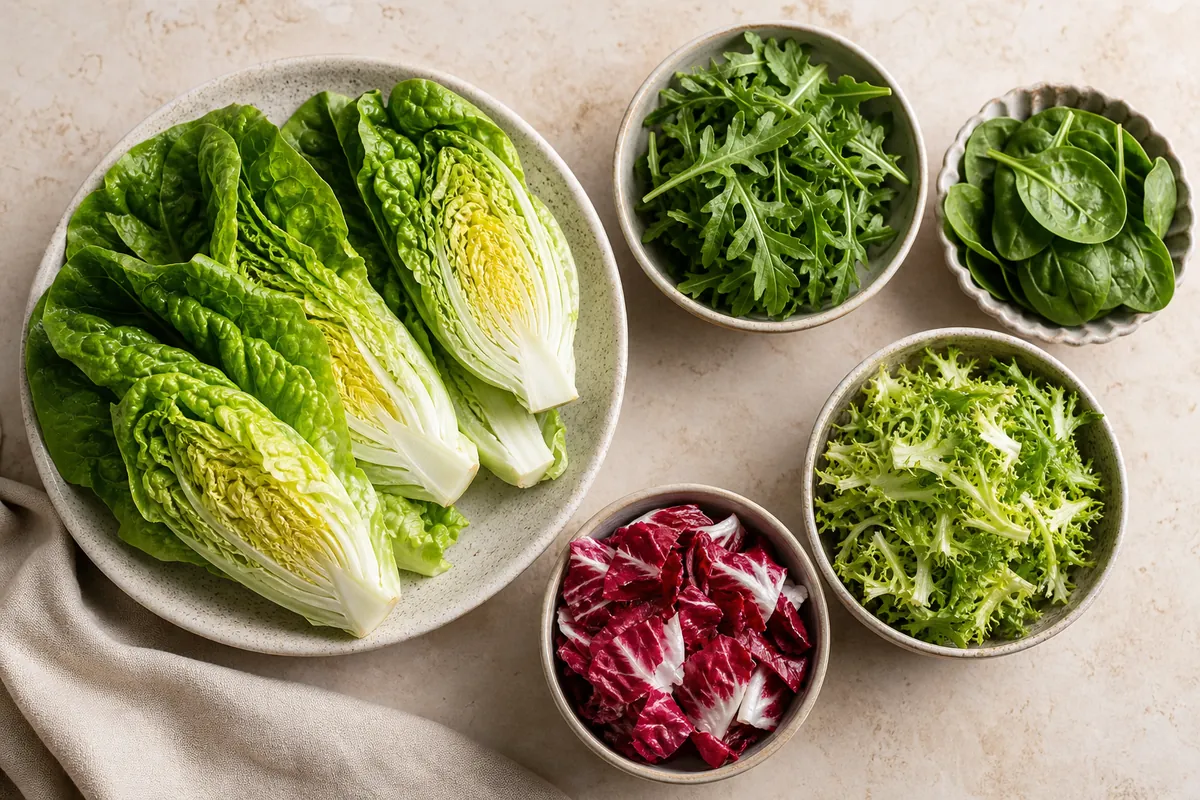
5 Best Little Gem Lettuce Substitutes in Every Recipe
Ingredients
Equipment
Method
- Decide your use: salads/toppings (needs crisp bite) vs. lettuce cups (needs leaf shape).
- Pick the closest substitute from the table by texture: romaine hearts for crisp, butter/Boston for tender cups.
- Use the listed ratio: for wetter/softer options, measure by packed leaves so volume stays equivalent.
- Adjust prep: trim thick ribs, separate leaves for cups, and keep greens chilled 10–20 minutes for maximum crunch.
- Dress and toss at the last minute; if the swap is blander (iceberg), add salt or a sharper dressing to match flavor intensity.
Notes
- For maximum ‘buttery crunch,’ chill lettuce before using and dress briefly right before serving.
Tried this recipe?
Let us know how it was!
Carrie is a food writer and editor with more than 15 years of experience. She has worked for some of the biggest names in the food industry, including Bon Appétit, Food & Wine, and Martha Stewart Living.
As the Editor in Chief of EpicureDelight, Carrie oversees all of the content on the site. She also manages the team of contributing writers and editors, who help to create delicious recipes, helpful tips, and informative articles that you’ll find on the site.
A native of the Chicago area, Carrie is passionate about all things food. She loves trying new restaurants and experimenting with new recipes in her kitchen. She’s also a graduate of the Culinary Institute of America, so she knows a thing or two about food!



