
That simmered tomato smell-garlic, basil, a little acid-is hard to fake. But when you need a marinara sauce substitute, the gap between a good swap and a flat one usually comes down to three things: tang, thickness, and herb depth.
Most pantry tomatoes lean plain. They need a small push to mimic what marinara brings by default.
Passata is the closest swap for silky pasta dishes. Crushed tomatoes match marinara's body after a short simmer. Tomato sauce works fast with a splash of vinegar. Pizza sauce is a seasoned shortcut. Tomato paste plus water is the true pantry emergency fix.
The swap you pick should match your dish. A silky pasta needs different texture than a baked ziti that will sit in a 400°F oven for 30 minutes.
5 Best Marinara Sauce Substitutes Ranked
Every option below works at a 1:1 ratio unless noted. The main job in each case is coaxing out the tang and herb flavor that marinara carries ready-made.
| # | Substitute | Best For | Ratio | Key Note |
|---|---|---|---|---|
| 1 | Passata | Both | 1:1 | Add herbs + salt |
| 2 | Crushed Tomatoes | Both | 1:1 | Simmer 5 min |
| 3 | Tomato Sauce | Both | 1:1 | Add vinegar or lemon |
| 4 | Pizza Sauce | Cooking | 1:1 | Already seasoned |
| 5 | Tomato Paste + Water | Both | 1:2 | Season fully |
1. Passata
Passata is strained, smooth tomato with no seeds or skin. It behaves almost exactly like marinara in a pan, just without the seasoning already added.
To season it right, think of what marinara already carries. Understanding that simmered flavor helps you add only what's missing.
- Ratio: 1:1 with marinara
- Season with: ½ teaspoon Italian seasoning, 1 small garlic clove (minced), salt to taste per cup of passata
- Tang fix: Add ½ teaspoon red wine vinegar per cup if it tastes flat
- Texture note: Already smooth, no blending needed
Skip if: you need a chunky marinara with visible tomato pieces. Use crushed tomatoes instead.
2. Crushed Tomatoes
Crushed tomatoes have the body and slight chunkiness that marinara is known for. Five minutes on the stove closes most of the gap between them.
Heat the tomatoes in a small pan with olive oil and garlic. Simmer until the sauce looks glossy and coats the back of a spoon.
When storing any open paste or canned tomato you have leftover, refrigerate and use within 5 days.
- Ratio: 1:1 with marinara
- Add: ½ teaspoon dried oregano, pinch of sugar, salt
- Simmer time: 5 minutes minimum for pasta; 8 minutes before baking
- Thickness check: If it still runs thin, simmer 2 more minutes until glossy
Skip if: you're short on time. Choose tomato sauce instead-it's already thicker straight from the can.
3. Tomato Sauce
Canned tomato sauce is thicker than crushed tomatoes and pours smooth. It needs acidity and herbs to read as marinara, but neither takes long.
A teaspoon of red wine vinegar per cup does the job neatly. If you want to compare sauce flavor profiles before deciding how much to adjust, that's worth a quick read.
Tomato Sauce vs. Marinara
Works for: pasta, baked dishes, dipping, pizza-just add 1 teaspoon vinegar or lemon and ½ teaspoon Italian seasoning per cup
Skip if: the label already lists herbs and spices and it tastes balanced-over-adding will muddy the flavor
- Ratio: 1:1 with marinara
- Tang fix: 1 teaspoon red wine vinegar or lemon juice per cup
- Herb fix: ½ teaspoon Italian seasoning, ¼ teaspoon garlic powder
- For baking: Use as-is without thinning; it holds up well in the oven
4. Pizza Sauce
Pizza sauce is already seasoned and often a little sweeter than marinara. That sweetness is by design-it balances the cheese on a pizza-but it can make pasta taste slightly off.
Fix it fast with a small squeeze of lemon or a pinch of salt. For dishes where you want a citrus brightness but don't have fresh lemons on hand, a small splash of white wine vinegar works the same way.
- Ratio: 1:1 with marinara
- Sweetness fix: Add a pinch of salt and ¼ teaspoon red wine vinegar per cup
- Best uses: Baked ziti, pizza, calzones, stuffed shells
- Skip for: Light herb pastas where you want a cleaner, less seasoned sauce
Skip if: you're making a delicate pasta dish where you need a classic, lighter herb profile. Pizza sauce carries too much seasoning for that.
5. Tomato Paste + Water
Tomato paste is concentrated and intense. Thinned correctly, it becomes a serviceable marinara-style base in about 4 minutes flat.
The passata-vs-paste tradeoff is real-passata is ready, paste needs work. Checking the paste-versus-passata difference helps you decide which pantry item to reach for first.
| Use | Ratio | Notes |
|---|---|---|
| Pasta sauce | 1 tablespoon paste : 2 tablespoon water | Thin to marinara consistency; add garlic, Italian seasoning, salt |
| Baked dishes | 1 tablespoon paste : 1.5 tablespoon water | Keep slightly thicker; simmer 3 min before using so it doesn't water out |
| Dipping | 1 tablespoon paste : 2.5 tablespoon water | Add ½ teaspoon vinegar and a pinch of sugar to mimic marinara tang |
- Seasoning must-haves: garlic, Italian seasoning, salt, and a splash of vinegar
- Baking tip: Always simmer after thinning to prevent extra water releasing in the oven
- Sweetness note: A pinch of sugar balances the sharpness of concentrated paste
Skip if: you have passata or crushed tomatoes on hand. Paste requires more seasoning work to reach the same result.
Making a Marinara Substitute Taste Like Marinara
The difference between a bland tomato swap and one that reads as marinara is almost always three things: acidity, seasoning, and the right thickness. Getting the right base matters, but even a weak base improves dramatically with two minutes of adjusting.
If your sauce tastes flat after swapping, work through these three moves in order before adding anything else.
- Acidity first: Stir in 1 teaspoon red wine vinegar or lemon juice per cup of substitute. Taste. If it still tastes dull, add another ¼ teaspoon at a time. This one move fixes most bland swaps fast.
- Seasoning second: Add ½ teaspoon Italian seasoning, a pinch of garlic powder, and salt to taste. If the sauce is going into a baked dish, hold back on salt slightly-the oven concentrates everything.
- Thickness last: Simmer uncovered for 3-5 minutes if it looks watery. For pasta, you want the sauce to coat the spoon without running. For baked dishes, reduce by 2 tablespoon per cup before layering to avoid a watery casserole.
If your substitute is already labeled as pizza sauce or comes pre-seasoned, skip straight to the thickness step and only adjust salt.
Frequently Asked Questions
Passata is the closest match for a smooth, silky texture. Use it at a 1:1 ratio and add Italian seasoning plus a small splash of red wine vinegar to replicate marinara's herb-forward flavor.
Add just 1 teaspoon vinegar and ½ teaspoon Italian seasoning per cup. Taste before adding more-pre-seasoned tomato sauces need less than plain ones.
Yes, pizza sauce works at 1:1 in baked ziti. It's a little sweeter, so add a pinch of salt and a small squeeze of lemon to balance it before layering.
Simmer uncovered for 5-8 minutes until it looks glossy and coats a spoon. For baked dishes, reduce by about 2 tablespoon per cup before using.
Use 1 tablespoon of tomato paste to 2 tablespoons of water for pasta, or 1.5 tablespoons of water for baked dishes. Always simmer the thinned paste for 3 minutes before using.
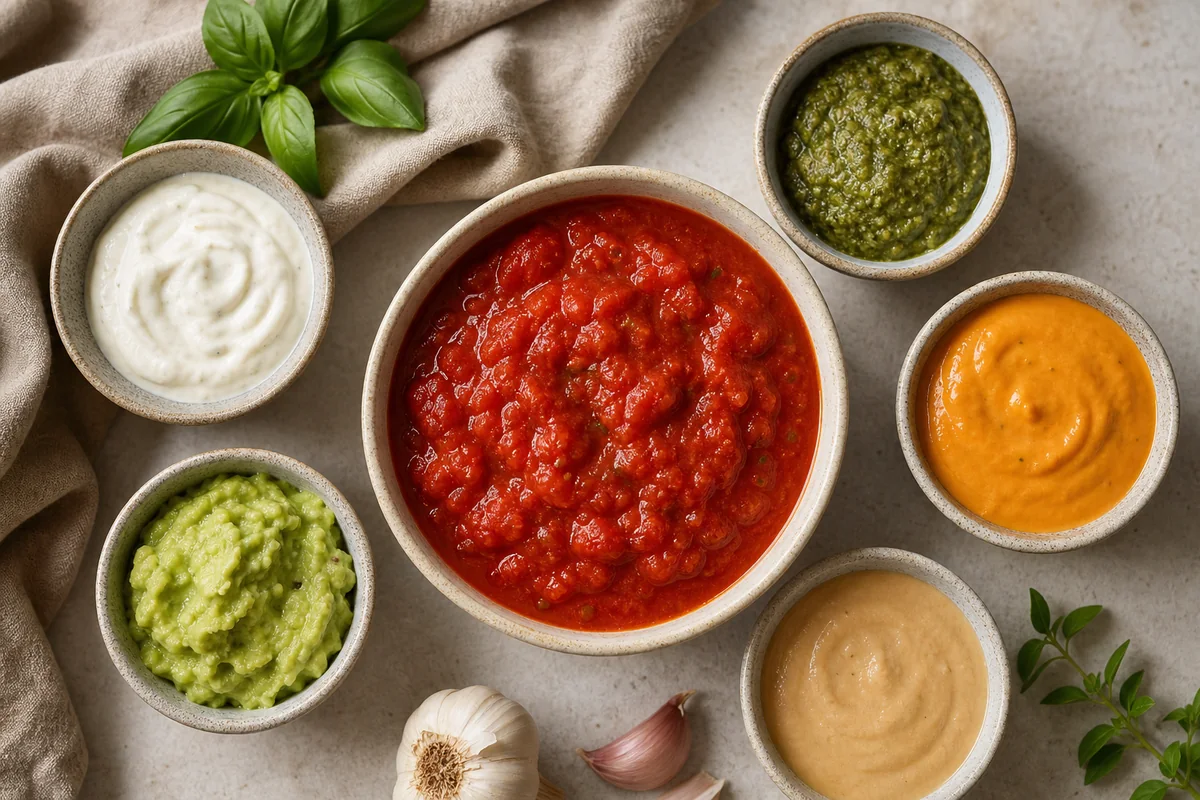
5 Best Marinara Sauce Substitutes for Home Cooks
Ingredients
Equipment
Method
- Pick the substitute based on texture: passata for smooth, crushed tomatoes for classic body, tomato sauce for convenience, pizza sauce for seasoned flavor, or paste+water for pantry-only.
- Match tang: stir in a teaspoon of vinegar or lemon juice per 1 cup substitute, then taste and fine-tune salt and herbs.
- If it’s watery (especially crushed/paste), simmer 3–5 minutes until glossy and spoon-coating.
- Use immediately for pasta; for baking, reduce by simmering 2–3 minutes so it doesn’t leak.
- Adjust thickness at the end: add a splash of water for looseness or simmer longer for a thicker marinara.
Notes
- For best results in baking, simmer the substitute briefly to reduce excess moisture.
- Marinara’s flavor is driven by acidity + salt + herbs—adjust those last.
Tried this recipe?
Let us know how it was!
Carrie is a food writer and editor with more than 15 years of experience. She has worked for some of the biggest names in the food industry, including Bon Appétit, Food & Wine, and Martha Stewart Living.
As the Editor in Chief of EpicureDelight, Carrie oversees all of the content on the site. She also manages the team of contributing writers and editors, who help to create delicious recipes, helpful tips, and informative articles that you’ll find on the site.
A native of the Chicago area, Carrie is passionate about all things food. She loves trying new restaurants and experimenting with new recipes in her kitchen. She’s also a graduate of the Culinary Institute of America, so she knows a thing or two about food!



