
Mascarpone does something most creamy cheeses can't: it sits between a spread and a poured cream, holding its shape without turning dense. That balance of fat, silk, and just a whisper of tang is why tiramisu and certain baked fillings depend on it.
Finding a good mascarpone substitute means matching that thickness first, then adjusting for tang second.
The rule is simple. Thick and mild?
Go for cream cheese or strained Greek yogurt. Thick and slightly tart?
Crème fraîche or sour cream with a butter boost. Grainy and cheap?
Ricotta or cottage cheese, but only after you've blended them smooth.
The best mascarpone substitutes are cream cheese, strained Greek yogurt, and crème fraîche. Each works at a 1:1 ratio. Blend or strain before using. Match fat level to your recipe: thick fillings need a dense swap; baked sets need something that firms when chilled.
5 Best Mascarpone Substitutes Ranked by Creaminess
Every swap below holds up at a 1:1 ratio, but texture prep is what separates a silky result from a watery or grainy one. Skim the table to pick your match, then read the section for prep details.
| # | Substitute | Best For | Ratio | Key Note |
|---|---|---|---|---|
| 1 | Strained Greek Yogurt | Both | 1:1 | Strain 20-30 min first |
| 2 | Cream Cheese | Both | 1:1 | Beat until lump-free |
| 3 | Ricotta (Blended) | Baked | 1:1 | Blend 30-60 seconds |
| 4 | Crème Fraîche | Both | 1:1 | Whip if loose |
| 5 | Sour Cream + Butter | Baked | 1:1 | Add 1-2 teaspoon butter/cup |
1. Strained Greek Yogurt
Full-fat Greek yogurt is the closest everyday swap for mascarpone in no-cook applications. The key is straining: pour it into a cheesecloth over a bowl, leave it for 20-30 minutes, and what's left is thick, spoonable, and barely tangy.
The yogurt's flavor profile is mild enough that most desserts won't read as "yogurt-forward" once sweetened.
After straining, beat it smooth with a fork or hand mixer before folding it into your base.
Strained Greek Yogurt
Works for: tiramisu layers, no-cook cheesecake filling, chilled mousses
Skip if: your yogurt is low-fat or you can't strain it (too loose to hold shape)
- Ratio: 1:1 after straining
- Tang level: Mild to moderate - add a pinch of sugar if it tastes sharp
- Texture fix: Beat smooth after straining to remove any last graininess
2. Cream Cheese
Cream cheese is thicker than mascarpone and slightly sharper in flavor, but it blends into smooth fillings with almost no effort when properly softened. Pull it from the fridge 30 minutes early, then beat it on medium until it's silky.
The dense, tangy spread works especially well in frostings and baked fillings that need to hold shape without curdling.
For layered desserts, chill the mixture for 15 minutes after mixing to firm it closer to mascarpone's body.
- Ratio: 1:1 (reduce sugar slightly - cream cheese can taste sharper)
- Smoothing tip: Beat at room temperature; cold cream cheese stays lumpy
- Storage: Know that storing soft cheese safely keeps your final dish fresher longer
- Skip if: You want a completely neutral flavor - cream cheese is noticeably tangier
3. Ricotta (Blended Smooth)
Ricotta is the most widely available swap, but it has a natural granular texture that shows up badly in chilled layers. The fix is straightforward: blend it in a food processor for 30-60 seconds until completely smooth, scraping the sides once halfway through.
The soft, milky curd loses its graininess and becomes almost creamy once processed long enough.
It's a better fit for baked desserts than no-cook ones, because heat helps the texture set without exposing any remaining grain.
- Ratio: 1:1 after blending
- Blending time: At least 45 seconds - under-blended ricotta still reads grainy
- Best uses: Cannoli-style fillings, baked tarts, ricotta cheesecake
- Skip if: You're making a no-cook layer dessert and don't have a blender
4. Crème Fraîche
Crème fraîche is the swap that feels most like mascarpone in both tang and richness, though it lands noticeably more tart side-by-side. The fat content is close, and the cultured cream's flavor blends seamlessly into baked fillings without separating.
If your container runs a little loose, whisk it briefly to thicken before measuring.
- Ratio: 1:1
- Thickening: Whisk 30-45 seconds by hand if it looks pourable
- Best uses: Baked tarts, savory-sweet fillings, mousse bases
| Use | Ratio | Notes |
|---|---|---|
| Baked filling | 1:1 | Use as-is; heat firms the texture |
| No-cook dessert | 1:1 | Whisk first; chill mixture 20 min before layering |
| Frosting | ¾:1 | Reduce slightly - crème fraîche is looser than mascarpone |
Skip if you need a mild, nearly neutral cream. Crème fraîche reads tangier than mascarpone and will affect the overall flavor balance of delicate desserts.
5. Sour Cream + Butter
Sour cream alone is thinner and sharper than mascarpone, so it needs a small fat boost to close the gap. Add 1-2 teaspoons of melted butter per cup of sour cream, stir well, and you have something that works in baked applications where the heat sets the texture.
You can find fat-swap options if butter is also off the table, though the result won't be as close.
- Ratio: 1:1 (sour cream + 1-2 teaspoon melted butter per cup)
- Best uses: Baked cheesecakes, warm sauces, fillings that set in the oven
- Tang note: Stir in a pinch of sugar if the tang is too pronounced after mixing
- Skip if: You're making a no-cook dessert - sour cream won't firm up without heat
Making Mascarpone Substitutes Work
Every substitute above can go wrong in the same two ways: it's either too loose, or it's grainy in the final dish. Both problems have easy fixes, and catching them before you fold your swap into a batter is what separates a good result from a failed one.
Check the shelf life of tangy dairy before starting, since older product often separates faster and throws off texture.
- Texture first: Strain, blend, or beat your substitute before it touches anything else - a loose or grainy swap won't improve once it's mixed in
- Tang adjustment: Add a small pinch of sugar if your swap tastes sharp, or a tiny squeeze of lemon if it tastes flat - mascarpone sits right in the middle
- Consistency check: Scoop a spoonful and tilt it - it should hold a slow drip, not pour; if it pours, chill it for 10 minutes before proceeding
Frequently Asked Questions
Yes, but beat it until completely smooth and expect a slightly sharper flavor. Softening it at room temperature first prevents lumps in the cream layer.
Cream cheese is the strongest choice - it holds its structure when baked and blends smooth. Strained Greek yogurt works well for no-bake versions.
Blend ricotta and cottage cheese for at least 45 seconds before use. Strain yogurt through cheesecloth, then beat smooth before folding into your recipe.
Yes, as long as it's full-fat and strained for at least 20 minutes. Low-fat or unstrained yogurt stays too loose to hold shape in chilled layers.
Cashew cream blended until completely smooth is the closest dairy-free option. Add a small squeeze of lemon to match mascarpone's mild tang.
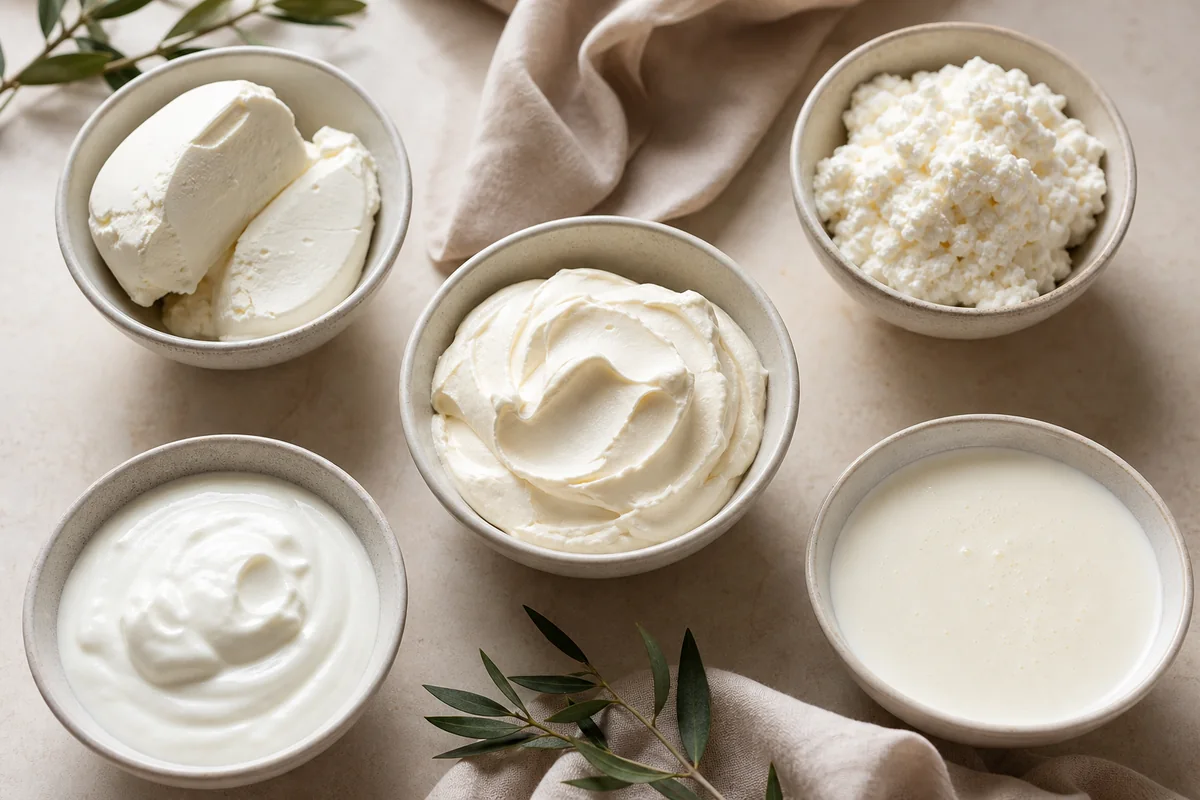
5 Best Mascarpone Substitutes (That Actually Work)
Ingredients
Equipment
Method
- Match the job: for thick spreads/filling, choose strained Greek yogurt, cream cheese, or crème fraîche; for dairy-free, choose cashew cream.
- Prep texture first: strain yogurt, soften and beat cream cheese, or blend ricotta/cashew cream until completely smooth.
- Swap using the table ratio (typically 1:1), then adjust consistency with 1–2 teaspoons water/cream as needed to reach “spreadable” thickness.
- Taste-adjust: if the swap is too tangy, mix in a pinch of sugar; if it’s bland, add a tiny squeeze of lemon or a pinch of salt.
- Check before committing: fold into your base and confirm it holds shape (for layered desserts) or sets (for baked fillings).
Notes
- If your substitute seems thin, strain/adjust before mixing into the recipe—most “failures” come from watery swaps.
- For baked desserts, smoothness matters: blend ricotta/cashew cream thoroughly to avoid a grainy texture.
Tried this recipe?
Let us know how it was!
Carrie is a food writer and editor with more than 15 years of experience. She has worked for some of the biggest names in the food industry, including Bon Appétit, Food & Wine, and Martha Stewart Living.
As the Editor in Chief of EpicureDelight, Carrie oversees all of the content on the site. She also manages the team of contributing writers and editors, who help to create delicious recipes, helpful tips, and informative articles that you’ll find on the site.
A native of the Chicago area, Carrie is passionate about all things food. She loves trying new restaurants and experimenting with new recipes in her kitchen. She’s also a graduate of the Culinary Institute of America, so she knows a thing or two about food!



