
Mayonnaise does three jobs at once: it spreads thick, it adds tang, and it holds sauces together. That triple role is why finding the right mayonnaise substitute takes a second of thought.
Grab the wrong swap and your potato salad turns watery, or your sandwich tastes like plain yogurt.
The key is matching function to dish. Cold spreads need fat and body.
Dressings need acid. Cooked sauces need stability under heat.
Once you know which job matters most, the right replacement is obvious.
Greek yogurt is the closest all-around mayonnaise substitute for cold dishes. Sour cream adds more tang. Avocado works dairy-free on sandwiches. A quick olive oil + Dijon emulsion best replicates mayo's structure in sauces. Hummus and silken tofu cover egg-free needs.
5 Best Mayonnaise Substitutes, Ranked by Texture and Tang
The ranking below weighs three things: spreadability, tang level, and how well each option holds up in sauces. Thicker swaps earn higher slots for cold uses.
Emulsifying options score points for hot or mixed sauces where acid swap choices also matter. Use the table to find your ratio fast, then read the section for full guidance.
| # | Substitute | Best For | Ratio | Key Note |
|---|---|---|---|---|
| 1 | Greek Yogurt (strained) | Both | 1:1 | Strain for thickness |
| 2 | Sour Cream | Both | 1:1 | Tang-forward; thin slightly |
| 3 | Avocado (blended) | Cold | ¾:1 | Add lemon for tang |
| 4 | Olive Oil Emulsion | Both | 1:1 | Whisk oil in slowly |
| 5 | Hummus (thinned) | Cold | 1:1 | Thin with water first |
1. Greek Yogurt
Full-fat, strained Greek yogurt is the best overall mayonnaise replacement for cold dishes. It matches mayo's creamy mouthfeel better than anything else on this list.
If you swap toward thicker options, strained yogurt is where to start.
Strain it for 20 to 30 minutes through a cheesecloth or fine mesh. That step removes excess whey and brings the texture closer to a proper spreadable mayo.
- Best for: Sandwiches, potato salad, coleslaw, dips, and cold pasta salads
- Flavor shift: Slightly tangier than mayo; the gap is small with full-fat versions
- Tang fix: If it tastes too sharp, stir in ½ teaspoon neutral oil per ¼ cup to round it out
- Ratio: Use 1:1 with mayo
Skip if: You need a stable, high-heat emulsifier. Yogurt can split when cooked above a low simmer.
2. Sour Cream
Sour cream is the tang-forward cousin of mayonnaise. It shares the same fatty, creamy body but lands noticeably more sour.
That difference matters in dishes with delicate flavor, so check the comparison below before reaching for it. For a deeper look at how fat content affects texture, the dairy fat and nutrition breakdown is worth scanning.
Mayonnaise
Works for: neutral, creamy base; hot and cold uses; long-hold stability
Skip if: you want a sharper, dairy-forward tang in the final dish
Sour Cream
Works for: dips, cold slaw, potato salad, any dish that can handle more acid
Skip if: the recipe needs a mellow, neutral flavor - sour cream reads distinctly tangier
- Ratio: 1:1 with mayo
- Thin it: Whisk in 1 teaspoon of water or milk if it feels too stiff to spread
- Salt check: Sour cream can taste flat; add a small pinch of salt to lift the flavor
- Best uses: Dips, cold salads, sandwich spreads, and baked potato toppings
Skip if: Your dish needs a neutral base. The extra tartness is hard to hide in simple preparations.
3. Avocado
Blended avocado is a strong dairy-free swap, especially for sandwiches and wraps. It has a naturally creamy fat content that mimics mayo's spreadability well.
The buttery green flesh gets richer and smoother when blended with a fork or food processor until completely lump-free.
- Ratio: Use ¾ cup blended avocado per 1 cup mayo called for
- Tang booster: Add 1 to 2 teaspoon lemon juice per ½ cup to replicate mayo's acid note
- Flavor note: Avocado has an earthy, grassy taste that comes through in simple dishes
- Cold only: Avocado does not hold well in warm sauces; it dulls and separates
- Best for: Sandwich spreads, BLTs, wraps, and avocado-based dressings
Skip if: You need a neutral, classic mayo flavor. Avocado adds a distinct taste that takes over mild dishes.
4. Olive Oil Emulsion with Dijon
This is the closest option in function because it actually rebuilds the emulsion that mayo provides. Dijon mustard contains lecithin, which acts as a natural emulsifier.
That is why a quick whisk of oil into Dijon and vinegar produces a sauce that holds together like mayo. If you want to try picking a different base oil, a light-flavored one works better than extra-virgin here.
- Base formula: 1 teaspoon Dijon + 1 teaspoon white vinegar or lemon juice, then whisk in 3 tablespoon olive oil in a slow, thin stream
- Ratio: 1:1 with mayo by volume
- Technique: Always whisk the Dijon and acid together first before adding any oil; adding oil too fast breaks the emulsion
- Thickness check: The finished emulsion should coat the back of a spoon; if too thin, whisk in another 1 teaspoon oil
- Best for: Dressings, dipping sauces, aioli-style spreads, and mixed sauces held for up to 1 hour
Skip if: You need something ready in under a minute, or if the sauce must hold perfectly for more than 2 hours without separating.
5. Hummus
Smooth, thinned hummus works well in wraps and cold salads where a savory, earthy spread is welcome. It does not taste like mayo, but it fills the same role of coating and binding.
The sharp mustard notes in a Dijon-spiked hummus can actually help bridge the flavor gap.
- Ratio: 1:1 with mayo; thin with water first if the hummus is very stiff
- Thinning method: Whisk in 1 teaspoon of water at a time until the hummus is spoonable and spreadable
- Tang fix: Add 1 teaspoon lemon juice and a pinch of garlic salt to lift the flavor closer to mayo
- Best for: Wraps, cold grain bowls, roasted vegetable sandwiches, and cold pasta salads
Skip if: You want a classic, neutral mayo flavor. Hummus has a garlicky, legume-forward taste that reads clearly in simple dishes.
Making Mayonnaise Substitutes Work
Choosing a substitute is only half the job. The other half is adjusting it so it actually performs.
Most swaps need a small tang correction (add acid) and a thickness check (strain or thin) before they are ready. Understanding tangy dairy flavor helps you predict how much lemon juice or vinegar to add without overshooting.
If you are also watching how long dairy substitutes keep, store any swap in a sealed container and use it within 3 days.
- Thickness check: Spread a spoonful on the back of a plate. It should stay put. If it slides, strain or whisk in 1 teaspoon less liquid next time.
- Tang and salt: Add acid in ½ teaspoon increments (lemon juice or white vinegar) and taste after each addition. Salt amplifies tang, so add both together in small amounts.
- Heat stability: For warm dishes, choose the olive oil emulsion or sour cream at low heat. Yogurt and tofu can separate above a gentle simmer; stir constantly and keep the heat low if you must use them warm.
Frequently Asked Questions
Full-fat Greek yogurt, strained for 20 minutes, is the closest match in texture and mild tang. Use it 1:1 and add a small pinch of salt to sharpen the flavor.
Yes, but only at low heat with constant stirring. Greek yogurt can separate above a gentle simmer, so keep temperatures low and avoid boiling the sauce.
Hummus, blended avocado, and silken tofu are all egg-free. The olive oil and Dijon emulsion skips eggs too, using mustard's lecithin to bind the sauce instead.
Stir in a small amount of neutral oil (½ teaspoon at a time) to mellow sharpness. For yogurt or sour cream, a tiny pinch of sugar can also balance excess tang.
Keep them in a sealed container in the refrigerator and use within 3 days. Stir before each use, as separation is normal and easy to fix with a quick whisk.
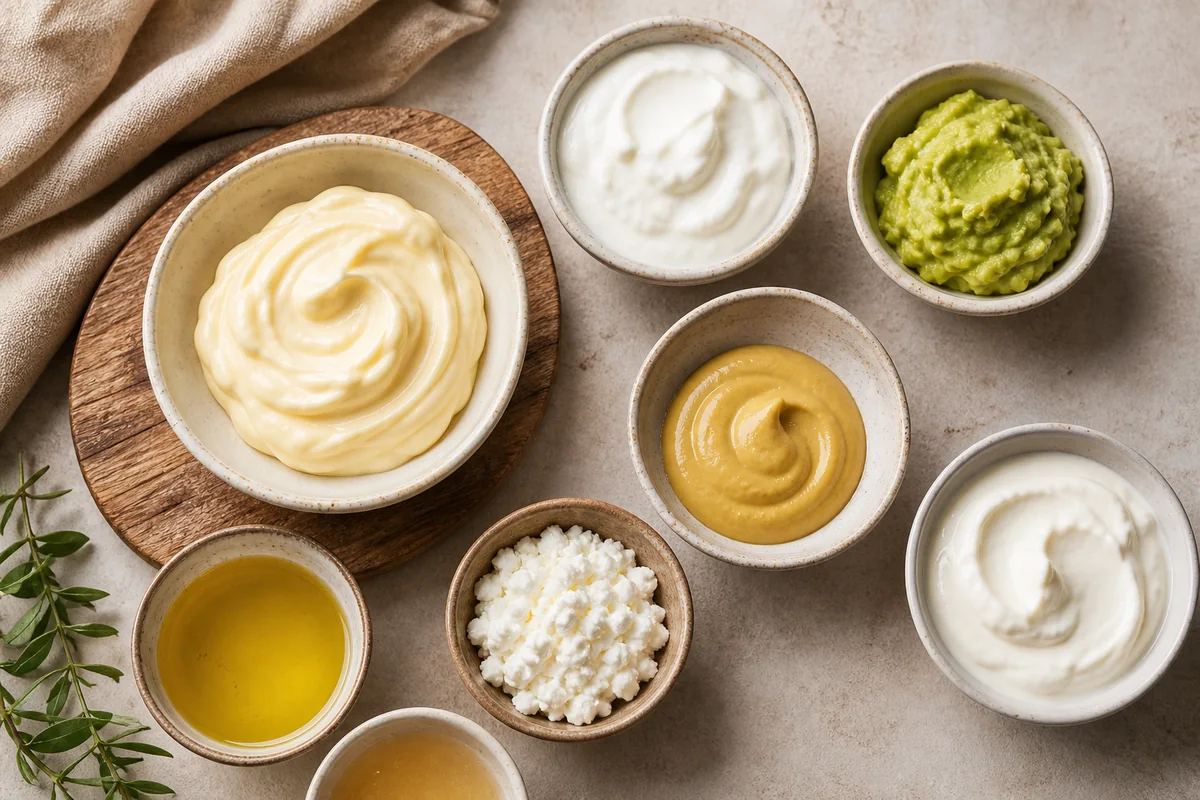
5 Best Mayonnaise Substitutes (Ranked)
Ingredients
Equipment
Method
- Choose your use-case: spreading (sandwich/wrap), dressing (salad), or saucing (hot or mixed sauces).
- Use the listed ratio for your starting amount of mayonnaise, then check thickness against your goal.
- Adjust flavor with a small acid boost: lemon juice or vinegar (start with 1-2 teaspoon per ½ cup) and a pinch of salt if needed.
- For any option that’s thinner or looser, let it rest 5 minutes so it thickens; for overly thick swaps, whisk in 1 teaspoon water at a time.
- If using for warm dishes, avoid high-heat cooking with yogurt/tofu unless you reduce heat and stir gently to prevent separation.
Notes
- For best texture: strain Greek yogurt, blend avocado/tofu very smooth, and thin hummus with water until spoonable.
Tried this recipe?
Let us know how it was!
Carrie is a food writer and editor with more than 15 years of experience. She has worked for some of the biggest names in the food industry, including Bon Appétit, Food & Wine, and Martha Stewart Living.
As the Editor in Chief of EpicureDelight, Carrie oversees all of the content on the site. She also manages the team of contributing writers and editors, who help to create delicious recipes, helpful tips, and informative articles that you’ll find on the site.
A native of the Chicago area, Carrie is passionate about all things food. She loves trying new restaurants and experimenting with new recipes in her kitchen. She’s also a graduate of the Culinary Institute of America, so she knows a thing or two about food!



