
Creamy sauces, tender baked goods, homemade hot cocoa-they all owe some of their body to milk powder. Running out mid-recipe is annoying, but it rarely means starting over.
The right milk powder substitute can match both the texture and the mild dairy flavor, as long as you choose based on what your specific recipe actually needs.
Milk powder mainly adds milk solids. Those solids thicken, enrich, and carry a faint sweet-dairy note.
Your substitute has to do the same job-don't just grab the nearest liquid and hope. Texture first, flavor second is the working rule here.
The best milk powder substitutes are evaporated milk, strained Greek yogurt, buttermilk or kefir, condensed milk, and coconut or oat cream. Each swap matches milk powder's body differently. Evaporated milk is the closest all-around match. Adjust liquid after swapping to keep batter or sauce consistency on target.
Best Milk Powder Substitute Options (Ratios + When to Use)
The table below gives you a fast ratio map. Start there, then adjust your recipe's liquid by small spoonfuls-milk powder affects body more than most cooks expect.
For sweet recipes, lean toward condensed milk. For savory, reach for evaporated milk or yogurt.
The lighter cream tradeoff is worth knowing before you pick your liquid substitute.
| # | Substitute | Best For | Ratio | Key Note |
|---|---|---|---|---|
| 1 | Evaporated Milk | Both | 1:1 | Closest body, reduce liquid slightly |
| 2 | Greek Yogurt (strained) | Both | ¾:1 | Tangy; thin before adding |
| 3 | Buttermilk / Kefir | Both | 1:1 | Adds acidity; reduce other liquid |
| 4 | Condensed Milk | Sweet | 1:1 | Dilute; skip in savory dishes |
| 5 | Coconut or Oat Cream | Both | ¾:1 | Flavor shifts; good dairy-free body |
Tart fermented dairy like that sharp, tangy liquid can surprise you with how much body it adds once mixed into a batter. Keep that in mind when choosing between the liquid-based options.
5 Best Milk Powder Substitutes Ranked by Performance
1. Evaporated Milk
Evaporated milk is the closest all-around match for milk powder in most recipes. It has the concentrated milk solids your batter or sauce needs, and it mixes in without lumping or splitting.
The flavor is mildly cooked and slightly malty, which is barely noticeable once baked.
Use a 1:1 ratio by volume to match your milk powder amount. Then pull back your other liquids by about 2 tablespoons per half cup to compensate for the added moisture.
- Baking: Swap 1:1, reduce added liquid by 2 tablespoon per ½ cup used
- Cream sauces: Stir in directly; no thinning needed for most sauce bases
- Hot drinks: Use straight from the can; it dissolves cleanly and adds a smooth finish
- Pancakes and waffles: Works well at 1:1, but mix gently to avoid over-activation
When you store opened cans, transfer to a sealed container and use within 5 days.
Skip if: your recipe is sensitive to a malty, cooked-milk note-evaporated milk has a more pronounced flavor than reconstituted milk powder.
2. Greek Yogurt
Strained Greek yogurt adds serious body and a mild tang that works in both baking and creamy sauces. It is thicker than milk powder reconstituted with water, so you need to thin it down before it goes into your mix.
We prefer straining it for an extra 30 minutes to remove excess whey first.
The thick, tart profile can stand out in very plain recipes. Pair it with a touch of vanilla or a neutral fat to round the flavor.
- Ratio: Use ¾ of the milk powder amount, then thin with water or milk to match batter consistency
- Baked goods: Adds moisture and a tender crumb; expect a slightly denser result
- Creamy sauces: Whisk in off heat to prevent curdling; reheat gently
- Smoothies and drinks: Blend completely smooth; use full-fat for the least tang
Skip if: your recipe requires a neutral milk flavor. Greek yogurt's tang can shift the final taste noticeably in plain or lightly seasoned dishes.
3. Buttermilk or Kefir
Both buttermilk and kefir bring liquid body plus acidity, which tenderizes gluten and creates a lighter crumb in baked goods. The acidity is their defining trait.
It works beautifully in pancakes, quick breads, and muffins, and it can actually improve texture over what plain milk powder would give.
Swap at a 1:1 ratio, then reduce your recipe's other liquids to keep the batter from going too loose. For savory sauces, use sparingly, as the tang builds fast.
For recipes where fermented dairy already fits, the tangy powder swaps page has options that work dry, which is handy for dry-mix situations.
- Pancakes and quick breads: Direct 1:1 swap; expect a fluffier, lighter result
- Muffins and cakes: Works well; reduce other liquid by 1-2 tbsp
- Mac and cheese sauce: Use cautiously-add ¼ cup at a time and taste as you go
Skip if: your recipe needs a sweet or neutral milk base. The tang in buttermilk and kefir is forward and will change the flavor of anything lightly seasoned.
4. Condensed Milk
Condensed milk has high milk solid content, which makes it a strong texture match-especially in desserts. Sweetened versions carry a lot of sugar, so they only work when your recipe is already sweet.
Unsweetened condensed milk is the safer pick for savory baking or when you need solids without added sugar.
Start with a 1:1 ratio for solids, then dilute with water if the mixture is too dense.
| Use | Ratio | Notes |
|---|---|---|
| Dessert baking | 1:1 | Sweetened condensed milk; reduce added sugar by 25% |
| Savory baking | 1:1 | Unsweetened only; dilute with 2 tablespoon water per ¼ cup |
| Creamy drinks | 1:1 | Sweetened version works well; no extra sugar needed |
| Sauces | ¾:1 | Unsweetened; thin with broth or water to reach sauce body |
- Cookies and bars: Full swap at 1:1; reduce sugar by about 2 tablespoon per ¼ cup used
- Hot cocoa or coffee drinks: Use sweetened condensed milk straight; skip added sugar
- Cheese sauces: Unsweetened only; whisk in off heat for a smooth result
Skip if: you're working on a savory or unsweetened recipe and only have sweetened condensed milk. The sugar will push the dish completely off balance.
5. Coconut Cream or Oat Cream
For dairy-free cooking, coconut cream and oat cream are the two most reliable options for replacing milk powder's body. Neither mimics dairy flavor exactly-coconut cream has a recognizable tropical note, and oat cream adds a faint grain sweetness.
But both add body where milk powder would.
Coconut Cream
Works for: sweet baked goods, curries, hot drinks, desserts where coconut flavor is welcome or neutral
Skip if: you need a neutral dairy note-coconut flavor will be noticeable in plain sauces or white batters
Oat Cream (Barista-Style)
Works for: savory sauces, baked goods, neutral-flavored drinks where coconut isn't ideal
Skip if: your recipe needs full dairy richness-oat cream is thinner and slightly sweet, not fatty
- Ratio: Use ¾ of your milk powder amount, then thin with water to reach consistency
- Sweet baking: Coconut cream works at ¾:1; mix with a neutral oil if batter seems heavy
- Savory sauces: Oat cream is the better pick; add slowly and taste as you go
- Hot drinks: Both blend cleanly; oat cream froths better for coffee-style drinks
For the cream-replacement angle, evaporated milk still beats both of these in pure dairy body-but when dairy is off the table, oat cream in savory and coconut cream in sweet is a reliable split.
Skip if: you need a completely neutral milk flavor. Choose evaporated milk or strained yogurt instead.
Making Milk Powder Substitutes Work (Consistency Rules)
Milk powder works in recipes because its milk solids add body-not just flavor. That's why swapping it is trickier than it looks.
Whatever substitute you choose, the ratio gets you to the starting line, but the liquid adjustment is what actually makes the recipe work. If your thickened fermented dairy swap makes the batter too stiff, add water in 1-tablespoon increments and stir between each addition.
And if you want to understand more about how milk powder flavor actually behaves, that context helps you judge whether your substitute is close enough.
- Do: Start with the listed ratio, then adjust liquid slowly-small tweaks (1 tablespoon at a time) prevent over-thinning
- Do: Taste before baking or finishing the sauce; milk powder has a mild sweetness that some substitutes lack
- Don't: Add your substitute and the full original liquid at the same time-add liquid in stages and check thickness after each addition
Frequently Asked Questions
Evaporated milk is the closest match for baking texture. Use it at a 1:1 ratio and reduce your other liquids by about 2 tablespoons per half cup to keep the batter from going too loose.
Add water or plain milk in 1-tablespoon increments, stirring between each addition. Stop once the batter matches the original consistency described in the recipe.
Yes, but whisk it in off heat and reheat gently to prevent curdling. The tang is mild in finished sauces but noticeable in very lightly seasoned dishes.
Only if you use unsweetened condensed milk. Sweetened condensed milk adds too much sugar for savory dishes and will change the flavor significantly.
Oat cream (barista-style) is the most neutral non-dairy pick for savory recipes. Coconut cream works better in sweet dishes where a hint of coconut flavor is acceptable.
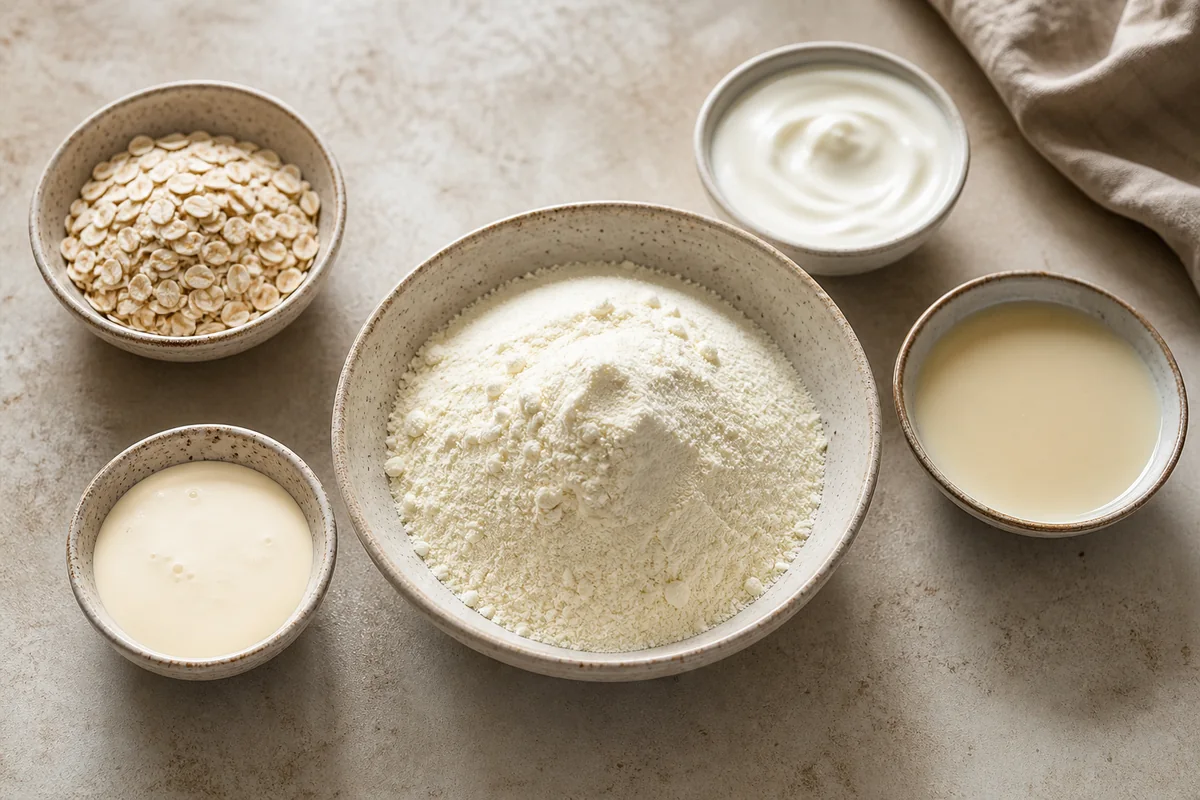
5 Best Milk Powder Substitutes (Honest Picks)
Ingredients
Equipment
Method
- Identify your goal: creaminess (sauces), milk solids (batter/body), or sweetness (only if the recipe is sweet).
- Choose the closest match from the table (evaporated milk for creamy body; strained Greek yogurt for thickness; buttermilk/kefir for liquid with acidity).
- Use the listed ratio for your milk powder amount, then adjust consistency by adding water/milk in small spoonfuls.
- If your swap is thicker than milk powder reconstitution (yogurt or coconut cream), thin it first to match your batter/sauce thickness.
- Re-check after 2–3 minutes of cooking or mixing: milk powder mainly changes body, so small liquid tweaks matter.
Notes
- Milk powder affects body because it adds milk solids—so texture and consistency checks are part of the substitute.
Tried this recipe?
Let us know how it was!
Carrie is a food writer and editor with more than 15 years of experience. She has worked for some of the biggest names in the food industry, including Bon Appétit, Food & Wine, and Martha Stewart Living.
As the Editor in Chief of EpicureDelight, Carrie oversees all of the content on the site. She also manages the team of contributing writers and editors, who help to create delicious recipes, helpful tips, and informative articles that you’ll find on the site.
A native of the Chicago area, Carrie is passionate about all things food. She loves trying new restaurants and experimenting with new recipes in her kitchen. She’s also a graduate of the Culinary Institute of America, so she knows a thing or two about food!



