
Montasio has a personality that's easy to underestimate. It's nutty and slightly sweet when young, firmer and more savory as it ages, and it melts with just enough body to hold its shape in a gratin without turning greasy.
Finding a montasio cheese substitute that covers those two jobs at once is the real challenge.
The right swap depends entirely on what you're doing with the cheese. Grating calls for something dry and salty enough to punch through pasta or soup.
Melting needs a cheese that softens under heat without breaking into an oily puddle. We cover both.
The best montasio cheese substitute depends on whether you're grating or melting. Grana Padano and Parmigiano-Reggiano are the top picks for grating. Asiago and Aged Gouda work better for firm melts. Pecorino Romano is sharper, so reduce added salt when using it.
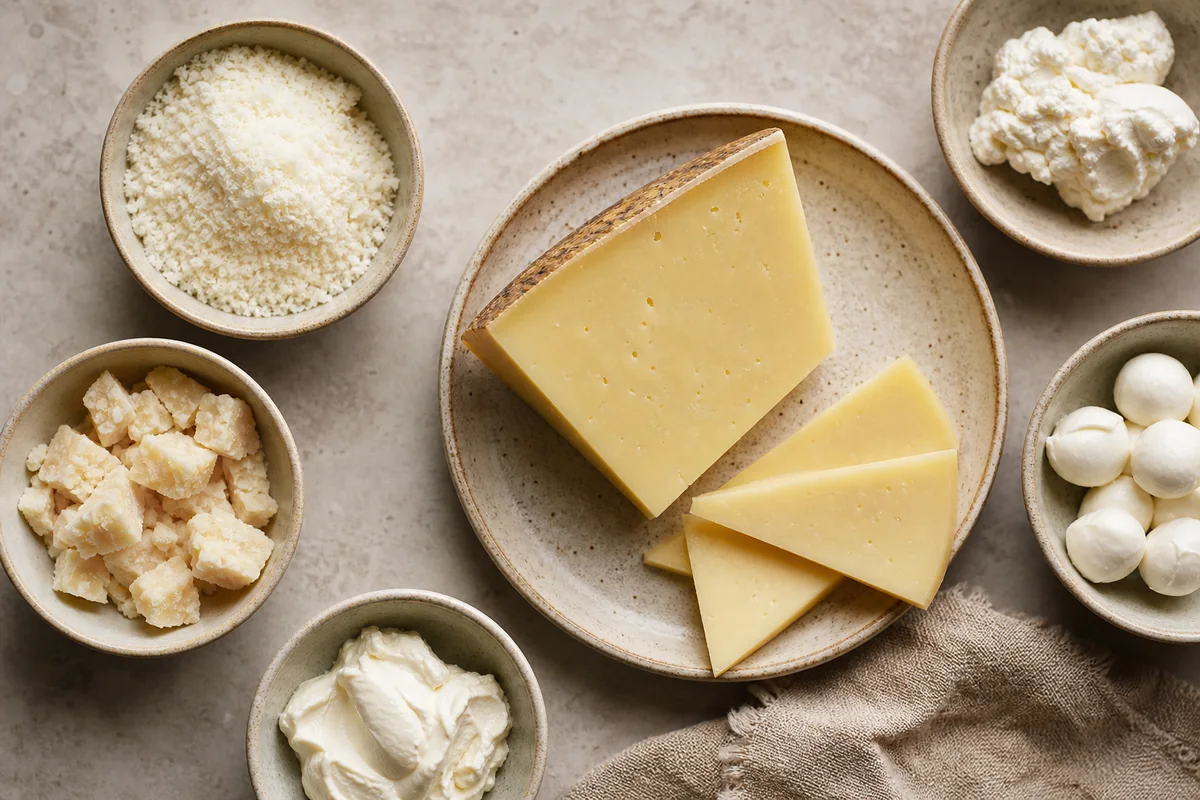
5 Best Montasio Cheese Substitutes That Taste Right
A quick note before the table: these options are ranked for cooking, not cold platters. If you're building a cheese board, texture and melt behavior matter less, and any of these will do.
| # | Substitute | Best For | Ratio | Key Note |
|---|---|---|---|---|
| 1 | Grana Padano | Grating | 1:1 | Salty-nutty, dry melt |
| 2 | Parmigiano-Reggiano | Grating | 1:1 | Grate fine for sauces |
| 3 | Asiago (aged) | Semi-melt | 1:1 | Firm, nutty, good in bakes |
| 4 | Pecorino Romano | Grating | 1:1 | Cut added salt by ¼ |
| 5 | Aged Gouda | Melting/Baking | ¾:1 | Browns well at high heat |
1. Grana Padano
Grana Padano is the most direct grating swap for Montasio. It has the same salty-nutty character, ages in a similar way, and dries to a fine crumb that distributes evenly over pasta, soups, and baked dishes. It won't stretch or pool when heated, which is exactly what you want when Montasio is acting as a topping rather than a melted layer.
One thing to watch: Grana Padano can run slightly saltier than a young or medium-aged Montasio. Grate it on the finer side of a box grater so the salt distributes more evenly instead of landing in concentrated patches.
You can also find firmer aged-cheese picks if Grana isn't available at your store.
- Ratio: 1:1 by weight or volume
- Grating tip: Use the fine side of the grater for sauces; the medium side for gratins
- Salt check: Taste the dish before adding any extra salt when using Grana
Skip if: you need a creamier, stretchier melt. For that job, a semi-hard melting cheese is a better call.
2. Parmigiano-Reggiano
Parmigiano-Reggiano sits very close to Montasio's aged, nutty flavor. It is drier and more assertive, but grated finely it blends fast into hot sauces and avoids the grainy clumps that coarser shreds can cause.
The aged versus fresh parmesan distinction matters here: always choose aged Parmigiano for the closest match.
- Ratio: 1:1, but start with slightly less since the flavor is more concentrated
- Grating size: Fine grate for pasta sauces; medium for topping baked dishes
- Salt: Reduce other salt in the recipe by about ¼ teaspoon per 50g used
- Texture note: Stir it in during the last 1-2 minutes of heat to avoid a grainy texture
Skip if: your recipe needs a mild, buttery cheese baseline. Parmigiano is more assertive and can overpower a delicate sauce.
3. Asiago (Aged, Firm)
Aged Asiago is firm, nutty, and behaves predictably under heat, which makes it a solid pick for gratins, baked pasta, and anything that goes in the oven for more than 15 minutes. It softens rather than flows, so the texture stays close to what Montasio delivers in those applications.
For melting hard Italian cheeses, Asiago is one of the more reliable options in this category.
Firm Melt (Bakes & Gratins)
Works for: oven dishes, pasta bakes, toasted tops
Skip if: you need a creamy, smooth sauce melt
Grate-and-Go (Topping)
Works for: hot soup, finished pasta, toasted bread
Skip if: you want it to dissolve fully into a liquid sauce
- Ratio: 1:1 by weight
- Best uses: Gratins, baked ziti, stuffed vegetables
- Texture expectation: It melts adequately but can feel slightly grainy in very smooth sauces
Skip if: you're making a cheese sauce or custard that needs a completely smooth, creamy melt.
4. Pecorino Romano
Pecorino Romano delivers a sharp, salty punch that can stand in for Montasio's savory edge. The flavor is more aggressive though.
It works best in dishes that already have bold components, like roasted vegetables, tomato-based pasta, or anything with cured meat.
The salt issue is real. Pecorino Romano is noticeably saltier than Montasio, so cut your added salt by at least ¼ teaspoon for every 50g you use. Taste the dish before serving and add a small squeeze of lemon if it still feels flat after the salt reduction.
- Ratio: 1:1, but taste before finishing the dish
- Salt fix: Reduce added salt by ¼ teaspoon per 50g used
- Best dishes: Tomato pasta, roasted vegetables, savory tarts
- Acid balance: A small splash of lemon juice or white wine vinegar helps if the dish tastes one-dimensional
Skip if: your recipe calls for Montasio's mild, nutty sweetness. Pecorino's sharper bite will change the character of the dish.
5. Aged Gouda
Aged Gouda is the easiest emergency swap when you need browning and melt behavior more than an Italian flavor profile. It is nutty and firm, and it caramelizes well at high heat, which can make it feel closer to Montasio in a cooked dish than it would taste on a plate.
It's a practical fix when Italian cheeses aren't at hand.
| Use | Ratio | Notes |
|---|---|---|
| Grating over pasta | ¾:1 | Aged Gouda; grate finely, use less |
| Baked dishes/gratins | ¾:1 | Aged Gouda; browns and strings lightly |
| Sandwiches/panini | 1:1 slices | Aged Gouda; melts cleanly under press |
- Browning: Aged Gouda caramelizes faster than Montasio; watch the oven in the last 5 minutes
- Flavor gap: The taste is nuttier and less tangy; add a pinch of white pepper if the dish feels flat
- Grating tip: Use ¾ of the amount called for since aged Gouda concentrates flavor faster
Skip if: you need the exact Italian aged-cheese flavor. Gouda will taste noticeably different on a cold plate or cheese board.
Making Montasio Cheese Substitutes Work
The core rule is simple: match the cheese to the job, then adjust salt. Grating swaps (Grana Padano, Parmigiano) work best stirred in at the end of cooking.
Melting swaps (Asiago, Gouda) go in with time to soften. Understanding this firm alpine-style cheese makes it easier to know which swap direction to take before you start cooking.
- For grating: Always grate finely. Coarse shreds don't distribute evenly and can make sauces grainy.
- For melting: Add the substitute in the last 5-10 minutes of bake time. Longer exposure to heat makes most hard cheeses oily.
- For salt balance: When using Pecorino or Parmigiano, reduce added salt by ¼ teaspoon per 50g and taste again before serving.
Frequently Asked Questions
Yes, use it at a 1:1 ratio but grate it finely so it melts smoothly. Reduce any added salt by about ¼ teaspoon since Parmesan is sharper and saltier than Montasio.
Aged Gouda or mild Swiss are the best sandwich options. Both melt cleanly under a press or broiler without turning greasy or breaking.
Pecorino Romano and Parmigiano are the likely culprits. Cut added salt by ¼ teaspoon per 50g and add a small squeeze of lemon juice to rebalance the dish.
Yes. Aged Asiago is firm and nutty with less sharpness than Pecorino. It works well in gratins and baked pasta where you want body without a strong tangy bite.
Grate it cold and use the fine side of the grater. Add it to hot dishes off the heat and stir immediately so it disperses before the proteins seize.
5 Best Montasio Cheese Substitutes That Taste Right
Ingredients
Equipment
Method
- Identify your use-case: grating over pasta, melting in a bake, or slicing for a board/sandwich.
- Choose the closest match: Parmesan/Grana for grating, Asiago for firm melt, Swiss/Gouda for sandwich-style melting.
- Swap by the listed ratio. If your substitute is sharper (like Pecorino), reduce any added salt by about ¼.
- For smoother melt/grate performance, grate harder cheeses finely and stir them in during the last 1–2 minutes of heat.
- Taste and adjust with pepper, a pinch of acid (lemon/vinegar) for tang, or a small drizzle of butter/oil for roundness.
Notes
- Montasio is typically used as a firm, aged cheese—choose substitutes that behave similarly when heated (grate vs melt).
- If the substitute is saltier or sharper than Montasio, compensate by reducing added salt rather than over-seasoning.
Tried this recipe?
Let us know how it was!
Carrie is a food writer and editor with more than 15 years of experience. She has worked for some of the biggest names in the food industry, including Bon Appétit, Food & Wine, and Martha Stewart Living.
As the Editor in Chief of EpicureDelight, Carrie oversees all of the content on the site. She also manages the team of contributing writers and editors, who help to create delicious recipes, helpful tips, and informative articles that you’ll find on the site.
A native of the Chicago area, Carrie is passionate about all things food. She loves trying new restaurants and experimenting with new recipes in her kitchen. She’s also a graduate of the Culinary Institute of America, so she knows a thing or two about food!



