
That earthy, brick-red depth in a bowl of New Mexico red chile sauce is not easy to fake. New Mexico chile delivers mild-to-medium heat, a quiet smokiness, and a color that stains everything a gorgeous reddish-brown. Lose it from a recipe and you notice fast.
The good news is several dried chiles and spice blends land close enough to work. The right new mexico chile substitute depends on what your dish actually needs: color, heat, earthiness, or all three.
New Mexico chile brings mild-to-medium heat, earthy-smoky flavor, and a reddish-brown color to sauces, stews, and baked goods. Ancho chile powder is the closest overall swap at a 1:1 ratio. Guajillo powder works for brighter dishes. Smoked paprika covers color and smoke when depth is not critical.
5 Best New Mexico Chile Substitutes Ranked
Before choosing, scan this table fast. It maps each substitute to its best use, heat impact, and a starting ratio against New Mexico chile powder.
| # | Substitute | Best For | Ratio | Key Note |
|---|---|---|---|---|
| 1 | Ancho Chile Powder | Sauces + Baking | 1:1 | Mild, earthy, slightly sweet |
| 2 | Guajillo Chile Powder | Sauces + Rubs | 1:1 | Brighter, fruitier smoke |
| 3 | Pasilla Chile Powder | Sauces + Stews | ¾:1 | Darker, deeper, start lower |
| 4 | Cayenne + Paprika Blend | Rubs + Quick Sauces | ½:1 | Heat and color, no depth |
| 5 | Smoked Paprika | Soups + Marinades | ½:1 | Smoke and color only |
1. Ancho Chile Powder
Ancho is dried poblano ground into powder, and it sits closer to New Mexico chile than almost anything else on a spice shelf. It shares that same low-rumble earthiness, and when you're choosing ancho instead of hunting down specialty chiles, the 1:1 swap holds in nearly every context.
The flavor is slightly sweeter and rounder, but most recipes absorb that difference without complaint.
- Red chile sauce: Swap 1:1 and whisk into warm liquid before adding to the pot.
- Braises and stews: Add early so the ancho softens and blends into the broth.
- Dry rubs: Ancho works well here because its sweetness balances salt and cumin.
- Baked goods: Mix into dry ingredients first to distribute evenly and avoid bitter pockets.
Skip if: your dish depends on New Mexico chile's slightly sharper, brighter tang. Ancho reads sweeter and rounder, so in a dish where that tang is the point, the result will taste noticeably different.
2. Guajillo Chile Powder
Guajillo powder brings a fruity, slightly tangy smoke that works beautifully in dishes where a brighter edge is welcome. It is still earthy, but it has more lift than New Mexico chile.
For mole-adjacent sauces, enchilada bases, and marinades, guajillo holds up well at a 1:1 ratio. If the tang feels too forward, adding a pinch of smoked paprika pulls it back toward earthy territory.
- Enchilada sauce: The tang integrates well when the sauce simmers for at least 15 minutes.
- Dry rubs for pork: Guajillo's fruitiness pairs naturally with pork fat and citrus marinades.
- Soups: Bloom guajillo powder in oil for 30 seconds before adding liquid to deepen flavor.
- Rebalancing tip: If tang is too sharp, stir in ¼ teaspoon smoked paprika per tablespoon of guajillo.
Skip if: you're making a classic, mild New Mexico-style red sauce where fruity tang would feel out of place. Guajillo's brighter profile is noticeable in simple, lightly seasoned preparations.
3. Pasilla Chile Powder
Pasilla goes darker and deeper than New Mexico chile. It carries a near-chocolatey earthiness and can push a sauce toward a mole-like tone, which is great in some recipes and a problem in others.
Start at ¾ of the called-for amount, then taste after the dish has cooked for a few minutes before adding more.
Pasilla vs. New Mexico Chile
Works for: stews, dark mole-style sauces, braises where deep color is an asset
Skip if: pale sauces, mild salsas, or any dish where darker color would look wrong
- Thick red stews: Pasilla blends in beautifully when other bold spices like cumin are present.
- Baking: Use sparingly, as its intensity can overpower delicate spice blends in batters.
- Layered sauces: Combine with a small amount of ancho powder to soften the darkness.
- Starting ratio: Begin at ¾ teaspoon pasilla per 1 teaspoon New Mexico chile called for, then adjust.
4. Cayenne + Paprika Blend
This is the pantry-rescue option. Neither cayenne nor paprika alone captures New Mexico chile's earthiness, but together they cover heat and color well enough for quick weeknight cooking.
Use ¼ teaspoon cayenne plus ¾ teaspoon sweet or mild paprika to replace each teaspoon of New Mexico chile. If you want smoky character, swap the sweet paprika for smoked paprika.
When adjusting heat, picking a milder cayenne option first gives you room to add more without overcorrecting.
- Ratio starting point: ¼ teaspoon cayenne + ¾ teaspoon paprika per 1 teaspoon New Mexico chile.
- Soups and stews: Bloom both spices in oil for 20 seconds before adding liquid.
- Dry rubs: This blend coats meat well and provides good color on the grill.
- Heat control: Reduce cayenne to ⅛ teaspoon first if the recipe is meant to stay mild.
- Smoked version: Swap sweet paprika for smoked paprika when you need that charred undertone.
Skip if: you need true chile depth. This blend gives heat and color, but the earthy-smoky complexity of a dried chile is not something a spice blend can fully replicate.
5. Smoked Paprika
Smoked paprika is the simplest swap when your goal is color and a gentle smokiness rather than full chile character. Use it at about half the amount called for in the recipe, since its smoke can intensify in long-cooked dishes.
It works best in soups, marinades, and anything where a light reddish tint matters. If you want to understand how its flavor behaves across cooking methods, smoked paprika flavor notes cover the range from mild to intense.
Skip if: your recipe relies on chile's cooked, earthy base flavor. Smoked paprika provides smoke and color but not the grounded, dried-chile depth that New Mexico chile builds over a long simmer.
Making New Mexico Chile Substitutes Work
The biggest mistake people make is adding chile powder or its substitute dry, straight into a hot pan. Hydrating your substitute in 2 to 3 tablespoons of warm broth or water before adding it to the pot removes that raw, dusty edge and lets the flavor bloom evenly.
For baking, this step changes: mix the powder directly into your dry ingredients so it distributes without clumping. If you need to dial back heat after adding your substitute, smoky low-heat swaps are worth keeping in mind as a follow-up adjustment.
- Hydrate first: Stir chile substitute into 2-3 tablespoon warm liquid and let it sit for 60 seconds before adding to the pot.
- Taste after 5 minutes: Substitutes behave differently once heat is applied, so taste and adjust before the dish finishes cooking.
- For baked goods: Blend substitute powder into dry ingredients first, then combine wet and dry to prevent bitter clumps.
Frequently Asked Questions
Ancho chile powder is the closest match. It shares New Mexico chile's mild heat and earthy base, and swaps in at a 1:1 ratio in sauces, stews, and baked goods.
Regular paprika provides color but not heat or earthy depth. Combine it with a small amount of cayenne to get closer, but expect less complexity than the original.
No. New Mexico chile is a single-chile powder with a distinct earthy character. Commercial chili powder is a blend of multiple spices, including cumin and garlic, which changes the flavor profile significantly.
Ancho chile powder at a 1:1 ratio works best in baking. Its mild sweetness and earthiness blend cleanly into dry ingredients without adding unwanted sharpness or heat spikes.
Start at half the called-for amount when using cayenne-forward blends, then build up slowly. Taste after 5 minutes of cooking before adding more.
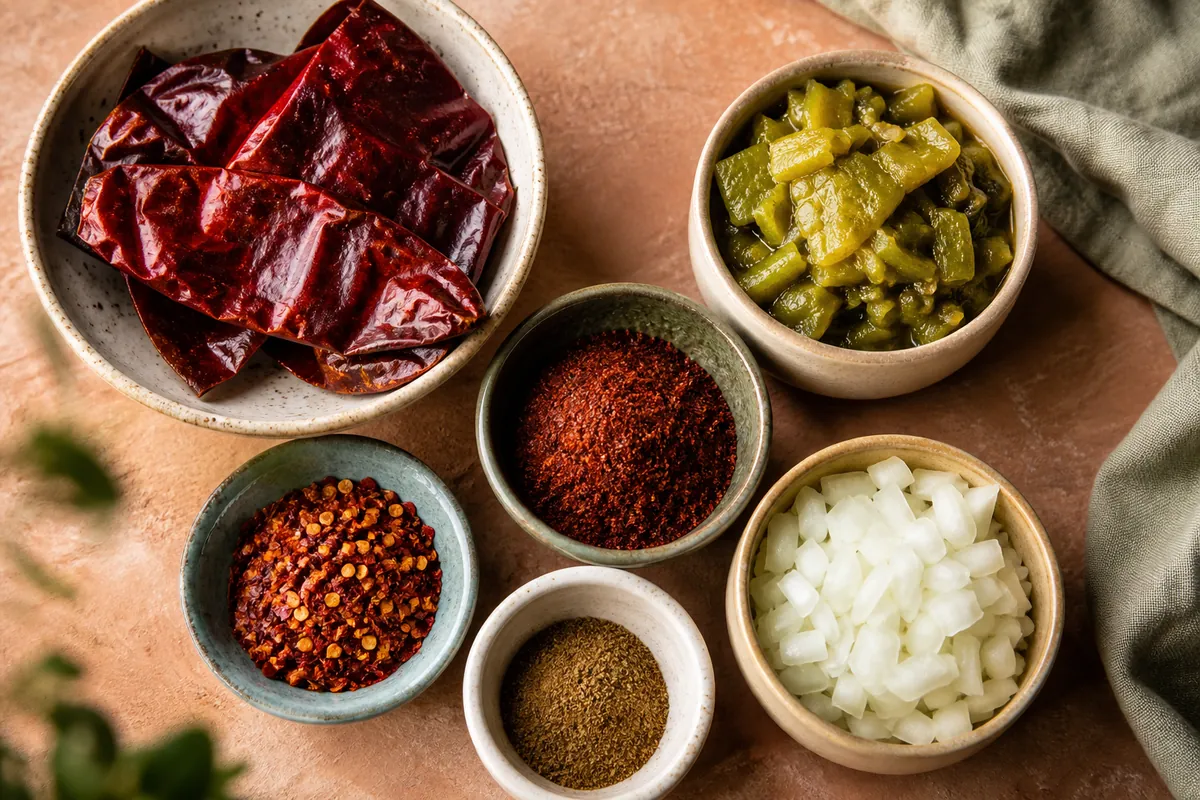
5 Best New Mexico Chile Substitutes (Tested)
Ingredients
Equipment
Method
- Identify your recipe goal: color/smokiness, earthy chile flavor, or mild-to-medium heat.
- Pick the closest substitute from the table (powder-to-powder works best for baking and thick sauces).
- Apply the ratio, then taste once the mixture is hydrated (especially for thickening sauces).
- If your substitute is heat-forward (like cayenne), reduce slightly and build up; if it’s mild, add in small increments.
- For baked goods, mix chile powder evenly into dry ingredients to prevent bitter clumps.
Notes
- Powder substitutes generally map best to New Mexico chile powder in baking and thickening sauces.
- If your recipe uses rehydrated whole chiles, blend and strain your substitute into a paste for similar texture.
Tried this recipe?
Let us know how it was!
Carrie is a food writer and editor with more than 15 years of experience. She has worked for some of the biggest names in the food industry, including Bon Appétit, Food & Wine, and Martha Stewart Living.
As the Editor in Chief of EpicureDelight, Carrie oversees all of the content on the site. She also manages the team of contributing writers and editors, who help to create delicious recipes, helpful tips, and informative articles that you’ll find on the site.
A native of the Chicago area, Carrie is passionate about all things food. She loves trying new restaurants and experimenting with new recipes in her kitchen. She’s also a graduate of the Culinary Institute of America, so she knows a thing or two about food!



