Oat bran has a specific character that's hard to ignore once you know it: a warm, faintly nutty grain texture that thickens porridge, adds soft heft to baked goods, and quietly bumps up the fiber in nearly anything. When you run out, the swap depends less on which ingredient looks similar and more on what oat bran is actually doing in that recipe.
For thickening oatmeal, you need something that hydrates fast and swells. For baking, you need fine grain and absorbency.
The right oat bran substitute for cookies is not the same as the right one for a breakfast bowl, and the guide below is built around that difference.
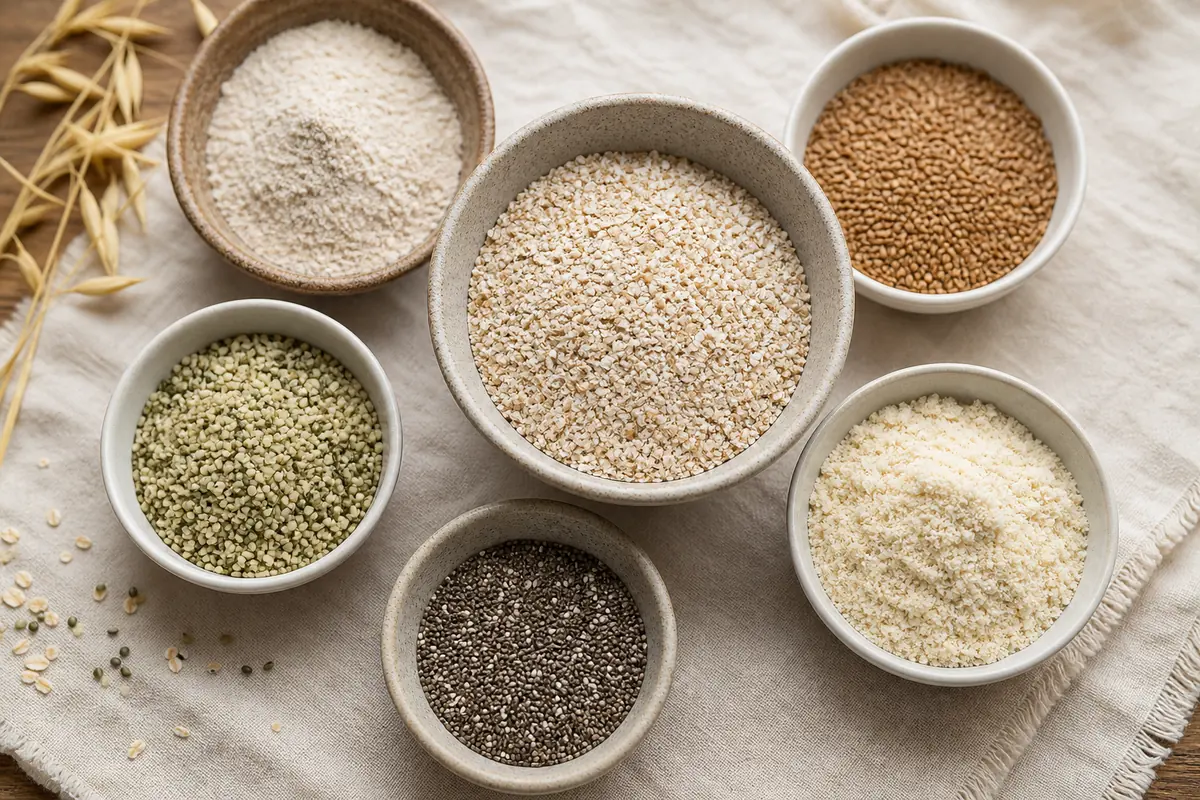
The best swap depends on what oat bran is doing in your recipe. Blended rolled oats cover most baking jobs at a 1:1 ratio. Oat flour works for tender crumb. Steel-cut oats (pulsed) add chew. Whole wheat flour gives bulk. Fine cornmeal thickens and crisps.
5 Best Oat Bran Substitutes (and When to Use Each)
Every substitute below is matched to a specific texture goal. Scan the table first to find your use case, then read the section for the ratio and any adjustments you'll need.
| # | Substitute | Best For | Ratio | Key Note |
|---|---|---|---|---|
| 1 | Rolled Oats (blended) | Both | 1:1 | Blend flour-fine |
| 2 | Steel-Cut Oats (pulsed) | Baking | ¾:1 | Add rest time |
| 3 | Oat Flour | Both | 1:1 | Finer, add liquid |
| 4 | Whole Wheat Flour | Baking | 1:1 | Nuttier, less oaty |
| 5 | Cornmeal (fine) | Thickening | ¾:1 | Crisps, not oaty |
If your recipe needs hearty oat character, oat-based swaps (items 1-3) are your first move. Whole wheat and cornmeal shift the flavor, so use those when bulk or texture matters more than oat identity.
If you're also swapping out adding a bran alternative, the same logic applies: match the texture job, then adjust liquid.
1. Rolled Oats (Blended)
Blended rolled oats are the closest all-around swap for oat bran. They match the fine-grain absorbency that oat bran brings to batters and bakes, and most home cooks already have them in the pantry.
- Ratio: Use 1:1 by weight; volume works too for most home recipes.
- Grind level: Blend until the oats look flour-fine with no visible flakes.
- Hydration fix: If the batter feels too thick, add 1 tablespoon water and stir before adding more.
- For oatmeal: Blend lightly so a few small pieces remain for texture.
Skip if: You need a distinctly grainy bran texture. Blended oats read smoother and softer in finished bakes.
2. Steel-Cut Oats (Pulsed)
Steel-cut oats give you the chewiest, most fiber-forward result of any swap here. They need a pulse in the food processor first, and a short rest once in the batter.
For readers who want this grainy grain flavor to stay front and center, pulsed steel-cut oats deliver better than any flour-based option.
- Ratio: Start at ¾ cup pulsed oats for every 1 cup oat bran called for.
- Grind level: Pulse to a coarse flour texture, not a crunchy crumble or powder.
- Rest time: Let the batter or oatmeal sit for 3 minutes so the oats hydrate fully.
- Liquid note: Add 1-2 tablespoon extra liquid per batch if the mix looks dry after resting.
Skip if: You want a smooth, spoonable oatmeal texture. Pulsed steel-cut oats stay noticeably coarser than oat bran.
3. Oat Flour
Store-bought oat flour is the quietest swap on this list. It keeps the oat flavor intact and blends seamlessly into tender baked goods without any prep work.
The catch is absorption. Oat flour is often ground finer than oat bran, so the same volume of flour drinks up less liquid.
Start with the 1:1 ratio, then add liquid 1 teaspoon at a time if the mix looks dry or crumbly.
For cookies, quick breads, and muffins, oat flour is the most consistent performer. It keeps the crumb light and avoids the dense chew that coarser swaps sometimes bring.
Skip if: You need oat bran's rougher grain to create a specific crust bite. Oat flour won't replicate that texture.
4. Whole Wheat Flour
Whole wheat flour works when you need body and structure more than oat character. It carries a nuttier, slightly earthier flavor that is noticeable but rarely a problem in muffins, pancakes, or dense quick breads.
The wheat-based flour options worth knowing here include white whole wheat flour, which has a milder taste and performs almost identically to regular whole wheat in this role.
Whole Wheat Flour
Works for: muffins, pancakes, dense quick breads, any recipe where bulk and structure matter more than oat flavor
Skip if: your recipe depends on oat identity (oat bran cookies, oat-forward granola bars)
- Ratio: Swap 1:1 by volume for most recipes.
- Flavor adjustment: Reduce strong spices by a pinch if the wheat flavor reads too heavy.
- Bake time: Bake 3-5 minutes longer if the center feels under-set; whole wheat absorbs moisture more slowly.
5. Cornmeal (Fine Grind)
Fine cornmeal is the emergency thickener of this group. It absorbs liquid fast, adds a slight crunch, and is naturally gluten-free.
Cornmeal works best in savory batters, thick porridges, and recipes where a little crunch is welcome. If you're storing it, knowing its this dry grain's shelf life will save you from a stale batch mid-recipe.
- Ratio: Use ¾ cup fine cornmeal for every 1 cup oat bran.
- Sweet recipes: Add 1 teaspoon extra sugar or a splash of vanilla to offset the corn flavor.
- Texture note: Expect thickness and a slight crunch rather than a soft oat chew.
Skip if: Your recipe is oat-forward in flavor or you find corn's taste too assertive in sweet bakes.
Making Your Oat Bran Substitutes Work
The key is knowing oat bran's job before you swap. Oat bran thickens, adds grain texture, and binds moisture.
Your substitute only needs to handle whichever one of those the recipe actually relies on. A muffin needs absorption and crumb.
An oatmeal bowl needs swelling and body. Those are different problems, and they point to different solutions.
For oat-based swaps, rest time is your best friend. Letting the batter or porridge sit for 2-3 minutes gives the blended or pulsed oats time to hydrate, which improves both texture and thickness without adding more substitute.
- Too thick: Add liquid 1 tablespoon at a time, stir, and wait 1 minute before adding more.
- Too thin: Stir in 1-2 tablespoon more of your chosen substitute and let it rest before baking or serving.
- Off flavor: A pinch of salt or an extra ¼ teaspoon vanilla usually corrects the flat or grain-heavy notes that some swaps introduce.
Frequently Asked Questions
Blended rolled oats at a 1:1 ratio are the best call for cookies. They match oat bran's absorbency and keep the oat flavor without changing the dough structure.
Yes, a 1:1 swap works in most recipes. Oat flour is finer, so add liquid 1 teaspoon at a time if the batter or dough looks too dry.
Blended rolled oats or oat flour both work well. Let either one rest in hot water for 2-3 minutes before serving so it thickens properly.
It works in a pinch, but cornmeal adds a noticeable corn flavor. Balance it with extra vanilla or a small amount of added sugar.
Start with the listed ratio and check consistency after a 2-minute rest. Add liquid 1 tablespoon at a time if the mix is too thick, or add 1-2 tablespoon more substitute if too thin.
5 Best Oat Bran Substitutes for Home Cooks
Ingredients
Equipment
Method
- Identify what you need oat bran to do: thicken oatmeal, add fiber/bulk, or create a hearty crumb in baking.
- Choose the closest texture match from the WPRM table: oat flour for smoothness, oat flour-from-rolled-oats for classic baking texture, or fine cornmeal for thickening.
- Use the listed ratio. If your substitute is coarser or absorbs more liquid (like steel-cut pulses), add 1–2 tablespoon extra liquid per batch.
- For oat-based swaps in oatmeal, let the mixture sit 2–3 minutes so the blended oats hydrate and thicken.
- Taste and adjust: add a pinch of salt for grainy flavors, or increase sweetness if the swap reads less “oatty” than oat bran.
Notes
- For best results, match the swap to the recipe’s job (thickener vs crumb vs fiber/bulk).
- If your substitute is more finely ground than oat bran, you may need slightly less liquid; if coarser, add a splash more.
Tried this recipe?
Let us know how it was!
Carrie is a food writer and editor with more than 15 years of experience. She has worked for some of the biggest names in the food industry, including Bon Appétit, Food & Wine, and Martha Stewart Living.
As the Editor in Chief of EpicureDelight, Carrie oversees all of the content on the site. She also manages the team of contributing writers and editors, who help to create delicious recipes, helpful tips, and informative articles that you’ll find on the site.
A native of the Chicago area, Carrie is passionate about all things food. She loves trying new restaurants and experimenting with new recipes in her kitchen. She’s also a graduate of the Culinary Institute of America, so she knows a thing or two about food!