Peach schnapps keeps for years while sealed and usually tastes best within 6 to 12 months after opening. The exact window depends on the label, alcohol level, seal, storage temperature, and how much air sits above the liquid.
An older bottle is more likely to lose its fresh peach aroma than to become unsafe. Check the bottle and pour before mixing it, since heat, sunlight, a loose cap, or dirty handling can shorten that useful window.

Use an opened bottle within 6 to 12 months for its clearest peach flavor. A sealed commercial bottle can remain usable much longer, but the maker's date and storage directions should guide your decision.
Set the Clock by Bottle State, Not the Printed Year
A best-by date gives you a starting point for unopened quality. It does not turn peach schnapps bad at midnight on that date, and it cannot account for a bottle that sat beside a sunny window.
Commercial peach schnapps commonly contains enough alcohol and sugar to resist the fast spoilage seen in juice or wine. Its fruit aroma still changes after the seal breaks, so an opened bottle has a shorter quality window.
| Bottle state | Practical quality window | What changes the answer |
|---|---|---|
| Sealed commercial bottle | Several years when stored well | Damaged closure, high heat, direct sun, or label instruction |
| Opened and more than half full | Best within 6 to 12 months | Cap fit, pouring habits, and storage temperature |
| Opened and nearly empty | Use sooner | More oxygen sits above less liquid |
| Homemade peach infusion | Follow its tested recipe | Fruit, water, sugar, proof, and sanitation vary |
The label wins when it gives a shorter after-opening period. A cream-based or low-alcohol peach product is not the same as clear peach schnapps and may need refrigeration.
A bottle with an unknown history deserves a fresh inspection even if the date looks recent. A cracked cap, sticky leak, or evidence that someone stored another liquid in the bottle makes the calendar irrelevant.
Do not use the bottle clock for a prepared cocktail. Once you mix schnapps with juice, wine, soda, fruit, or dairy, the most perishable ingredient controls storage.
Move a mixed drink into the refrigerator promptly and keep it covered. Fresh fruit and low-alcohol mixers remove the protection that a sealed bottle of liqueur provides.
Why the Peach Smell Fades Before the Bottle Becomes Unsafe
Opening the cap lets oxygen enter and lets volatile peach aromas escape. Each pour replaces some liquid with air, which is why a nearly empty bottle often smells flatter than a full bottle of the same age.
Heat speeds those quality changes. Direct light can also alter color and flavor, while repeated warming and cooling makes the closure move and breathe more than a bottle kept at a stable room temperature.
Sweetness can hide early aroma loss in a cocktail. Pour a teaspoon into a clean glass and smell it at room temperature before adding juice, soda, or ice.
A weak peach note with a normal sweet flavor means the schnapps has lost quality. You can use it soon in a mixed drink, or replace it when peach needs to lead.
Sugar crust around the cap is not automatic spoilage. A small drip can dry into clear or pale crystals, especially when the bottle was poured without wiping the neck.
Clean the outside of the closed bottle with warm water and dry it. If growth returns from under the closure, the cap will not seal, or foreign material appears inside the liquid, discard the bottle.
Build a Better Storage Spot in Two Minutes
A cool interior cabinet gives peach schnapps a steady environment without taking refrigerator space. Choose a shelf away from an oven, dishwasher vent, radiator, or bright window.
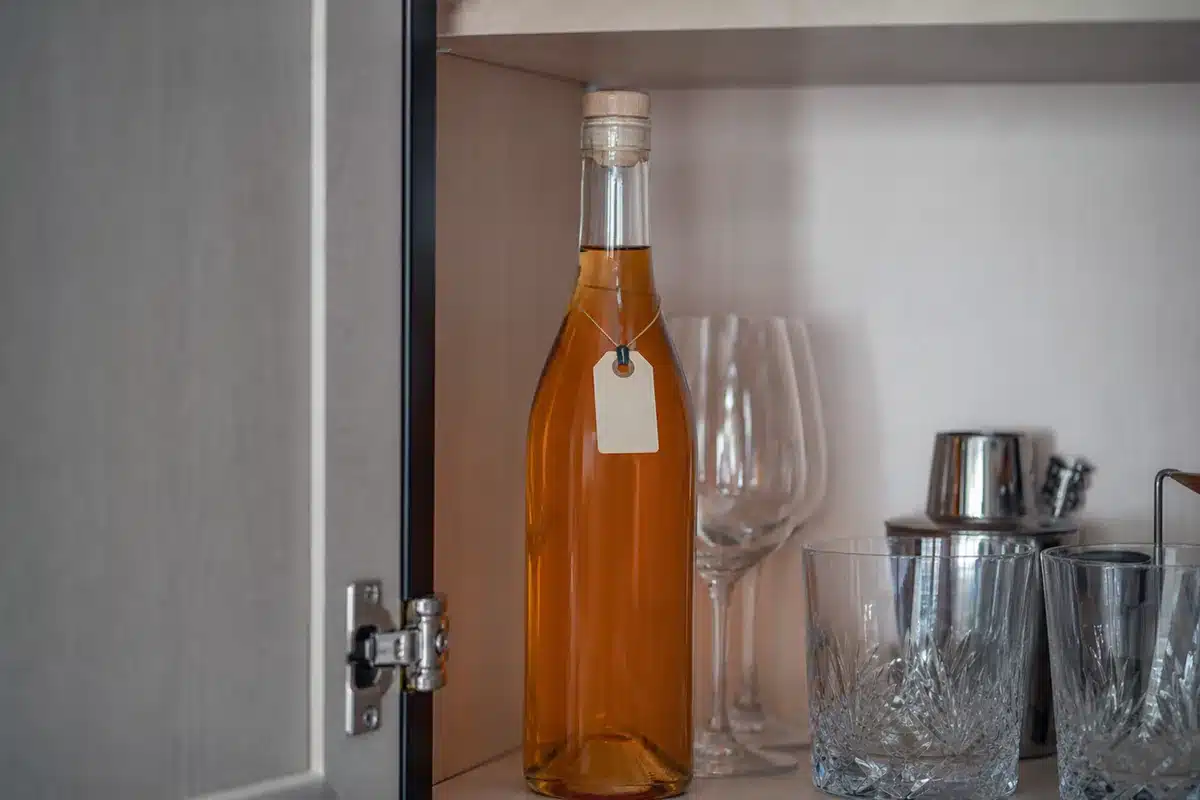
- Stand the bottle upright. This keeps sweet liquid away from the closure and reduces leaks.
- Tighten and wipe the cap. Remove sticky drips before they attract dust or block a clean seal.
- Keep the temperature steady. A normal cool room works better than a shelf that heats every day.
- Pour with clean tools. Do not return a used measure or mixed drink to the bottle.
- Mark the opening month. A small tag gives you better evidence than memory.
Refrigeration can keep the bottle cool, but most clear commercial peach schnapps does not require it unless the label says so. Cold also mutes aroma during the check, so let a small sample warm briefly before judging flavor.
Store the bottle separately from cleaning products or strong-smelling chemicals. A closed bottle should resist outside odor, but a loose or damaged closure removes that protection.
Screw caps need clean threads to close fully. A natural cork should stay sound and snug, but do not lay a sweet liqueur on its side for months because constant liquid contact can weaken the closure and cause seepage.
Smell the Pour Before You Mix It
Inspect an old bottle from the outside inward. Stop before tasting when you see a damaged package or anything that suggests the original drink is no longer the only liquid inside.
- Keep it. The seal is sound, the liquid looks normal, and the aroma still smells sweet and peachy.
- Use it soon. The peach aroma is weaker, the color has darkened slightly, or the finish tastes flat without a sour or harsh fault.
- Discard it. You see mold, unexpected gas, stringy material, a leaking closure, or a sharp odor that is foreign to the product.
- Do not taste it. The bottle was refilled, left open, or stored where another liquid could enter.
Some fruit liqueurs develop sediment or color changes that the producer considers normal. Compare an unfamiliar change with the maker's product information before treating it as a defect.
If the bottle passes the visual and smell checks, taste only a small drop. A dull pour may still work with citrus and sparkling water, but it will disappoint in a drink where peach schnapps supplies the main aroma.
A sharply sour, medicinal, or stale odor calls for disposal. Do not try to hide a clear fault under stronger mixers.
Freezing Solves the Wrong Problem
Long freezer storage does not protect or restore peach aroma. Alcohol lowers the freezing point, so the bottle may stay liquid, turn slushy, or freeze unevenly depending on its proof and sugar level.
The water-rich part can expand as it freezes. A full glass bottle then faces pressure at the shoulders and closure, which can cause leakage or cracking.
Very cold schnapps may also look hazy or show temporary sugar crystals. Those changes make inspection harder without fixing oxidation or aroma loss.
Chill only the amount you plan to serve, or place the bottle in the refrigerator for a short period. Return it to a cool dark cabinet after service if the label allows room-temperature storage.
Sources
- Alko guidance on storing opened liqueurs
- LCBO tips for preserving alcoholic drinks
- DeKuyper Peachtree product information
Most clear commercial peach schnapps can stay in a cool dark cabinet. Refrigerate it when the label requires cold storage or when the product contains dairy.
Cold sugar or flavor compounds can create temporary haze. Persistent threads, growth, gas, or an unusual odor point to a different problem.
A small amount of sugary liqueur likely dried after pouring. Clean the outside, inspect the seal, and discard the bottle if liquid keeps leaking.
A clean food-safe bottle with a tight closure can reduce headspace. Label it clearly and never use a container that once held household chemicals.
Stores often use both names for sweet peach-flavored spirits, but formulas and alcohol levels vary. Read the ingredient list and alcohol statement before applying storage advice.

Carrie is a food writer and editor with more than 15 years of experience. She has worked for some of the biggest names in the food industry, including Bon Appétit, Food & Wine, and Martha Stewart Living.
As the Editor in Chief of EpicureDelight, Carrie oversees all of the content on the site. She also manages the team of contributing writers and editors, who help to create delicious recipes, helpful tips, and informative articles that you’ll find on the site.
A native of the Chicago area, Carrie is passionate about all things food. She loves trying new restaurants and experimenting with new recipes in her kitchen. She’s also a graduate of the Culinary Institute of America, so she knows a thing or two about food!