
Peanut flour has a way of doing three jobs at once: delivering nutty flavor, adding fine dry texture, and binding or thickening your recipe. Finding a solid peanut flour substitute means matching as many of those jobs as possible.
The fat level matters most. Oilier subs loosen batters; drier ones tighten them.
Most nut-based swaps land close to a 1:1 ratio. A few need a small pull-back to about ¾ of the original amount.
If you want to understand peanut flour's flavor profile before picking your swap, that helps narrow the field fast.
For the closest result, use peanut meal or peanut butter powder at 1:1. Both keep the nutty flavor. For non-peanut options, almond or cashew flour at ¾:1 works well in baking. Ground peanuts and all-purpose flour with extract are reliable backup options.
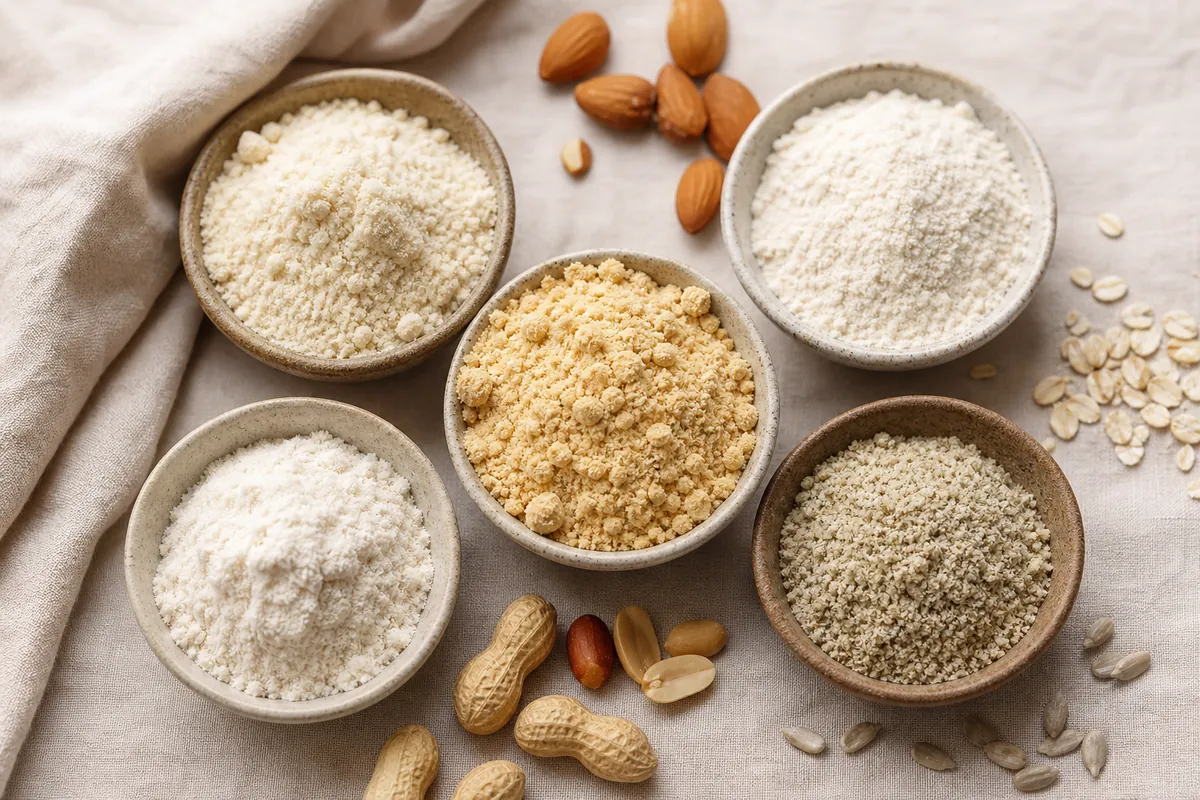
5 Best Peanut Flour Substitutes That Taste Right
These five options cover baking and thickening, ordered from closest match to emergency pantry backup. Check the table first, then read each section for how to apply the swap.
| # | Substitute | Best For | Ratio | Key Note |
|---|---|---|---|---|
| 1 | Peanut meal | Both | 1:1 | Sift if coarse |
| 2 | Peanut butter powder | Both | 1:1 | Add water if dry |
| 3 | Almond flour | Baking | ¾:1 | Lighter, less binding |
| 4 | Cashew flour | Baking | ¾:1 | Softer, tender crumb |
| 5 | Ground peanuts (DIY) | Both | 1:1 | Pulse short; avoid paste |
| 6 | AP flour + extract | Baking | 1:1 | Flavor only, less binding |
1. Peanut Meal
Finely ground peanut meal is the nearest thing to peanut flour you can find. It keeps the same nutty intensity, and a fine grind behaves almost identically in batter.
If you're swapping peanut ingredients throughout a recipe, this is the first stop.
The only real variable is grind size. A coarser meal can make muffins or cookies feel slightly grainy.
Peanut Meal
Works for: baking (cookies, muffins, bars), thickening sauces and soups, protein-forward batters
Skip if: your meal is coarse, heavily oiled, or sweetened, because all three change browning and texture
- Check the grind: Rub a pinch between your fingers. Fine and dry? Use it as-is. Gritty? Sift once through a fine mesh.
- Ratio: 1:1 with no liquid adjustment needed for most recipes.
- Thickening: Whisk into cool liquid before adding heat to prevent clumping.
2. Peanut Butter Powder
Peanut butter powder is more concentrated than standard peanut flour, with most of the oil pressed out. That means it can tighten a batter faster and sometimes leave dough feeling dry.
Add 1-2 teaspoon of water or milk per ½ cup of powder if the dough feels stiff. If you're watching fat, this is actually an advantage.
Skip if your powder is sweetened or vanilla-flavored. Those versions affect browning and can tip a savory recipe into dessert territory.
- Ratio: Use 1:1, then check consistency before adding liquid.
- Best recipes: Smoothie mixes, protein bars, cookie dough, peanut sauce bases.
- Moisture fix: Add liquid in 1 teaspoon increments until the batter looks familiar.
- Savory use: Unsweetened versions work in satay-style sauces and spice rubs.
3. Almond Flour
Blanched, finely ground pale nut flour swaps in cleanly for peanut flour in most baked goods, though the flavor shift is real. You'll get a milder, slightly buttery taste instead of peanut.
Use ¾ cup almond flour per 1 cup peanut flour; the extra fat in almonds can make batters slightly looser, so pull back by that ¼ cup first.
- Ratio: ¾ cup almond flour for every 1 cup peanut flour.
- Best for: Cookies, muffins, pancakes, and gentle sauce thickening.
- Liquid: Start with the original amount. Add 1 teaspoon extra only if the batter looks dry.
- Storage tip: fine milled nut flour goes rancid faster than AP flour; keep it in the fridge.
Skip if the recipe depends on a strong peanut taste. Almond tastes clearly different, and no amount of extract fully bridges that gap.
4. Cashew Flour
Cashew flour produces a smoother, more tender crumb than almond flour. The fat is distributed evenly through a very fine grind, so baked goods come out soft rather than dense.
Use it at ¾:1, the same pull-back as almond flour.
For sauces, cashew flour adds a mild creaminess that reads more like a roux than a nutty thickener. That works in creamy soups and mild curries.
Skip it when you want obvious peanut character. Cashew reads distinctly neutral, and the swap will read more like a cream sauce than a peanut one.
5. Ground Peanuts (DIY)
Blending roasted peanuts into a fine powder is the most direct path when you're out of peanut flour and can't get to a store. The key is keeping the blender moving in short pulses.
Stop the moment it looks powdery. Continued blending releases oils and pushes everything toward paste.
| Processing Stage | Pulse Time | Expected Texture |
|---|---|---|
| Early | 3-4 × 2-second pulses | Coarse, sandy crumbs |
| Mid | 4-5 more 2-second pulses | Fine, powdery meal |
| Stop point | Do not continue | Dry, no clumping |
- Best peanuts to use: Dry-roasted, unsalted. Salted peanuts work if you reduce added salt in the recipe.
- Sift it: Pass through a fine mesh and re-pulse any large pieces.
- Baking: Use at 1:1; no liquid adjustment needed if texture is fine and dry.
- Thickening: Works well in peanut noodle sauces; whisk into warm broth gradually.
Skip if you don't have a food processor or high-speed blender. A standard blender can struggle to get fine enough, leaving grit that changes the finished texture.
All-Purpose Flour + Peanut Extract
This swap is a pantry-only backup. Plain wheat flour doesn't replicate the nut fat or binding behavior of peanut flour, but peanut extract can restore the aroma convincingly. It's best when the recipe uses peanut flour mostly for flavor rather than structure.
- Ratio: 1:1 AP flour for peanut flour, plus ¼ teaspoon peanut extract per ½ cup flour.
- Add extract gradually: Start with ¼ tsp, taste the batter, and increase by ⅛ teaspoon at a time.
- Best for: Pancakes, quick breads, light cookies where structure comes from eggs and butter.
- Avoid in: Thick sauces or recipes needing a dense, nutty crumb.
Skip if peanut flour is doing the thickening or supplying a substantial part of the binding. AP flour behaves like wheat flour, not nut flour, and the result will feel different.
Making Peanut Flour Substitutes Work
The fastest way to get a reliable result is to match the fat level first, then handle moisture. Peanut-based options (meal, powder, DIY ground) stay closest to the original fat profile.
Almond and cashew flour work well in baking but won't thicken a sauce the same way because they're lighter in solids. For any sub that feels off, sifting and a small liquid tweak fix most problems before they reach the oven.
- Match fat first: If the recipe depends on nutty fat for richness, stick to peanut-based subs. For lighter bakes, almond or cashew flour works fine.
- Sift before using: Any coarse grind, including DIY ground peanuts, benefits from one pass through a fine mesh sieve.
- Adjust liquid in small steps: Add liquid 1 teaspoon at a time for dry batters; for thin sauces that won't thicken, simmer 1-2 extra minutes before adding more flour.
Frequently Asked Questions
Use ¾ cup almond flour per 1 cup peanut flour. Almond flour has more fat, so a full 1:1 can make batter too loose and baked goods slightly greasy.
Finely ground peanut meal is the closest, followed by unsweetened peanut butter powder. Both use a 1:1 ratio and keep the peanut flavor intact.
Pulse in 2-second bursts and stop as soon as the texture looks dry and powdery. Continuous blending heats the nuts and releases oil, creating paste.
Peanut meal and peanut butter powder thicken comparably. Almond and cashew flour are lighter and may need an extra 1-2 minutes of simmering to reach the same consistency.
Skip sweetened versions for savory dishes. The added sugar affects browning and pushes the flavor sweet, which clashes with spiced or salty sauces.
5 Best Peanut Flour Substitutes That Taste Right
Ingredients
Equipment
Method
- Identify your recipe job: baking (needs structure) or thickening (needs fat/solids).
- Choose the closest match from the list and use the listed ratio (e.g., ¾:1 for almond/cashew flour).
- If your substitute looks coarse or clumps, sift once to improve texture and prevent gritty results.
- For wet batters, add small splashes of water/milk only if the dough feels dry and crumbly; for thick sauces, simmer 1–2 minutes to activate thickening.
- Taste and fine-tune peanut flavor by adding a small amount of peanut extract or extra nut flour next time.
Notes
- Match texture first: peanut flour should behave like a fine meal, not a paste.
- Nut flours vary by oil/fat; if your batter seems oily, reduce liquid slightly; if it’s dry, add a splash.
Tried this recipe?
Let us know how it was!
Carrie is a food writer and editor with more than 15 years of experience. She has worked for some of the biggest names in the food industry, including Bon Appétit, Food & Wine, and Martha Stewart Living.
As the Editor in Chief of EpicureDelight, Carrie oversees all of the content on the site. She also manages the team of contributing writers and editors, who help to create delicious recipes, helpful tips, and informative articles that you’ll find on the site.
A native of the Chicago area, Carrie is passionate about all things food. She loves trying new restaurants and experimenting with new recipes in her kitchen. She’s also a graduate of the Culinary Institute of America, so she knows a thing or two about food!



