
That sticky, sweet-tangy spoon-coat on a dumpling or a roasted duck leg? That's plum sauce doing its job.
When you're choosing a plum sauce substitute, the first question isn't "what tastes similar?" It's "what does my recipe actually need?"
A dip wants body and fruit. A glaze wants cling and shine.
A stir-fry needs brightness.
Plum sauce is sweet-fruity, lightly vinegared, and thick enough to coat a spoon without dripping. The best swaps replicate that triad: sweetness, tang, and cling.
Nail two of the three and most dishes won't notice.
The best plum sauce substitute depends on your use. Duck sauce is the closest 1:1 match for dipping and glazing. Apricot preserves with rice vinegar give a fruit-forward version you build yourself. For stir-fries, sweet-and-sour sauce brings brightness fast. Use hoisin plus vinegar for savory depth. Emergency swap: ketchup and cranberry preserves, simmered briefly.
5 Best Plum Sauce Substitutes Ranked by Flavor Match
Every substitute below targets at least two of plum sauce's three qualities: fruity sweetness, vinegar tang, and sticky body. The table gives you a fast scan; each H3 section below covers how to use it correctly.
| # | Substitute | Best For | Ratio | Key Note |
|---|---|---|---|---|
| 1 | Duck Sauce | Both | 1:1 | Closest sweet-tang match |
| 2 | Apricot Preserves + Rice Vinegar | Both | ¾:1 | Simmer to thicken back up |
| 3 | Sweet-and-Sour Sauce | Both | 1:1 | Reduce if too loose |
| 4 | Hoisin + Vinegar Splash | Both | ¾:1 | Adds savory undertone |
| 5 | Teriyaki + Plum Jam | Both | 1:1 | Sweeter base, add vinegar |
1. Duck Sauce
Duck sauce lands so close to plum sauce that most diners won't notice a swap at the table. Both share that side-by-side flavor profile of fruity sweetness and gentle vinegar edge, though duck sauce leans more apricot than true plum.
For dipping spring rolls or glazing chicken, start at 1:1 and taste before adjusting.
- Best for: Dumpling dipping, egg roll dipping, light chicken glaze
- Swap ratio: 1:1 with no other changes needed as a starting point
- Too tangy? Simmer 1-2 minutes to mellow; the sharpness softens quickly
- Too sweet? Add rice vinegar 1 teaspoon at a time until balanced
Skip if: your recipe specifically needs a plum-fruit profile. Duck sauce reads apricot-forward, and in dishes where plum's distinct tartness matters, you'll notice the difference.
2. Apricot Preserves + Rice Vinegar
Apricot preserves bring the same cooked-fruit sweetness and gel-like body that makes plum sauce cling. The acid you're swapping in with rice vinegar does the job of recreating that fermented-plum tang without any specialty ingredients.
Start with about ¾ preserves to your total volume and build the vinegar in from there.
- Base ratio: 3 tablespoon apricot preserves to 1 tablespoon rice vinegar as your starting blend
- Thin texture? Simmer the mix 1-2 minutes over medium-low heat to thicken back to a spoon-coating body
- Too sharp? Add preserves a teaspoon at a time until the edge softens
- Cold dip version: Skip the simmer and stir until fully smooth; works without cooking for cold applications
Skip if: you can't stand any cooked vinegar note. For cold dips only, use the preserves straight without heating.
3. Sweet-and-Sour Sauce
Sweet-and-sour sauce is the go-to for stir-fries that need brightness over fruit depth. It has real tang and enough sugar to approximate plum sauce's sweetness, and it's typically thinner, so a short simmer is often needed.
We prefer this option over hoisin when the dish calls for something lively rather than earthy.
The one adjustment most recipes need: reduce the sauce by simmering 2-3 minutes when substituting in a glaze. A tiny pinch of sugar can also pull it back from vinegar-forward if it tastes flat rather than bright.
Sweet-and-Sour Sauce
Works for: stir-fries, dipping, quick glazes needing acidity
Skip if: your dish needs fruity depth more than vinegar brightness
- Swap ratio: 1:1, then taste before serving
- Too loose? Simmer 2-3 minutes until it coats the back of a spoon
- Too acidic? Add a pinch of sugar and stir; re-taste after 30 seconds
- Best dishes: Pork stir-fry, fried rice topping, spring roll dip
4. Hoisin Sauce + Vinegar Splash
Hoisin is thick, sweet, and already complex enough to carry a sauce, but it needs acidity to work as a savory-sweet condiment in place of plum sauce. Without vinegar, it reads flat and heavy.
Add vinegar after the hoisin, not before, so you can taste as you go.
- Base ratio: ¾ hoisin to your total volume, then add vinegar by the teaspoon
- Mixing order: Hoisin first, then vinegar, then stir and taste
- Simmer time: 30-60 seconds over medium heat rounds the flavors and softens the raw vinegar edge
- Vinegar choice: Rice vinegar keeps it mild; apple cider vinegar adds a little more bite
Skip if: you don't want any smoky or soy-forward undertone in the final sauce. Hoisin carries both, and they don't disappear after simmering.
5. Teriyaki + Plum Jam
Teriyaki sauce gives you a glossy, caramel-sweet base that already clings well to meat and vegetables. Adding plum jam (or any red fruit jam) pulls it toward the fruity territory plum sauce occupies.
The result is sweeter and less acidic than plum sauce, so plan to finish with vinegar if your dish needs tang. This option works especially well when you're picking a glaze alternative for roasted or grilled proteins.
Teriyaki + Plum Jam vs. Sweet-and-Sour
Works for: glazing chicken, pork ribs, grilled vegetables; sweeter and less acidic
Skip if: your recipe requires strong tang upfront; this base reads sweeter than plum sauce
- Mix ratio: 1 part teriyaki to 1 part plum or red fruit jam
- Simmer time: 1 minute to thicken and pull the flavors together
- Still too sweet? Add 1-2 teaspoon rice or white vinegar and re-taste before serving
Making Plum Sauce Substitutes Taste Like the Real Thing
Most substitutes get you 80% of the way there out of the jar. The final 20% comes from a few quick adjustments before you plate.
Understanding that sweet-sticky quality of the original helps you know what to chase. For ketchup and BBQ-based swaps, picking a milder base makes balancing far easier.
- Balance tang: Add vinegar 1 teaspoon at a time for more acidity; add sugar ½ teaspoon at a time to soften it. Taste after each addition.
- Fix thickness: Simmer 1-3 minutes uncovered over medium heat; stir frequently. A cornstarch slurry (½ teaspoon in 1 teaspoon water) can also thicken without changing flavor much.
- Dipping vs. glazing: For dipping, serve it slightly looser and at room temperature. For glazing, reduce further until the sauce clings visibly to a cold spoon.
Frequently Asked Questions
Duck sauce is the closest match in sweetness, tang, and spoonable thickness. Use it at a straight 1:1 ratio for dipping or glazing with minimal adjustment needed.
Simmer the substitute uncovered for 2-3 minutes over medium heat, stirring often. If you need faster results, whisk in a small cornstarch slurry and simmer 30 more seconds.
Yes, it works well for dipping dumplings or egg rolls. It's more vinegar-forward than plum sauce, so add a small pinch of sugar if it tastes too sharp.
Add rice vinegar one teaspoon at a time, tasting after each addition. A small squeeze of lemon juice also works if rice vinegar isn't available.
Store it in a sealed container and use it within one week. Preserve-based versions last slightly longer; ketchup or BBQ-based versions are best within five days.
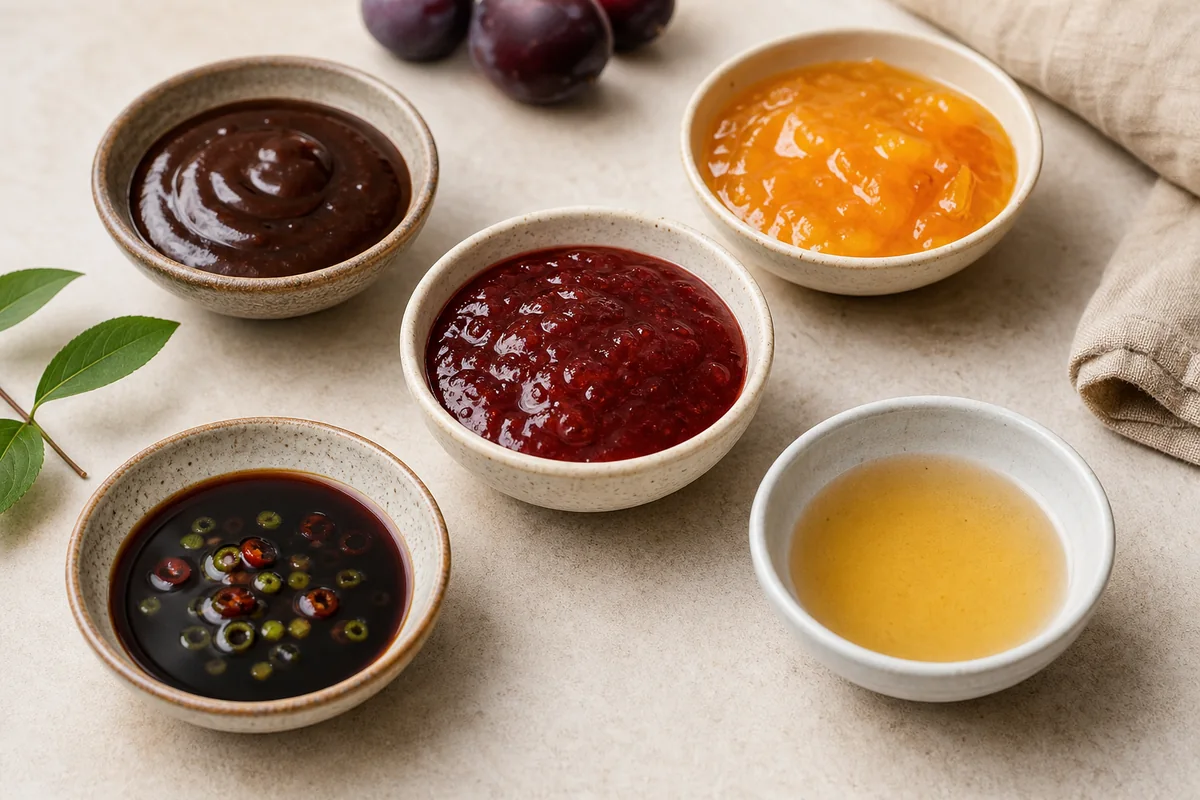
5 Best Plum Sauce Substitutes (Closest Match)
Ingredients
Equipment
Method
- Match your use: for dipping, choose the sauce with the thickest texture (duck sauce, apricot preserves mix); for glazing, choose a sauce you can simmer to cling.
- Start with the listed ratio, then adjust after tasting: add vinegar a teaspoon at a time for more tang or simmer 1-3 minutes for thicker body.
- If the substitute is fruit-preserve based, stir until fully uniform and simmer briefly so the vinegar and preserves emulsify.
- If the substitute is ketchup/BBQ/hoisin based, simmer to mellow sharp notes and improve shine before tossing with food.
- Use immediately or cool and store covered in the fridge up to 1 week.
Notes
- Best results come from adjusting tang (vinegar) and viscosity (quick simmer).
- If your recipe is spicy, add chili oil or a pinch of chili flakes after blending.
Tried this recipe?
Let us know how it was!
Carrie is a food writer and editor with more than 15 years of experience. She has worked for some of the biggest names in the food industry, including Bon Appétit, Food & Wine, and Martha Stewart Living.
As the Editor in Chief of EpicureDelight, Carrie oversees all of the content on the site. She also manages the team of contributing writers and editors, who help to create delicious recipes, helpful tips, and informative articles that you’ll find on the site.
A native of the Chicago area, Carrie is passionate about all things food. She loves trying new restaurants and experimenting with new recipes in her kitchen. She’s also a graduate of the Culinary Institute of America, so she knows a thing or two about food!



